
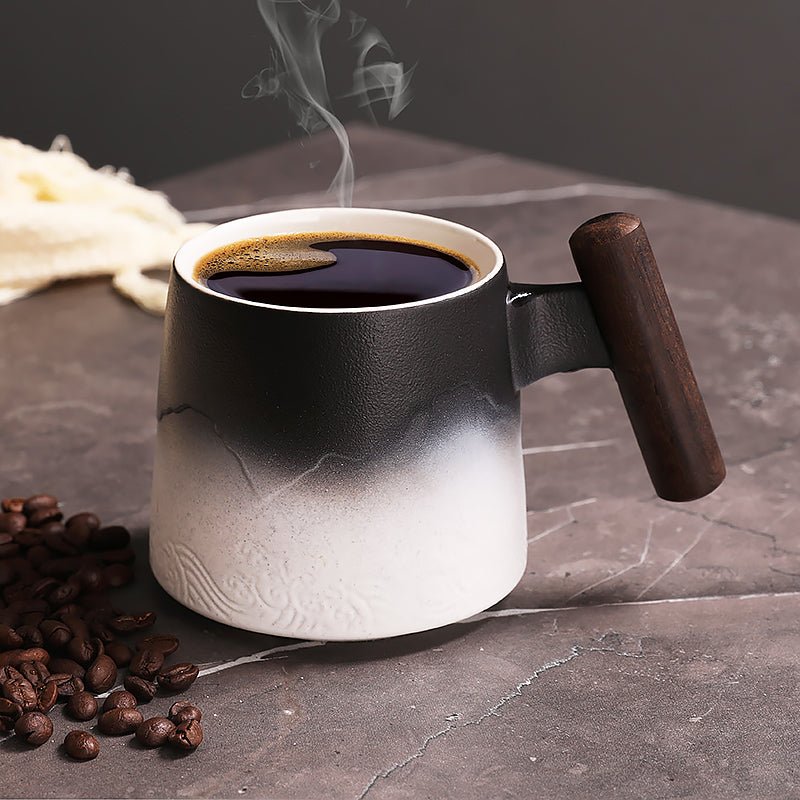
18 oz Coffee Mug: What to Check Before You Buy
Reading time: about 12 minutes
The first thing we notice with an 18 oz coffee mug is the headroom. You can pour a full home-brewed coffee, add milk or creamer, and still walk from the kitchen to the desk without the nervous slow shuffle that comes with a filled-to-the-rim cup.
That extra space is the main reason shoppers ask for this size. It feels generous without becoming a soup bowl. In our store, buyers who compare mug sizes often land on 18 oz after deciding that 11 or 12 oz feels too small, but 20 or 24 oz feels too bulky for daily coffee.
This guide is written for that decision point. If you are comparing an 18 oz coffee mug against neighboring sizes, the right choice depends on more than capacity. Handle shape, wall thickness, base width, ceramic weight, microwave clearance, dishwasher behavior, and the way you actually drink coffee all matter.
Is an 18 oz coffee mug the right size for daily coffee?
For many home and office drinkers, 18 oz is a practical large mug size. It gives enough volume for a bigger serving of drip coffee, a latte-style drink with foam, or coffee with cream and ice cubes if the mug shape allows. It is also a useful size for people who dislike refilling their cup during a meeting or while working at a desk.
The trade-off is weight. An 18 oz ceramic mug filled with coffee feels noticeably heavier than a standard 10 or 11 oz mug. That does not make it uncomfortable by default, but it makes handle design more important. A thin, cramped handle that feels fine on a small mug can feel awkward once the cup is full.
Here is the simple way we explain it to customers:
- Choose 18 oz if you want one larger pour, extra room for creamer, or a mug that can handle coffee, tea, cocoa, and occasional soup.
- Choose smaller if you sip slowly and want the drink to stay hotter in a shorter serving time.
- Choose larger only if you truly want oversized capacity and do not mind more weight on the desk or in the hand.
If you are still unsure about smaller sizes, our guides to the 12 oz coffee mug and 16 oz coffee mug are useful comparisons before you move up to 18 oz.
How big does an 18 oz mug feel in the hand?
An 18 oz mug is not only about liquid capacity. Two mugs can both be labeled 18 oz and still feel very different because of wall thickness, shape, and handle clearance. A straight-sided ceramic mug may feel compact and sturdy, while a rounded belly mug with the same capacity can feel wider and more casual.
In our experience handling mugs for packing, displays, and customer questions, the details shoppers notice after unboxing are often small but practical:
- Handle opening: A comfortable large mug usually needs enough space for at least two or three fingers, depending on hand size. Narrow handles can pinch when the mug is full.
- Rim shape: A slightly rounded rim is often more pleasant for sipping than a sharp, thin edge, especially on a heavier mug.
- Base width: A wider base helps stability on a desk, but it may not fit all car cup holders or narrow side tables.
- Wall thickness: Thicker ceramic feels durable and holds warmth reasonably well, but it adds weight before any coffee is poured.
- Interior curve: Very tight corners at the bottom can trap coffee residue and make hand washing more annoying.
One useful at-home check is to compare the footprint of your current favorite mug. If that mug already crowds your desk beside a keyboard, an 18 oz mug with a wide base may feel too large. If your current mug feels comfortable but constantly needs refilling, 18 oz may be the right step up.
What drinks work best in an 18 oz coffee mug?
An 18 oz mug works well for drinks that need room. A standard black coffee pour may only use part of the capacity, but the extra space helps prevent splashes. For milk-based drinks, the size is more useful. You can add hot coffee, steamed milk, foam, or flavored creamer without crowding the rim.
Common use cases we see from shoppers include:
- Large drip coffee: Good for people who brew a bigger serving in the morning and carry it to a home office.
- Coffee with milk or creamer: The added capacity leaves stirring room, which matters more than people expect.
- Tea: Works well for large tea bags or loose-leaf infusers, though very wide mugs can cool tea faster.
- Hot cocoa: Good for whipped cream or marshmallows because the mug has vertical space above the drink.
- Desk soup or broth: Possible, though a bowl-shaped mug may be better if you plan to use it for food often.
What is it not ideal for? Espresso alone, small cappuccinos, and slow sipping over long periods. A small drink in a large mug can cool quickly because more surface area is exposed to air. If you usually drink a compact serving, an 18 oz coffee mug may look nice but perform less well than a smaller cup.
How does 18 oz compare with 15, 16, 20, and 24 oz mugs?
The closest comparisons are 16 oz and 20 oz. A 16 oz mug often feels like a large everyday mug. An 18 oz mug gives a bit more breathing room, especially for add-ins. A 20 oz mug starts to feel oversized for some shoppers, particularly if the ceramic is thick or the mug has a broad base.
Use this table as a practical comparison, not a rigid rule. Actual feel depends on the mug shape and material.
| Mug size | Best fit | Main trade-off |
|---|---|---|
| 15 oz | Large coffee without feeling oversized | Less room for foam, cream, or toppings |
| 16 oz | Everyday large mug for home or office | May still feel slightly tight for people who add a lot of milk |
| 18 oz | Generous daily coffee with splash room | Heavier when full; handle comfort matters |
| 20 oz | Very large servings or people who hate refills | Can feel bulky on small desks or shelves |
| 24 oz | Oversized drinks, soup, or novelty gifting | Often too large for casual daily coffee |
If you are comparing close sizes, read our 15 oz coffee mug guide for a slightly smaller option, or our 20 oz coffee mug guide if you are considering going bigger.
What material should you choose for an 18 oz mug?
Most shoppers looking at this size are choosing ceramic, stoneware, porcelain, or sometimes stainless steel. Each has a different feel on the counter and in the hand.
Ceramic and stoneware are common choices for an 18 oz coffee mug because they feel substantial, take printed designs well, and are comfortable for everyday hot drinks. Stoneware often has a heavier, denser feel, which many people like, but that also increases the full weight of the mug.
Porcelain can feel smoother and slightly more refined, depending on the design. It may have thinner walls than heavy stoneware, but shoppers should still check the handle and base shape. Thin does not automatically mean better if the mug feels fragile or too hot to hold comfortably.
Stainless steel is useful if you need insulation or outdoor durability, but it gives a different drinking experience. Some people notice a metallic feel at the rim. Also, stainless travel-style mugs are not the same category as open ceramic mugs, especially if you care about microwave use.
For decorated mugs, pay attention to the print area and finish. Glossy surfaces are often easier to wipe clean than rough textured areas. If the mug has metallic accents, it should not go in the microwave unless the manufacturer clearly says it is microwave safe. We never recommend guessing on that point.
What should you check before buying an 18 oz coffee mug online?
Online mug shopping is easier when you know what to look for in the product photos and description. Capacity is just the starting point. We suggest checking these details before adding to cart:
- Listed capacity: Confirm that the mug is actually 18 oz, not just described as large. Some listings use rounded language.
- Dimensions: Look for height, diameter, and base width if provided. This helps with shelf clearance and desk fit.
- Handle design: Check whether the handle looks roomy enough for your grip. A large mug needs a practical handle.
- Microwave guidance: Do not microwave mugs with metallic trim or unclear material details.
- Dishwasher guidance: Dishwasher-safe mugs are easier for daily use, but hand washing can help preserve decorative finishes longer.
- Rim and interior finish: Smooth glazed interiors are easier to clean and less likely to hold stains in corners.
- Gift presentation: If it is a gift, consider how the design will look when unboxed, not just in a cropped product image.
You can compare current options in our full mug collection, or browse available designs through our product page if you are ready to look at specific mugs.
Will an 18 oz mug fit under coffee makers and on office desks?
This is one of the most practical questions, and it is easy to overlook. Some single-serve machines and compact brewers have limited clearance under the spout. A tall 18 oz mug may not fit unless the drip tray can be removed. A shorter, wider 18 oz mug may fit better under the machine but take up more desk space.
Before buying, measure the height from your coffee maker tray to the spout. Also think about where the mug sits after brewing. On a crowded desk, a wide mug near a laptop, planner, and phone charger needs a stable base and enough clearance so the handle does not knock into other items.
For office use, we usually prefer mugs with three practical traits:
- A base that feels stable when set down quickly
- A handle that is easy to grab without looking
- A rim that is comfortable for repeated sipping during calls
An 18 oz mug can be a good office mug, but it is not the best pick for tiny desks, shared workstations with narrow shelves, or anyone who frequently walks long hallways with a full cup. In those cases, a lidded travel mug or a smaller ceramic mug may be safer.
How should you care for an 18 oz coffee mug?
Care depends on material and decoration, but a few habits help most mugs last longer. Rinse the mug soon after coffee if you can. Coffee oils and dark roasts can leave residue, especially near the inside bottom curve. A soft sponge and mild dish soap are usually enough for glazed ceramic.
For dishwasher use, place the mug securely so it does not rattle against plates or other mugs. Chipping often happens from impact during loading, unloading, or dishwasher movement, not from normal sipping. Pay attention to the rim and handle attachment points because those areas take the most stress in daily use.
Care steps we recommend:
- Check the product care instructions before the first wash.
- Avoid sudden temperature shocks, such as pouring boiling water into a very cold mug.
- Do not use abrasive pads on printed or glossy surfaces.
- Let the mug dry fully before storing it in a closed cabinet.
- Inspect small chips at the rim or handle and stop using the mug if the damage affects safe handling.
If you are buying a mug as a gift, include a small note about care if the design has a special finish. It is a simple touch, and it helps the recipient keep the mug looking good after many dishwasher cycles or hand washes.
Who should not buy an 18 oz coffee mug?
An 18 oz coffee mug is useful, but it is not the right choice for everyone. If someone drinks small servings and likes coffee very hot, a smaller mug can be better because the drink is finished sooner. If hand strength or wrist comfort is a concern, the filled weight of an 18 oz ceramic mug may be more than ideal.
It may also be the wrong pick for people who need a cup holder-friendly mug. Many open ceramic mugs, especially larger ones, do not fit car cup holders well. For commuting, a lidded insulated tumbler is usually the safer choice. For compact apartment kitchens, check cabinet height and shelf depth before buying multiple large mugs.
Here is the honest buying rule: choose 18 oz if you want extra room and you will actually use it. Do not choose it only because larger sounds better. A mug that fits your routine will get used more than one that looks impressive but feels awkward every morning.
Frequently asked questions
Is an 18 oz coffee mug too big for everyday use?
For many people, no. An 18 oz mug is large but still practical for home and office coffee, especially if you add milk, creamer, or foam. It may feel too big if you prefer small servings or have limited desk and cabinet space.
How much coffee should I pour into an 18 oz mug?
You do not need to fill it to the rim. Many shoppers use an 18 oz mug for a 12 to 16 oz drink so there is room for cream, stirring, and walking without spills. Leaving headroom is one of the main advantages of this size.
Will an 18 oz mug fit under a single-serve coffee maker?
It depends on the mug height and your machine clearance. Some 18 oz mugs fit if the drip tray is removed, while taller styles may not. Measure from the tray to the spout before buying if this is your main brewing method.
Is ceramic or stoneware better for an 18 oz coffee mug?
Both can work well. Ceramic often feels familiar and versatile, while stoneware may feel heavier and more substantial. For an 18 oz size, handle comfort and total filled weight matter as much as the material name.
Can I put an 18 oz coffee mug in the dishwasher and microwave?
Only if the specific mug is labeled safe for those uses. Many plain glazed ceramic mugs are designed for everyday washing and reheating, but metallic accents or special finishes can change the care instructions. Always follow the product guidance rather than assuming.
Your practical next step before buying
Before choosing an 18 oz coffee mug, compare it against the mug you already reach for most often. Check the capacity, then look at the handle, base width, rim feel, and care instructions. Those details decide whether the mug becomes a daily favorite or stays in the back of the cabinet.
Use this quick checklist:
- Do you want one large pour instead of refills?
- Do you add milk, creamer, foam, or toppings?
- Will the mug fit under your brewer?
- Does the handle look comfortable when the mug is full?
- Will it fit your cabinet, desk, and cleaning routine?
If the answer is yes to most of those, 18 oz is a strong size to consider. Start by browsing our available mug collection and compare the shapes and designs that match how you actually drink coffee.
More from our blog
Read more
Swig Coffee Mug Buying Guide: Size, Lid, Insulation, and Fit
A practical buyer’s guide to choosing a swig coffee mug, including size, lid style, insulation, handle comfort, cleaning, and when a ceramic mug may be the better choice.
Czytaj dalej
8oz Coffee Mug Buying Guide: Size, Fit, and Daily Use
An 8oz coffee mug is compact, practical, and easy to store, but it is not the right fit for every coffee habit. Here is what to check before buying one for home, office, gifting, or espresso-based ...
Czytaj dalej
Zostaw komentarz
Ta strona jest chroniona przez hCaptcha i obowiązują na niej Polityka prywatności i Warunki korzystania z usługi serwisu hCaptcha.