
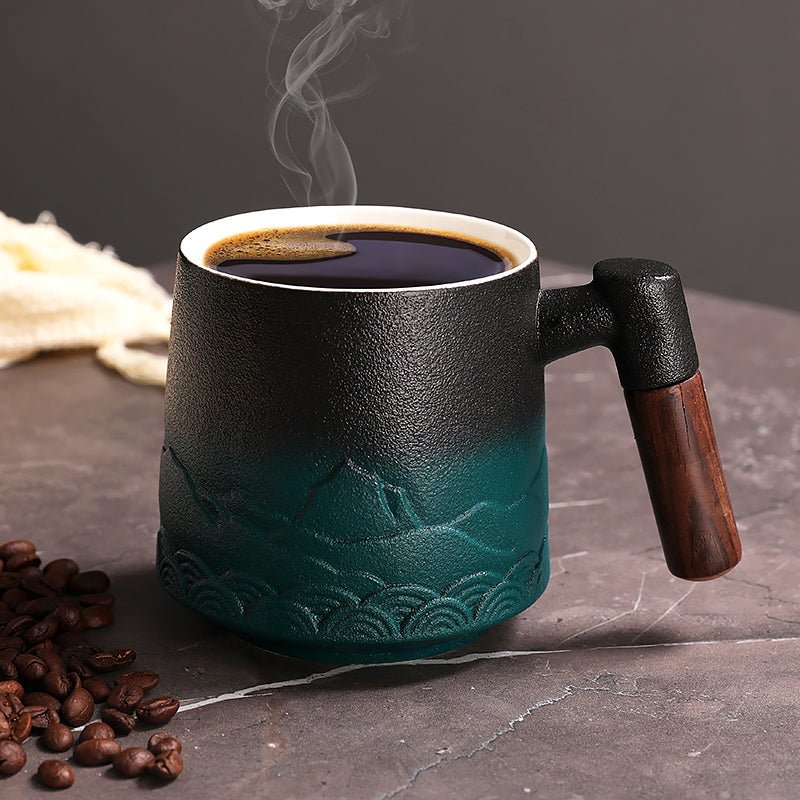
Vintage Pottery Coffee Mugs Shape and Handle Guide: Current Options
Reading time: about 9 minutes
A mug can look generous in a close-up product photo, then feel cramped once two fingers meet the cup wall or the handle bumps the mug beside it. Our vintage pottery coffee mugs shape and handle guide starts with the checks we use while handling and selling this category: visible silhouette, listed dimensions, stated capacity, and handle form. A style name can point you toward a look, but it cannot establish fit.
Begin in our unique coffee mugs collection and open each design that catches your eye. The live product page should be treated as the source of truth for the selected option because dimensions, capacity details, and availability can change. This guide keeps general pottery-mug advice separate from product-specific facts.
Vintage pottery coffee mugs shape and handle guide: which details matter?
Product photos and listed specifications answer different questions. Photos reveal proportion, decoration, taper, and attachment points. Written specifications provide the scale that props and camera angles cannot reliably show.
- Silhouette: Compare the rim width with the body and foot. A straight-sided body, outward flare, rounded belly, or narrow base will occupy space differently on a shelf and desk.
- Listed dimensions: Height and body diameter are not the same as total width including the handle. If a listing does not define which width was measured, do not assume the handle is included.
- Handle form: Look at the opening from inside edge to inside edge, especially at its narrowest point. The outside width of a handle can make the opening appear roomier than it is.
- Capacity: Use the stated capacity, but check whether the page identifies a selected variant or measurement method. A brimful capacity and a comfortable everyday fill are not automatically the same.
- Material and care: Pottery can describe a visual category as well as a manufacturing tradition. Ceramic, stoneware, and porcelain labels are material details, so rely on the wording and care instructions on the individual listing.
We also compare units before judging size. One inch equals 2.54 cm, while 12 US fluid ounces is approximately 355 ml. Converting the listed figures is more dependable than using a spoon, coffee bean, or background prop in a photograph as a scale reference.
How do the Retro, Mountain Sea, and Great Mountain options compare?
The three current pages represent different named design directions. Their names do not establish that they share a mold, handle opening, capacity, or care method, so each page needs to be checked independently.
| Current option | Reader situation | Visible comparison | Listed details to confirm |
|---|---|---|---|
| Retro Coffee Tea Cup | You are choosing specifically for a retro coffee or tea setting. | Trace the outline from rim to foot and inspect both handle attachment points in the product images. | Selected capacity, height, body width, material, and care directions. |
| Mountain Sea Coffee Tea Mug | You want a design built around mountain-and-sea imagery. | Check how the scenic treatment sits on the body and how much room appears between the handle and mug wall. | Current dimensions, stated capacity, selected option, material, and care directions. |
| Great Mountain Coffee Tea Mug | You prefer a mountain-centered design for your desk, kitchen, or gift. | Compare its widest body point, base, rim, and handle form with the other mountain-themed listing. | Current capacity and dimensions rather than assuming they match the Mountain Sea design. |
The two mountain-named mugs should not be treated as interchangeable merely because they share a theme. A common motif does not prove equal shelf footprint, finger clearance, or volume. We also do not assign claims such as better balance, longer heat retention, or greater durability where the visible images and listed facts do not establish them.
Which mug shape fits a kitchen counter or office desk?
At a kitchen counter, a mug competes with the grinder, kettle, dripper, and other cups. On an office desk, the base and projecting handle matter as much as the body capacity. We compare the listed measurements with the actual space rather than relying on an impression of compactness.
- Lower and wider forms need more shelf and coaster width but less vertical cabinet clearance.
- Taller and narrower forms require enough space below the shelf above, even if their body occupies less horizontal room.
- Flared rims can make the upper part wider than the base, which matters when mugs are stored close together.
- Tapered or footed bodies may have a smaller contact area than their widest exterior point, so compare both figures if they are shown.
Decorative coffee and tea mugs are not automatically travel mugs. If you need a sealed lid, a confirmed vehicle cup-holder fit, or a spill-resistant design, choose a purpose-built travel option unless the product page explicitly lists those features. A vintage appearance does not supply them.
Which handle form is likely to suit your grip?
Handle comfort is personal, but it can still be assessed methodically. Rounded loops, squared loops, and compact ear-shaped handles create different contact points. Photos can show the form; they cannot prove how the loaded mug will feel in your hand.
- Measure the vertical opening inside the handle of a mug you already find comfortable.
- Measure the horizontal clearance from the cup wall to the inside edge of that handle.
- Compare those measurements with any listed dimensions and the clearest side-view product image.
- Check whether your fingers would meet the mug wall, especially if you wear rings or prefer a three- or four-finger grip.
A thick-looking handle may still have a compact opening, while a visually slim handle can project farther from the body. If wall and handle thickness are central to your decision, our thick ceramic coffee mugs shape and handle guide treats thickness as a separate buying variable. Do not infer it solely from vintage styling or shadow in a photograph.
How should capacity and exterior dimensions be read together?
Capacity describes how much liquid the vessel is stated to hold. Exterior dimensions describe how much physical space it uses. Two mugs can appear similar in a cropped image while differing in either measurement, and a broad decorative body does not guarantee a larger usable fill.
- Black coffee: Match the stated capacity to the amount you normally brew, leaving enough room to carry the mug without filling to the rim.
- Milk-based coffee: Account for milk and foam instead of selecting capacity from the espresso volume alone.
- Iced coffee: Ice displaces liquid and needs rim clearance. A mug that suits hot coffee may not hold the same finished iced drink.
- Loose-leaf tea: Capacity alone does not confirm that an infuser will fit. Rim diameter and internal shape also matter.
If 12 oz is your fixed target, compare the product page figures with our focused 12 oz ceramic coffee mugs shape and handle guide. Do not round an unspecified capacity up to the size you want or assume that every option within one design has identical measurements.
What should you check for glaze, care, and condition?
Color and glaze help create the vintage effect, but finish is not a substitute for a material specification. Before using a new mug, our team checks the functional areas that can be missed during a quick gift unboxing.
- Inspect the rim: Look for chips, sharp points, or cracks crossing the drinking edge.
- Check the foot: Place the empty mug on a clean, flat counter and confirm that debris or an uneven contact point is not making it rock.
- Examine both handle joins: A color change can be cosmetic, but a visible crack through a join should not be dismissed as part of the vintage style.
- Read each care statement: Microwave-safe and dishwasher-safe are separate claims. Follow the linked listing rather than assuming one implies the other.
Repeated dishwasher cycles involve heat, water pressure, and detergent, so use a dishwasher only where the product instructions permit it. Avoid abrupt thermal changes, such as moving a chilled ceramic mug directly to very hot liquid. Direct stovetop, open-flame, and oven use should also be excluded unless a listing expressly authorizes them.
Which current option matches your buying situation?
- For a retro-focused kitchen: Start with the retro cup design. It directly matches that visual brief, but its selected dimensions, capacity, and handle opening still need to match your daily drink.
- For a landscape-themed desk or tea setup: Open the Mountain Sea mug page. Its named theme fits the situation; use the live images and specifications to decide whether the shape fits your shelf and grip.
- For a mountain-themed gift: Review the Great Mountain mug. Before ordering, compare the recipient's usual drink size and cabinet space. Our coffee mug gift shape and handle guide covers the practical checks that matter after the unboxing.
- For a shopper still deciding on shape: Return to the current unique coffee mug collection and compare at least two pages side by side. This is the better route if handle clearance or a particular capacity matters more than a named design.
None of these is a responsible recommendation from the design name alone. If a required measurement or care claim is absent from the live page, do not fill the gap with an assumption. A different style with clearer specifications is the better purchase.
Frequently asked questions
What should a vintage pottery coffee mugs shape and handle guide compare?
A useful vintage pottery coffee mugs shape and handle guide should compare the visible body profile, listed exterior dimensions, stated capacity, and internal handle clearance. It should also separate facts shown on a product page from general advice about ceramic care, grip, storage, and drink size.
Are the Retro Coffee Tea Cup and mountain-themed mugs the same size?
Do not assume they are the same size. Product names and shared themes do not establish equal capacity or dimensions, so check the current values on each linked page and confirm that you are viewing the intended option.
How can I tell whether a mug handle will fit three or four fingers?
The most useful figures are the internal height and horizontal clearance at the handle's narrowest points. If those measurements are not listed, compare the side-view images with a mug you own, but treat the result as an estimate. Skip the design if a full three- or four-finger grip is non-negotiable and the page does not establish it clearly.
Can a vintage-style pottery mug go in the microwave or dishwasher?
Only use those appliances if the individual product instructions permit them. A vintage finish, glazed surface, or ceramic label does not by itself establish microwave or dishwasher compatibility. Follow the care statement for the selected product and avoid abrupt temperature changes.
Five checks to make before placing the order
- Confirm the exact product and selected option shown on the live page.
- Match the stated capacity to your usual coffee or tea recipe.
- Compare height, body width, and total handle footprint with your shelf, desk, and coaster.
- Inspect the handle opening and both attachment points in the clearest available images.
- Read the material and care details, then inspect the rim, foot, and handle joins after delivery.
Use those five checks while comparing the CoffeifyMug unique coffee mug collection. The best next step is the design that meets both parts of the decision: the vintage look you want and the dimensions, capacity, handle form, and care terms you can verify.
Read more
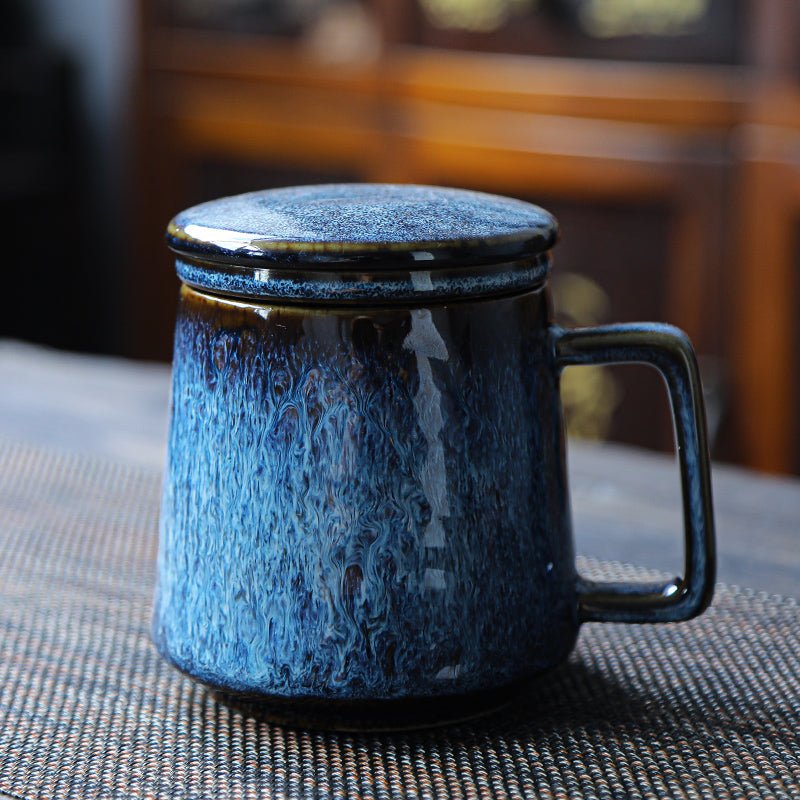
Cafe Au Lait Mug Shape and Handle Guide: 400-480 ml Options
Compare The Flow 400 ml, Morning and Night 440 ml, and The Rock 480 ml by listed capacity, visible shape, handle clearance, and everyday fit. Includes practical limitations and a pre-order checklist.
Per saperne di più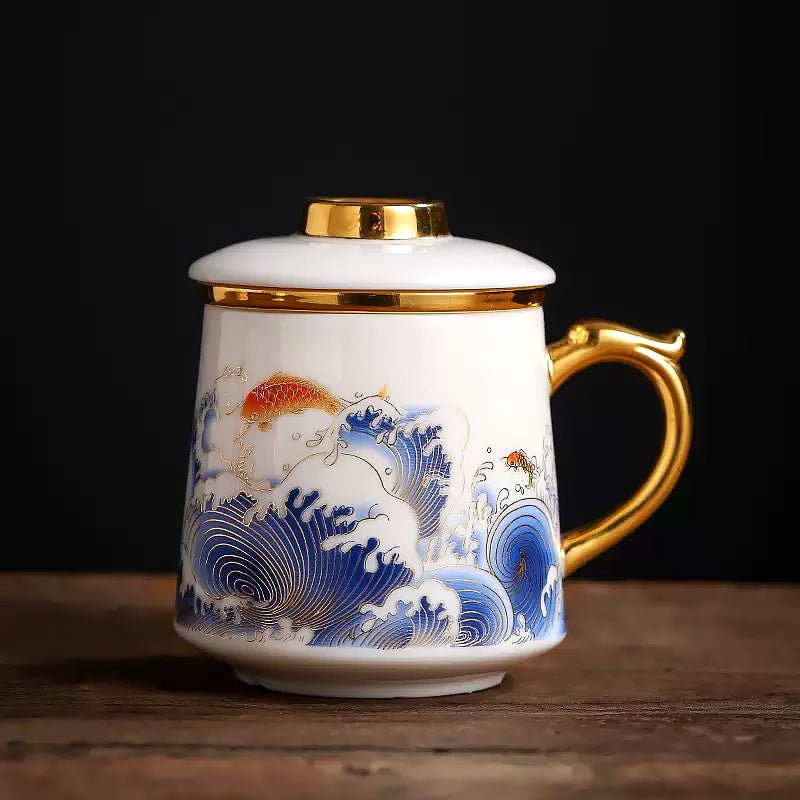
Ceramic Glazed Coffee Mugs Shape and Handle Guide: Current Options
Compare three current CoffeifyMug glazed mug styles by visible body profile, handle clearance, listed capacity and dimensions, care limits, and fit for shelves, desks, or gifting.
Per saperne di più
Commenta
Questo sito è protetto da hCaptcha e applica le Norme sulla privacy e i Termini di servizio di hCaptcha.