
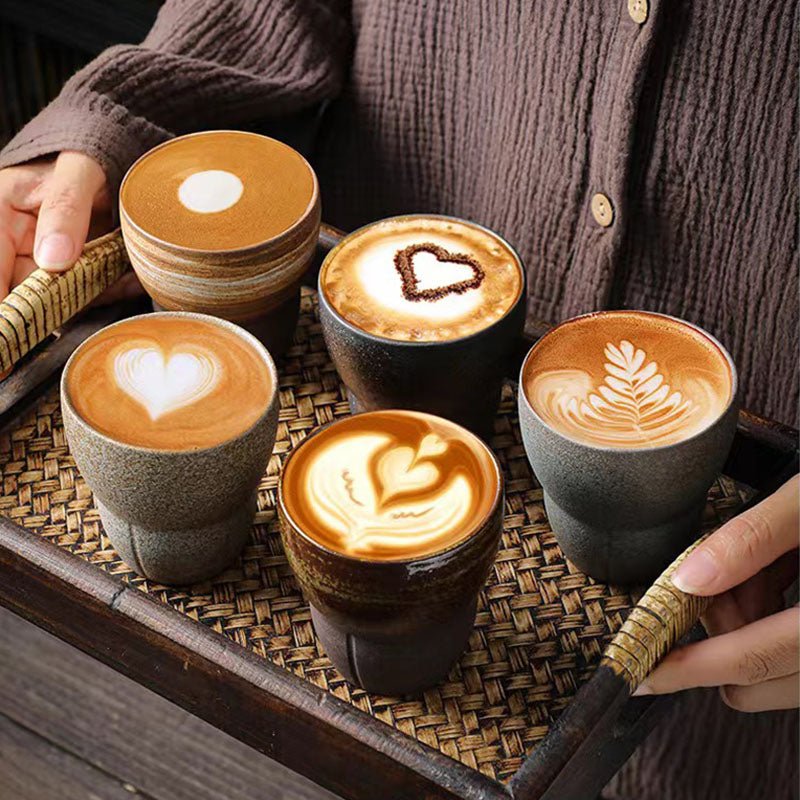
Vintage Pottery Coffee Mugs: A Practical Buying Guide
Reading time: about 8 minutes
A mug can look perfect beside a coffee maker and still disappoint at 7:30 a.m. The handle pinches, the listed capacity leaves no room for milk, or a rough foot ring drags across the counter. Buyers comparing vintage pottery coffee mugs are usually balancing period-inspired character with practical details that affect every pour.
In our store, we start with the intended use and then narrow the design. The Retro Coffee Tea Cup is a direct starting point for shoppers drawn to an explicitly retro theme. If you want to compare that direction with other visual styles first, browse our unique coffee mugs collection. The current product page should always be the source of truth for material, capacity, dimensions, and care instructions.
Are you buying an antique mug or a vintage-style mug?
The word vintage describes two different purchases. An actual vintage mug has age and a history that may be supported by a maker's mark, production details, provenance, or documented condition. A vintage-style mug is a current product designed around an older visual language, such as retro decoration, traditional pottery shapes, or nostalgic color combinations.
Do not assume that a product is antique because its name includes words such as retro or vintage. The Retro Coffee Tea Cup is a catalog product whose name establishes its style direction; the name alone is not proof of age. Buyers seeking collectible pottery should look for explicit age, maker, condition, and authenticity information. Buyers seeking an attractive daily mug may care more about handle comfort, usable capacity, and cleaning instructions.
Our guide to coffee mugs with vintage styling for daily use explores that practical distinction in more detail.
Which vintage pottery coffee mugs fit daily use?
General buying guidance: decoration is only one part of the decision. Before comparing patterns, check the details that will matter at the kitchen counter or office desk.
- Usable drink volume: Measure your normal coffee or tea pour, including milk, foam, or ice. Compare that amount with the listed capacity and leave some room below the rim. A brim-full mug is inconvenient to carry.
- Handle clearance: Look at the opening as well as the outside shape. A small loop may suit a compact cup, while a daily desk mug often feels better when the fingers are not pressed against hot pottery.
- Rim shape: Check for an even, comfortable drinking edge. A thick rim can feel substantial; a finer rim gives a different sipping experience. Neither is automatically better.
- Base and foot ring: A flat base should sit without rocking. If the foot ring is unglazed, check that it appears smooth enough for the counters, desks, and tables where the mug will be used.
- Appliance compatibility: Never infer dishwasher or microwave suitability from the word pottery. Use the care statements on the current product page.
These checks are especially useful during gift unboxings. A recipient may love the design but still leave the mug in a cabinet if it is too small for a usual drink, too tall for a coffee machine, or awkward to hold.
What pottery and glaze details should buyers inspect?
General pottery guidance: pottery is a broad category, not a precise material label. Stoneware, earthenware, and porcelain are different ceramic bodies, and glaze color does not reliably identify which one was used. Only describe a product as a specific material when the listing does so.
Zoomed product images can also help you distinguish intentional surface character from a practical defect. Crazing appears as a network of fine lines in a glaze. Pinholes are tiny pits, while glaze skips are exposed areas where a coating did not cover the body. Some buyers appreciate irregular glaze movement, but an active crack, sharp chip, unstable base, or rough drinking edge is not a decorative advantage.
Handmade and handmade-looking products require the same careful reading. Variation can be part of the intended finish, but the page should explain any material or care claim you are expected to rely on. Our handmade pottery mug ordering checklist covers the questions worth asking before checkout.
What capacity works for coffee, tea, and iced drinks?
General capacity framework: use these ranges as a shopping aid, not as specifications for the linked CoffeifyMug products. Confirm each mug's listed capacity on its product page.
| Usual drink | Capacity range to compare | Main trade-off |
|---|---|---|
| Short coffee or tea with little milk | About 6 to 8 fl oz | Compact footprint, but limited headroom |
| Filtered coffee or everyday tea | About 10 to 12 fl oz | Versatile for most desks and counters |
| Large latte, long tea, or an iced drink | 14 fl oz or more | More room, but greater weight and height |
Capacity is not the only size variable. Check exterior height if the mug must fit under a coffee machine, and compare base width with a cup warmer or vehicle cup holder. Cabinet clearance matters too, particularly if handles prevent close stacking.
A large mug is not automatically the better value. Once filled, it is heavier to lift, takes longer to finish, and occupies more desk space. A smaller coffee or tea cup can be the better match for short drinks and frequent fresh pours.
How should pottery mugs be cleaned and stored?
General care guidance: the manufacturer's instructions override any routine below. If the product page does not explicitly confirm dishwasher or microwave use, we do not assume either feature.
- Avoid sudden temperature changes. Do not move a very cold ceramic mug directly into an extreme heat situation. Gradual temperature changes reduce unnecessary stress on the body and glaze.
- Use a soft sponge for routine washing. Abrasive pads can mark decorative surfaces or dull some finishes.
- Dry the foot ring. Pay attention to any unglazed area on the base before returning the mug to a shelf.
- Stack cautiously. Rim-to-base contact can cause chips, especially when mugs are pushed into a crowded cabinet.
- Inspect between uses. Stop using a mug for drinks if it develops a sharp chip or a crack that changes with pressure or temperature.
Dishwasher convenience can matter for a busy household, but repeated cycles should only be part of the plan when the listing supports them. A collector, a buyer choosing delicate decoration, or anyone uncertain about the care label may be better served by hand washing.
Which CoffeifyMug design matches your room or gift recipient?
The product names provide a useful first filter for visual theme. They do not replace checking the current specifications, images, and care details on each page.
- Situation: a retro kitchen, nostalgic tea setup, or vintage-inspired desk. Why it fits: the Retro Coffee Tea Cup explicitly centers retro styling and coffee or tea use in its product name. Open the listing next to your usual mug and compare the stated measurements and capacity.
- Situation: a gift recipient who likes both coastal and mountain imagery. Why it fits: the Mountain Sea Coffee Tea Mug names both scenic themes, making it the most relevant visual starting point of these three products. Confirm the current page details before treating it as a size or material match.
- Situation: a cabin, hiking-themed room, or mountain-focused collection. Why it fits: the Great Mountain Coffee Tea Mug puts the mountain theme at the center of the product name. It is the more direct comparison for a shopper who does not need the sea element.
- Situation: you are unsure which motif the recipient will prefer. Why it fits: the unique coffee mugs collection lets you compare a wider range before committing to one visual direction.
These styles are not the right choice for every buyer. Someone seeking a documented antique, a known pottery studio, or a specific historic maker needs provenance details rather than a retro theme. A shopper who prioritizes a matching stackable set, an oversized capacity, or confirmed appliance compatibility should put those requirements ahead of decoration.
What should you verify before placing the order?
Run through this five-point check while the product page is open:
- The material is explicitly named rather than inferred from appearance.
- The listed capacity accommodates your normal drink with headroom.
- The height, base, rim, and handle suit your machine, shelf, and grip.
- Dishwasher and microwave claims are clearly stated if you need them.
- The design fits the intended kitchen, office, display shelf, or gift recipient.
That short comparison prevents the most common mismatch: buying for the photograph and discovering after the first pour that the mug does not fit the routine.
Frequently asked questions
Can vintage pottery coffee mugs go in the dishwasher?
Not based on the style label alone. Check the exact care instructions on the product page, because pottery body, glaze, decoration, and applied finishes can have different requirements. If dishwasher use is not stated, hand washing is the cautious option.
How can I tell if a pottery mug is genuinely vintage?
Look for an explicit age statement, maker's mark, production information, provenance, and a clear condition description. Words such as retro or vintage-style describe appearance and do not prove that a mug is an antique.
What mug capacity is best for everyday coffee?
Measure the drink you actually prepare, including milk or foam. About 10 to 12 fl oz is a useful general comparison range for many everyday drinks, while smaller pours may suit 6 to 8 fl oz and large or iced drinks may require 14 fl oz or more. Always compare that framework with the capacity stated on the individual listing.
Are glaze lines and small surface variations defects?
Not always. Fine glaze movement, color variation, or an irregular handmade-looking surface may be intentional, while a sharp chip, active crack, unstable base, or rough rim creates a practical problem. Read the product description and inspect the images rather than assuming every variation is either damage or craftsmanship.
Which CoffeifyMug style should I compare first?
Start with the Retro Coffee Tea Cup for an explicitly retro direction, the Mountain Sea Coffee Tea Mug for a combined scenic theme, or the Great Mountain Coffee Tea Mug for a mountain-focused option. Then open the unique coffee mugs collection and compare material, capacity, dimensions, care, and design before ordering.
More from our blog
Read more
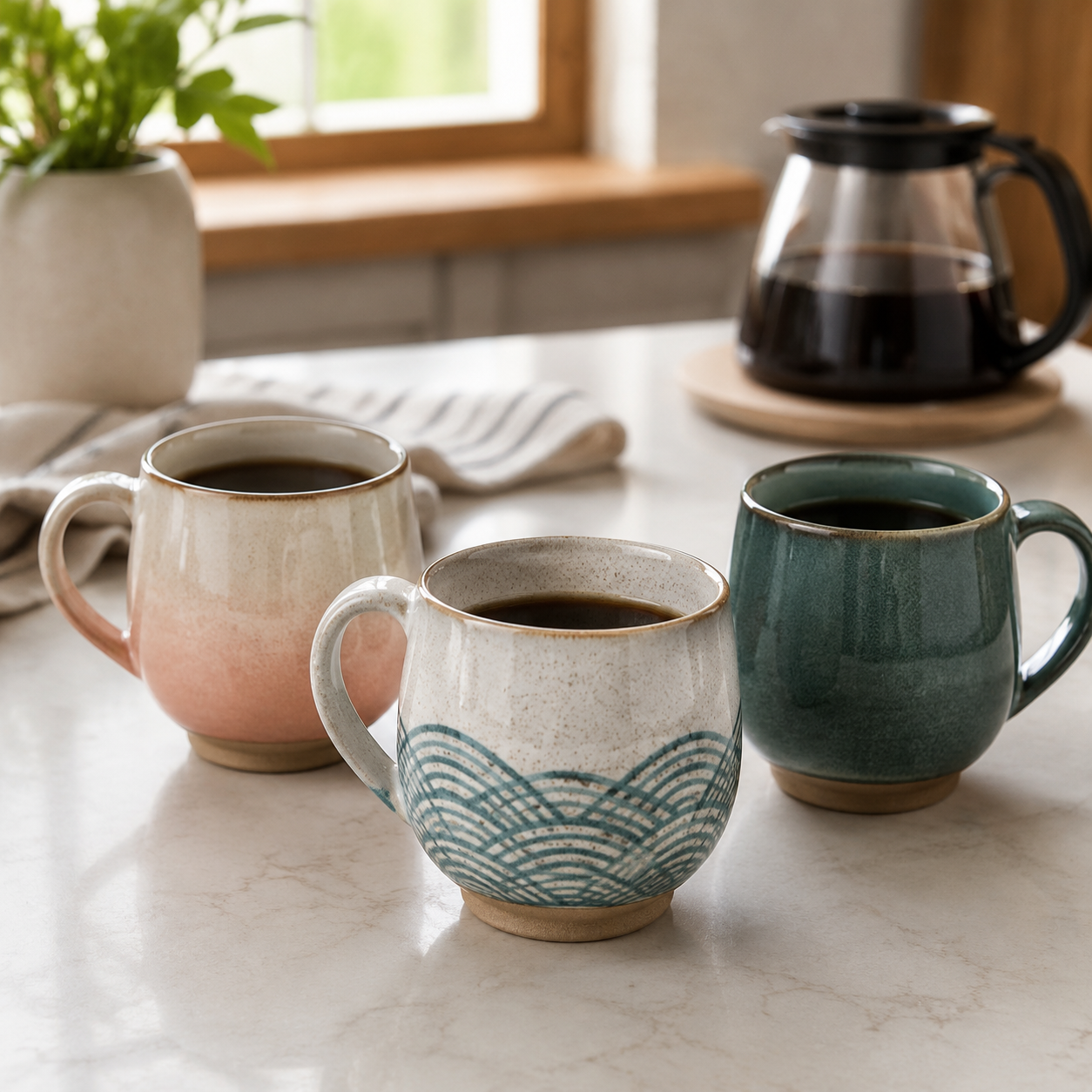
Ceramic Glazed Coffee Mugs: Finish, Fit, and Care
Compare glazed mug finishes without overlooking practical details such as rim quality, handle clearance, usable capacity, care instructions, and desk or kitchen fit.
Per saperne di più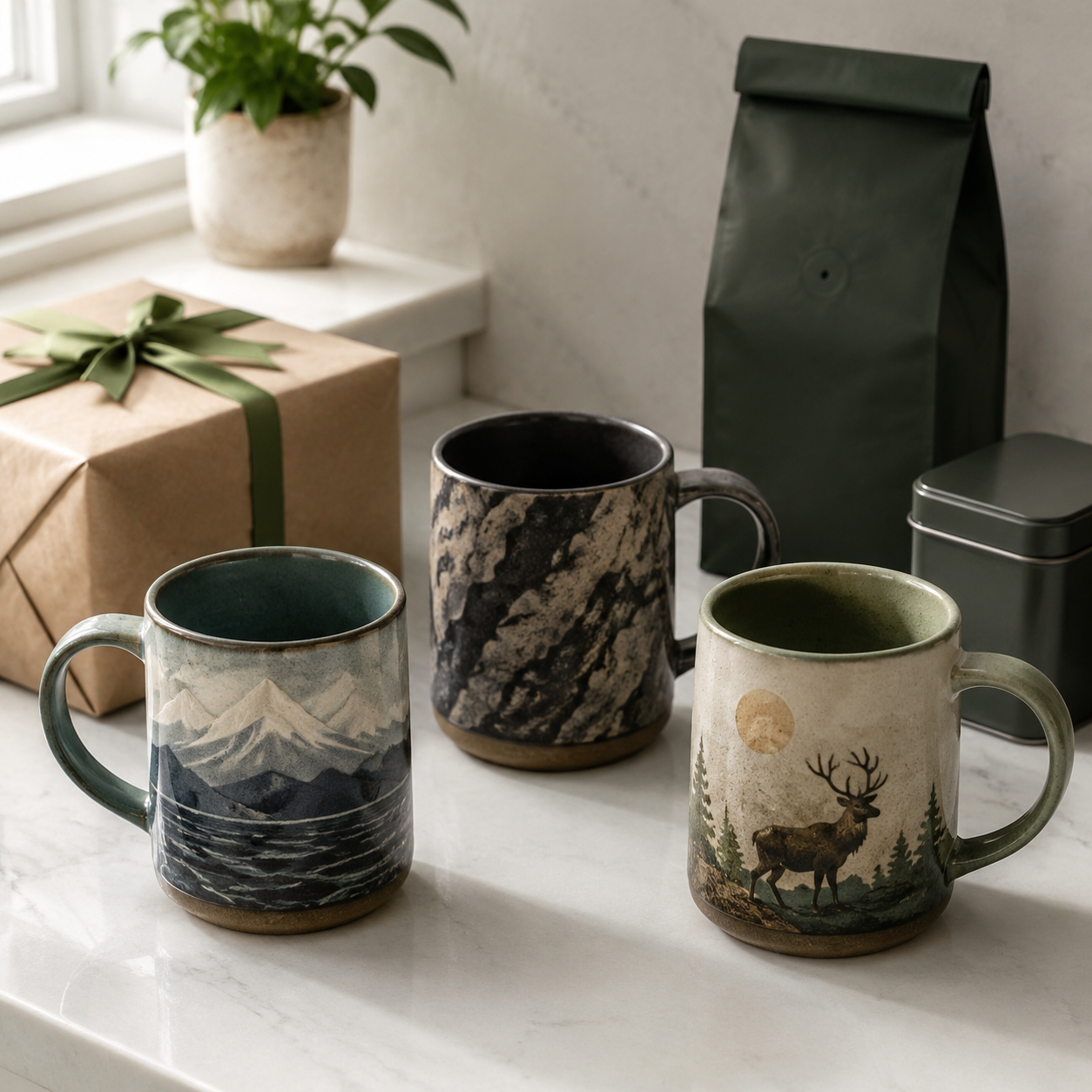
Coffee Mug Gift Ideas for Him: Match the Mug to His Routine
Compare three distinctive mug designs by personality, drink routine, capacity, care, and where he will use the gift. Includes practical checks for fit, finish, and daily use.
Per saperne di più
Commenta
Questo sito è protetto da hCaptcha e applica le Norme sulla privacy e i Termini di servizio di hCaptcha.