
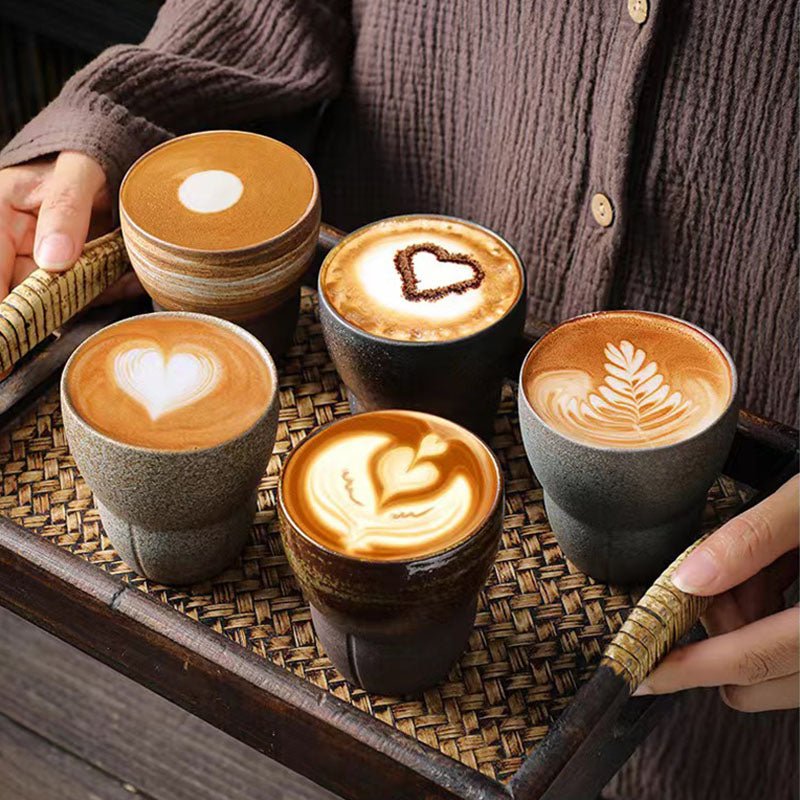
Vintage Pottery Coffee Mugs Capacity Guide: 200-350 ml
Reading time: about 9 minutes
A mug that looks right on the product page can feel completely wrong after the first pour. A 200 ml cup may need an immediate refill at an office desk, while a 350 ml mug can leave too much room around a short coffee. This vintage pottery coffee mugs capacity guide compares the listed sizes before style takes over the buying decision.
Our current comparison covers the 200 ml Retro Coffee Tea Cup, the 270 ml Mountain Sea Coffee Tea Mug, and the 350 ml Great Mountain Coffee Tea Mug. These are nominal capacities shown on the product listings. They should not be read as a promise that every buyer will want to fill a cup to its maximum level.
We handle mug questions from shoppers who often begin with appearance and only later consider serving volume. In our experience, reversing that order prevents more disappointment: settle on the pour, milk allowance, and refill pattern first, then compare the available finishes in our unique coffee mugs collection.
How do 200, 270, and 350 ml compare in a daily routine?
The 70 to 80 ml steps between these products are noticeable. An extra 70 ml can provide room for milk or extend a black coffee, while the jump from 200 to 350 ml adds 150 ml, or three-quarters of the smallest cup's listed capacity.
| Current product | Listed capacity | Approximate US fluid ounces | Practical routine | Main limitation |
|---|---|---|---|---|
| Retro Coffee Tea Cup | 200 ml | 6.8 fl oz | Short coffee, modest tea serving, or planned refills | Limited room for a long drink plus milk |
| Mountain Sea Coffee Tea Mug | 270 ml | 9.1 fl oz | Medium daily pour with some room for additions | Still below a full 12 US fl oz serving |
| Great Mountain Coffee Tea Mug | 350 ml | 11.8 fl oz | Longer coffee, larger tea serving, or fewer refills | Oversized for a short espresso-led drink |
The fluid-ounce figures above are rounded mathematical conversions, not separate claims from the listings. Mug capacity also describes volume rather than outer dimensions, handle clearance, or physical weight. Check the live product page for any other specifications that matter to your shelf, cup holder, or coffee machine.
Who does the 200 ml Retro Coffee Tea Cup fit?
The Retro Coffee Tea Cup is the focused option in this group. Its listed 200 ml capacity suits someone who deliberately pours a smaller coffee, serves tea in modest amounts, or prefers to refill with a fresh, hot drink instead of nursing one large mug.
A sensible buyer situation is a morning coffee at the kitchen counter followed by a second cup later. The smaller capacity keeps each serving contained and makes the refill part of the routine. It can also work for a coffee with a restrained amount of milk, provided the brewed portion leaves enough space.
This is not the best fit for a shopper who regularly prepares a long coffee and adds a generous amount of milk, foam, or ice. Filling close to the top leaves little carrying room, and ice displaces liquid quickly. Buyers who think in 12 oz servings should also recognize that 200 ml is only about 6.8 US fl oz.
For a closer comparison among similarly compact drink formats, our 170, 200, and 270 ml cappuccino mug capacity guide explains how the neighboring sizes change the available room for coffee and milk.
Is the 270 ml Mountain Sea mug the balanced middle size?
For many daily routines, 270 ml is the least disruptive move in either direction. The Mountain Sea Coffee Tea Mug has 70 ml more listed capacity than the Retro cup without moving all the way to the largest option.
That makes it a practical fit for someone who wants a medium black coffee, a moderate tea serving, or a coffee with a measured addition of milk. On an office desk, 270 ml can reduce the quick-refill problem associated with a small cup while avoiding the longer drinking time of a 350 ml serving.
There is still a clear limit. At approximately 9.1 US fl oz, 270 ml is not a disguised 12 oz mug. It may feel small to a buyer accustomed to filling a larger travel cup, and adding substantial foam or ice means reducing the base drink. It is also more capacity than necessary for someone who wants the compact proportions of a short, espresso-led serving.
The middle size is therefore best understood as a compromise, not an automatic winner. Choose it when both 200 ml and 350 ml create obvious drawbacks for your normal pour.
When does the 350 ml Great Mountain mug make more sense?
The Great Mountain Coffee Tea Mug is the largest current option in this comparison, with a listed capacity of 350 ml. That is approximately 11.8 US fl oz, making it the closest of these three to a familiar 12 US fl oz serving.
It fits a long morning coffee, a fuller tea serving, or a desk routine where getting up for a refill is inconvenient. The extra volume also gives the buyer more flexibility to leave carrying space at the top while still serving more liquid than the smaller mugs hold at maximum capacity.
Larger is not automatically more useful. A short coffee can look and feel lost in a 350 ml vessel, and a full serving may cool before a slow drinker finishes it. More liquid also means more carried weight even though this guide does not make a claim about the mug's empty weight. Buyers who prefer several fresh pours may get better daily use from the 200 or 270 ml option.
If the familiar 12 oz reference point is central to your decision, read our 12 oz ceramic coffee mugs capacity guide before treating 350 ml and 12 US fl oz as perfectly interchangeable.
How much capacity should you reserve for milk, foam, or ice?
Listed capacity is a ceiling for comparison, not necessarily the ideal working pour. A cup filled close to the rim is awkward to carry from a kitchen counter to a desk. Milk, foam, and ice also occupy space that would otherwise hold brewed coffee or tea.
Use this simple planning sequence before selecting a mug:
- Measure the base drink. Pour your usual brewed coffee, espresso plus water, or tea into a measuring vessel.
- Add the normal extras. Include the milk or creamer you actually use rather than an estimated splash.
- Allow carrying room. Do not plan around filling to the absolute top if you walk with the mug.
- Account for displaced volume. Ice and thick foam reduce the amount of liquid that fits in the same stated capacity.
- Compare the total with 200, 270, and 350 ml. Move up a size when your routine leaves no practical headroom.
As a general example, a drink totaling nearly 200 ml before foam is unlikely to be comfortable in the 200 ml cup. That does not change the product's stated capacity; it means the serving routine and the maximum volume are too close. The 270 ml option provides more margin, while 350 ml is better when the finished drink itself is genuinely large.
For buyers who mainly prepare Americanos, the 200, 270, and 350 ml Americano capacity comparison applies the same three sizes to espresso-and-water ratios without turning this article into a broader coffee recipe guide.
What should pottery mug buyers verify beyond capacity?
Capacity can narrow the choice, but it does not answer every ownership question. Product-specific care and compatibility claims should come from the live listing. We do not infer that a mug is dishwasher-safe, microwave-safe, or suitable for direct heat simply because it is described or styled as pottery drinkware.
Before ordering and again during the first unboxing, use a short inspection routine:
- Read the current product page for material, care, and compatibility information rather than assuming all pottery mugs behave alike.
- Check the rim and base for chips before the first drink.
- Inspect the handle attachment areas for visible cracking or separation.
- Look at the glazed drinking surface for damage that is different from intentional color or finish variation.
- Confirm that the mug sits steadily on a flat counter before filling it with a hot drink.
- Avoid sudden temperature changes unless the product instructions explicitly permit the intended use.
These are general handling checks, not claims that the three products have those defects. Pottery-style finishes can also make visual variation part of the design, so the product photographs and listing description should be the reference for what is intentional. A buyer who needs exact stackability, a sealed travel lid, or guaranteed vehicle cup-holder compatibility should choose a style specifically listed for that purpose instead.
Frequently asked questions
Is a 200 ml vintage pottery coffee mug large enough for daily coffee?
It is large enough for a short daily coffee or a routine built around smaller, fresher refills. It is not a good match for someone who expects a 12 oz serving or adds a large amount of milk, foam, or ice.
How should I use this vintage pottery coffee mugs capacity guide if I add milk?
Measure the coffee and milk together, then choose a listed capacity above that combined amount so the mug is not filled to the rim. The 270 ml or 350 ml option will usually offer more flexibility than 200 ml, but the correct choice depends on your measured recipe.
Which current mug is closest to a 12 oz capacity?
The Great Mountain Coffee Tea Mug is listed at 350 ml, approximately 11.8 US fl oz, so it is the closest of these three. The conversion is rounded, and buyers should not treat 350 ml as exactly equal to 12 US fl oz.
Should I choose 270 ml or 350 ml for an office desk?
Choose 270 ml if you want a moderate serving and do not mind a later refill. Choose 350 ml if fewer trips for coffee matter more, provided you normally finish a larger drink before it cools.
Are these vintage pottery mugs dishwasher- and microwave-safe?
Capacity alone does not establish dishwasher or microwave compatibility. Read the care and use information on the current product page before placing any mug in a dishwasher or microwave, and do not infer compatibility from its appearance.
Which current vintage pottery mug should you open next?
Use one final checklist: choose 200 ml for short servings and planned refills, 270 ml for a balanced medium pour, or 350 ml for a fuller drink and fewer refills. Then verify the live listing's care details and compare the available design with the rest of our unique coffee mugs. Capacity should eliminate the wrong fit first; the finish can decide between the options that remain.
Read more
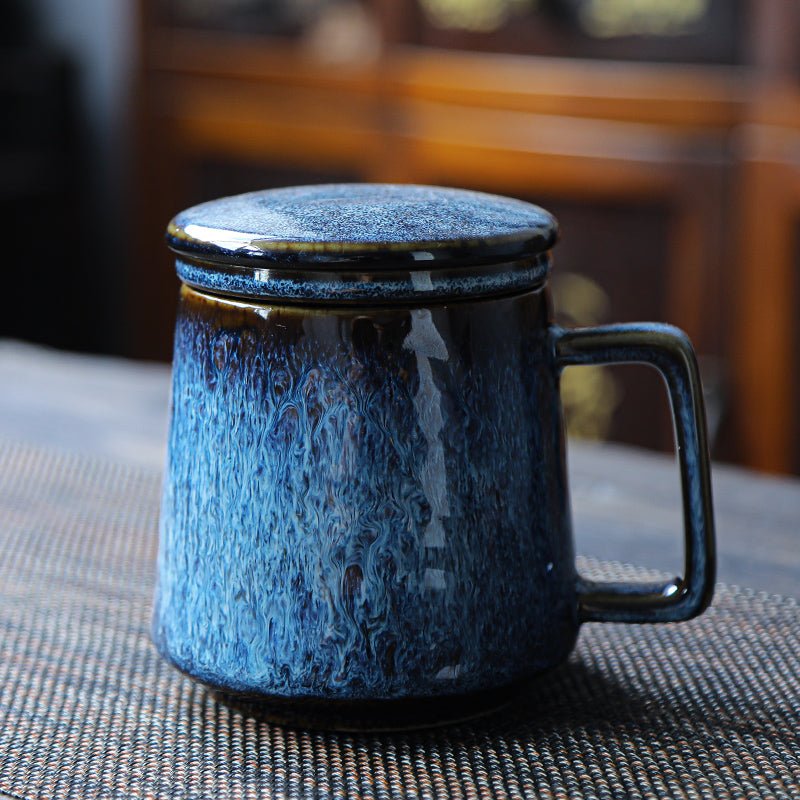
Cafe Au Lait Mug Capacity Guide: 400, 440, or 480 ml?
Compare CoffeifyMug's current 400, 440, and 480 ml mugs by pour size, refill routine, handle comfort, and everyday fit. See which capacity makes sense for your kitchen counter, office desk, or gift...
Per saperne di più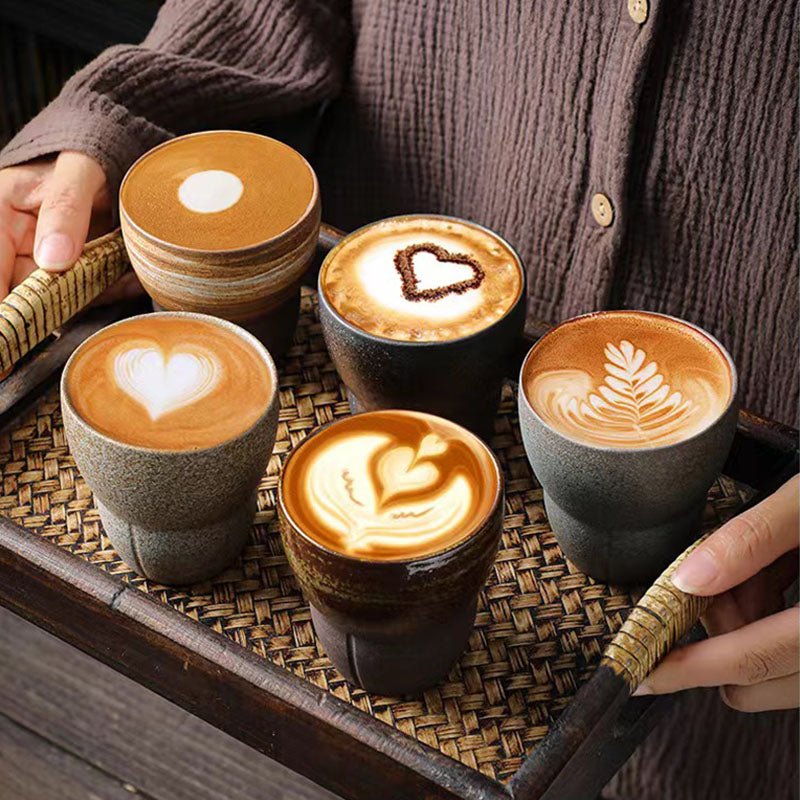
Small Ceramic Coffee Cup Capacity Guide: Current Size Fit
Compare current 170, 200, and 270 ml ceramic cups by serving size, refill pattern, headspace, and daily routine. See which CoffeifyMug product best matches a short coffee, measured pour, or longer ...
Per saperne di più
Commenta
Questo sito è protetto da hCaptcha e applica le Norme sulla privacy e i Termini di servizio di hCaptcha.