
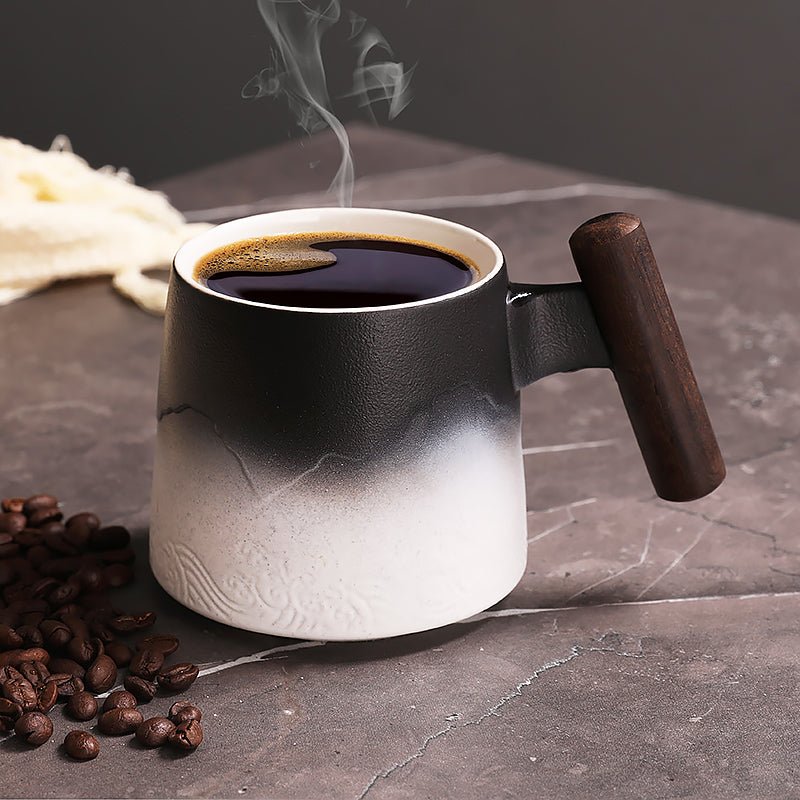
Stacked Coffee Mugs: What Buyers Should Check Before Ordering
Reading time: about 8 minutes
A mug that stacks neatly can keep a cabinet calm. The wrong mug does the opposite: it wobbles on top of another cup, chips at the rim when you pull it down, or sits so tall that the shelf door brushes the handle. We see that most often in small kitchens, office break rooms, and gift boxes where the buyer wants a polished look without giving up everyday use.
Why do stacked coffee mugs work better in some kitchens than others?
Stacked coffee mugs are a storage decision first and a style decision second. In a deep cabinet with enough vertical clearance, they save shelf space and keep a matching set together. On a crowded counter or open shelf, they also reduce visual clutter, which matters if your mug collection doubles as decor.
The trade-off is obvious. A mug that looks beautiful on a shelf can still be awkward to use if the handle is too tight for two fingers, the body is too bulbous to sit steadily on another mug, or the base has a foot ring that catches instead of settling. That is why we treat stackability as a real fit issue, not just a design detail.
If you want to compare more than one shape, start with our all collection and look at a few styles side by side. For example, the Handbag Coffee Tea Mug leans more decorative, while the White Golden Waves Tall Coffee Tea Mug and Mountain Tall Coffee Tea Mug show how a taller silhouette changes the way a mug sits in a cabinet and on a desk.
What should you check before you order?
We check the same few things every time because they decide whether a mug feels organized or annoying after the first week of use.
| What to check | Why it matters | What can go wrong |
|---|---|---|
| Base diameter and foot ring | These affect how stable the mug sits when stacked | A narrow foot ring can wobble, while an uneven base can rock |
| Handle clearance | Enough room keeps the mug comfortable for everyday pouring | A tight handle can hit the mug above it or feel cramped in the hand |
| Rim thickness | A balanced rim feels better on the lips and is less likely to chip in light use | Very thin rims can feel delicate; very thick rims can feel bulky |
| Body shape | Straighter sides usually stack more cleanly than a wide belly | Bulky curves waste shelf space and can slide around on top of another mug |
| Finish and decoration | Smooth glaze is easier to wipe clean and less likely to snag in storage | Raised texture, metallic accents, or rough seams can collect residue or scratch nearby mugs |
For size-specific shopping, our size guides can help you avoid buying by appearance alone. If you are comparing smaller daily cups, see 12 oz Coffee Mugs: How to Choose the Right Mug for Daily Use. If you lean bigger, our 16 Ounce Coffee Mugs: Size, Materials, and Fit Guide is the better place to start.
Which shapes stack cleanly without wobble?
The cleanest stack usually comes from mugs with a straighter profile, a level base, and a handle that does not flare too far out. A gently tapered wall can still stack well if the foot ring is stable. What causes trouble is the classic oversized silhouette: wide in the middle, narrow at the bottom, and decorated with a handle that sticks out just enough to knock the mug above it off center.
That is why we tell customers to think about the cabinet, not just the countertop. A mug can look balanced from the front and still be a poor stacker if the shelf is shallow, the top shelf is low, or the neighboring plate stack leaves no room to lift it out without bumping the lip.
If your goal is a coordinated shelf, it helps to keep similar heights together. Tall mugs often look cleaner in a row, but they are not always the best choice for tight upper cabinets. A shorter cup is easier to stack and easier to reach. A taller one can feel better for tea, larger pours, or a latte, but it may turn a neat stack into a cramped one.
We see the same trade-off in gifting. A decorative mug can make the unboxing feel special, which is one reason buyers gravitate toward our more styled pieces. The downside is that sculptural shapes are not always the easiest to nest. If presentation matters more than compact storage, that is fine. If you want a mug that disappears neatly into a cupboard, choose a simpler silhouette.
For readers comparing shape versus capacity, our 14 Ounce Coffee Mugs: Size, Fit, and Buying Guide is a useful bridge between compact mugs and larger daily-use styles.
Are stacked coffee mugs good for daily coffee, tea, and gifting?
Yes, if you pick the right style for the job. For drip coffee at home, a mid-size mug tends to be the sweet spot because it holds a practical pour without making the mug feel oversized in the hand. For tea, a taller shape can be useful because it gives you a bit more room for hot water and leaves while still staying visually tidy on the shelf.
In our experience, buyers usually want one of three outcomes:
- A compact mug set that keeps a small kitchen cabinet organized.
- A desk mug that looks good on camera and does not hog space near a laptop.
- A gift mug that opens well in a box and feels more considered than a plain cylinder.
The Handbag Coffee Tea Mug fits the third use case better than the first. It has more visual personality, so it reads like a gift or accent piece. The White Golden Waves Tall Coffee Tea Mug and Mountain Tall Coffee Tea Mug are better if you want a more refined, vertical look on an office desk or breakfast tray.
What these mugs are not ideal for is rough grab-and-go use. If you need something that lives in a car cup holder, survives frequent commuting, or gets tossed into a tote bag, a standard countertop mug is the wrong category. A dedicated travel mug is the better fit. Stacked coffee mugs are for home, office, gifting, and display, not movement.
If you are deciding between everyday volume and a slightly roomier mug, the 16 oz Coffee Mugs: How to Choose the Right Mug for Daily Use article is a practical next read.
How do you care for stacked coffee mugs so they stay clean and chip-free?
Care is where a lot of buyers lose the benefit of a good stack. The mug might arrive in perfect condition, then chip because it was forced into a tight nesting arrangement or put away wet. We handle and pack mugs with that in mind, and we recommend the same habits at home.
- Let each mug dry fully before stacking it away. Moisture trapped between rims can leave spots and make glaze surfaces feel tacky.
- Do not force a mug into a stack if the base ring catches. A gentle fit is fine. A forced fit creates the pressure that chips glaze over time.
- Keep heavier mugs lower in the cabinet and lighter, more decorative pieces above them. That reduces the chance of a slip when you reach in.
- If a mug has metallic-looking decoration or a delicate finish, hand washing is the safer default unless the care instructions say otherwise.
- Check the foot ring now and then. Tiny chips often start there because that is where mugs take the most contact during stacking and unstacking.
Dishwasher cycles are usually hardest on the contact points, not the printed design alone. A mug that goes through repeated wash cycles and still comes out clean is doing its job. But if the glaze is thin, textured, or embellished, we would rather see a quick hand wash than a dull, scuffed finish after a few months.
Frequently asked questions
Do stacked coffee mugs chip more easily than regular mugs?
They can, but only if the stack is tight or the base is uneven. The risk is usually at the rim and foot ring, not the center of the mug. If you leave a little clearance and avoid forcing the fit, stacked storage is very practical.
Are stacked coffee mugs good for small kitchens?
Yes, especially in cabinets with limited shelf width. They reduce clutter and keep a matching set together. The main thing to check is vertical clearance, because a tall stack can solve one storage problem and create another if the shelf is low.
What size stacked coffee mug is best for daily use?
For most people, 12 to 14 ounces is the easiest range to live with because it handles coffee, tea, and milk drinks without feeling oversized. If you usually pour larger servings, a 16 oz mug may be a better fit. Our size guides linked above can help you compare those options against your routine.
Can I put stacked coffee mugs in the dishwasher?
Only if the care instructions say they are dishwasher-safe. Even then, let them cool and dry before stacking them back in the cabinet. That keeps moisture from collecting at the base and helps prevent scuffs at the contact points.
Which stacked coffee mugs make the best gifts?
Decorative mugs usually do best for gifting because they feel more personal when unboxed. A sculptural piece like the Handbag Coffee Tea Mug stands out more than a plain everyday cup, while a tall patterned mug works well if the recipient likes a polished desk or breakfast setup.
If you want the fastest way to compare options, open our all collection, check the base shape and height against your cabinet shelf, then choose the mug that fits both your storage space and your daily pour. That single pass will tell you more than a dozen broad style claims.
Read more
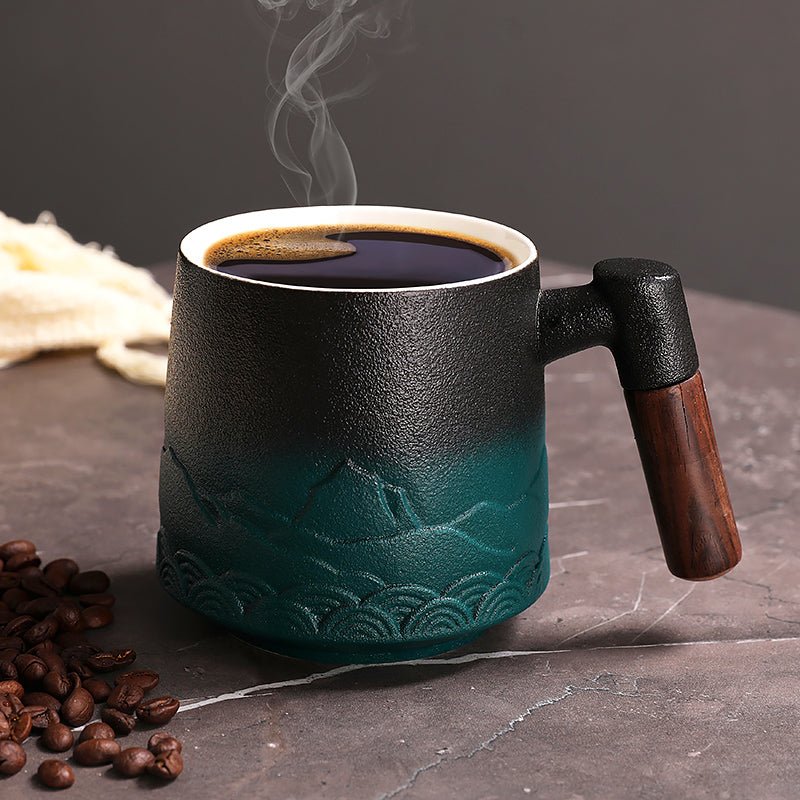
Blank Coffee Mugs: How to Choose the Right Shape and Size
A practical guide to blank coffee mugs that compares shape, size, and finish for everyday use, gifting, and customization. See which mug is easier to hold, easier to decorate, and easier to keep lo...
Per saperne di più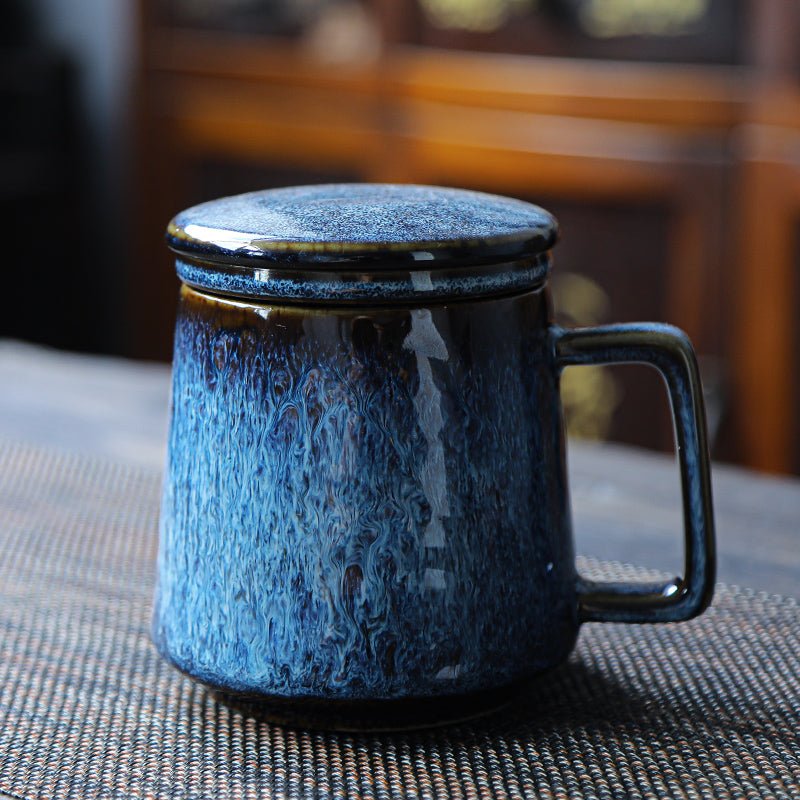
Blue Coffee Mug: Size, Finish, and Best Uses
A blue coffee mug should do more than look good on the shelf. We break down shape, finish, care, and real-world use so you can choose the right one the first time.
Per saperne di più
Commenta
Questo sito è protetto da hCaptcha e applica le Norme sulla privacy e i Termini di servizio di hCaptcha.