
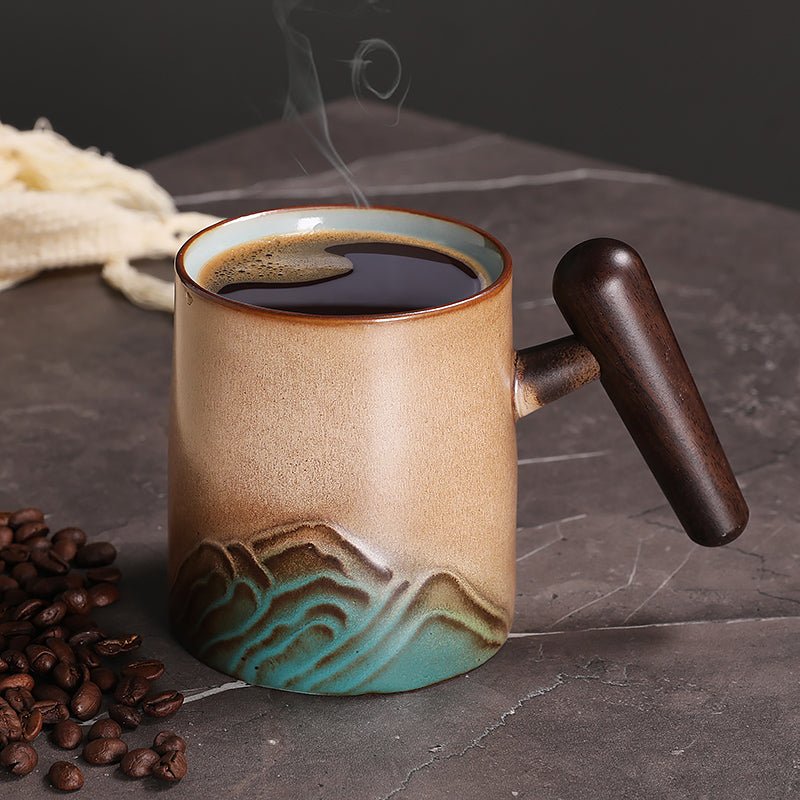
Stacked Coffee Mugs: Fit, Storage, and Buying Tips
Reading time: about 9 minutes
A mug can look perfect on a product page and still turn awkward in a real cabinet. The usual problem is simple: the base rocks, the handle catches the rim above it, or the stack takes up more shelf height than expected. In our store, we see the same pattern again and again, so we judge stacked coffee mugs by how they behave on a kitchen shelf, a crowded office counter, and after a few dishwasher cycles.
What makes stacked coffee mugs worth buying?
The best stacked coffee mugs are not just about saving space. They need a base that sits flat, a shape that centers cleanly on the mug below, and a handle that does not fight the one above it. That sounds basic, but it is where many mugs fail in daily use.
We look for three things first. A stable foot ring keeps the mug from wobbling. A consistent wall thickness helps the mug feel balanced instead of top-heavy. A handle with enough clearance makes it easy to grab the lower mug without bumping the one above it.
Material matters too. Stoneware usually feels heavier and more grounded on a shelf. Porcelain often looks cleaner and can be lighter, which helps when you are stacking more than two mugs. Ceramic is the broad category most shoppers recognize, but the practical difference is how even the base and rim feel, not just the label.
The trade-off is worth saying plainly: the most decorative mug is not always the best stacker. A wide handle, an oversized lip, or a heavily contoured silhouette can look nicer on a table and still be annoying in a cabinet. If your priority is storage first, choose function over ornament.
How do you know if they will actually stack without wobbling?
We test for the kinds of problems shoppers notice only after the box is open. The mug may stack, but does it stack cleanly? That means no side-to-side movement, no rim contact that feels too tight, and no foot ring that lands off-center.
| Check | What it tells you | Why it matters |
|---|---|---|
| Flat base | The mug sits evenly on a counter | Uneven bottoms are the fastest way to get a wobbling stack |
| Foot ring fit | The lower mug has a defined landing point | Helps the mug above it stay centered instead of drifting sideways |
| Rim thickness | The top edge is consistent and not too bulky | A thick or uneven rim can make stacking feel unstable |
| Handle clearance | Your fingers can reach in without scraping the mug above | Important for daily use on a crowded shelf or office cart |
| Glaze finish | The surface looks even at the base and rim | Pooled glaze, rough edges, or tiny chips can signal quality issues |
Common defect modes are easy to miss in photos. Look for a chipped rim, a foot ring that sits crooked, or a handle that is mounted slightly higher on one side than the other. Those details do not sound dramatic until you are trying to pull a mug from the bottom of a stack before coffee.
For shoppers who want a deeper pre-purchase checklist, our guide Stacked Coffee Mugs: What to Check Before You Buy covers the same cabinet-fit questions in more detail. If you are also deciding on capacity, compare that with 12 oz Coffee Mugs: How to Choose the Right Mug for Daily Use and 16 oz Coffee Mugs: How to Choose the Right Mug for Daily Use.
Which mug styles fit different buyers?
If you want to browse current options, start with our full collection and then narrow by shape, handle size, and how much shelf room you actually have. The right choice depends on whether you want a clean everyday mug, a giftable piece, or a taller profile that sits neatly in a row.
| Buyer type | What usually works best | Trade-off |
|---|---|---|
| Small kitchen | Straight-sided mugs with a modest footprint | Less decorative shape, but easier to store in pairs or small stacks |
| Office desk | A mug with a stable base and comfortable handle clearance | Tall silhouettes can crowd monitors or shelves |
| Gift buyer | A visually distinctive mug that still feels usable every day | Some statement shapes are not the easiest to stack |
| Display-first shopper | A piece with strong visual lines and a finish that looks polished on open shelving | May take more care when stacking tightly |
For a tall profile, the Mountain Tall Coffee Tea Mug is a useful reference point if you are comparing cabinet height and hand clearance. The White Golden Waves Tall Coffee Tea Mug gives you a different visual finish to compare against a more minimal kitchen setup. If you want a more sculptural look, the Handbag Coffee Tea Mug is the kind of piece people buy when they care as much about display as storage.
Those product pages are useful not because every mug behaves the same, but because they show how much shape changes the real buying decision. A mug can have a beautiful profile and still be the wrong choice if your shelf is shallow, your cabinet door closes tight, or your hand needs more room around the handle. That is the part shoppers often discover too late.
What should you check before ordering stacked coffee mugs?
Before you click buy, we recommend a short checklist that reflects how mugs actually get used in homes and offices. This is the same advice we give customers who are trying to decide whether a mug belongs in a daily rotation or only on a display shelf.
- Measure the shelf height where the mugs will live, not just the cabinet opening.
- Check whether the handle clears the mug above it when you lift the lower one out.
- Look for a flat base and an even foot ring so the stack does not drift.
- Confirm whether the finish is meant for everyday washing or more careful hand washing.
- Decide whether you want a mug that stacks neatly or a mug that stands out visually.
- Think about the size you actually drink from, not the size that looks best online.
That last point matters more than most shoppers expect. A mug that is too large can be awkward on a stacked shelf, while a smaller mug may be easier to store but not satisfy a long coffee routine. If you are still deciding on capacity, the right size guide matters as much as the shape. We use capacity as a filter, not a promise that bigger is better.
There is also a practical limit to how decorative you want to go. A hand-finished glaze, embossed surface, or unusual handle can be a great purchase for a gift or a feature shelf, but it may not be the best choice if you plan to stack and unstack the mug several times a day. We call that a style win and a storage compromise.
Are stacked coffee mugs practical for dishwashers and daily use?
For everyday kitchens, the answer depends on the finish and how carefully the mugs are made. If a mug is labeled dishwasher safe, that makes routine cleanup easier. If it has delicate detailing, metallic trim, or a rough decorative edge, hand washing is usually the safer option. Either way, let mugs dry fully before putting them back in a stack.
That drying step is easy to ignore and easy to regret. Restacking a damp mug can leave water marks around the foot ring, and repeated moisture in a tight cabinet is not something we recommend. We also advise avoiding tight, forced stacks with chipped mugs. One small chip can become a bigger problem when it sits against another mug day after day.
On the daily-use side, stacked mugs are best when you have a routine. A home kitchen with one coffee station, an office break area, or a guest shelf all benefit from a neat stack that is easy to pull apart. They are less ideal if you need a mug that travels often, lives in a car cup holder, or gets tossed into a bag. That is a different product category entirely.
Who should choose a different mug style instead?
If you want a very large mug, a wide latte bowl shape, or a handle that fits oversized hands, stacked coffee mugs may not be the best match. The shapes that stack well are often more disciplined in profile. They are designed to be orderly. That is a strength, but it also means they are not always the most spacious or the most casual-looking option.
Choose a different style if you care more about one of these needs:
- You want maximum volume for long work sessions.
- You prefer a wide mouth for milk-heavy drinks.
- You need a mug that is easy to grip with a larger handle.
- You want a piece that stands alone on the table rather than sitting in a stack.
That is why we do not treat stackability as the only feature that matters. A mug can be well made and still be the wrong mug for your routine. The better question is whether the shape solves your actual storage problem without creating a drinking problem.
Frequently asked questions
Do stacked coffee mugs save cabinet space?
Yes, if the mugs are shaped to sit securely on each other. The biggest benefit comes from reduced shelf clutter and easier grouping, especially in smaller kitchens or office cabinets. The trade-off is that the mugs need enough vertical clearance, so a tall stack is not always a space saver if your shelves are shallow.
What material is best for stacked coffee mugs?
Stoneware, porcelain, and ceramic can all work, but the shape and finish matter more than the label alone. A flat base, even rim, and balanced handle placement are what make the stack feel stable. If you want a lighter feel and a cleaner look, porcelain is often appealing; if you want a heavier, sturdier feel, stoneware is usually more reassuring.
Can I stack different mug shapes together?
You can, but we do not recommend forcing mismatched mugs into the same stack. Different rim widths and handle positions can create wobble or make the mugs hard to lift. If the shapes are not similar, store them side by side or group them by size instead.
Are tall mugs good for stacking?
They can be, but only if your shelf height and cabinet depth are generous enough. Tall mugs are often better for display rows or loose grouping than for tight, nested stacking. If your cabinet is compact, a shorter profile is usually easier to live with every day.
What is the easiest mug size to store if I want a neat stack?
For many buyers, a mid-size everyday mug is the easiest to manage because it balances hand feel with shelf fit. Smaller mugs are simpler to stack, but they may not suit a full coffee or tea routine. If you are deciding between sizes, start with the capacity guide that matches how much you actually drink.
If you want to compare shapes and sizes in one place, start with our collection, then narrow by cabinet height, handle clearance, and whether the mug is meant for daily use or display. That is the fastest way to find stacked coffee mugs that look neat and still work on a real shelf.
Read more
Bee Coffee Mug: What to Check Before You Buy
A bee coffee mug should do more than look cute on the counter. We break down the details that matter most: size, handle feel, print quality, care, and which nature-themed alternatives are worth con...
Per saperne di più
Polish Coffee Mug Buying Guide for Smooth Finish and Daily Use
A polished coffee mug looks great on the counter, but the finish, rim shape, and care instructions decide whether it stays that way after real daily use. Here is what we check before we stock or re...
Per saperne di più
Commenta
Questo sito è protetto da hCaptcha e applica le Norme sulla privacy e i Termini di servizio di hCaptcha.