
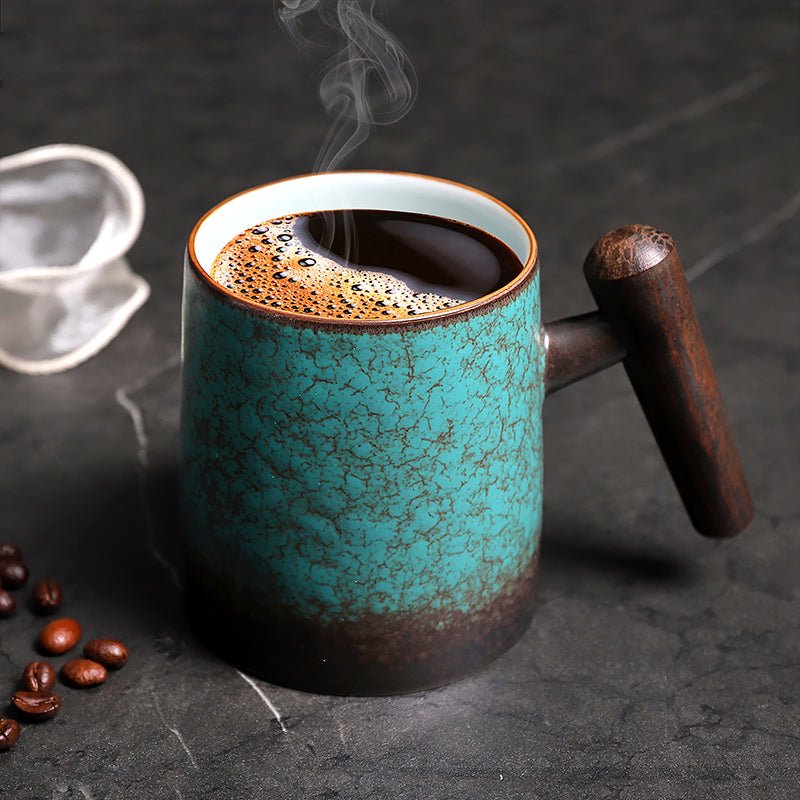
Current piccolo cup shape and handle guide: 170, 250, 270 ml
Reading time: about 9 minutes
A cup can look compact in a product photo and still take up more hand, shelf, or saucer space than expected. In our store, the useful starting point for this piccolo cup shape and handle guide is the combination of listed capacity, visible body profile, and handle form. The current comparison is the Retro Coffee Tea Cup at 170 ml, the Ball Handled Coffee Tea Mug at 250 ml, and the Emerald Coffee Tea Mug at 270 ml. We present them as current cups a shopper may consider for a piccolo-style serving, not as certified piccolo cups. We also do not assign a fixed milk-to-coffee ratio or claim unlisted barista testing or cafe provenance.
Start with those three product pages if one of the capacities already fits your routine. If none does, the wider unique coffee mugs collection gives you other shapes to compare. Remember that capacity describes potential volume. It does not establish the comfortable fill line, outside dimensions, or the recipe you should use.
What do 170, 250, and 270 ml change in daily use?
The capacity gaps create three distinct buying decisions. The Retro holds 80 ml less than the Ball Handle and 100 ml less than the Emerald. The Ball Handle and Emerald are much closer, with only 20 ml between their listed capacities.
| Current option | Listed capacity | Useful starting situation | Main trade-off |
|---|---|---|---|
| Retro | 170 ml | A shopper who wants the smallest listed capacity and a firmer limit on the total pour | Least room for milk, water, foam, or other additions |
| Ball Handle | 250 ml | A middle-capacity choice for someone drawn to a handle-led design | The named ball handle may not suit someone who specifically wants a conventional finger loop |
| Emerald | 270 ml | The most headroom of these three for coffee, tea, or a less restricted pour | May be more cup than needed for a deliberately small serving |
The 20 ml gap between 250 and 270 ml is modest, so shape and handle preference may decide that comparison. The 80 ml jump from 170 to 250 ml is more likely to change how much room remains after the coffee is poured. If your priority is an even more espresso-led vessel, our ceramic espresso cup shape and handle guide covers that neighboring category.
A piccolo cup shape and handle guide to visible silhouettes
Capacity can be distributed through height, rim width, body curvature, and the relationship between the base and widest point. That is why we compare the live product images alongside the listed measurements instead of judging size from a single isolated photo.
- Rim width: Check how open the cup appears and how much space the top occupies beside a spoon or small plate.
- Body profile: A tall, narrow body and a low, broad body can hold similar volumes while fitting very differently on a shelf.
- Base or foot: Compare the base diameter with any saucer recess you already own; saucer compatibility should not be assumed.
- Handle projection: Include the handle when checking cabinet depth, gift packaging, or space beside an office keyboard.
Retro 170 ml: smallest listed capacity
For a shopper whose first priority is the smallest verified capacity and a retro visual character, the Retro is the logical first page to open. Its 170 ml limit supports a more compact serving decision, but capacity alone does not prove it has the smallest outside footprint. Compare the current height, rim width, widest body point, and handle projection with the space available on your counter or shelf.
Ball Handle 250 ml: handle as the focal point
The Ball Handle suits a shopper who wants the grip to be part of the cup's visible design. Its 250 ml capacity adds 80 ml over the Retro, while the named ball-form handle requires a different grip decision from a familiar loop. If slipping two or three fingers through a handle is essential, inspect the product photography closely before choosing it.
Emerald 270 ml: the largest current capacity
The Emerald is the first comparison for someone who wants the most volume of these three and likes the appearance shown on its live listing. It can make sense for a gift recipient who takes a fuller coffee or also uses the cup for tea. It is not the strongest match for a buyer trying to create the smallest-looking place setting.
How does a ball handle change the grip decision?
Handle comfort is personal, and a photo cannot certify that one form will be easier for every hand. In our experience selling shaped drinkware, shoppers often check the cup body carefully but miss handle clearance and the full width created by the handle.
- Decide whether you normally insert fingers through a loop or hold a handle between fingertips.
- Check the space between the handle and cup body, especially if you have larger fingers.
- Remember that carrying more liquid means carrying more mass; a grip that feels decorative when empty still needs to suit your normal fill.
- Do not assume a sculptural handle remains cool during use unless the product information explicitly supports that claim.
The 250 ml Ball Handled mug is the relevant next step if the unusual grip is the main attraction. For another compact milk-drink comparison, the ceramic cortado cup shape and handle options article gives useful neighboring context.
Which option fits a kitchen counter, office desk, or gift?
The same cup can be convenient in one setting and awkward in another. Match the capacity and visible form to where the cup will actually spend its time.
- Small kitchen or open shelf: Start with the 170 ml Retro because it has the lowest listed capacity, then verify its complete outside dimensions. Do not assume it stacks unless the listing says or shows that it does.
- Office desk: The 250 ml Ball Handle provides a middle-capacity option, but check how far the handle projects toward a mouse, notebook, or monitor stand.
- Gift unboxing: Consider the 270 ml Emerald for a recipient who likes its visible style and takes a less restricted pour. Confirm the care instructions first if that person expects every cup to go through regular dishwasher cycles.
- Milk-based coffee: The 250 and 270 ml choices leave more total capacity than the Retro, without establishing any required espresso-to-milk ratio. Our flat white cup guide for 200, 250, and 270 ml provides a closer comparison of those larger sizes.
- Large iced drinks or commuting: These are not our first recommendations for lots of ice, a leak-resistant lid, or vehicle cup-holder use. A larger or travel-specific style would be more appropriate.
What should you verify about dimensions, material, and care?
The fixed catalog facts used here are the 170, 250, and 270 ml capacities. Current dimensions, material, finish, and care directions should be taken from the live product pages. We do not treat photo scale as a measurement or assume that a glazed-looking cup must be ceramic, porcelain, or stoneware.
- Record four dimensions: Note the height, rim diameter, base diameter, and full width including the handle. Use the full width for cabinets and desk placement, not just the body diameter.
- Confirm the material and finish: Read the current specification rather than inferring material from color or shine. This also matters if you are trying to match existing tableware.
- Read the appliance-care line: Only use a dishwasher or microwave if the current listing explicitly permits it. If care information is absent, the conservative approach is hand washing with mild dish soap and a non-abrasive sponge, followed by complete drying.
- Inspect the cup at unboxing: Check the rim for chips, both handle attachment points for hairline cracks, the foot for rough damage, and the base for rocking on a flat counter. Do not use a cup with a crack or structural handle damage.
- Avoid forced stacking: Sculptural bodies and projecting handles can make contact before the cups are securely nested. Store them individually if the product shape does not clearly support stacking.
These checks are particularly useful for gifts. A cup may suit the recipient's style but still be a poor choice if its dimensions miss their shelf clearance or its care needs do not match a daily dishwasher routine.
Current options matched to real serving habits
- Choose Retro 170 ml if you want the smallest listed capacity, prefer a shorter-serving limit, and are prepared to confirm the live dimensions before checkout.
- Choose Ball Handle 250 ml if you want more room than the Retro and the ball-form grip is a deliberate part of the purchase, not an ergonomic detail you have overlooked.
- Choose Emerald 270 ml if the largest current capacity and its visible style matter more than creating a notably small cup presentation.
- Choose another collection option if you need a large iced drink, travel lid, confirmed stacking, or a different handle arrangement.
None of the three is an automatic winner. The useful distinction is simple: Retro creates the clearest capacity limit, Ball Handle makes grip form central to the decision, and Emerald provides the most listed volume.
A 30-second checkout checklist
- Pick the maximum capacity you will realistically use: 170, 250, or 270 ml.
- Compare the rim, body, base, and handle in the current product images.
- Check height and full width against your shelf, saucer, desk, or gift box.
- Confirm the exact material and finish on the live listing.
- Read the dishwasher and microwave instructions rather than assuming compatibility.
- Reject any option whose handle form conflicts with your usual grip.
Frequently asked questions
What size cup is best for a piccolo coffee?
There is no single certified piccolo capacity used in this comparison. This piccolo cup shape and handle guide treats the 170 ml Retro as the smallest current option, while recognizing that your coffee and milk quantities determine how much of that capacity you use.
Is a 250 ml cup too large for a piccolo-style drink?
It may be larger than you need if you want the cup itself to enforce a small total pour. The 250 ml Ball Handle can still be partially filled, but the drink will occupy less of the cup, so the 170 ml Retro may create a more intentional compact presentation.
Is a ball handle easier to hold than a loop handle?
Not for every shopper. A ball-form handle can suit a fingertip or pinching grip, while someone who prefers putting several fingers through a loop may find it less familiar. Use the live images to judge clearance and contact area before ordering.
Are the Retro, Ball Handle, and Emerald cups dishwasher safe?
Confirm this separately on each current product page because care details should not be inferred from appearance or product name. If dishwasher or microwave use is not explicitly stated, hand washing is the more conservative care choice.
Which CoffeifyMug option should I compare first?
Open the Retro first for the smallest capacity, the Ball Handle first for a grip-led design, or the Emerald first for the most listed volume. Compare the three product pages in separate tabs, note the live dimensions, material, handle type, and care line, then move to the unique coffee mugs collection if one of those checks does not fit your routine.
Read more
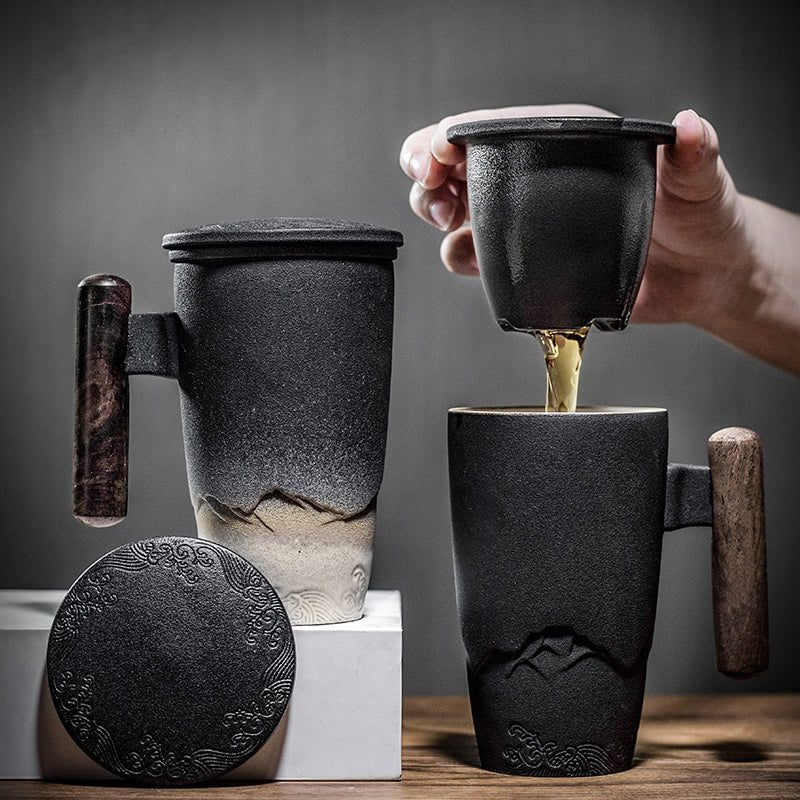
High Quality Ceramic Coffee Mugs Shape and Handle Guide: Current Options
Compare three current CoffeifyMug designs by silhouette, handle geometry, listed dimensions, and capacity. Includes practical fit checks for cabinets, desks, drink preparation, care, and gifting.
Per saperne di più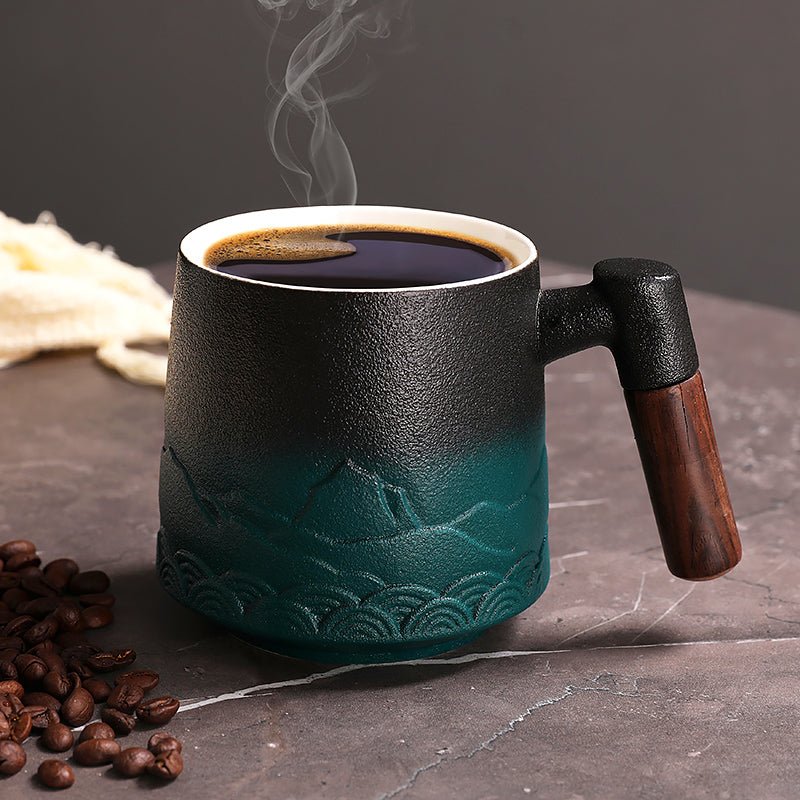
Rustic Ceramic Coffee Mugs Shape and Handle Guide: Current Options
Compare current Mountain & Sea, Elk and Moon, and wooden-handle mug listings by visible profile, handle clearance, capacity, dimensions, and care. This guide separates listing facts from practi...
Per saperne di più
Commenta
Questo sito è protetto da hCaptcha e applica le Norme sulla privacy e i Termini di servizio di hCaptcha.