
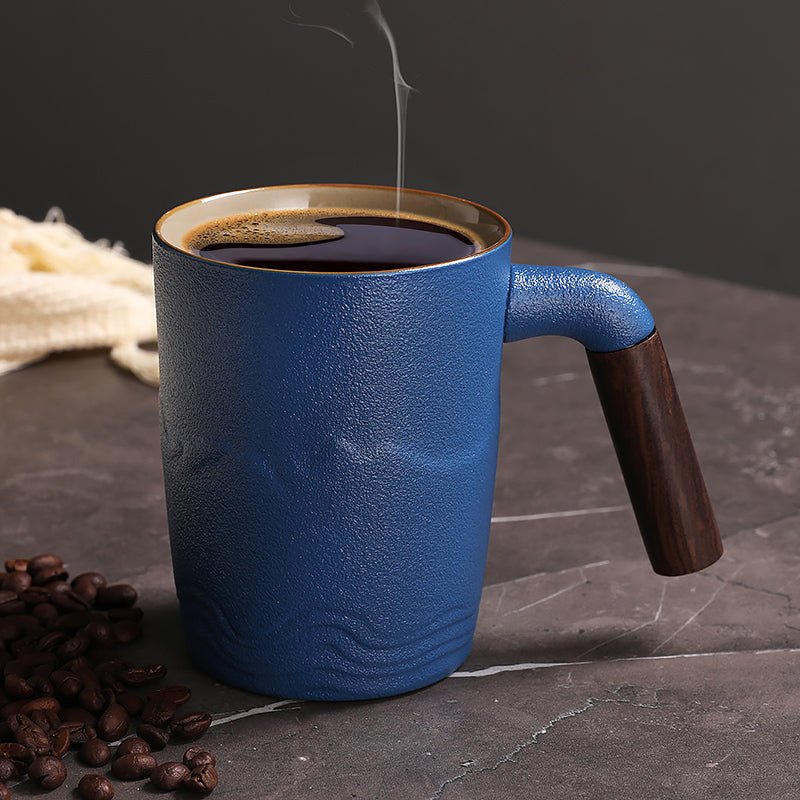
Outline of Coffee Mug: How Shape Affects Grip, Heat, and Fit
Reading time: about 10 minutes
The outline of a coffee mug changes more than the look on a shelf. It changes how the cup clears your fingers, how hot the drink stays on a desk, and whether the mug feels steady in a crowded sink or a narrow cabinet.
In our store, we see shoppers focus on color first and silhouette second. That is usually backwards. The outline tells you more about day-to-day use than the print on the outside.
If you want a visual reference, compare Golden Waves Kio Coffee Tea Mug and The Flow Coffee Tea Mug, then open our all mugs collection to compare silhouettes side by side. For buyers who are also sizing by capacity, our 10 oz Coffee Mug: Size, Fit, and What to Check Before You Buy, 11 oz Coffee Mug: Size, Fit, and What to Check Before You Buy, and 12 oz Coffee Mug Buying Guide for Fit, Comfort, and Daily Use are useful follow-ups.
What does the outline of a coffee mug change?
The mug outline affects how the cup feels before you even take a sip. A straight-sided mug usually feels stable and predictable on a desk. A tapered mug often feels easier to lift because the top opens a little wider than the base. A barrel shape sits somewhere in between and tends to feel more relaxed in the hand.
We pay attention to three details when we handle mugs in our store: the rim, the handle, and the base. A smooth rim matters because a thick, uneven lip can make a mug feel clumsy even if the design is beautiful. Handle clearance matters because a tight handle can press against larger fingers. A flat, even base matters because a mug that rocks on the counter is annoying every single morning.
The outline also changes heat behavior. A wider mouth exposes more coffee or tea to the air, so the drink cools faster. A taller, narrower profile usually holds heat a little better, but it can be less comfortable if you prefer a broad opening for aroma. That is the kind of trade-off buyers often miss when they shop by color alone.
Common defects show up here too. We look for a handle seam that feels sharp, a glaze line that leaves the rim rough, or a foot ring that does not sit flat. None of those issues are dramatic in a photo, but they show up quickly in daily use.
Which mug outlines are worth comparing?
Most buyers only need a few outline families to make a good decision. The names vary by brand, but the behavior is fairly consistent.
| Outline type | What it feels like | Best for | Trade-off |
|---|---|---|---|
| Straight-sided | Clean, stable, easy to stack | Office desks, cabinets with tight shelves | Can feel plain and less ergonomic in the hand |
| Tapered | Open at the top, narrower at the base | Daily coffee, lighter-feeling mugs, easier grip | May look taller and can tip if the base is too small |
| Barrel-shaped | Rounded, full, more substantial | Slow sipping, tea, people who like a fuller hand feel | Takes more shelf room and can feel heavy when full |
| Flared lip | Wider opening with a soft edge profile | Aroma-focused drinks and casual serving | Cools faster and splashes more easily if overfilled |
Material changes the experience too. Ceramic is the most familiar everyday choice because it balances weight and comfort. Stoneware usually feels heavier and more grounded. Porcelain often has a finer wall and a more delicate rim, which some buyers prefer for tea service but not everyone wants for an office mug.
If you are comparing mugs for a gift, the outline matters even more than usual. A mug with a thoughtful shape feels intentional when it comes out of the box. A mug with a good silhouette also photographs better on a kitchen counter, which is part of why people keep reaching for it after the first week.
How do you choose the right outline for daily use?
The right outline depends on where the mug lives most of the time. A mug that works in a calm breakfast nook may not work on a crowded workbench or next to a laptop and notebook.
Use this simple filter before you buy:
- Choose straight-sided if you want predictable storage, easy stacking, and a mug that fits neatly in a cabinet.
- Choose tapered if you want a shape that feels easier to pick up and less blocky in the hand.
- Choose barrel-shaped if you prefer a fuller grip and usually drink slowly.
- Choose a wider mouth if aroma matters more to you than heat retention.
- Choose a narrower profile if you want your coffee to stay warmer while you work through the first half hour of email.
For office use, we usually steer buyers toward an outline that does not demand attention. It should sit flat, clear the coffee machine tray, and leave enough room for the handle to rotate without bumping a monitor or pen cup. For kitchen use, the same mug can be slightly larger and more sculpted because the shelf and sink are less restrictive.
For gifting, a more expressive outline can be worth the trade-off. A mug with a stronger curve, a more visible foot, or a distinctive lip can feel more personal than a standard cylinder. That said, if the person you are buying for uses a dishwasher every day, a simpler shape is often the safer pick.
What should you check before buying online?
Online mug shopping is mostly about reducing surprises. Photos can show the artwork, but they do not always reveal the profile that matters in real life. We usually tell shoppers to check the shape against the way they actually drink.
Before you add a mug to cart, check these items:
- Handle opening: Make sure your fingers will fit comfortably, especially if you drink with a spoon or stirrer in the mug.
- Rim thickness: A thinner rim often feels cleaner to sip from, while a thick rim can feel heavy and less refined.
- Base stability: Look for a flat base and a foot ring that sits evenly on the counter.
- Care notes: If the listing does not clearly state dishwasher-safe or microwave-safe, treat that as a signal to ask or hand wash.
- Cabinet height: Taller mugs can be annoying if your shelf spacing is tight or your mug tree is shallow.
- Drink style: Decide whether you want a mug for espresso-based drinks, drip coffee, or tea, because each one rewards a slightly different profile.
One practical detail buyers forget is thermal shock. A ceramic mug can be fine for a hot drink, but moving it from a cold cabinet straight into boiling water or from the fridge to very hot liquid can stress the material. That is not a dramatic risk in normal use, but it is a real reason to handle mugs consistently instead of assuming every outline behaves the same.
If you are comparing our designs, start with the shapes that feel closest to your daily routine. Then choose the artwork after the profile makes sense.
Which mug outline is not the best fit for every buyer?
Some outlines look great and still fail the daily-use test. A very wide mug may be pleasant for a relaxed tea session, but it is not the best choice if you want your drink to stay hot while you sit through a long meeting. A tall narrow mug can save shelf space, but it may feel top-heavy if the base is too small.
Highly sculpted mugs have the same problem. They are more interesting to look at, but they can be harder to wash, harder to stack, and less forgiving if you use a dishwasher rack with tight spacing. If you want a mug for a shared kitchen or office dishwasher, a simpler outline usually makes more sense.
The same caution applies to handle shape. A handle can look elegant and still be uncomfortable if the opening is too small or the attachment point puts your knuckles close to the mug wall. We always recommend checking the handle against the way you hold a mug on an average weekday, not just how it looks in a product photo.
If you know you prefer function over flair, that is useful information. It means you can skip anything that feels too decorative and focus on the mug that will not ask questions every morning.
How does the outline affect ceramic, stoneware, and porcelain mugs?
Material and outline work together. A straight-sided ceramic mug feels different from a straight-sided porcelain mug because wall thickness, rim feel, and overall weight change the experience. The outline is the first thing you notice visually, but the material decides how substantial the mug feels once it is full.
Here is the practical version:
- Ceramic is the middle-ground option for most shoppers. It usually gives a balanced feel and a familiar weight.
- Stoneware tends to feel more solid and rustic. That can be a plus if you want a mug that feels anchored on the desk.
- Porcelain often looks and feels more refined. It can suit buyers who like a thinner rim and a lighter hand feel.
We do not treat one material as universally better. A heavier stoneware mug is not ideal if you carry coffee between rooms all morning. A very thin porcelain mug is not ideal if you are rough on dishware or want a mug that can handle a busy sink without much fuss. The outline should support the material, not fight it.
Frequently asked questions
What is the best outline of a coffee mug for everyday use?
A slightly tapered or straight-sided mug is usually the safest everyday choice. It gives you a stable base, an easy grip, and a profile that fits most cabinets and dish racks. If you want the least amount of friction in daily use, start there.
Does a wider mug outline cool coffee faster?
Yes, a wider mouth exposes more surface area, so heat escapes faster. That can be good for tea or for people who want a drink to cool quickly, but it is not ideal if you like to sip slowly. A narrower profile usually holds heat a bit better.
What mug outline is best for small hands?
A mug with a slimmer body and a comfortable handle opening usually works best. Very round, bulky mugs can be tiring to hold if the handle sits too close to the wall. We suggest checking the handle clearance first, then the overall width.
How do I know if a mug outline will fit my cabinet?
Measure the shelf height and compare it with the mug's full height, including any raised lip or handle clearance if the mug will sit on a hook. Tall mugs can look compact in photos and still be awkward in shallow cabinets. If your shelf space is tight, straight-sided shapes are usually easier to store.
Is a sculpted mug outline worth it?
It can be, if you want the mug to feel special and you do not mind a little less convenience. Sculpted outlines often take more room and can be less friendly to stacking and dishwasher loading. They work best when the mug is part of the ritual, not just a fast caffeine tool.
What should you check before you buy?
If you are choosing by outline first, use this short checklist before you place the order:
- Does the shape feel comfortable in one hand, not just on a screen?
- Will the mug fit your shelf, mug tree, or coffee station?
- Is the rim comfortable enough for daily sipping?
- Does the handle leave room for your fingers without pinching?
- Does the outline match how fast you usually finish a drink?
- Do you want a practical daily mug or a more expressive piece for slower coffee moments?
If you want to compare silhouettes and artwork in one place, start with our all mugs collection and narrow down from there. The best next step is to compare the outline against your cabinet height, your grip, and the way you actually drink coffee on a weekday morning.
Read more
Mushroom Coffee Mug Buying Guide for Style, Size, and Daily Use
A mushroom coffee mug should feel good in the hand, fit your daily pour, and hold up through real kitchen use. We break down what matters before you buy, plus which CoffeifyMug styles are worth com...
Per saperne di più
Large Christmas Coffee Mugs: Style, Size, and Fit Guide
Large Christmas coffee mugs are best when they feel good in the hand, hold enough for a real pour, and still fit your shelf, dishwasher, and gift plan. Here’s how we help shoppers compare seasonal ...
Per saperne di più
Commenta
Questo sito è protetto da hCaptcha e applica le Norme sulla privacy e i Termini di servizio di hCaptcha.