
National Park Coffee Mugs: How to Choose the Right One
Reading time: about 9 minutes
The mug looks great online. Then it arrives, and you realize the handle is too tight, the print is smaller than expected, or the finish shows every tea stain after two dishwasher cycles. That is usually the difference between a mug people keep on the desk and a mug that gets shoved to the back of the cabinet.
We handle mugs for everyday buyers, gift shoppers, and people building a themed kitchen set, so we look at national park coffee mugs the same way you would at home: size first, feel second, design third. If you are comparing options for your own use or a gift, this guide breaks down what actually matters before you buy. For a broader look at our current drinkware selection, start with one of our product styles and compare it against the full collection as you read.
What should you check first on national park coffee mugs?
The first thing we check is not the artwork. It is the mug shape, capacity, and surface finish. A scenic print cannot make up for a mug that feels clumsy in hand or behaves badly in the dishwasher.
For buyers, the practical checklist is simple:
- Capacity: smaller mugs suit espresso-based drinks and tea; larger ones suit drip coffee or people who refill less often.
- Handle comfort: a handle should fit at least two fingers without forcing your grip.
- Finish: glossy glazes often wipe clean more easily, while matte or textured finishes may show wear differently over time.
- Print placement: centered artwork usually looks best on a shelf and in photos, but wraparound graphics may be more visible from either side.
- Care expectations: check whether the mug is meant for regular dishwasher use or handwashing only.
If you want a size-focused breakdown before choosing, our 12 oz coffee mugs buying guide covers the everyday middle ground that many shoppers end up preferring. For lighter drinkers and smaller servings, the 10 oz coffee mugs guide is also useful.
What size works best for everyday use?
Size changes the whole experience. A mug that is too small means frequent refills. A mug that is too large can cool down a drink before you finish it, and it may feel bulky on a crowded desk or narrow mug shelf.
In our experience, most national park coffee mugs buyers fall into one of three use cases:
- 10 oz to 12 oz: Better for tea, smaller coffee servings, or anyone who likes a compact mug that heats quickly and stores easily.
- 14 oz: A practical in-between option for people who want a little more room without jumping into an oversized shape.
- 15 oz: Good for longer coffee sessions, home offices, and people who dislike refilling. The trade-off is more weight and a larger footprint in the cupboard.
If you are deciding between the middle and larger range, our 14 ounce coffee mugs guide and 15 oz coffee mugs article explain how that extra capacity affects daily use. We see a lot of buyers choose a bigger mug for the office and a smaller one for kitchen shelves, because the right size changes depending on where it lives.
One practical note: larger mugs are not always better for travel or car cup holders. If you want a mug mainly for a packed commuter bag or a tiny kitchen shelf, a more compact option is usually easier to live with.
Which materials and finishes hold up best?
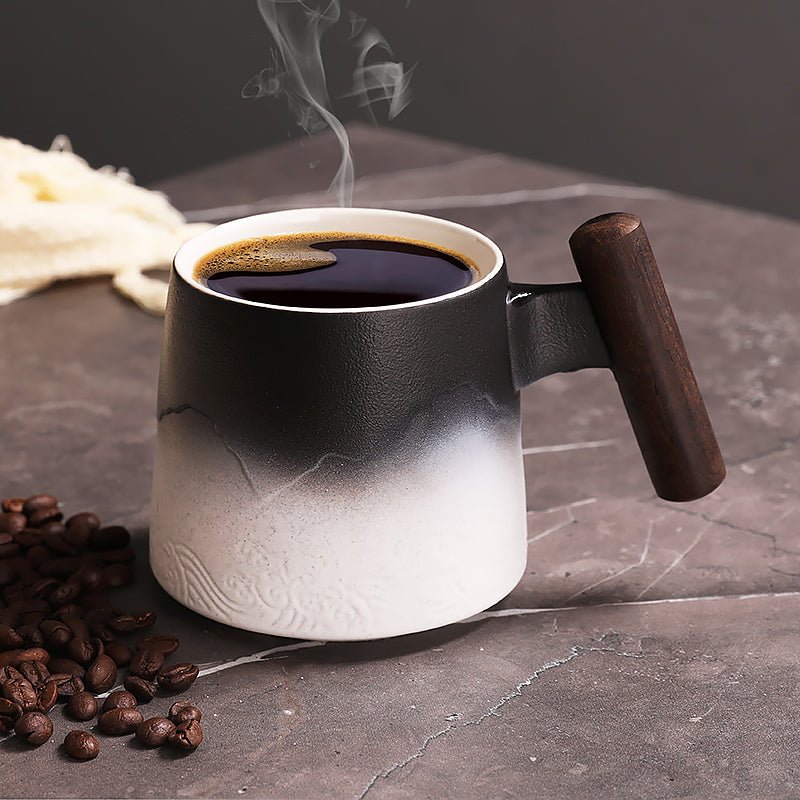
Most national park coffee mugs are ceramic or stoneware, and that matters more than the theme itself. Ceramic tends to feel familiar, has a smooth drinking rim, and is easy to clean. Stoneware often feels a bit heavier and more substantial in hand, which some buyers like for a desk mug or a gift set.
Here is how we think about the common trade-offs:
| Material / finish | What it does well | Where it can fall short |
|---|---|---|
| Ceramic | Clean look, everyday comfort, easy to match with most kitchens | Can chip if knocked against a sink or stacked carelessly |
| Stoneware | Heavier feel, sturdy presence, nice for home use | Can be bulkier and less convenient on crowded shelves |
| Glossy glaze | Easier wipe-down, often looks bright under kitchen lighting | May show water spots if air-dried |
| Matte or textured surface | More tactile, can feel distinctive as a gift | May need more attention to prevent tea or coffee residue buildup |
Common wear points we watch for in the category are thin handle joins, glaze pinholes, and printed graphics that sit too close to the rim where lips and dishwashers both create extra wear. If the mug is supposed to be used daily, we prefer a smooth drinking edge and a handle that does not twist awkwardly when full.
For our own store assortment, we keep an eye on how a mug feels in a real kitchen, not just in a product photo. A mug can look excellent on a white background and still feel slippery at the sink after a rinse. That is why we suggest comparing style and shape across the full collection before committing to a specific design.
What makes a national park mug a good gift?
A national park mug works best as a gift when the park connection is meaningful. It is a stronger choice for someone who has visited, hiked, camped, or plans trips around a specific park than for someone who only likes scenic artwork in general.
Gift buyers should pay attention to three things:
- Presentation: Does the mug have a clean, giftable shape that looks good out of the box?
- Audience fit: Is the recipient likely to use it daily, or will it sit on a shelf?
- Practicality: Will it fit their coffee maker, dishwasher habits, and cabinet space?
For a gift, a slightly larger mug often feels more generous, but not everyone wants a big cup. Someone who drinks tea or smaller coffees may prefer a compact mug that is easier to hold while reading, working, or watching a morning trail video.
If the recipient is especially picky about mug size, the size guides on our blog can help narrow it down before you buy. We have seen gift shoppers save themselves a return by checking mug volume first instead of relying on the artwork alone.
How do these mugs hold up in real kitchens and offices?
A mug earns its place by surviving ordinary routines. That means morning pours, desk clutter, sink bumps, and the occasional dishwasher cycle after a long day. In real use, the mug should feel balanced when half full, not top-heavy or awkward to lift with one hand.
Here is what matters in everyday situations:
- Kitchen counter use: The mug should be stable enough to sit next to a kettle or coffee maker without wobbling.
- Office desk use: It should fit under common coffee machines and leave room for a spoon or tea bag without spilling.
- Dishwasher rotation: The finish should tolerate regular washing without making every cup look dull after a few runs.
- Cabinet storage: The handle should stack or nest logically if you keep multiple mugs together.
We also think about the failure modes that shoppers only notice later: fading artwork, tiny glaze cracks around the base, and handles that feel fine empty but uncomfortable once the mug is full. If a mug is meant for a cabin shelf more than daily use, that is fine. If you want a true everyday mug, those details matter.
Our rule in the store is simple: if a mug only works as decor, we say so. If you want a piece you can actually drink from every morning, the handle, rim, and finish need to earn their keep.
Which of our mug styles should you compare first?
If you are browsing our store and want to compare mug shapes before you buy, we suggest starting with three distinct styles. They are not national park themed pieces, but they are useful references for shape, proportion, and everyday handling.
- Planet Coffee Tea Mug for shoppers who want a rounder, more relaxed feel in hand.
- Rhombus Coffee Tea Mug for a more geometric profile that reads cleanly on a desk or shelf.
- Handbag Coffee Tea Mug for buyers who want a distinctive silhouette and a giftable presentation.
We use these comparisons because shape changes use more than style does. A rounded mug can feel softer and easier to cradle. A more angular mug can look sharper in a minimal kitchen, but some people prefer a smoother grip. That is the kind of trade-off that matters when you are choosing a mug to use every day, not just to display once in a while.
If you are shopping for national park coffee mugs specifically, use these shape cues alongside the park artwork you like best. A design that feels right on the screen should still make sense in your hand and on your shelf.
What should you avoid if you want a mug you will actually use?
We would skip any mug that depends on the print to carry the whole product. If the shape is awkward, the rim feels sharp, or the handle barely fits a finger, the design will not save it.
These are the biggest limitations to watch for:
- Oversized mugs if you prefer small pours or have limited cabinet space.
- Highly decorative pieces if you want something dishwasher-friendly and low maintenance.
- Very thin-walled mugs if you care about heat retention and a sturdier feel.
- Busy graphic layouts if you want the mug to look clean long after the novelty wears off.
Not every national park coffee mug needs to be a heavy-duty daily driver. Some are better as souvenirs, shelf decor, or gift add-ons. That is fine, but it helps to be honest about the role before you buy. If you want something for daily coffee, choose a mug with a comfortable handle, a practical size, and a finish that will not demand special care.
Frequently asked questions
Are national park coffee mugs dishwasher safe?
Some are, but not all. Check the product care notes before assuming regular dishwasher use is safe for the finish or printed design. If you want low-maintenance use, a smooth glazed mug with clear care instructions is usually the safest bet.
What size national park coffee mug is best for everyday coffee?
For many buyers, 12 oz to 14 oz is the most practical range. It gives enough room for a normal pour without feeling oversized on a kitchen shelf. If you like bigger refills or longer sipping sessions, 15 oz can work better.
Do national park coffee mugs make good gifts?
Yes, especially if the recipient has a real connection to a park or enjoys travel-themed drinkware. They work best when the mug size and handle comfort are practical enough for daily use, not just display.
What is the biggest mistake people make when buying a themed mug?
They focus on the artwork and ignore the shape. A mug can have great graphics and still be uncomfortable if the handle is too small, the rim is awkward, or the mug is too heavy for its size.
Should I choose a mug for display or daily use?
If it is going to live on a shelf, you can prioritize artwork and theme. If you plan to use it every morning, comfort, capacity, and easy cleaning matter more. Daily-use mugs should feel good when full, not just look good in photos.
If you are ready to compare styles, start with the mug shape you prefer and then work outward from there. For the fastest path, browse our full collection, then compare it with the size guides on our blog so you end up with a mug you will actually reach for every morning.
Read more
Michigan Coffee Mugs: What to Buy for Daily Use, Gifts, and Souvenirs
Michigan coffee mugs work best when they feel good in the hand, fit your usual drink size, and hold up to everyday washing. Here’s how we help shoppers pick a mug that looks right, lasts, and actua...
Per saperne di più
Coffee Mugs on the Go for Commutes, Desk Use, and Daily Carry
Coffee mugs on the go work best when you want a handled cup that moves from kitchen to desk without feeling like a sealed bottle. We break down the trade-offs, the details that matter, and which st...
Per saperne di più
Commenta
Questo sito è protetto da hCaptcha e applica le Norme sulla privacy e i Termini di servizio di hCaptcha.