
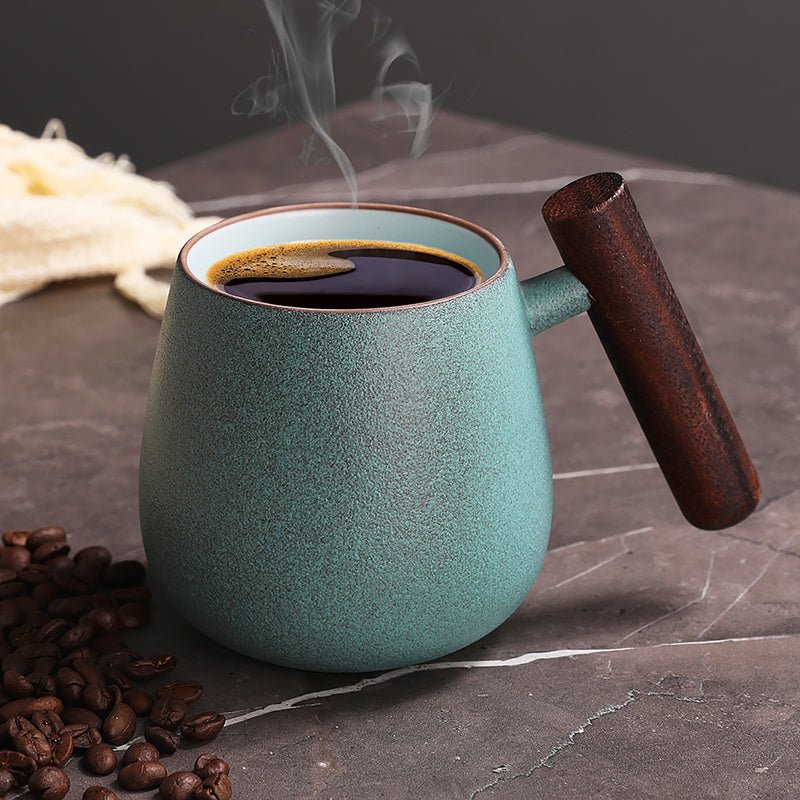
Mikasa Coffee Mugs: What to Check Before You Buy
Reading time: about 9 minutes
A mug can look right in the cabinet and still feel wrong by the third sip. We see that most often with buyers comparing Mikasa coffee mugs: the shape is elegant, but the handle may be tighter than expected, the rim may feel too narrow for a larger hand, or the mug may be better suited to tea and lighter coffee pours than a desk full of refills.
If you are comparing styles before buying, start with the parts that change everyday use: capacity, material, handle clearance, dishwasher care, and the type of drink you actually make. For a deeper size comparison, our guide on Mikasa Coffee Mugs: Size, Material, and Buying Guide covers the basics, and our posts on 12 oz Coffee Mugs: How to Choose the Right Mug for Daily Use and 14 Ounce Coffee Mugs: Fit, Materials, and Buying Guide are useful if you are trying to match mug size to your routine.
What makes Mikasa coffee mugs appealing in daily use?
Most people do not buy a mug for the label alone. They buy it because they want a piece that feels balanced in the hand, looks polished on the table, and survives repeat use without becoming annoying. Mikasa coffee mugs usually sit in that category of tableware that feels more refined than a basic diner mug, but still practical enough for a kitchen shelf.
In our experience, the appeal is usually a mix of three things:
- Visual finish: Many buyers like the cleaner, more formal look that works for a breakfast nook, office desk, or gift set.
- Day-to-day comfort: A mug only works if the handle clears two or three fingers comfortably and the base sits steady on a countertop.
- Versatility: A good mug should handle coffee, tea, cocoa, and reheats without feeling delicate in normal use.
That said, not every Mikasa-style mug is the best pick for everyone. If you drink large iced lattes, want a very wide mouth for foam art, or need a mug that can take rough office treatment, a more utilitarian shape may suit you better than a refined, decorative one.
Which size should you pick for coffee, tea, or a longer pour?
Size is the first thing we ask shoppers to confirm. A mug that is too small can feel cramped once you add milk or cream. A mug that is too large can cool too fast if you only drink half a cup at a time.
For most buyers comparing mikasa coffee mugs, the useful question is not just the listed capacity. It is how that capacity translates into a real cup of coffee at home.
| Use case | What usually works well | What to watch for |
|---|---|---|
| Quick black coffee | Smaller to mid-size mug | Too much empty space can make the mug feel oversized |
| Coffee with milk | Mid-size mug with a comfortable handle | Check whether the rim narrows at the top |
| Tea, cocoa, longer sipping | Larger capacity mug or taller profile | Heavier fill can make a thin handle less comfortable |
| Office desk use | Stable base and moderate height | Tall mugs can be easier to tip if the desk is crowded |
If your current mug feels just a little too small, our size guide for 16 Ounce Coffee Mugs: Size, Materials, and Fit Guide is useful for understanding when a larger profile makes sense. For everyday use, 12 oz and 14 oz styles remain the sweet spot for many buyers because they handle a standard pour without becoming bulky.
What material details should you actually check?
Material matters because it affects heat retention, weight, chip resistance, and how the mug behaves after repeated washing. Buyers often focus on the look and miss the practical part.
Before you decide, check these specific points:
- Body material: Ceramic, porcelain, and stoneware do not feel the same in hand. Porcelain often feels smoother and lighter, while stoneware tends to feel sturdier and heavier.
- Wall thickness: Thicker walls usually hold heat a bit longer, but they also make the mug heavier.
- Glaze finish: A smooth glaze is easier to wipe clean, while highly textured surfaces may show tea staining more quickly.
- Rim shape: A thin, even rim usually feels better for sipping than a thick rolled edge.
We handle mugs that go straight from cabinet to dishwasher to desk, so we pay attention to the edges and the base. The most common wear points are the rim chips, handle joins, and the foot ring at the bottom. If a mug has a decorative finish, look closely at whether the design is printed under glaze or sitting on top of it, because top-layer decoration tends to show wear sooner.
For shoppers who want a balanced everyday option, the full mug collection is a practical place to compare shape, height, and finish across styles before narrowing down a final pick.
How do the shape and handle affect comfort?
Shape sounds like a style question, but it changes how the mug performs on a real kitchen counter. A tall mug can feel elegant and space-efficient, but it may be less stable than a shorter, wider one. A rounded mug can be pleasant to hold, while a more angular body may feel better for shelf stacking and visual order.
Handle comfort is where many buyers are surprised. We recommend checking these points before you buy:
- Finger clearance: Make sure you can fit two fingers comfortably, or three if you prefer a looser grip.
- Handle angle: A handle that sits too close to the body can get warm and feel cramped.
- Weight distribution: A mug that feels balanced empty may feel front-heavy once full.
- Grip surface: Very smooth handles can feel less secure if your hands are wet from the sink or dishwasher.
That is why some shoppers prefer a more sculpted silhouette. If you like the idea of a decorative mug that still works at a desk or breakfast table, our Rhombus Coffee Tea Mug offers a more geometric feel, while the Handbag Coffee Tea Mug is better if you are buying for display value or gifting rather than a no-nonsense office mug.
What should you expect from care, durability, and dishwasher use?
Care is where buyer expectations and reality can diverge. A mug that looks delicate may still be fine for everyday washing, but decorative finishes need more caution. If you are buying for a busy household, ask how the mug handles repeated dishwasher cycles, stack pressure in the cabinet, and the occasional knock against a sink edge.
These are the practical checks we use:
- Dishwasher compatibility: Confirm whether the finish is intended for machine washing or whether hand washing is safer.
- Microwave use: If the mug has metallic trim or gold detailing, it may not be microwave-safe.
- Cabinet storage: Tall mugs can be awkward under low shelves and may tip if stacked with other pieces.
- Chip risk: Thin rims and decorative handles are usually the first places to show damage.
That trade-off matters. A more decorative mug can be a poor choice for rough daily use, especially if you want one cup to survive dish loads, fast reheats, and office kitchen handling without babysitting it. If you need a mug mainly for durability, choose the simplest shape and the least fussy finish you like.
For buyers who want a practical sizing reference before narrowing down their short list, our post on 12 oz Coffee Mugs: What to Check Before You Buy is a useful companion read.
Which Mikasa coffee mugs-style buyer is each option best for?
If you are comparing mikasa coffee mugs with other elegant mug styles, think about the use case first and the design second. That keeps you from choosing a mug that looks beautiful but does not fit your routine.
Here is a practical way to sort the options:
- Choose a refined, classic shape if you want something that fits a dining table or gift set and does not look overly casual.
- Choose a taller mug if you like larger pours, milk drinks, or tea that stays warm while you work.
- Choose a sculpted or geometric mug if you want a statement piece that still functions as an everyday cup.
- Choose a simpler mug if you care more about dishwasher durability and stackability than about appearance.
In our store, we often see people start with one aesthetic and end up buying based on hand feel. That is normal. A pretty mug that is awkward to hold does not stay in rotation for long, no matter how good it looks in the product photo.
If you want to compare styles side by side, the White Golden Waves Tall Coffee Tea Mug is a good example of a mug that leans more elegant and vertical, which can work well for tea drinkers and longer coffee pours.
How do you compare similar mugs before checking out?
We recommend a short checklist before you place an order. It takes less time than replacing the wrong mug later, and it filters out most impulse buys.
- Confirm the capacity against the drink you actually make most mornings.
- Check the handle opening with your hand size in mind, not just the photo.
- Look for care notes on dishwasher and microwave use.
- Decide whether you want a decorative piece, a workhorse mug, or something in between.
- Consider cabinet height, especially if you store mugs under a shelf or in a crowded rack.
If you are still unsure, compare one refined option against one more playful option before committing. That makes the trade-off obvious. A mug chosen only from a thumbnail often feels different once it is on your shelf, filled with coffee, and washed a few times.
Frequently asked questions
Are Mikasa coffee mugs good for everyday use?
They can be, as long as the specific mug has a shape and finish that fits daily handling. We would check handle comfort, rim thickness, and care instructions first. Decorative details can make a mug better for display than for rough everyday use.
What size Mikasa coffee mug works best for coffee with milk?
Mid-size mugs usually work best because they leave room for espresso, milk, and a little foam without feeling half empty. If you drink larger pours, a taller mug may be more comfortable. The better choice depends on whether you want a compact cup or a roomier profile.
Can decorated mugs go in the dishwasher?
Sometimes, but not always with the same level of long-term durability. Printed or metallic details can wear faster than simple glazed finishes. If the mug has gold trim or similar accents, check the care notes carefully before relying on machine washing.
What should I check before buying a mug online?
Check the listed capacity, mug height, handle size, material, and care instructions. Photos can hide how narrow the opening is or how large the base feels on a table. We also look for signs that the mug will stack well and store easily.
Are taller mugs better than shorter mugs?
Not automatically. Taller mugs can be good for tea, larger pours, and a more elegant look, but they can feel less stable and may not fit under low shelves. Shorter mugs usually feel sturdier and are often easier to store.
If you are comparing options now, start with the use case first: desk coffee, tea, gift, or everyday kitchen mug. Then open the full collection and compare the shapes that match that use, instead of choosing by design alone.
Read more
Coffee Jesus Mug Buying Guide: Size, Print, and Gift Value
A coffee Jesus mug should feel good in the hand, read clearly from across a desk, and still look right after repeated use. We break down the size, print, and gift checks that matter before you buy.
Per saperne di più
Coffee Mug Hooks: What Fits, What Holds Up, and What to Buy
Coffee mug hooks save counter space, but only if hook depth, spacing, and mug handle shape work together. We cover what fits, what fails, and which mugs are easier to hang.
Per saperne di più
Commenta
Questo sito è protetto da hCaptcha e applica le Norme sulla privacy e i Termini di servizio di hCaptcha.