

Lead Free Coffee Mugs: How to Choose a Safe Everyday Mug
Reading time: about 9 minutes
A mug can look perfect in a product photo and still feel wrong after the first week on a real kitchen counter. The handle pinches, the rim feels rough, or the glaze shows tiny flaws once it has gone through a few dishwasher cycles. That is the point where lead free coffee mugs stop being a search term and become an everyday decision.
We sell and handle mugs in this category every day, so we look at the practical details shoppers actually live with: how the mug sits in the hand, how the finish holds up, and whether the style fits coffee, tea, office use, or gifting. If you want a broader browse path first, start with our all mugs collection. If you want a quick checklist on the buying basics, our guide Lead Free Coffee Mugs: What Buyers Should Check Before Ordering is a good companion read.
What should you check before buying lead free coffee mugs?
The phrase lead free coffee mugs should mean more than a label on a product page. In real buying terms, you want a mug that is comfortable, easy to clean, and finished well enough that it still looks good after daily use. The lead-free claim matters, but so do the details around the glaze, the rim, and the handle join.
Our team usually checks four things first:
- Glaze and decoration: The finish should look even, with no obvious pinholes, rough spots, or cloudy patches that catch your fingernail.
- Rim feel: A smooth rim matters more than most shoppers expect. It changes how coffee or tea tastes on the first sip.
- Handle comfort: The mug should clear your knuckles without forcing your fingers into an awkward grip.
- Care instructions: If the mug is meant for daily use, you should know whether it is dishwasher safe, hand wash only, or sensitive to sudden temperature shifts.
One detail we watch closely is the base. A mug with a rough foot ring can scratch a desk, a tray, or a stone countertop. Another is the underside of the handle. If that area feels sharp or uneven, it usually gets annoying faster than a buyer expects. These are the small defects that do not always show up in a staged photo but absolutely show up in a real kitchen.
Our rule is simple: a mug has to pass the hand test first, then the wash test, then the shelf test.
Which style fits your routine best?
Lead free coffee mugs are not all trying to do the same job. Some are made for a desk and a quick refill. Some suit a smaller tea pour and a cleaner tabletop look. Some are built around grip comfort. That is why we show different shapes in our store instead of treating every mug as interchangeable.
If you are comparing specific styles, these are the three most useful starting points in our range:
| Mug | Best for | What stands out | Trade-off |
|---|---|---|---|
| The Gradient Coffee Tea Mug | Desk coffee, gift orders, and shoppers who want a more visual mug | The gradient finish gives it a modern, easy-to-spot look on a shared shelf or office desk | It is less neutral if you want a plain white everyday mug |
| Retro Coffee Tea Cup | Smaller pours, tea, and people who like a classic cup feel | Its compact cup-style shape feels familiar and tidy on a table | Not the right pick if you want a larger latte mug |
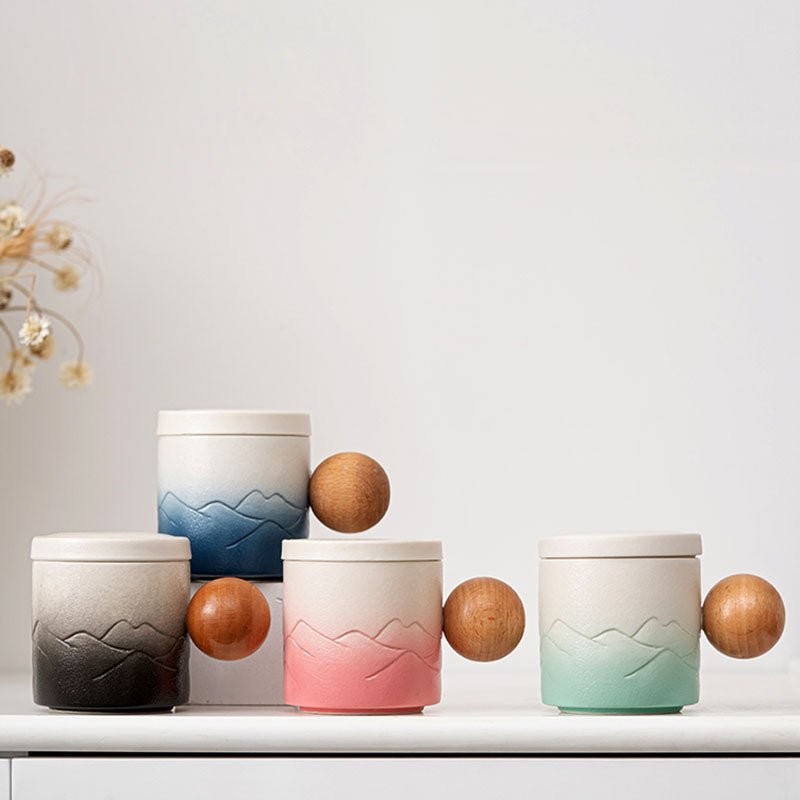
| Ball Handled Coffee Tea Mug | Grip-first use, especially for people who notice handle comfort right away | The ball-style handle gives the mug a different hold and a distinct profile | Less compact on a shelf than a simpler straight-handle mug |
For shoppers who want to compare more options in one place, the all mugs collection makes that easier than hopping between tabs. That is often the fastest way to compare shape, finish, and gift potential without losing track of what you liked.
In our experience, the best lead free coffee mugs are the ones that match the room they live in. A mug for a home office needs to sit well beside a laptop and not dominate the desk. A mug for morning tea in the kitchen can be more relaxed. A gift mug needs to look good when it comes out of the box, not just in a studio photo.
How do lead free coffee mugs hold up in daily use?
Daily use is where the quality difference shows up. A mug that looks fine on day one may start revealing small issues after a week of rinse, fill, sip, and wash. We see that most often in three places: the rim, the handle joint, and the glaze near the base.
Here is what we look for when we evaluate mugs for real use:
- Dishwasher wear: Repeated cycles should not make the finish look tired quickly or leave the surface looking dull and patchy.
- Heat behavior: A mug should feel comfortable enough to hold after a normal pour, without an awkward hot spot at the handle.
- Surface quality: The glaze should not have rough or sharp areas that make the mug feel unfinished.
- Stacking and storage: The base and handle should not create a problem if you keep mugs on open shelves or in a crowded cabinet.
Lead-free does not mean indestructible. A mug can still chip if it is knocked against a sink edge. It can still craze over time if it sees a lot of hot-cold shock. It can still feel too thin or too heavy for the person using it. That is why we treat safety as one part of the purchase, not the whole decision.
If you are shopping for a mug that will live on a busy office desk, a gift table, or a kitchen shelf that gets used every morning, the practical question is simple: will it still feel good after the fiftieth fill? That is the test that matters.
What size and shape feel best for coffee, tea, and desk use?
Size changes how a mug performs more than most shoppers expect. A smaller mug stays lighter and can feel tidier with tea. A larger mug works better for longer coffee breaks, but it can get bulky fast if you carry it around the house or tuck it under a single-serve brewer. Shape matters just as much. A wider mouth cools faster. A narrower profile tends to hold heat a little longer and often feels easier to hold with one hand.
If you want a deeper size comparison, our size guides on 12 oz Coffee Mugs: How to Choose the Right Mug for Daily Use and 16 oz Coffee Mugs: How to Choose the Right Mug for Daily Use are useful reads. Those articles help when you are deciding between a lighter everyday cup and something roomier for longer pours.
For day-to-day buyers, we usually frame the choice this way:
- Choose a smaller mug if you want something quick to wash, easy to store, and comfortable for tea or shorter coffee servings.
- Choose a medium mug if you want a versatile daily option that works for coffee, tea, and occasional cocoa.
- Choose a larger mug if you drink slowly, refill often, or prefer a mug that does not feel stingy.
One trade-off worth calling out: larger mugs are not always better for taste or temperature. If you pour a modest amount into a much bigger cup, the drink can cool too fast. That is why we push buyers to think about real habits, not just capacity on a listing page.
What are the trade-offs with lead free coffee mugs?
Lead free coffee mugs solve one concern, but they do not solve every concern. A buyer who stops at the safety label can still end up with a mug that is awkward to hold, too decorative for daily washing, or too large for the amount they actually drink. We would rather call that out clearly than pretend every mug fits every person.
The main trade-offs are straightforward:
- Design versus neutrality: A more styled mug can feel special, but a simpler mug is easier to match with kitchenware and easier to replace later.
- Comfort versus capacity: A bigger mug may look useful, but if the handle is cramped or the body feels top-heavy, it becomes the mug you avoid.
- Decorative finish versus hard use: Highly decorated mugs can look great as a gift, but they may not be the best choice if you want something that will live in the dishwasher every day.
- Kitchen mug versus travel mug: These are for the counter, the desk, and the table. If you need insulation, a lid, or a cup that can ride in a car, a travel tumbler is the better category.
That last point matters. Lead free coffee mugs are not the right answer for commuting. They are also not the best fit if you want your coffee to stay hot for a long stretch without a second pour. For that use case, you should be looking at an insulated cup, not a standard mug.
Inside our store, we treat mugs as everyday objects first and decor second. A good mug should make the routine easier. If it only looks good on a product page, it is not doing enough.
Frequently asked questions
How do I know if a coffee mug is really lead free?
Look for clear product wording that says the mug, glaze, or decorative finish is lead free. If the listing is vague, ask the seller how the claim is supported before you buy. A good retailer should be able to explain what part of the mug the claim applies to, not just repeat the phrase.
Are lead free coffee mugs dishwasher safe?
Some are, some are not. The lead-free claim does not tell you the full care story. Check the product page for dishwasher guidance, and if the mug has delicate decoration or a special finish, hand washing may keep it looking better for longer.
Can I microwave lead free coffee mugs?
Many ceramic-style mugs are microwave safe, but you should confirm the listing before using one that way. If the mug has metallic trim, unusual decoration, or a finish that is not meant for microwave use, skip the microwave and use a different mug for reheating.
What is the best lead free mug for daily desk coffee?
For desk use, we usually point shoppers toward a mug that feels balanced in one hand and has a comfortable handle clearance. A medium-size mug is often easier to live with than an oversized one because it fits better beside a keyboard and does not feel clumsy when you reach for it often.
Do lead free coffee mugs still need special care?
Yes. Lead free does not mean care-free. Avoid sudden temperature swings, do not use abrasive scrubbers on decorative surfaces, and inspect the glaze and base if the mug starts feeling rough after regular washing. Good habits keep the mug looking better for longer.
If you are comparing options now, start with the Gradient Coffee Tea Mug, the Retro Coffee Tea Cup, and the Ball Handled Coffee Tea Mug, then open the all mugs collection to compare the rest side by side and pick the mug that actually fits your routine.
Read more
Big Tea Cup: How to Pick One for Daily Tea and Better Comfort
A practical guide to choosing a big tea cup that fits your tea routine, hand feel, and kitchen space, with real trade-offs and product links.
Per saperne di più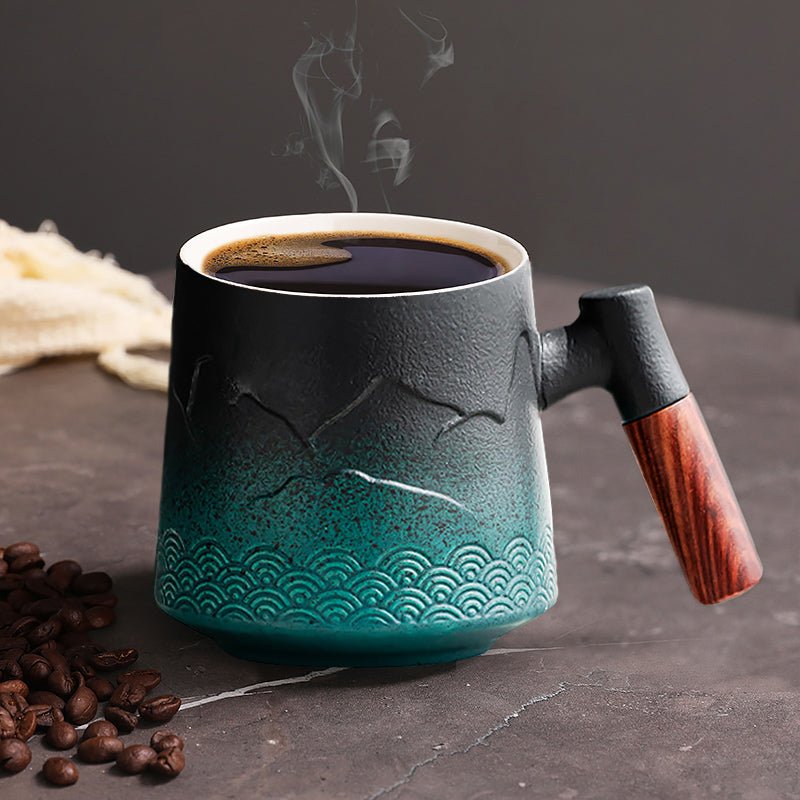
Large Coffee Mugs With Handles: How to Choose the Right One
A practical guide to large coffee mugs with handles, focused on comfort, material trade-offs, and which styles make sense for daily use at home or at a desk.
Per saperne di più
Commenta
Questo sito è protetto da hCaptcha e applica le Norme sulla privacy e i Termini di servizio di hCaptcha.