
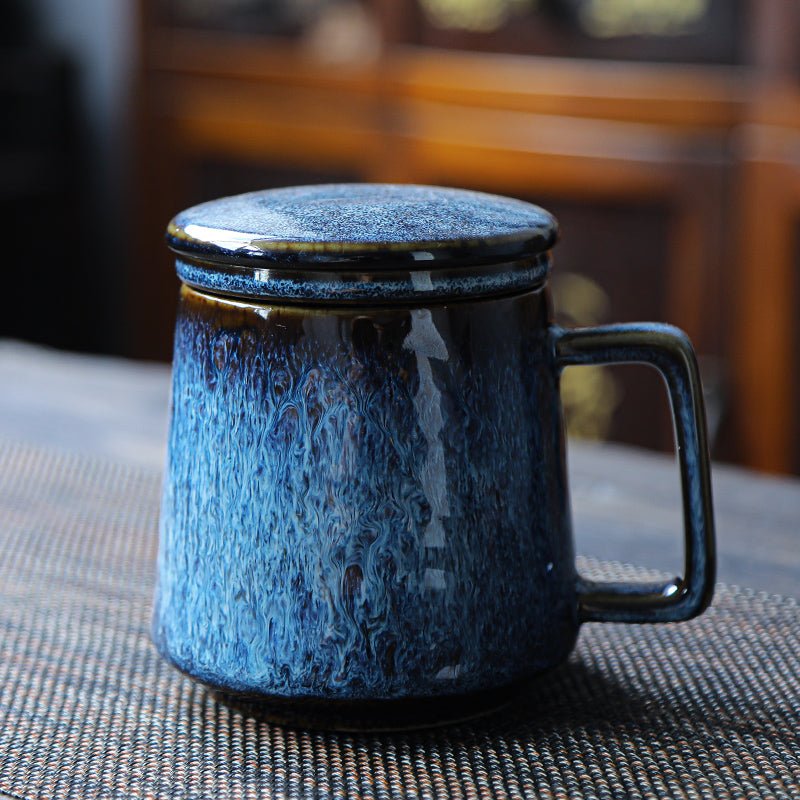
How to Get Coffee Stains Out of Mugs Without Damaging the Finish
Reading time: about 8 minutes
That brown ring at the bottom of a mug usually shows up after a few mornings of strong coffee, especially if the cup sits on a desk between refills or gets a quick rinse instead of a full wash. The stain is usually coffee tannins plus a thin oil film. Once it dries on a glazed surface, it starts to cling.
We see this all the time on everyday mugs in our store. The practical answer is not to scrub harder. It is to use a method that lifts the stain without dulling the glaze, marking decals, or roughing up a finish that should still look good after months of use.
Why do some mugs stain faster than others?
Not every mug behaves the same way. A smooth, high-gloss ceramic interior usually releases coffee faster than a matte glaze or a textured stoneware surface. Narrow openings also make a difference because they are harder to reach with a sponge, so residue stays in the bottom and around the inner wall.
We also see more staining on mugs that hold strong black coffee, espresso-based drinks, or coffee that sits for a long time before the last sip. Milk drinks leave their own film too, and that film can trap coffee color. A mug that is washed the same day is usually much easier to keep clean than one that sits overnight with a cold coffee ring drying in place.
If you are shopping for a mug that will be used every day, a taller profile is easier to rinse and reach into than a short, narrow cup. That is one reason shoppers often like pieces such as our White Golden Waves Tall Coffee Tea Mug and Mountain Tall Coffee Tea Mug. For a seasonal gift or a mug that gets pulled out for specific occasions, the Christmas Coffee Tea Mug is a different kind of choice. If you want to compare more styles, start with our All collection.
What is the safest first method for a stained mug?
Start with the least aggressive option. On most mugs we handle, warm water and dish soap remove fresh stains and light buildup. If the stain is older, a baking soda paste usually does the job without scratching the finish.
- Rinse the mug with warm water so the stain is damp again.
- Add a small amount of baking soda, then mix it with a few drops of water until it forms a paste.
- Rub the stain with a soft sponge or microfiber cloth for 20 to 30 seconds.
- Let the paste sit for a couple of minutes if the ring is stubborn.
- Rinse well and check the interior in bright light before repeating.
If the stain is still visible, move to a short soak instead of a harder scrub. That is the part many people skip. A soak loosens the film so you do not have to grind at the glaze.
| Method | Best for | Watch out for |
|---|---|---|
| Dish soap and warm water | Fresh coffee marks and daily maintenance | Often not enough for old rings |
| Baking soda paste | Most glazed ceramic mugs and light-to-moderate staining | Rinse fully so no powder stays in seams or texture |
| Short vinegar soak | Mineral-heavy buildup and older stains on plain ceramic | Skip repeated soaking on decorative or metallic trim |
Can vinegar or baking soda damage a mug?
Used correctly, baking soda is usually gentle enough for standard ceramic mugs. The problem is not the ingredient itself. It is using too much pressure, especially on a glossy glaze or a printed design where a rough pad can leave tiny marks over time.
White vinegar can help with hard-water film and old coffee residue, but we would keep it to a short soak. A ten- to fifteen-minute soak is usually enough to loosen the stain. After that, wash the mug with dish soap and rinse it thoroughly. We do not recommend leaving vinegar in a mug for long periods, especially if the mug has metallic accents, a hand-applied decal, or a finish you want to protect.
Bleach is not our first choice for this job. It can work on plain white ceramic, but it is more aggressive than most people need for coffee staining, and it is the wrong move for decorative mugs. If the mug matters to you because of its finish or artwork, start gentle and only escalate if the stain really refuses to move.
If you want a deeper breakdown focused on finish-safe cleaning, our posts How to Get Coffee Stains Out of Mugs Without Damaging the Finish and How to Clean Coffee Stains from Mugs Without Damaging the Finish cover the same problem from a few different angles.
What should you do for old stains that keep coming back?
Old stains usually need a little patience. A single quick wash rarely resets a mug that has been stained for weeks. The goal is to break down the layer, rinse it away, and then repeat only if needed.
- Wash the mug once with hot water and dish soap to remove loose residue.
- Apply a baking soda paste to the stained area and let it sit for five minutes.
- If the stain is still there, add a short vinegar soak after the paste is rinsed off.
- Use a soft sponge, not steel wool, so you do not scratch the finish.
- Dry the mug fully so mineral spots do not make the stain look worse than it is.
For mugs with a narrow interior, a small bottle brush can help more than a large kitchen sponge. For tall mugs, you get a little more room to work, which is one reason people often prefer them for daily coffee. They are simply easier to clean well after repeated use. That matters if the mug lives on an office desk, goes through the dishwasher often, or gets handed around the kitchen during busy mornings.
How do you stop coffee stains from building up again?
Prevention is less dramatic than cleaning, but it saves time. In our experience, the mugs that stay clean longest are the ones that get rinsed soon after use and washed before the coffee has a chance to dry into the glaze.
- Rinse the mug soon after finishing the drink, even if you cannot wash it right away.
- Do not leave coffee sitting overnight, especially in a mug that also holds milk drinks.
- Use a soft sponge for regular washing so the inside stays smooth.
- Let the mug dry fully before stacking it, which helps prevent water spots from looking like new stains.
- Run decorative mugs through the dishwasher only if the finish is meant for it, and keep an eye on hand-painted or metallic details.
If you are replacing a mug that stains too easily or is hard to clean, compare finish, opening width, and interior shape before you buy. A mug can look great on the shelf and still be awkward at the sink. That is why we focus on pieces people actually use, not just pieces that photograph well.
For readers who like mugs that get used both at the desk and in the kitchen, our article Fun Coffee Mugs That Actually Get Used Every Day is worth a look. If you are comparing gift options, Funny Drinking Coffee Mugs That Get Used, Gifted, and Kept is a useful companion read.
Frequently asked questions
What is the easiest way to get coffee stains out of a ceramic mug?
Warm water, dish soap, and a soft sponge are enough for fresh stains. If the ring is older, add a baking soda paste and let it sit for a few minutes before rinsing. That is usually enough for plain glazed ceramic without needing harsh cleaners.
Will baking soda scratch my mug?
Baking soda is usually gentle on ceramic, but the scrubber matters. A soft sponge or microfiber cloth is safe for most mugs, while a rough pad can dull the glaze over time. If the mug has a matte or printed finish, keep the pressure light.
Can I use vinegar on mugs with gold trim or decals?
We would avoid long vinegar soaks on mugs with metallic trim, decals, or hand-applied decoration. A brief soak on plain ceramic is usually fine, but decorative finishes deserve a lighter touch. If the mug is a gift or a keepsake, test a small area first and rinse promptly.
Why does my mug still look stained after the dishwasher?
The dishwasher is good at removing loose residue, but old coffee film can stay behind. That usually means the stain has already bonded to the glaze, so a pre-soak or baking soda paste is needed first. Once the ring is loosened, the dishwasher can help finish the job.
Are tall mugs easier to keep clean than short mugs?
Often, yes. A taller mug usually gives you more room to reach the bottom with a sponge or brush, which makes daily cleaning easier. That does not make it stain-proof, but it can make maintenance less annoying.
If you want the shortest path to a cleaner mug, start with the finish you already have, then choose the mildest method that removes the stain. If you are shopping for a replacement, compare the interior shape, surface finish, and ease of washing first, then browse our All collection for mugs that will hold up to real daily use.
Read more

Coffee Mug Shelf Guide: Fit, Materials, and Display Tips
A coffee mug shelf can look finished on install day and still be annoying every morning after that. This guide covers the shelf styles, measurements, materials, and mug shapes that work best in rea...
Per saperne di più
Porcelain Coffee Mugs: How to Choose the Right One Before Buying
A practical buyer’s guide to porcelain coffee mugs, with real trade-offs on size, weight, finish, and care. See which styles fit everyday use, gifting, and display, plus where to shop next.
Per saperne di più
Commenta
Questo sito è protetto da hCaptcha e applica le Norme sulla privacy e i Termini di servizio di hCaptcha.