
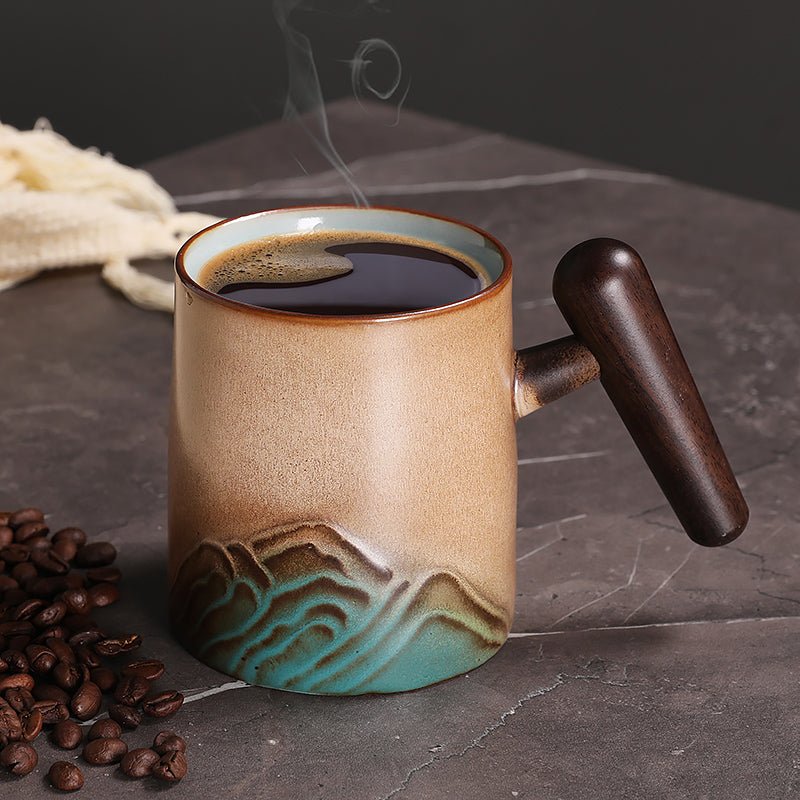
Hairline Crack in Coffee Mug: What It Means and What to Do
Reading time: about 9 minutes
A mug with a thin line running across the glaze usually gets noticed at the worst time: after a hot pour, on a desk before a meeting, or while rinsing it in the sink and seeing the line catch the light. A hairline crack in coffee mug form can be a small surface issue, or it can be the first sign that the cup is no longer reliable.
At CoffeifyMug, we handle a lot of everyday mugs, and the same question comes up again and again: is this just a cosmetic mark, or is the mug actually failing? The answer depends on where the line is, how it behaves, and what the mug is made of.
What does a hairline crack in a coffee mug actually mean?
A true hairline crack is a very thin break in the body of the mug. It may be visible from one angle only, and it often looks darker after washing because water gets into the line. That is different from crazing, which is a network of fine lines in the glaze itself. Crazing can be cosmetic if the body is still intact, but it is still a warning sign because repeated heat and washing can push a weak mug further.
We usually look for three things in our store and at our own kitchen sink:
- Location: a crack near the rim, handle joint, or base is more serious than one that appears to sit only in the glaze.
- Direction: a line that travels through the mug wall, especially from rim to lower body, is more concerning than a shallow surface mark.
- Behavior: if the line darkens after washing, expands, or starts collecting residue, the mug is no longer a good daily-use candidate.
If you are comparing a damaged mug to a replacement, our broader size and fit guides can help you avoid buying something that feels wrong in the hand. We cover practical details in 10 oz Coffee Mug: Size, Fit, and What to Check Before You Buy and 11 oz Coffee Mug: Size, Fit, and What to Check Before You Buy.
Can you still use a mug with a hairline crack?
Sometimes, but we would not treat it as a long-term everyday mug. A small surface crack in the glaze may survive a while, especially if the mug is only used for lukewarm drinks and hand-washed gently. A real crack in the ceramic body is a different matter. Hot coffee, repeated dishwasher cycles, and thermal shock from a cold rinse can widen the damage.
Our practical rule is simple: if the mug is used for boiling-hot coffee, goes in the dishwasher often, or has any crack near the handle or rim, retire it. That mug is not a great choice for office desks, children’s use, or anywhere a spill would be annoying. It is also not a good candidate for travel, since a weak cup can fail without warning.
If a mug has started to leak, flex, or shed flakes from the crack, stop using it.
That is especially true for mugs that see daily use around a sink, coffee station, or shared kitchen. A mug can look fine until hot liquid and repeated washing expose the weak point.
What causes hairline cracks in ceramic mugs?
Most hairline cracks start with stress, not a single dramatic drop. We see the same causes over and over: thermal shock, impact, poor storage, and manufacturing defects that only show up after the mug has been used a few times.
| Common cause | What it looks like | What to do |
|---|---|---|
| Thermal shock | A line appears after a very hot pour into a cold mug, or after washing a hot mug in cold water | Stop forcing temperature swings; replace if the crack grows |
| Impact | Small line or chip after the mug was bumped in the sink, cabinet, or dishwasher rack | Inspect rim, base, and handle; retire if the body is compromised |
| Glaze crazing | Fine web-like lines in the finish, often visible under bright light | Check whether the body is still intact; use cautiously or replace |
| Manufacturing defect | Uneven wall thickness, pinhole, or line that shows up early in ownership | Do not keep relying on it as a daily mug |
Ceramic and stoneware mugs can both develop cracks, but thicker walls tend to tolerate everyday handling better. That said, thickness is not a guarantee. A thick mug with a flawed handle joint can fail faster than a lighter mug with even construction. We look for a steady base, smooth rim, and a handle that feels integrated instead of glued on by appearance only.
How do you inspect a mug before you keep using it or buy a replacement?
We inspect mugs the same way we would check one for a customer who plans to use it every day: under bright light, after a wash, and with the mug empty and dry. A crack often shows up more clearly once the surface sheen is gone.
- Check the outside and inside walls. Look for a line that continues through the ceramic, not just the glaze.
- Inspect the handle joint. This is a common stress point, especially on mugs that get lifted one-handed from a desk or sink.
- Tap lightly. A clear ring is normal for many intact ceramic mugs; a dull or uneven sound can point to a hidden flaw, though it is not a final test.
- Fill with warm water. Watch for seepage, sweating, or a line that darkens.
- Check the base. A wobble or chip near the foot can make the mug feel unstable on hard counters.
If you are replacing a damaged mug rather than trying to rescue an old one, our current range is a practical place to start. The Flow Coffee Tea Mug, Mountain Sea Coffee Tea Mug, and Spittoon Coffee Tea Mug are better options than patching up a cup that already shows structural damage. If you want to compare the broader assortment, start at our full collection.
For buyers who care about capacity and daily comfort, our related guides can help narrow the choice. See 12 oz Coffee Mug Buying Guide for Fit, Comfort, and Daily Use and 12 Ounce Coffee Mug Buying Guide for Daily Use and Better Fit if you want a mug that feels right on a work desk or kitchen counter.
What should you do if your mug already has a crack?
If the mug is cracked, our recommendation is to stop treating it like a daily coffee mug. A cracked cup can work for dry storage, pens, or as a small planter, but it is not a good long-term choice for hot drinks. That is especially true if the line sits near the rim, handle, or bottom edge.
Here is the practical order we use:
- Retire the mug if the crack reaches the drinking edge, handle, or base.
- Do not use it for boiling liquids or sudden temperature changes.
- Keep it out of the dishwasher if you are unsure whether the crack is only superficial.
- Replace it with a mug that feels right in the hand, not just one that matches the old size.
We would also avoid trying to patch a drinking mug with glue or sealant. Those fixes are not a good fit for a mug that touches hot beverages and needs regular washing. For most shoppers, a replacement is the safer and cleaner decision.
Which replacement mug is the better fit for everyday use?
If you are shopping after a crack, the better replacement is the mug that fits your routine, not just your shelf. A mug for quick office coffee is not the same as a mug for slow weekend pours. In our experience, buyers usually care about three things: hand feel, stability, and how the mug handles repeated washing.
Here is a simple way to compare your options:
- Choose a balanced shape if you carry coffee between kitchen and desk often.
- Choose a sturdier base if your counter is crowded or you are clumsy during morning rush.
- Choose a comfortable handle opening if you prefer one-handed sipping or have larger hands.
- Choose a size that matches your drink habit so you do not end up overfilling or underusing the mug.
If you are replacing a cracked cup because you want a dependable everyday mug, our Flow Coffee Tea Mug is a strong place to start for a clean daily routine, while the Mountain Sea Coffee Tea Mug suits buyers who want a more decorative feel without giving up practical use. The Spittoon Coffee Tea Mug is another option if you want a distinct shape for home or office use.
If you are still comparing sizes before replacing the mug, the size-specific articles on our blog can help you avoid a mismatch. The difference between a mug that feels right and one that sits unused is often just capacity and handle comfort.
Frequently asked questions
Is a hairline crack in coffee mug always dangerous?
No. Some hairline cracks are only in the glaze, but a crack that goes through the ceramic body is a real risk. If the line darkens, grows, leaks, or sits near the rim or handle, we would stop using it for hot drinks.
Can I put a cracked mug in the dishwasher?
We would not. Dishwasher heat, detergent, and rack vibration can widen an existing crack. Hand washing is gentler, but even then a cracked mug is still not a great choice for daily coffee.
How can I tell the difference between crazing and a crack?
Crazing looks like a fine web in the glaze. A crack usually looks like a single line that may catch a fingernail or darken when wet. If you can see water entering the line, treat it as a crack, not just a surface mark.
Should I keep using a mug with a small crack if it does not leak?
We would not recommend it for regular hot drinks. A small crack can spread with heat changes, washing, or a light bump in the sink. It is better to retire it before it fails at the wrong moment.
What should I buy if I am replacing a cracked mug?
Pick a mug with a stable base, a comfortable handle, and a size that matches your actual coffee habit. If you want a simple place to compare current options, start with our full collection and choose the shape that fits your daily routine.
If you are replacing a damaged mug today, use one practical checklist: no crack at the rim or handle, no wobble on the base, and a size you will actually use every morning. From there, compare the current options in our collection and choose the mug that matches the way you drink coffee, not the one that only looks right in the cabinet.
Read more
Churchill Blue Willow Coffee Mugs: What to Check Before You Buy
A practical buyer’s guide to Churchill Blue Willow coffee mugs, including what to inspect for size, finish, pattern clarity, and everyday use. We also compare similar mug styles that can be a bette...
Per saperne di più
Mr Coffee Mugs: What to Buy for Daily Coffee, Tea, and Gifts
A practical guide to mr coffee mugs, with size, handle comfort, finish, and care trade-offs so you can choose a mug that actually gets used.
Per saperne di più
Commenta
Questo sito è protetto da hCaptcha e applica le Norme sulla privacy e i Termini di servizio di hCaptcha.