
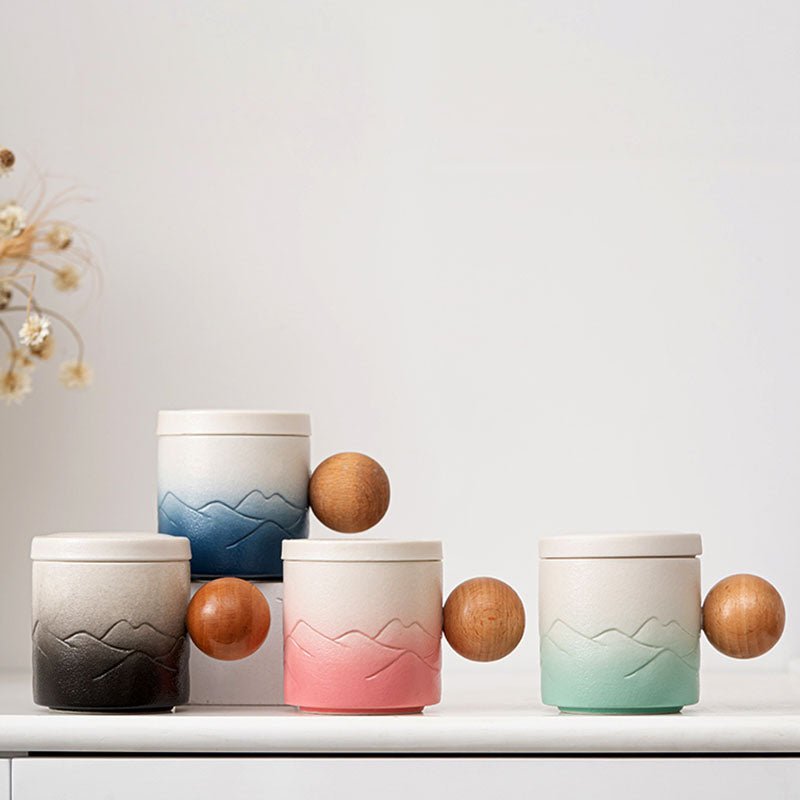
Flat White Cup for Small Coffee Setup: Compare Before Buying
Reading time: about 9 minutes
A narrow drying rack and one open cabinet shelf expose a poor cup choice quickly. A cup can look compact on a product page yet feel awkward once it sits beside an espresso machine, a milk jug, a spoon rest, and the other cups you use every morning. For shoppers building a limited-space station, a flat white cup for small coffee setup should be compared as part of the whole routine, not chosen by appearance alone.
At CoffeifyMug, we see this most often with customers setting up a first apartment kitchen, a small office coffee corner, or a gift set for someone who already has more mugs than cupboard room. They are not necessarily looking for the tiniest cup. They need one that suits the amount they normally pour, leaves sensible room at the top, stores without creating clutter, and still feels deliberate on the table.
How much capacity does a flat white cup for small coffee setup need?
The current compact choices in this group are listed at 200 ml, 250 ml, and 270 ml. Those figures are a useful starting point because they show the usable capacity range, but they do not establish a required recipe or a cafe-standard serving size. Drink names vary by household and coffee shop, so choose from your own usual pour rather than trying to match a fixed ratio.
| Current option | Listed capacity | Useful fit for a small setup | Capacity trade-off |
|---|---|---|---|
| Pleated Coffee Tea Cup | 200 ml | For a shorter everyday pour and the smallest listed capacity in this comparison | Less room for a larger drink or extra space above your usual fill |
| Ball Handled Coffee Tea Mug | 250 ml | For shoppers who want a middle option without moving into a large mug | 50 ml more capacity than the 200 ml option, which may be unnecessary for a smaller pour |
| Emerald Coffee Tea Mug | 270 ml | For a slightly roomier everyday cup while remaining in the compact range | 20 ml more capacity than the 250 ml option, with a larger listed capacity than both alternatives |
Headroom is worth considering separately from the amount you drink. If you commonly pour the same amount into two cups, the cup with the higher listed capacity leaves more unfilled space. That can be useful for carrying a drink from counter to desk, but it also means the cup may feel less full to someone who prefers a smaller serving. The listed capacity does not tell us the exterior width, height, weight, or brimful measurement, so do not treat it as a complete footprint specification.
For a closer size-only comparison before deciding, our flat white cup capacity guide for 200 ml, 250 ml, and 270 ml explains how those listed capacities change the daily fit.
Will the cup actually fit your shelf, counter, and drying rack?
Capacity and storage footprint are related, but they are not the same thing. A lower-capacity cup is not automatically narrower, shorter, lighter, or stackable. Before ordering a set, measure the practical gaps in your setup: the cabinet shelf height, the clear width beside the coffee machine, and the space on the drying rack where cups usually wait after washing.
We recommend using the following quick check before choosing a small coffee cup:
- Measure the height from your shelf to the shelf above, allowing room to lift a cup out without scraping its rim.
- Measure the width of the tray or counter zone where the cup will sit during brewing.
- Count how many cups need to live there at once, including a spare for a guest or a second drink.
- Check the live product listing for any available size, material, and care details before assuming it will stack or fit under a particular cabinet.
- Think about the handle or profile as part of storage. A cup that fits on a shelf can still be inconvenient if it is difficult to lift out from a crowded row.
This is especially relevant for office desks. One cup, a compact kettle, a notebook, and charging cables can consume a surprising amount of usable surface. A small cup can make the station calmer, but a cup chosen only for its listed milliliters may still be a poor desk fit if the external dimensions do not suit the available space.
Which 200 ml, 250 ml, or 270 ml option fits your daily pour?
Choose the 200 ml Pleated Coffee Tea Cup if your priority is the smallest listed capacity. This is the practical starting point for someone who makes a modest coffee, has a shallow shelf, or wants a pair of cups that does not dominate a compact setup visually. Its 200 ml listing makes it the most restrained capacity option here. It is not the best choice for a shopper who regularly wants a larger drink, plenty of unused room at the top, or a cup intended to cover every beverage occasion. See the current Pleated Coffee Tea Cup listing for the product-specific details before adding it to a small set.
Choose the 250 ml Ball Handled Coffee Tea Mug if 200 ml sounds restrictive but 270 ml is more room than you expect to use. The 250 ml capacity sits 50 ml above the Pleated option and 20 ml below the Emerald option, making it a sensible middle comparison point. It can suit a household where one person likes a slightly more generous pour but does not want a standard large mug taking over the shelf. It is not a guaranteed space-saving choice based on capacity alone, so confirm the product details for your cabinet or tray. The next step for this situation is the Ball Handled Coffee Tea Mug page.
Choose the 270 ml Emerald Coffee Tea Mug if you want the largest listed capacity of these three compact options. The added 20 ml over the 250 ml choice may suit a buyer who prefers more room around a familiar pour or wants one cup to cover coffee and tea more often. It is not ideal for someone trying to minimize every item in a very tight cupboard or for a drink that is mostly ice, where the ice itself takes up substantial space. Review the Emerald Coffee Tea Mug as the product-specific next step.
Shoppers comparing several visual styles can also browse the unique coffee mugs collection. Compare the live listings side by side, then narrow the choice using your measured storage space and normal drink amount.
Is a compact cup the right choice for your actual coffee routine?
A small coffee setup often benefits from a dedicated cup size because it removes guesswork from a repeated morning routine. It can be easy to reach, easy to wash, and less intrusive than a large mug on a narrow counter. That does not make it the right answer for every drink.
A compact flat white coffee cup is usually a weaker fit if your usual drink is heavily iced, if you make a large volume of tea, or if you want one mug for long work sessions without refilling. In those cases, choosing a larger capacity can be more useful than forcing the drink into a smaller cup simply because your station is compact. The cup should reduce friction, not create a second pour or a cleanup problem.
Style matters in a small visible setup too. Open shelving turns every cup into part of the room, while a closed cupboard puts more emphasis on capacity and storage fit. For shoppers balancing those decisions, our guide to a small ceramic coffee cup: size, shape, and style provides useful comparison context without assuming that one visual style works for every kitchen.
What should you check before daily washing and gifting?
Care is often overlooked until the first crowded dishwasher cycle. We recommend reading the current product page and any included care guidance before assuming dishwasher or microwave suitability, because those details should be confirmed for the exact item you buy. Do not rely on the cup category alone to answer a care question.
For any small cup, the common handling risks are practical: rim-to-rim contact in a crowded rack, a cup sliding against metal utensils, and stacking items without knowing that they are intended to stack. Give each cup enough separation during washing, avoid leaving teaspoons inside while moving it to the sink, and dry the base before returning it to a wood or painted shelf. These steps protect the cup and keep the small station from becoming a collection of wet rings and loose dishes.
For gifting, capacity is often more useful than guessing a recipient's preferred coffee terminology. A 200 ml option suits a recipient who enjoys smaller servings; 250 ml is a middle-ground choice; and 270 ml gives a little more flexibility. Add a note with the listed capacity and a link to the exact product page so the recipient has the correct care information after unboxing.
Frequently asked questions
What capacity does a flat white cup for small coffee setup need?
Start with the amount you normally pour, then allow the amount of unfilled space you prefer for carrying the drink. The current choices discussed here are 200 ml, 250 ml, and 270 ml. There is no single required capacity for the drink name, so a smaller daily pour may suit 200 ml while a roomier routine may suit 250 ml or 270 ml.
Is a 200 ml cup too small for everyday coffee?
Not if your regular drink fits comfortably within that listed capacity and you do not want substantial extra room at the top. It is the smallest listed option in this comparison, which can make it appealing for a modest pour and limited cupboard space. It is less suitable for someone who routinely makes larger drinks or wants a cup for iced coffee.
Does a 270 ml cup take up more cabinet space than a 200 ml cup?
It has a larger listed capacity, but capacity alone cannot confirm exterior height, width, weight, or stackability. Check the current product listing for dimensions if supplied, and measure your shelf before buying multiple cups. This prevents a capacity decision from becoming a storage surprise.
Can I put these cups in the dishwasher?
Confirm the care instructions on the live product page or packaging for the exact cup before using a dishwasher. If dishwasher use is permitted, avoid crowding cups against each other or against cutlery, since contact at the rim and base is a common source of accidental damage during loading and unloading.
Use this small-setup checklist before adding a cup to cart
Write down your usual drink amount, measure the shelf and drying-rack space, and decide how much headroom you actually like. Then compare the 200 ml Pleated option, the 250 ml Ball Handled option, and the 270 ml Emerald option against that short list. For a coordinated starting point or additional styles, browse our unique coffee mugs collection and open the individual listings to confirm the details that matter in your own kitchen.
More from our blog
Read more

Cappuccino Coffee Mug for Small Coffee Setup: What to Compare
Compare the listed 170 ml, 200 ml, and 270 ml CoffeifyMug options with the shelf, counter, and everyday serving space you actually have. This guide separates capacity from physical footprint so sma...
Per saperne di più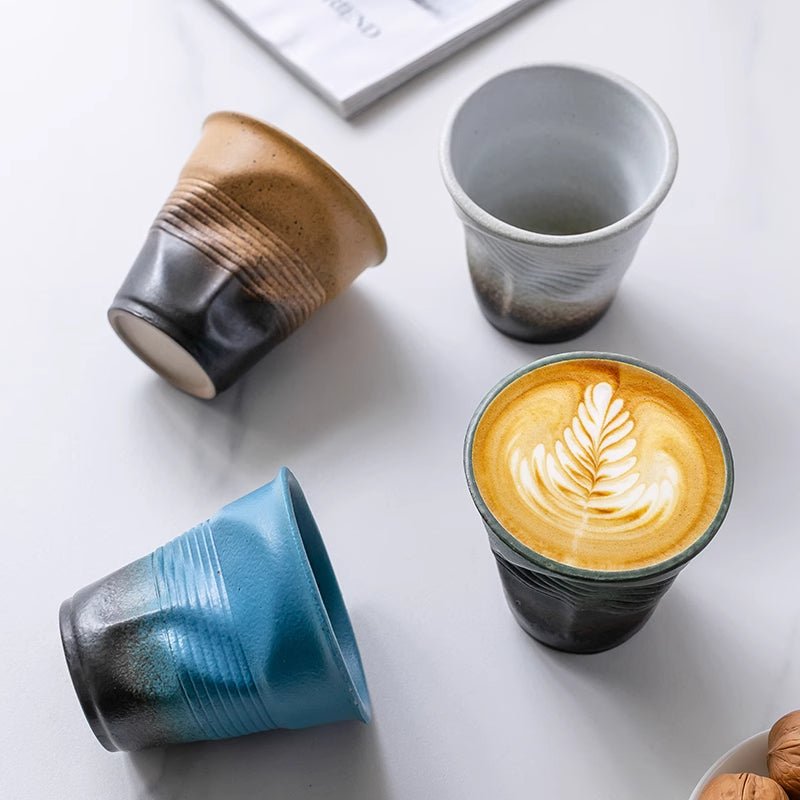
Ceramic Espresso Cup for Small Coffee Setup: Compare Before Buying
A ceramic espresso cup for small coffee setup needs to suit both your drink volume and the limited space around it. Compare the listed 170 ml, 200 ml, and 250 ml options with practical guidance on ...
Per saperne di più
Commenta
Questo sito è protetto da hCaptcha e applica le Norme sulla privacy e i Termini di servizio di hCaptcha.