
Flat White Cup Capacity Guide: 200 ml, 250 ml, or 270 ml?
Reading time: about 9 minutes
A flat white that leaves a comfortable gap below the rim in one cup can sit uncomfortably high in another. That difference becomes obvious during the walk from the coffee machine to the kitchen table, and again when the cup travels to an office desk. This flat white cup capacity guide compares CoffeifyMug's current listed capacities of 200 ml, 250 ml, and 270 ml so you can match a cup to the amount you actually pour.
From the product questions we handle in our store, the main sizing mistake is treating the drink name as if it guarantees one fixed volume. It does not. We are not presenting a required flat white ratio, a barista standard, purpose-built cup geometry, or results from cafe testing. The useful variables here are your complete prepared serving, the capacity you want to leave unused, and how often you plan to refill.
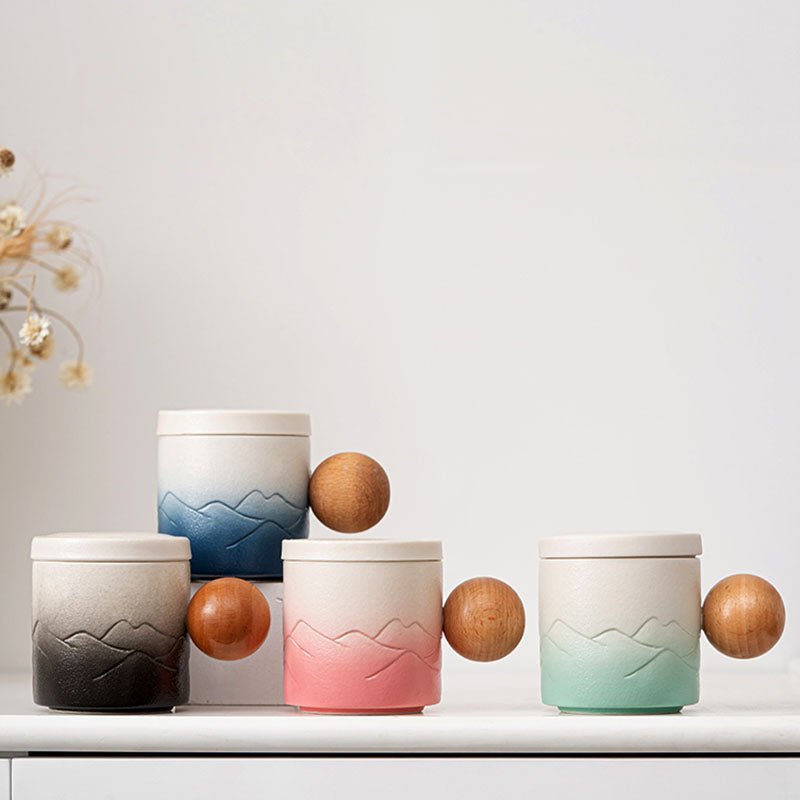
At the compact end, the Pleated Coffee Tea Cup has a listed 200 ml capacity. The Ball Handle Coffee Tea Mug is listed at 250 ml, while the Emerald Coffee Tea Mug is listed at 270 ml. Shoppers who need a different capacity can compare the wider unique coffee mug collection.
Flat white cup capacity guide: what changes across 200 ml, 250 ml, and 270 ml?
The clearest comparison is to subtract your intended finished drink from each listed capacity. We call the result a capacity margin. It is a planning number, not a measured liquid-to-rim headroom specification, because listed capacity alone does not reveal the cup's fill line, internal shape, or rim position.
| Current cup | Listed capacity | Margin with 150 ml | Margin with 180 ml | Margin with 200 ml |
|---|---|---|---|---|
| Pleated | 200 ml | 50 ml | 20 ml | 0 ml |
| Ball Handle | 250 ml | 100 ml | 70 ml | 50 ml |
| Emerald | 270 ml | 120 ml | 90 ml | 70 ml |
These figures include no assumed recipe. Your finished serving should account for everything that occupies the cup, including the coffee, milk, and foam you intend to serve. For example, a 200 ml finished drink uses the entire listed capacity of the Pleated cup on paper. That makes it a poor match for a shopper who wants a visible buffer below the rim, even though the two numbers technically match.
Which capacity fits a 150 ml, 180 ml, or 200 ml serving?
For a 150 ml serving
A 150 ml drink leaves a calculated 50 ml margin in the 200 ml Pleated cup. This is the most compact current match for someone who pours consistently, prefers one short serving, and does not need room for a larger variation. The 250 ml and 270 ml options also hold that serving, but they reserve 100 ml and 120 ml of their listed capacities.
For a 180 ml serving
The Pleated cup leaves only a 20 ml capacity margin at 180 ml. That can be too tight for someone who varies the milk amount or carries the cup across a room. The 250 ml Ball Handle mug leaves a calculated 70 ml, making it the middle option for a regular 180 ml serving with more spill allowance. The 270 ml Emerald leaves 90 ml for shoppers who place a larger buffer ahead of compactness.
For a 200 ml serving
A planned 200 ml drink rules out the Pleated cup if unused capacity is part of the requirement. Among the current options that retain a margin, the Ball Handle is the smaller choice at 250 ml and leaves 50 ml on paper. The 270 ml Emerald mug leaves 70 ml, so it fits the shopper who serves the same 200 ml drink but wants the largest margin in this three-cup comparison.
How much headroom should you plan for carrying and foam?
Headroom is the physical space between the finished drink and the rim. Capacity margin is only a practical proxy for that space. Two cups with the same stated volume can have different dimensions and internal profiles, so we do not convert these capacity figures into a claimed distance below the rim.
- Start with the complete drink. Record the amount you intend to serve after accounting for coffee, milk, and foam, rather than measuring only the coffee portion.
- Subtract it from each listed capacity. A 180 ml serving produces margins of 20 ml, 70 ml, and 90 ml across the three current cups.
- Match the margin to the trip. A cup that stays beside the machine presents a different spill concern from one carried around a kitchen island or through an office.
- Use your largest normal variation. If the drink shifts between 180 ml and 200 ml, compare against 200 ml instead of sizing around the smaller day.
A larger margin is useful when the pour varies or the cup moves frequently, but it is still unused capacity. A shopper who always serves 150 ml at the table may reasonably prefer the smaller listed cup. Someone who adds enough milk to reach 200 ml has a stronger reason to move to 250 ml or 270 ml.
One cup or repeat refills: which size suits the routine?
Capacity applies to one fill, not the total amount consumed across a morning. Two separate 180 ml drinks do not require a 360 ml cup if you prefer to prepare them fresh. They require a cup that comfortably handles each 180 ml round and a refill between servings.
| Serving routine | Capacity logic | Current fit |
|---|---|---|
| One 150 ml drink at the table | 50 ml margin in the smallest current cup | Pleated 200 ml |
| One 180 ml drink carried to a desk | 70 ml or 90 ml calculated margin | Ball Handle 250 ml or Emerald 270 ml |
| One 200 ml drink with unused capacity | 50 ml or 70 ml calculated margin | Ball Handle 250 ml or Emerald 270 ml |
| Repeated short servings | Size for each serving, then refill | Choose according to the volume of each round |
| More than 270 ml in one serving | No margin within this comparison | Move to a larger current cup |
For milk-based drinks served in separate rounds, rinse the cup before residue dries around the rim or base, then follow the current product care instructions for full cleaning. Do not assume dishwasher compatibility from capacity alone. In an office, the practical choice may also depend on access to a sink: a larger single serving reduces refills, while a compact cup is easier to use for shorter, freshly prepared rounds.
Where do 200 ml to 270 ml cups stop being practical?
Compact capacity is not the right answer for every coffee routine. These are the main situations in which we would direct a shopper elsewhere:
- Finished drinks above 270 ml: none of these three options leaves a numerical capacity margin.
- Iced coffee with several cubes: ice occupies cup volume, so the liquid amount must be reduced or the cup capacity increased.
- Long desk drinks: a shopper who wants one large drink instead of refills may find all three capacities restrictive.
- Travel use: capacity does not establish lid compatibility, leak resistance, or vehicle cupholder fit.
- Care-specific households: buyers who require microwave or dishwasher use should verify the live product instructions rather than infer suitability from cup size.
For a broader capacity comparison, use our coffee mug sizes guide for daily use. If capacity is only the first part of your decision, the separate flat white cup buying guide covers the wider purchase questions without changing the capacity math used here.
What should you verify before checkout and after delivery?
Product photography is useful for style, but it is not a measuring tool. We recommend making the capacity decision first, then confirming the remaining details on the live product page.
- Write down your usual finished serving and the largest amount you pour on a normal day.
- Subtract that larger number from 200 ml, 250 ml, and 270 ml.
- Reject any option that gives zero or a negative result if you want unused capacity.
- Check current dimensions against the coffee machine clearance, cupboard shelf, and dishwasher rack that matter in your home. Capacity alone does not reveal height or width.
- Confirm the listed material and care instructions at checkout. Do not treat this capacity comparison as a microwave or dishwasher guarantee.
- For a gift, include the recipient's likely serving size instead of choosing from the word mug alone.
- After delivery, inspect the rim and base for chips or hairline cracks. Where a handle is present, check both attachment points for visible damage or movement before washing and using the cup.
This process also prevents a common gift-unboxing mismatch: a visually appealing compact cup arriving for someone who routinely prepares a much larger drink. Milliliters are more reliable than visual scale in a product photo.
Frequently asked questions
What size cup is best for a flat white?
There is no single required capacity or best cup for flat white drinks. Match the cup to your complete serving and the unused capacity you want: for a 180 ml drink, the listed options leave calculated margins of 20 ml, 70 ml, and 90 ml. Choose the smaller cup for compact servings or the larger option for more buffer.
How should I use this flat white cup capacity guide for a 180 ml drink?
Subtract 180 ml from each listed capacity. The Pleated 200 ml cup leaves 20 ml, the Ball Handle 250 ml mug leaves 70 ml, and the Emerald 270 ml mug leaves 90 ml. Those are planning margins, not measured physical headroom specifications.
Is a 200 ml flat white coffee cup too small?
Not for every routine. A 150 ml finished drink leaves a calculated 50 ml in a 200 ml cup, while a 180 ml drink leaves 20 ml. It becomes unsuitable for a 200 ml serving if you expect any unused capacity.
Does a 270 ml cup give much more room than a 250 ml cup?
The difference in listed capacity is 20 ml. For the same finished drink, the 270 ml cup therefore provides 20 ml more calculated capacity margin. The significance of that difference depends on how consistently you pour and how much buffer you prefer.
Can these cups go in a dishwasher or microwave?
This capacity comparison does not establish dishwasher or microwave suitability. Check the current care instructions on the relevant product page before ordering or starting a dishwasher cycle. Cup volume is not an indicator of material or appliance compatibility.
A three-number checkout decision
- 150 ml serving: start with the Pleated 200 ml cup if a 50 ml calculated margin suits your routine.
- 180 ml serving: compare the Ball Handle 250 ml and Emerald 270 ml based on whether you want a 70 ml or 90 ml margin.
- 200 ml serving: skip the 200 ml option when headroom matters, then choose between the 50 ml margin of the Ball Handle and the 70 ml margin of the Emerald.
Measure the complete drink you already make, choose the margin that fits its trip from counter to table or desk, and check the live product details. If your serving exceeds 270 ml or you want substantially more unused capacity, continue with the current unique coffee mug collection rather than forcing a compact cup into the wrong routine.
More from our blog
Read more
The macchiato cup capacity guide: 170 ml, 200 ml, or 250 ml?
Compare CoffeifyMug's 170 ml, 200 ml, and 250 ml ceramic cups by practical headroom, refill habits, and serving routine. Includes measured-volume examples and clear limitations for each size.
Per saperne di più
Ceramic Espresso Cup Capacity Guide: 170, 200, or 250 ml?
Compare CoffeifyMug's current 170 ml, 200 ml, and 250 ml ceramic cups by measured drink volume, nominal headroom, and refill habits. See where each size fits, where it does not, and what to verify ...
Per saperne di più
Commenta
Questo sito è protetto da hCaptcha e applica le Norme sulla privacy e i Termini di servizio di hCaptcha.