
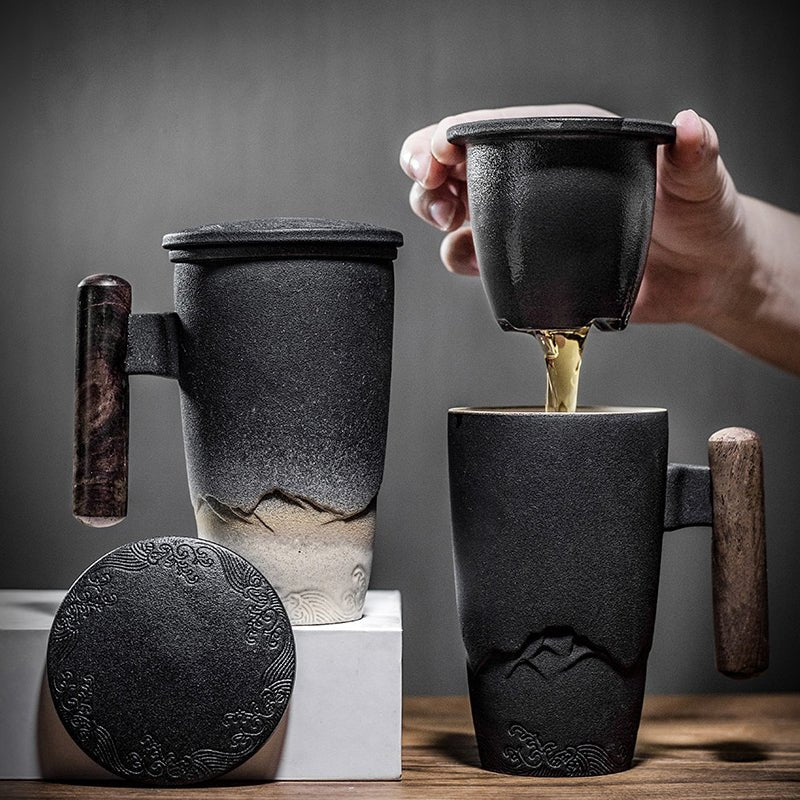
Coffee Mugs Walmart: What to Compare Before You Buy
Reading time: about 9 minutes
We see the same problem all the time: a shopper buys a mug because it looks fine online, then discovers the handle is too small for two fingers, the cup is shorter than expected, or the glaze starts showing wear after a few dishwasher cycles. That is why people searching for coffee mugs walmart usually need more than a quick product page glance. They need a real comparison.
In our store, we handle mugs every day, and the differences that matter are usually practical, not flashy. Capacity, rim shape, handle clearance, and whether the mug stays comfortable with hot coffee are the details that decide if a mug becomes a favorite or ends up at the back of the cabinet. If you are comparing options before buying, this guide will help you focus on the right trade-offs.
What should you compare before buying coffee mugs walmart?
Most buyers start by looking at color or price, but those are not the details that affect daily use. The better way to shop is to compare the parts of the mug you interact with every morning: how much it holds, how it feels in your hand, and how well it handles cleaning.
We wrote a deeper breakdown in Walmart Coffee Mugs: What to Compare Before You Buy, but the short version is this:
- Capacity: 8 oz, 12 oz, 16 oz, and 20 oz mugs all suit different drink habits.
- Material: Stoneware, ceramic, porcelain, and insulated styles all behave differently with heat and weight.
- Handle comfort: A mug can look nice and still feel awkward if the handle is narrow or sits too close to the body.
- Rim and lip shape: A thin, even rim usually feels better than a thick, heavy edge when you sip.
- Care routine: Dishwasher-safe is helpful, but glaze quality and finish still matter over time.
We also tell shoppers to think about where the mug will live. A kitchen cabinet with shallow shelves, an office desk beside a laptop, or a gift box for a coworker each calls for a different shape and size.
Which mug size works best for your daily coffee?
Size is the easiest detail to underestimate. A mug that looks compact in a photo can feel tiny beside a standard coffee maker, while an oversized mug can be clumsy for tea or espresso-style drinks.
If you are still deciding between common capacities, our related guides on 12 oz Coffee Mugs: What to Check Before You Buy and 16 oz Coffee Mugs: What to Check Before You Buy can help. For bigger servings, we also cover 20 Ounce Coffee Mugs: What Buyers Should Check Before Ordering.
| Size | Best for | What to watch for |
|---|---|---|
| 8 oz | Smaller coffee pours, espresso drinks, tea | Can feel too small for drip coffee or long morning sipping |
| 12 oz | Classic everyday coffee use | Usually the safest middle ground, but check handle size |
| 16 oz | Large coffee servings and longer drinks | Heavier when full; may not fit under some brewers |
| 20 oz | Big pour, desk mug, slower drinkers | Can get bulky and hot to hold if wall thickness is thin |
Our experience is that many people buy too large, then realize they do not actually want that much coffee in one sitting. If you like a normal refill routine, 12 oz or 16 oz usually makes more sense than jumping straight to a 20 oz mug.
If you only drink smaller amounts, an 8 oz mug can be the right choice. It just is not the best fit for someone who wants a full drip-coffee mug without topping off repeatedly. For that smaller format, see 8 Ounce Coffee Mugs: What Buyers Should Check Before Ordering and 8 oz Coffee Mugs: Size, Material, and Fit Guide.
Is ceramic, porcelain, or stoneware the better choice?
Material affects more than appearance. It changes weight, heat retention, and how the mug holds up in real use. We handle mugs that look similar from a distance but behave very differently once hot coffee, dishwasher cycles, and cabinet stacking enter the picture.
- Ceramic: Common and versatile. Usually has a familiar hand feel and works well for everyday use, but quality can vary widely.
- Stoneware: Often feels heavier and more substantial. Good for a sturdy, grounded feel, though the extra weight may bother some users.
- Porcelain: Typically lighter and more refined in feel. It can be a good fit for a cleaner tabletop look, but it may feel less “casual breakfast mug” than stoneware.
- Insulated or double-wall styles: Better if you want to keep coffee hot longer or reduce exterior heat, but they are not always the easiest to stack or store.
Trade-off matters here. A heavier mug can keep heat better and feel premium, but it is not ideal if you carry coffee from kitchen to desk all day. A lighter mug may be easier to handle, but it may cool faster. There is no single best material for everyone.
One detail many shoppers miss: the interior glaze and rim finish. A smooth, even glaze is easier to clean and usually feels better to sip from. Rough spots, pinholes, or uneven glaze near the lip are things we inspect closely because they can be annoying in daily use.
How do you tell if a mug handle will actually fit your hand?
This is one of the most common problems we see. A mug can be the right size on paper and still be uncomfortable if the handle opening is too narrow or the handle sits too close to the cup body.
When we examine mugs in our store, we look at three practical handle details:
- Finger clearance: Can you fit at least two fingers comfortably, or does it pinch?
- Grip angle: Does the handle let the mug hang naturally, or do you need to twist your wrist?
- Heat gap: Is the handle spaced far enough from the mug body to avoid warming up too quickly?
Office mugs are a good example. If someone carries coffee between meetings, a handle that is just a bit too small becomes irritating very fast. For home use, it may be fine, but for travel between rooms or a desk setup, comfort matters more.
Gift buyers should pay attention here too. A visually appealing mug can disappoint if the handle feels cramped once unboxed. That is why we recommend comparing actual dimensions, not just the lifestyle photo.
What should you expect from dishwasher and microwave use?
For many shoppers, easy cleanup is non-negotiable. But “dishwasher-safe” does not mean every mug will age the same way. We always advise checking how the glaze, print, and finish are applied.
Here is what we look for in everyday use:
- Dishwasher cycles: Repeated washing can expose weak glaze edges, printed decoration wear, or surface dulling.
- Microwave use: Some mugs heat evenly, while others develop hot spots depending on material thickness and shape.
- Stacking: A thicker base may feel sturdy but can make cabinet stacking awkward.
- Rim wear: A well-fired mug should keep its sip line smooth, not rough or uneven.
We do not recommend choosing a mug only because it claims easy care. Better to look at how the mug is built. A sturdy mug with a consistent glaze and sensible proportions is usually a better long-term buy than a decorative piece that looks great for one week and then starts showing wear.
If you want a broader look at our current drinkware options, browse our collection page or see what is available on our product listings.
What are coffee mugs walmart shoppers often overlook?
People comparing coffee mugs walmart options often focus on the obvious: price, color, and general size. That is understandable. But the details that create regret are usually less obvious.
These are the mistakes we see most often:
- Choosing by diameter only: A wide mug may still be shallow, so it feels different than expected.
- Ignoring base stability: A narrow base can feel less secure on a crowded desk.
- Overlooking glaze color inside the cup: Dark interiors can hide stains less well than some shoppers expect.
- Buying a large mug for every use: A 20 oz mug is not ideal if you actually prefer smaller, hotter servings.
- Forgetting storage: Tall mugs may not fit under shelf lips or in compact cabinets.
We have found that the mug most people keep reaching for is not always the prettiest one. It is the one that feels balanced, pours cleanly, and survives the dishwasher without becoming annoying.
That is the real test. If a mug is uncomfortable on day one, it usually does not become more appealing later.
Which coffee mug is not a good fit for you?
We prefer to be direct about limitations. Some mugs are simply the wrong choice for certain buyers.
A smaller 8 oz mug is not a good fit if you want a full morning pour without refilling. A 20 oz mug is not ideal if you like your coffee hot and finish it quickly. Heavier stoneware is not the best match for someone who wants something easy to lift with one hand while working. And decorative mugs with special finishes may not be the right option if you want zero-fuss dishwasher use every day.
That trade-off is normal. The goal is not to find the “best mug” in the abstract. It is to find the one that fits your coffee habit, storage space, and cleanup routine.
How do you choose a mug that feels right in real use?
Here is the simplest way to narrow the field:
- Decide your usual coffee amount. If you fill a standard brewer cup, start with 12 oz or 16 oz.
- Check the handle size against how you actually hold a mug.
- Pick a material based on feel: lighter for easy handling, heavier for a more solid feel.
- Confirm dishwasher and microwave compatibility if those matter to your routine.
- Consider where it will live: cabinet, office desk, gift box, or daily kitchen shelf.
If you are still comparing formats, our guide on large capacity coffee mugs is useful for deciding when a bigger mug makes sense and when it does not.
Frequently asked questions
Are coffee mugs from Walmart good for everyday use?
Some are, but the quality can vary a lot by material, handle shape, and finish. For everyday use, we suggest checking the mug’s weight, rim smoothness, and whether the handle fits your hand comfortably before buying.
What size coffee mug is best for daily drip coffee?
For most drip coffee drinkers, 12 oz or 16 oz is the most practical range. 8 oz is often too small for a full pour, while 20 oz can feel oversized unless you like a larger serving.
Should I choose stoneware or ceramic for a coffee mug?
Stoneware usually feels heavier and more substantial, while ceramic can be lighter and easier to handle. If you want a sturdier desk mug, stoneware is a strong choice; if you want something a bit lighter for daily kitchen use, ceramic may suit you better.
What mug handle size is actually comfortable?
A comfortable handle usually gives you room for at least two fingers without squeezing. The handle should also sit far enough from the mug body that your fingers are not pressed against warm ceramic.
Can I use these mugs in the dishwasher and microwave?
Many mugs are suitable for both, but not all finishes age the same way. We recommend checking the product care details and avoiding mugs with delicate decorative coatings if you want the easiest cleanup routine.
If you want to compare options side by side, start with your preferred size, then check the material and handle shape against your daily routine. After that, browse our collection or review our products to find a mug that fits the way you actually drink coffee.
Read more
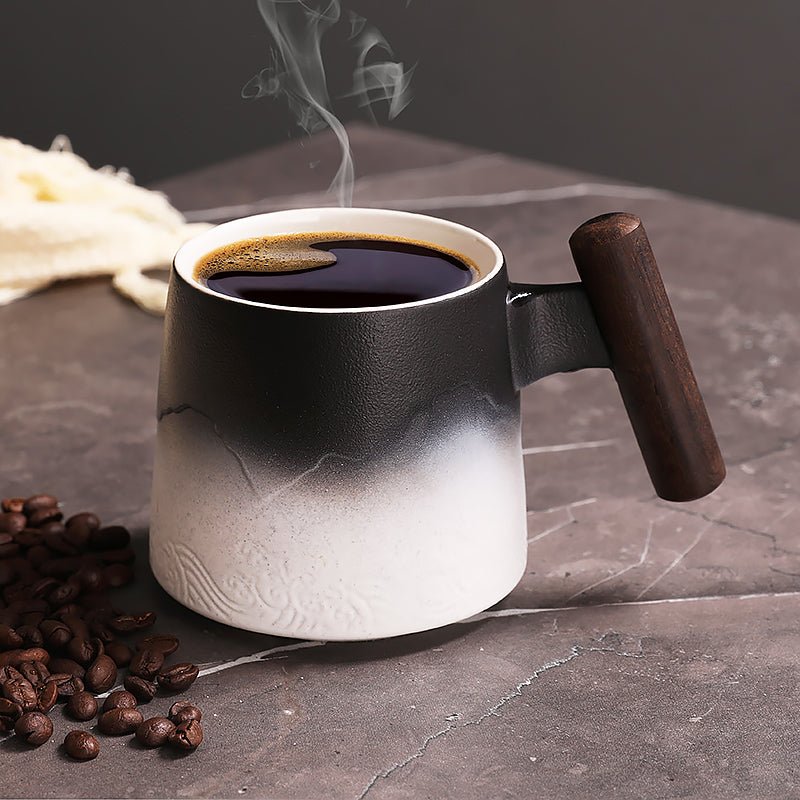
Set of Coffee Mugs: What Buyers Should Check Before Ordering
A practical guide to choosing a set of coffee mugs that fits your routine, from morning brew size to dishwasher durability. We break down what to check before you buy so you can compare options wit...
Per saperne di più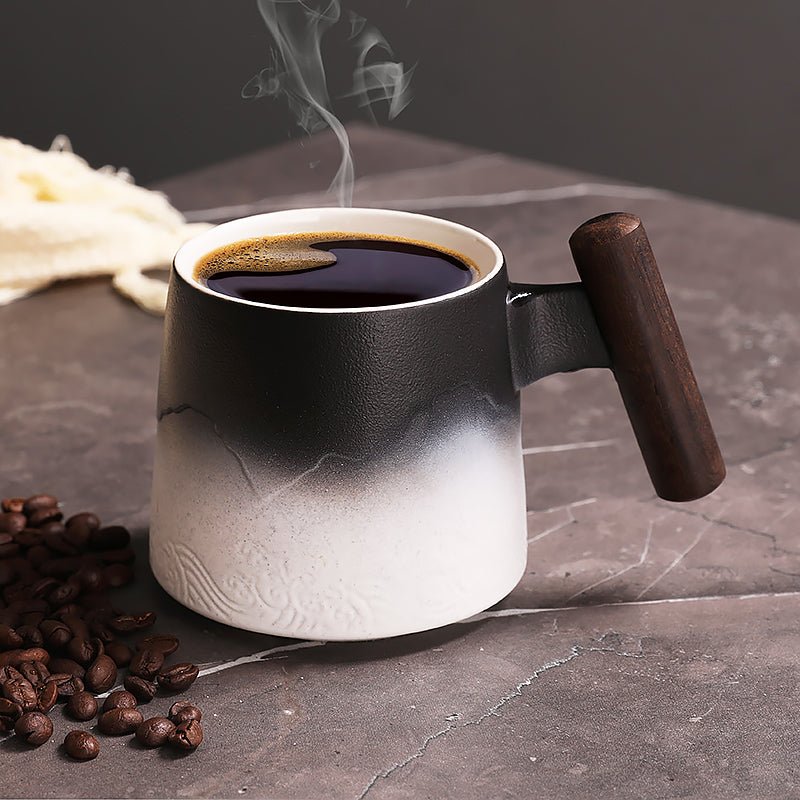
Pictures of Coffee Mugs: What Buyers Should Look For Before Ordering
Pictures of coffee mugs can tell you a lot, but not everything. Here’s how we judge shape, print quality, size, and finish so you can pick the right mug before you buy.
Per saperne di più
Commenta
Questo sito è protetto da hCaptcha e applica le Norme sulla privacy e i Termini di servizio di hCaptcha.