
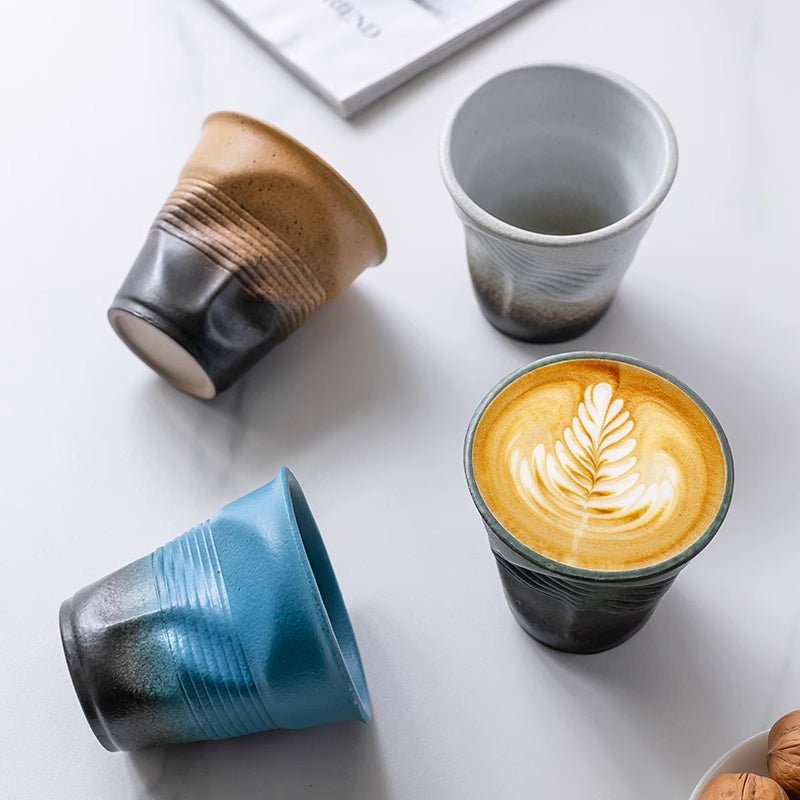
Coffee Mug Sizes Guide: How to Choose the Right Cup
Reading time: about 10 minutes
A mug that feels perfect in the hand can still be wrong for the drink. We see that all the time: a customer wants a bigger cup for morning coffee, then realizes the larger one cools too slowly for a quick commute, while the smaller one looks great on a desk but leaves no room for milk or creamer.
That is why coffee mug sizes matter more than the label on the box. Capacity changes the drinking experience, the fit under a coffee machine, and even how often you reach for the mug after the first week. If you want a broader primer first, our guides on How Many Oz Is a Coffee Mug? Common Sizes and What Fits Best and How Many Oz Is a Regular Coffee Mug? Common Sizes and Fit cover the baseline sizes buyers run into most often.
In our store, we look at mug size the same way a real shopper does: by the drink, the routine, and the trade-offs. A mug for black coffee is not always the same mug for lattes, tea, cocoa, or office use.
What do coffee mug sizes actually mean?
Coffee mug sizes usually refer to the mug’s liquid capacity in ounces or milliliters. In practice, a mug’s usable volume is often a little less than the absolute brim capacity because no one wants coffee sloshing over the edge.
That difference matters. A mug labeled 16 oz may comfortably hold closer to 14 oz of drinking room, especially if it has a thick base, a wide handle, or a tapered rim. Taller mugs often keep a higher volume without taking up as much table space, while wide mugs can feel easier to sip from but may lose heat faster.
We also pay attention to the real dimensions, not just the ounce count. Two mugs can both be 16 oz and still behave very differently on a counter, in a dishwasher, or under a pod machine. Rim diameter, height, wall thickness, and handle clearance all affect everyday use.
| Common size | Typical use | What usually fits best |
|---|---|---|
| 8 oz | Small coffee, espresso-based drinks, tea | Short pours, minimal milk, compact settings |
| 10–12 oz | Standard home coffee | Drip coffee, smaller lattes, everyday use |
| 14–16 oz | Large everyday mug | Big pour, room for cream or foam |
| 20 oz and up | Extra-large servings | Long drinks, all-day desk use, less refilling |
If you want a closer look at a very common mid-size option, our 16 Ounce Coffee Mug Buyer’s Guide: Size, Material, and Fit goes into the practical details buyers usually ask about first.
Which coffee mug size fits your daily drink?
The right size depends on how you actually drink coffee. A mug for a fast single cup before work needs different proportions than one that sits beside a laptop for two hours.
Here is the simplest way we help shoppers choose:
- 8 oz: Best for smaller servings, espresso drinks, and people who want a tighter pour with less leftover coffee.
- 10–12 oz: The everyday sweet spot for many households. Enough room for milk, but still easy to handle.
- 14–16 oz: Better if you like a larger pour, use cream, or want one mug that works for coffee and tea.
- 20 oz: Useful for long desk sessions, big iced-to-hot transitions, or people who dislike refills.
- 24 oz: Best for extra-large servings, but not ideal if you prefer your drink hot and finished quickly.
For smaller servings, our 8 oz Coffee Mug: What to Check Before You Buy covers the points that matter most before ordering. If you are leaning bigger, the 20 oz Coffee Mug: What to Check Before You Buy and 24 oz Coffee Mug: What to Check Before You Buy articles are useful for checking size, feel, and day-to-day practicality.
Our experience selling mugs for home kitchens and office desks is that buyers usually regret oversizing more than undersizing. A huge mug can feel impressive on day one, then become awkward to wash, heavy when full, and slow to finish before the drink gets lukewarm.
Is a bigger mug always better?
No. Bigger is only better if you actually use the extra volume. A large mug can be perfect for a long morning at a desk, but it is not automatically the right choice for every drinker.
Here are the trade-offs we see most often:
- Heat retention: Larger mugs often expose more coffee to air, so drinks can cool differently depending on shape and wall thickness.
- Weight: A full 20 oz ceramic mug is noticeably heavier than a 10 oz mug, especially with a thick handle or double-wall build.
- Storage: Bigger mugs may not fit neatly under a cabinet lip, in a mug tree, or under some espresso machines.
- Portion control: If you prefer one cup and done, a giant mug can encourage overpouring and waste.
A smaller mug is not a compromise if your routine is short and simple. For example, a 10 oz mug on a kitchen counter near a drip brewer is often more practical than a deep oversized mug that needs two hands when filled.
That said, bigger mugs do solve real problems. They are useful if you add milk, take a while to finish your coffee, or want one cup that doubles as a tea or cocoa mug later in the day.
What size works best for home, office, and gifting?
The best size changes with the setting. A mug that works beautifully in a quiet kitchen can be clumsy on a crowded desk or too specialized for a gift.
Home use
At home, most buyers are happiest with 10–16 oz because those sizes handle drip coffee, tea, and occasional cocoa without feeling oversized. If your cabinet space is tight, check the height and rim width as much as the ounce count.
Office use
For desks, 12–16 oz usually strikes the best balance. It gives enough capacity for a full pour, yet still fits beside a keyboard and mouse without dominating the workspace. A wider mug can be more stable than a tall narrow one, but make sure it still clears a coffee machine or hot water dispenser.
Gifting
For gifts, we usually recommend a size that feels easy to use with a standard drip coffee habit. That means 10–14 oz for most people. Very large mugs can feel thoughtful at first, but they are more personal and can be harder to match to someone’s setup.
Shoppers browsing the full range can start at our products page or browse the broader collection if they want to compare styles alongside size.
What should you check besides the ounce count?
We always tell customers to look past the headline capacity. Real-world fit depends on the build, not just the number on the listing.
Three details matter especially:
- Material: Ceramic is common, stable, and comfortable for daily use, but it can chip if it knocks against a sink or another mug. Double-wall stainless steel or insulated travel mugs hold heat longer, but they do not feel like a classic mug on the table.
- Rim and wall thickness: Thick walls can make a mug feel sturdy, but they also reduce usable capacity slightly. A thin-rim mug may sip more comfortably, yet it can feel less durable in a busy kitchen.
- Handle size and clearance: A roomy handle matters if you drink hot coffee, especially with large mugs. Some oversized mugs have a handle that looks fine but does not leave enough finger room once the mug is full.
We also check care instructions before recommending a mug. Dishwasher-safe ceramic is convenient for busy households, but repeated high-heat cycles can wear on printed designs or metallic details. Hand washing may preserve decoration longer, but it is not as convenient for an office or family kitchen.
One common defect mode we watch for is a poorly finished rim. If the glaze is uneven or the lip feels rough, the mug will never feel right no matter how good the design looks in photos. Another is handle stress: a mug can crack at the join if it is too thin or if the ceramic cools too quickly after a hot wash.
How do mug sizes affect coffee temperature and taste?
Size changes how your drink behaves after pouring. A smaller mug usually helps you finish the coffee while it is hotter. A larger mug gives you more time between refills, but it also means the drink has more surface area exposed to air.
That is one reason latte drinkers often prefer larger cups. Foam, milk, and espresso need space. On the other hand, a straight black coffee drinker who likes to finish within 10 minutes may be happier with a smaller mug because the cup stays more manageable and the drink does not linger as long.
We have also seen size affect taste perception. In a big mug, a modest pour can taste thinner simply because it looks smaller in the cup. That may not change the coffee itself, but it changes how the drink feels.
If your routine includes specialty drinks, size and shape should work together. A broad bowl-like mug suits a cappuccino-style drink, while a taller mug is better for drip coffee or milk-heavy pours that need vertical room.
Which coffee mug size should you avoid?
We do not think any size is universally bad, but a few combinations cause regret.
- Very large mugs for quick drinks: If you only drink a small amount at a time, a 20 oz or 24 oz mug may be more than you need.
- Small mugs for milk-heavy drinks: An 8 oz mug can be too tight for lattes, cappuccinos with foam, or tea with milk.
- Oversized mugs for travel: Big ceramic mugs are not a good substitute for a lidded travel cup. They spill too easily and cool too fast on the move.
- Decorative mugs with no usable handle space: Some designs look great on a shelf but are awkward in the hand once filled.
If you want a mug that mainly lives in a bag or car cup holder, a travel tumbler is a better fit than a classic mug. A coffee mug is built for desk, kitchen, and table use first.
Frequently asked questions
What is the most common coffee mug size?
Most shoppers end up choosing something in the 10 to 16 oz range. That size works for drip coffee, tea, and many milk-based drinks without feeling too small or too bulky.
Is 12 oz or 16 oz better for everyday use?
12 oz is usually better if you want a lighter mug that finishes drinks faster and takes up less space. 16 oz is better if you pour larger servings, add milk, or want fewer refills during a long morning.
Will a 20 oz mug fit under my coffee machine?
Sometimes, but not always. Check the mug height and the clearance under your machine’s brew head, especially if the mug has a tall handle or a thick base. Capacity alone does not tell you whether it will fit.
Are ceramic mugs better than stainless steel mugs?
For table use, ceramic usually feels better and looks more like a traditional coffee mug. Stainless steel is better if you want insulation and durability, but it does not give the same drinking experience.
What size mug is best for gifting?
A 10 to 14 oz mug is the safest gift choice for most people. It is practical, easy to use, and less likely to be too large for a standard coffee routine.
If you are comparing options now, use this quick check before buying: measure the cabinet space, think about your usual drink size, and decide whether you want a light everyday mug or a larger one with room for milk. Then browse our collection to compare styles and sizes side by side, or go straight to the products page if you already know the capacity you want.
More from our blog
Read more
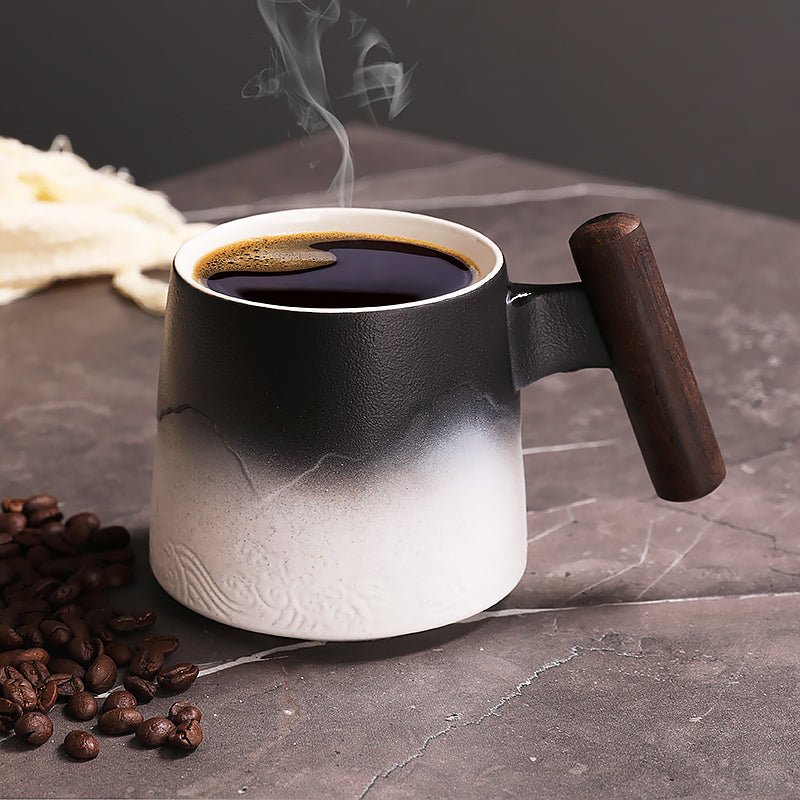
Cobalt Blue Coffee Mugs: What Buyers Should Check Before Ordering
A practical guide to cobalt blue coffee mugs, covering glaze finish, size, material, and everyday use so you can choose a mug that fits your routine and looks good on the counter.
Per saperne di più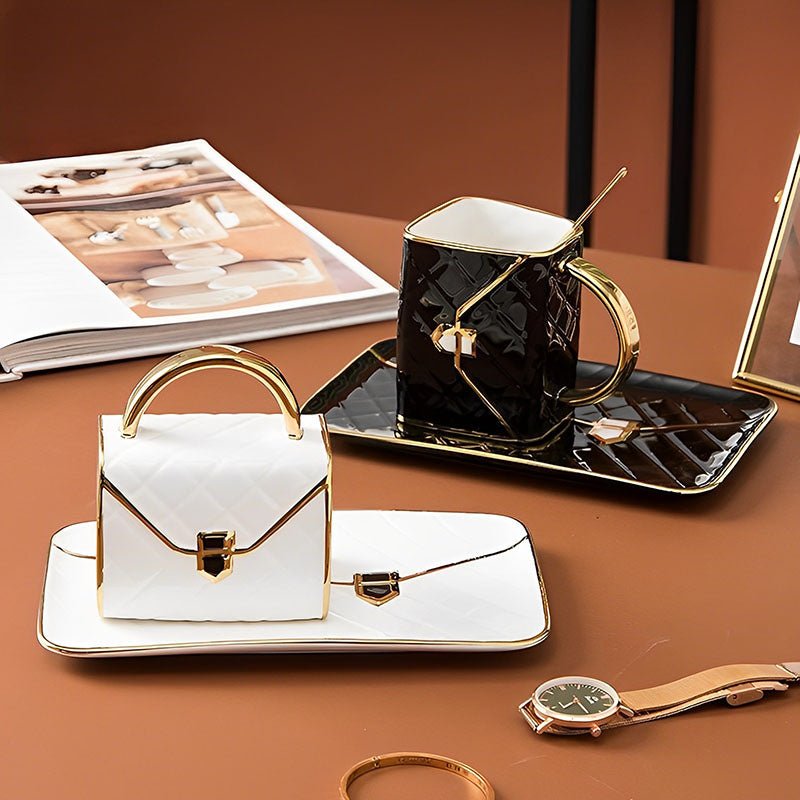
Coffee Mugs Funny Enough to Gift and Actually Use
Funny coffee mugs work best when the joke lands fast and the mug still feels good in the hand. We break down what to look for so you can pick one that gets used at home, at work, and after the firs...
Per saperne di più
Commenta
Questo sito è protetto da hCaptcha e applica le Norme sulla privacy e i Termini di servizio di hCaptcha.