
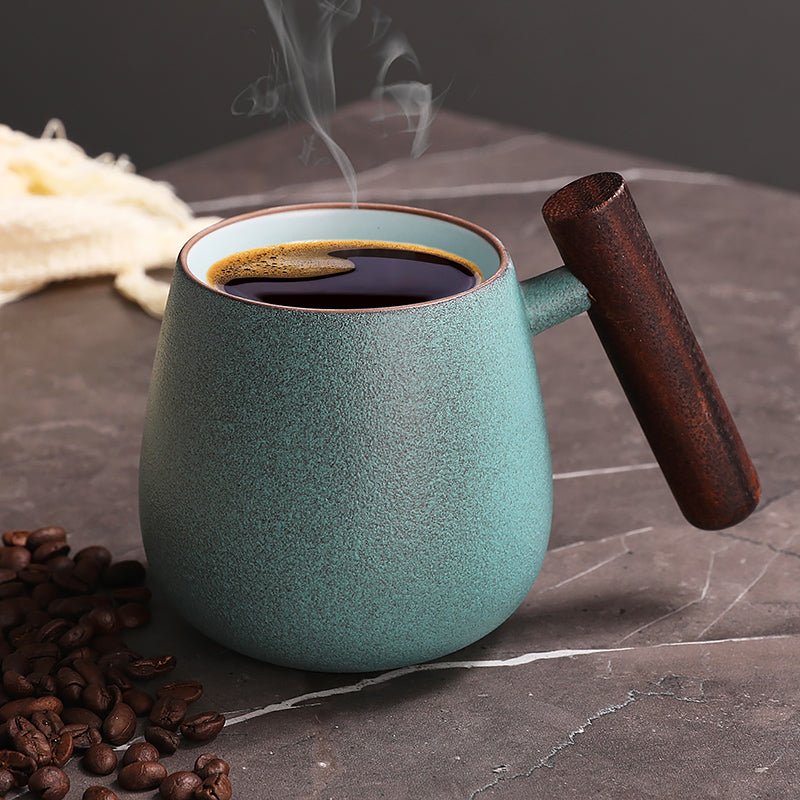
Coffee Mug Dimensions: How to Choose the Right Size
Reading time: about 9 minutes
A mug can look right online and still miss the mark once it reaches your kitchen. We see that mismatch most often at the cabinet shelf, under a machine spout, or in a dishwasher rack where an extra half-inch changes everything.
That is why we compare shape first, not just capacity. If you want to see how form changes the way a mug sits in the hand, look at our Rhombus Coffee Tea Mug, Handbag Coffee Tea Mug, and White Golden Waves Tall Coffee Tea Mug. Different silhouettes can hold similar amounts and still feel very different on a desk.
If you are comparing a few options at once, our full mug collection is the fastest place to compare shapes before narrowing in on size.
What do coffee mug dimensions actually tell you?
Coffee mug dimensions are the physical measurements that determine how a mug fits in real life, not just how much liquid it can hold. The usual ones are height, rim diameter, base diameter, handle opening, and overall width from handle to outer wall. Capacity matters, but it only tells part of the story.
A standard 11 oz mug and a wide 11 oz mug can both hold the same drink while behaving differently on the counter. One may fit easily under a cabinet; the other may feel more stable because it has a wider base. In our store, we see buyers focus on ounces first and then realize the mug does not clear the machine or the shelf they use every day.
A mug that holds the right amount can still be the wrong mug if the handle is too tight, the base is too wide, or the height does not match the space where it lives.
That is the core of sizing. Capacity tells you how much coffee goes inside. Dimensions tell you whether the mug works on your shelf, in your hands, and in your dishwasher.
Which measurements should you check before buying?
We recommend checking the physical footprint before anything else. If you are buying online, these are the measurements that matter most in day-to-day use:
- Height - Important for cabinet clearance, coffee machine spouts, and stacking.
- Rim diameter - A wider opening changes aroma, heat loss, and how easily you can sip without tipping too far.
- Base diameter - A wider base usually feels steadier on a desk or tray.
- Overall width with the handle - This is the number people forget, and it is often the one that causes shelf or dishwasher problems.
- Handle clearance - If your fingers touch the mug body while gripping the handle, the mug will feel smaller than the capacity suggests.
- Wall thickness - Thicker walls can help hold heat longer, but they also add weight and reduce internal volume.
For a rough sense of size, many everyday ceramic mugs land in these ranges. The exact numbers vary by shape, but these benchmarks help when comparing listings:
| Typical size | Common everyday dimensions | What it usually feels like |
|---|---|---|
| 10 oz mug | About 3.5 to 4 inches tall, often with a modest footprint | Compact, quick to store, good for smaller pours |
| 11 oz mug | About 3.75 to 4.25 inches tall, often the standard everyday size | Balanced for home and office use |
| 12 oz mug | About 4 to 4.5 inches tall, sometimes a little wider or taller | More room for milk, tea, or a larger pour |
A buyer should also check for common quality issues that show up in dimensions and finish. We look for a flat base that does not wobble, a smooth handle join, a rim without rough spots, and a glaze that covers the foot evenly. Hairline cracks near the handle, pinholes in the glaze, or a slightly uneven foot ring are the kinds of defects that matter because they can affect comfort and long-term use.
If you want a broader reference point, our guides on Coffee Mug Dimensions: Sizes, Fit, and What to Check Before Buying and Standard Coffee Mug Dimensions: What Buyers Should Check go deeper on the basics.
How do ounces, height, and width change the feel in hand?
Two mugs can share the same capacity and feel completely different. A shorter, wider mug usually feels more grounded on a desk and is easier to dip a spoon into. A taller, narrower mug may save shelf space, but it can feel top-heavy if the base is too small.
We see this difference most clearly with daily coffee routines. On a kitchen counter, a wider mug gives a little more stability when you are moving fast. At an office desk, a narrower mug can be easier to slide beside a keyboard or notebook. For tea, a taller mug can keep the drink hot a bit longer because less surface area is exposed, while a wide open mug cools faster and invites faster sipping.
Here is the practical trade-off:
- Short and wide - Better stability, easier stirring, more counter presence. Not ideal if cabinet clearance is tight.
- Tall and narrow - Better for compact shelves and some gift boxes. Not ideal if you have small hands or a low coffee machine.
- Thick-walled ceramic - Feels substantial and can hold heat longer. Not ideal if you want a very light mug for repeated lifting.
- Lightweight mug - Easier to carry from sink to desk. Not ideal if you prefer a heavier, more grounded feel.
That is why a mug with a comfortable capacity can still miss the mark. If you regularly drink while working, check the handle clearance and base width first. If you mostly drink at the table, lip comfort and balance matter more than a few extra millimeters of height.
If you want more examples focused on everyday size choices, our 10 oz Coffee Mug: Size, Fit, and What to Check Before You Buy and 12 Ounce Coffee Mug Buying Guide: Size, Fit, and Best Uses compare what those sizes do in real use.
Which coffee mug dimensions work best for home, office, and gifts?
The right dimensions depend on where the mug will live. For a home coffee station, the safest choice is usually a mug that balances height and footprint so it fits under cabinets and beside the machine. For an office desk, a mug with a stable base and a handle that clears your fingers is more useful than a decorative shape that is hard to grip. For gifting, the mug should look distinctive but still be easy to use every day.
We would break it down like this:
- Home kitchens - Check cabinet height, machine clearance, and dishwasher space.
- Office desks - Check stability, spill resistance, and whether the mug crowds your keyboard or mouse.
- Gifts - Check visual appeal, handle comfort, and whether the design feels special without being awkward to wash.
That is where shape-led mugs can be useful. A statement piece like the Rhombus Coffee Tea Mug or Handbag Coffee Tea Mug is the kind of mug people notice when they open the box. A taller profile like the White Golden Waves Tall Coffee Tea Mug is better if you want height without a bulky footprint. None of those shapes is automatically better. The right choice depends on where the mug will be used.
We try to be direct about the trade-offs. A decorative mug is not always the best pick for a crowded sink, and a tall mug is not always the best choice for a shallow shelf. If you want the easiest everyday use, a standard rounded mug usually wins. If you want a gift that feels more considered, a distinctive shape can be the better move.
Why do mug shapes change fit even at the same size?
Shape changes both the internal volume and the external footprint. Two mugs can both be labeled 11 oz, yet one may have thicker walls, a wider body, or a narrower base. Those differences change the way the mug feels in the hand and where it fits in your kitchen.
A round mug usually offers the most predictable grip and the easiest cleaning. A tapered mug can feel lighter visually and sometimes slide more easily into a narrow shelf. A novelty shape can be more fun to unwrap and display, but it may be less practical if you run it through a dishwasher every day or stack your mugs in a tight cupboard.
In our experience, the easiest mug to live with is the one that balances three things at once:
- Good balance - It sits flat and does not rock.
- Comfortable handle space - Your fingers fit without squeezing the mug body.
- Reasonable external size - It clears the shelf, machine, and dishwasher rack you already use.
That is also why we do not treat capacity as the only decision point. A mug can have the right ounces and still be awkward if the handle is too small or the body is too wide for your cabinet. If the mug will live in a dishwasher, look for a smooth glaze and a shape that does not trap water around the handle join. If it will be used on a desk, a flat, stable base matters more than decorative height.
For shoppers who want a better grounding in the standard sizes before choosing a shape, the article 11 oz Coffee Mug: Size, Fit, and What to Check Before You Buy is a useful comparison point.
Frequently asked questions
How do I measure coffee mug dimensions before buying?
Start with height, rim diameter, base diameter, and overall width including the handle. If you are replacing an old mug, measure the space it actually occupies on the shelf or beside the coffee machine, not just the amount it holds. That gives you a better fit check than ounces alone.
Is an 11 oz mug bigger than a 10 oz mug?
Usually yes, but not always in a way you can feel immediately. Some 11 oz mugs are only slightly taller, while others are noticeably wider or heavier because of the shape and wall thickness. Compare the physical dimensions, not just the capacity label.
What mug dimensions fit under most coffee machines?
That depends on the machine, but the safest move is to measure the clearance from the tray to the spout before you buy. Many standard mugs fit fine, while taller mugs can block the drip area or force you to remove the tray. If your machine sits under a low cabinet, measure both spaces.
Why do two mugs with the same ounces feel different?
Wall thickness, base width, handle shape, and lip diameter all change the feel. A thicker mug can feel more substantial and keep heat a bit longer, while a wider mug may feel easier to drink from. Same capacity does not mean same comfort.
Are tall mugs harder to store or wash?
They can be, especially if your cabinet shelves are tight or your dishwasher rack sits low. Tall mugs may also tip more easily if the base is narrow. If storage is tight, check the height first and compare it against the exact space you use every day.
If you want the safest next step, compare the mug's height, base width, handle clearance, and rim diameter against the space on your shelf or coffee machine, then browse our full mug collection for a shape that fits the way you actually drink coffee.
Read more
Large Ceramic Coffee Mugs: What Buyers Should Check Before Ordering
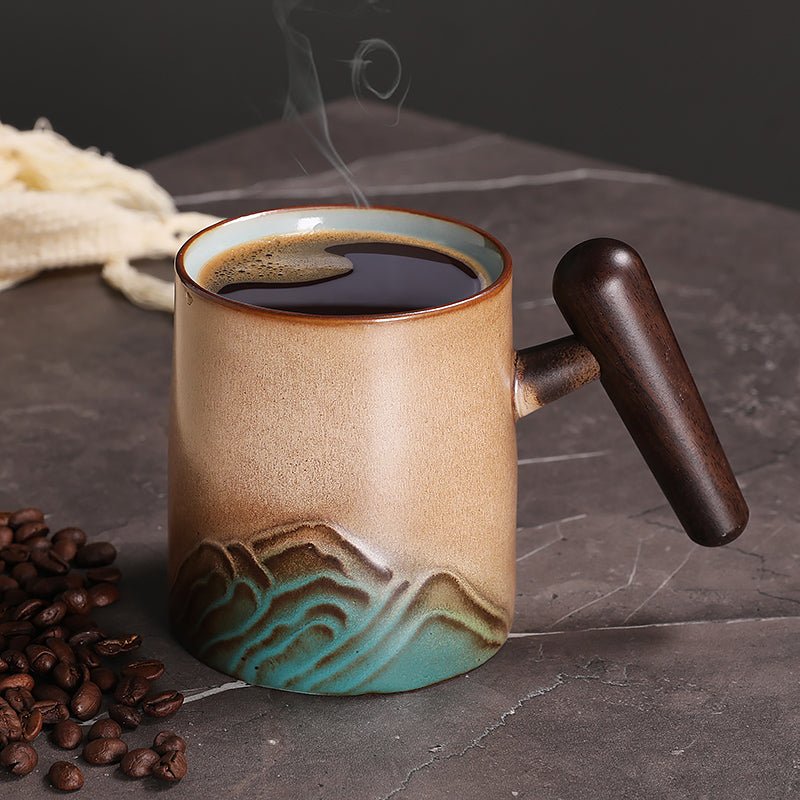
Large ceramic coffee mugs are a practical buy if you want a stable, heat-holding mug for daily coffee or tea. Here is what we check in our store, which styles work best, and which ones are worth sk...
Per saperne di più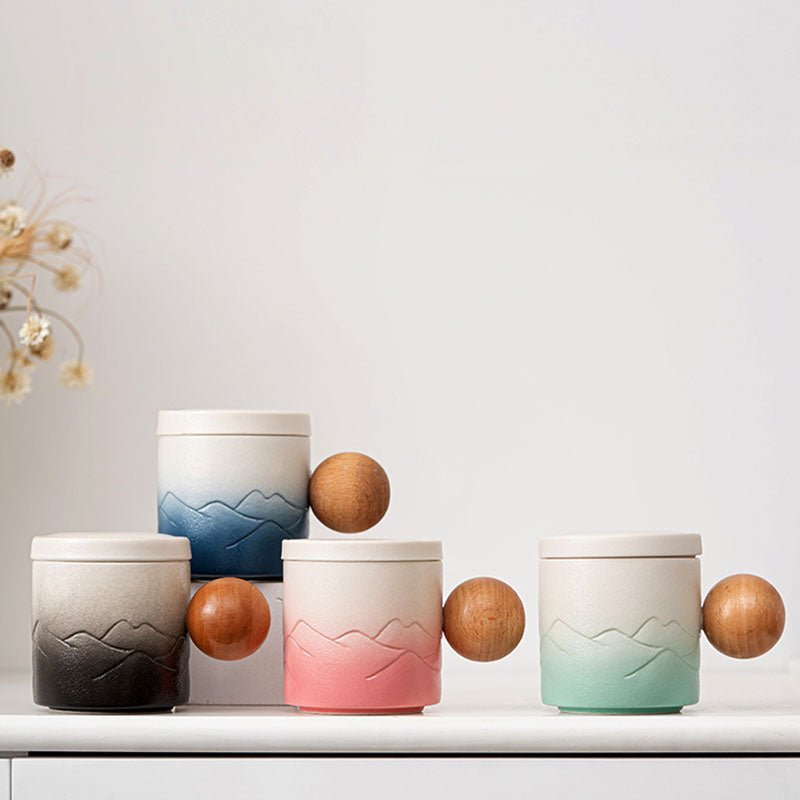
Otagiri Coffee Mug Buying Guide: Condition, Size, and Daily Use
A practical Otagiri coffee mug guide for shoppers who want the right mix of condition, size, and everyday usefulness before they buy.
Per saperne di più
Commenta
Questo sito è protetto da hCaptcha e applica le Norme sulla privacy e i Termini di servizio di hCaptcha.