
20 oz Coffee Mugs: Size, Fit, and What to Buy
Reading time: about 9 minutes
A full morning pour changes the way a mug feels in your hand. The handle matters more. The rim matters more. Even the cabinet shelf starts to matter, because a 20 oz mug is no longer a small accessory on the counter; it is the cup you build the routine around.
If you are comparing 20 0z coffee mugs, you are probably trying to solve a practical problem: one mug that can handle coffee, tea, or cocoa without constant refills, but still feels manageable at the desk or sink. That is the sweet spot we see shoppers aiming for in our store.
We handle a lot of mug decisions like this every day. The buyers who are happiest usually know what the size is for, what it is not for, and how they plan to wash and store it. That sounds basic, but it saves a lot of returns and regret.
What does a 20 oz mug actually mean in daily use?
A 20 oz mug is a large single-serving mug. It is big enough for a generous coffee with room for milk, a long tea session, or hot chocolate with toppings, but it is not a travel tumbler and it is not a tiny espresso cup pretending to be versatile.
In real use, the difference shows up in the fill line. A mug can be rated at 20 oz and still feel best when you leave some space at the top. That extra headroom helps with stirring, reduces splash on the way to the couch, and keeps foam or cream from riding right to the rim.
We see the size work well for:
- People who pour one drink and stay with it for a while.
- Tea drinkers who want room for a bag, loose-leaf infuser, or extra water.
- Desk setups where fewer refills matter more than a compact cup.
- Households where one mug is used for coffee in the morning and cocoa later in the day.
It is not the best choice if you only want a short, concentrated drink, or if you prefer lighter mugs that are easy to lift with one hand all day. For that use case, a smaller format such as a 12 oz mug often feels more natural, and our guide on 12 oz Coffee Mugs: How to Choose the Right Mug for Daily Use is the better starting point.
Which material makes the biggest difference?
Material affects heat, weight, and how forgiving the mug feels after a few months of daily use. For a large mug, those differences are easier to notice because the cup starts heavier once it is full.
| Material | What it does well | Trade-off | Best for |
|---|---|---|---|
| Ceramic | Comfortable everyday feel, stable on a desk, familiar drinking experience | Can chip if knocked against sinks, counters, or crowded dish racks | Home kitchens, office desks, gift mugs |
| Stoneware | Often feels sturdy and substantial in the hand | Can be heavier than thinner ceramics | People who like a weightier mug |
| Glass | Shows the drink visually, good for layered beverages | Usually loses heat faster and can feel slippery | Tea presentation and visual drinks |
For most buyers, ceramic is the practical middle ground. It usually feels warm in the hand without becoming fragile-looking, and it fits the way most people actually use a mug: coffee in the morning, rinse, dishwasher or sink, repeat. If the piece has a glaze, that finish matters too. A smooth glaze is easier to keep clean than a textured surface that traps coffee marks in the details.
One more point from our side of the counter: large mugs are less forgiving of weak handles and thin walls. If the handle opening is too tight for your fingers, the cup stops feeling relaxed very quickly. That is the sort of detail that does not show up in a product photo unless you know to look for it.
Does shape matter as much as capacity?
Yes. Shape changes how the mug pours, how it balances, and how it feels in your hand after the first few sips. A 20 oz mug with a wide body and narrow handle can feel very different from one with a taller profile and more room around the grip.
In our store, we see buyers split into two groups. One wants a roomy mug that sits well on a kitchen table or office desk. The other wants a mug that still fits comfortably under a coffee machine and does not overwhelm the shelf in a small apartment kitchen. Same capacity, different daily experience.
Watch these points before you buy:
- Handle clearance: Your fingers should fit without forcing the mug to tilt.
- Rim width: A broader opening can cool coffee faster, while a narrower opening helps hold heat a bit longer.
- Base stability: A wider base is less likely to feel tippy on a crowded desk.
- Cabinet height: Tall mugs can be awkward in shallow shelves or tight dish racks.
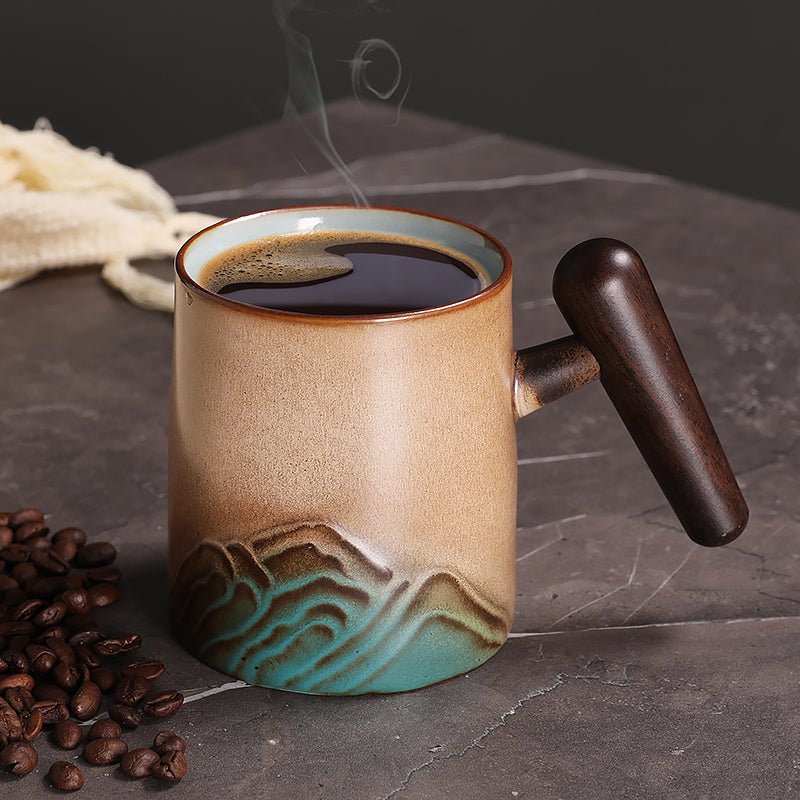
If you want to compare styles side by side, start with the full selection in our coffee mug collection. For a cleaner, more everyday look, we often point shoppers to the Landscape Coffee Tea Mug. If you prefer a stronger visual statement on a desk or gift shelf, the The Gradient Coffee Tea Mug gives you a different feel without changing the use case. For buyers who want something more nostalgic, the Retro Coffee Tea Cup is the kind of piece that stands out in an unboxing.
What should you check before ordering?
Our best advice is simple: compare the mug against the way you already drink coffee. Not the way you imagine you drink it. The real version. The one that happens between the kettle, the coffee maker, the laptop, and the first dish in the sink.
We recommend checking these details before you add a mug to cart:
- Capacity: Make sure the mug is truly 20 oz, not just labeled as a large cup with no clear volume.
- Material and finish: Look for the surface texture, glaze, and any printed detail that might change care instructions.
- Handle size: If you usually drink with one hand, the handle should feel secure, not cramped.
- Cleaning method: Confirm whether it is dishwasher-safe or better washed by hand, especially if the design includes delicate decoration.
- Storage fit: Check shelf height, dish rack spacing, and whether the mug will crowd other cups.
If you want a deeper buying checklist, our article on 20 oz Coffee Mugs: How to Choose the Right Size, Material, and Fit covers the main decision points. For a second pass focused on ordering details, the guide 20 Ounce Coffee Mugs: What Buyers Should Check Before Ordering is useful when you are comparing listings and trying to avoid easy misses.
How do you care for a large mug without ruining the finish?
A 20 oz mug gets used hard. It sees hot liquid, repeated rinsing, a few coffee stains, and probably a dishwasher cycle or two every week. That means care matters, especially if the mug has a decorative glaze or printed surface.
Our practical care routine is straightforward:
- Wash the mug before first use so the rim and interior start clean.
- Use a soft sponge for glazed finishes instead of abrasive pads that can dull the surface.
- If the product page says dishwasher-safe, place it where it will not knock into heavier cookware.
- Let the mug cool before moving it from a hot sink to a cold counter, which helps reduce thermal shock.
- Dry the handle and base after washing so moisture does not sit in seams or around the foot.
One limitation with larger mugs is drying time. A deeper cup can hold water at the bottom or around the handle connection if it is stacked too tightly. That is not a defect by itself, but it is a reason to avoid overcrowded dish racks if you want the finish to hold up.
They are also not the best pick for people who want a mug to live in a car cup holder or a compact backpacking setup. A 20 oz mug belongs on a kitchen counter, office desk, or breakfast table more than in a travel bag.
Which buyers should choose a smaller mug instead?
We will be direct here: a 20 oz mug is not the right choice for everyone. Size solves one problem and creates another. The larger cup gives you less refilling, but it also gives you more weight, more cabinet space used, and more liquid to handle at once.
You should probably go smaller if you:
- Prefer espresso, macchiatos, or short pours that disappear quickly.
- Have limited shelf space or a narrow dishwasher rack.
- Need a mug that is easy for smaller hands to hold comfortably for a long time.
- Mostly drink in a car or while walking between rooms.
If that sounds like you, a smaller format will feel less cumbersome and more natural day to day. We would rather point you to the right size than oversell the biggest one. That is also why we keep related size guides on the blog, so shoppers can compare before buying instead of guessing after delivery.
Frequently asked questions
Will a 20 oz mug fit under a standard coffee maker?
Sometimes, but not always. The deciding factor is the clearance under your machine and the height of the mug, not the capacity on the label. Measure from the drip basket to the tray before you buy if you plan to brew directly into the mug.
Are 20 oz coffee mugs too heavy for everyday use?
They can feel heavy once full, especially for people who sip with one hand or have smaller hands. The mug itself may be comfortable, but the full weight changes the experience. If that bothers you, a smaller mug will usually feel easier to manage.
Can I use a 20 oz mug for tea and cocoa too?
Yes. A 20 oz mug works well for tea, chai, and hot chocolate because it leaves room for steeping, milk, or toppings. It is a poor fit only when you want a small, concentrated drink with minimal volume.
What should I look for if I want a mug that lasts?
Check the glaze, the handle connection, and the base. A smooth finish is easier to maintain, a solid handle matters for daily lifting, and a stable base reduces accidental knocks. Also confirm the care instructions so you know whether the mug belongs in the dishwasher or needs hand washing.
What is the main drawback of buying a 20 oz mug?
The main trade-off is size. A larger mug takes more space, weighs more when full, and can be awkward if your routine is built around smaller servings. If that sounds inconvenient, a 12 oz or 16 oz mug may suit you better.
If you are narrowing your choice now, compare the mug against your shelf height, handle comfort, and how much liquid you actually pour each morning. Then start with the full range in our coffee mug collection and pick the style that fits your routine, not just your shelf photo.
Read more

Rack for Coffee Mugs: How to Choose the Right Fit for Your Space
A practical guide to choosing a rack for coffee mugs based on cabinet clearance, handle size, material, and daily use. We cover what works, what wears out, and what to skip.
Per saperne di più
Coffee Mug Painting: What Works, What Chips, and What to Buy
Coffee mug painting looks simple until the first wash test. We break down which mug surfaces, paints, and care steps actually hold up, and when a finished mug is the safer buy.
Per saperne di più
Commenta
Questo sito è protetto da hCaptcha e applica le Norme sulla privacy e i Termini di servizio di hCaptcha.