
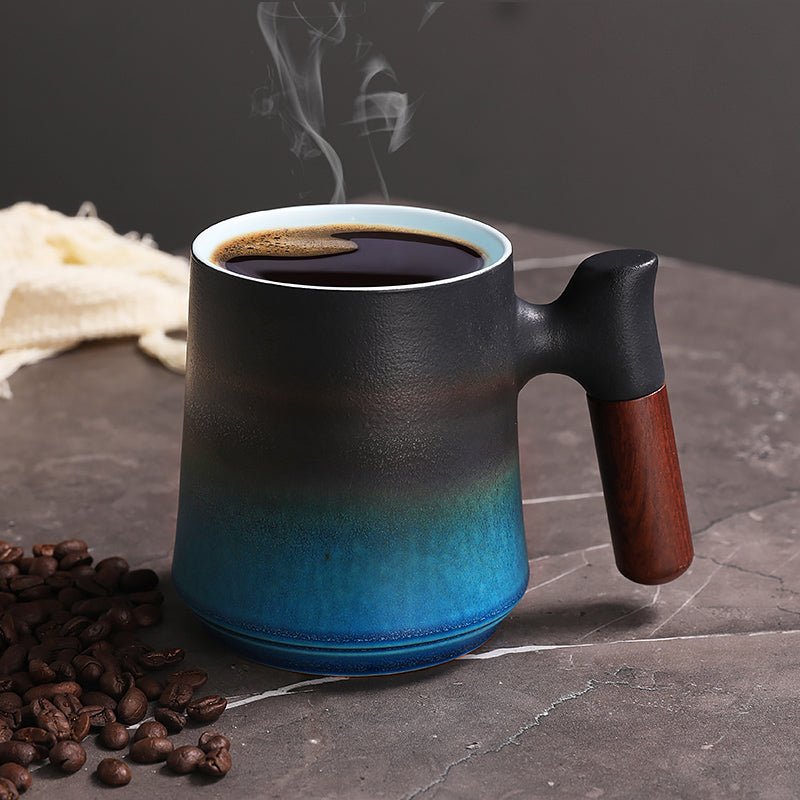
15 oz Coffee Mugs: Size, Fit, and Buyer Checklist
Reading time: about 9 minutes
A 15 oz mug looks simple on a product page. On a kitchen counter or office desk, it solves a specific problem: the smaller mug that runs out too quickly, but without jumping all the way to a giant cup that feels heavy or awkward to hold.
In our store, we see people buy 15 oz coffee mugs for morning drip coffee, milky tea, cocoa, and gift sets that need a little more presence than a standard cup. The tricky part is that 15 oz does not automatically mean better. Shape, handle room, rim comfort, and base stability matter just as much.
If you want to compare styles as you read, start with our all mugs collection. For examples of the kind of 15 oz pieces we carry, take a look at the Mountain Sea Coffee Tea Mug, the Spittoon Coffee Tea Mug, and the Planet Coffee Tea Mug.
What does a 15 oz mug actually feel like in daily use?
Fifteen ounces is the point where a mug starts to feel generous without becoming a novelty size. For most shoppers, that means enough room for a full coffee pour plus milk, or a tea service that does not need constant refilling. It also means more body height or width than a 12 oz mug, so the mug may take up more cabinet space and may feel heavier when full.
The practical detail most shoppers miss is usable fill. A mug is usually not filled to the rim. Leave room for heat, foam, or a splash of cream, and the everyday drinkable amount becomes a little less than the stated capacity. That is normal. It is also why two mugs labeled 15 oz can feel different in hand if one is wide and squat and the other is tall and narrow.
Here is the quick reality check we use:
- Good fit: drip coffee, tea, hot chocolate, and larger home pours.
- Less ideal: espresso-based drinks, very small servings, or anyone who wants a tiny mug that cools more slowly.
- Potential drawback: if your desk is crowded or your shelf clearance is tight, a 15 oz mug can be more annoying than useful.
If you are buying for a daily routine, this size is often the middle ground people settle on after trying something smaller first. It is not a universal answer, but it is a practical one.
How does 15 oz compare with 12 oz and 16 oz mugs?
The difference between 12 oz, 15 oz, and 16 oz often looks small on paper and feels larger in real use. A three-ounce change sounds minor until you are pouring coffee every morning, reheating in a microwave, or trying to store the mug under a cabinet.
If you are deciding between sizes, our guides on 12 oz coffee mugs and 16 oz coffee mugs are the fastest way to compare the edges of the decision. The 15 oz size usually lands in the middle: more forgiving than 12 oz, less bulky than 16 oz.
| Size | Best for | Trade-off |
|---|---|---|
| 12 oz | Standard coffee servings, smaller hands, lighter feel | Can feel too small for milk-heavy drinks or long work sessions |
| 15 oz | Daily coffee, tea, cocoa, and a fuller pour without going oversized | Takes more cabinet and desk space than a 12 oz mug |
| 16 oz | Big pours, lots of milk, long meetings, and slower sipping | Can feel bulky and heavier when full |
We usually tell shoppers to choose 15 oz if they want a mug that behaves like an everyday mug but gives them room to pour a little more generously. If you regularly refill, a 12 oz mug may still be the cleaner choice. If you always want a big, full cup, 16 oz can make more sense.
Which shape details matter before you buy?
Capacity is only part of the story. A 15 oz mug can still be uncomfortable if the shape is wrong for your hand or the way you use it. In our experience, the small details are what separate a mug that gets used from one that sits in the back of the cabinet.
- Handle clearance: Make sure there is enough room for at least two fingers if you like a secure grip, especially when the mug is full.
- Rim comfort: A smooth, even rim matters more than many shoppers expect. Rough glazing or a sharp lip can make the mug feel cheap fast.
- Base stability: A flat, steady foot ring reduces wobble on kitchen counters, office desks, and side tables.
- Wall thickness: Thicker walls often feel sturdier, but they can also make the mug feel heavier in hand.
- Overall footprint: A wider mug may be easier to clean and stir, while a taller mug may hold warmth a bit differently and fit a bag or shelf less easily.
This is where product photos and dimensions matter. A decorative mug can still be practical, but you want the shape to match the reality of your routine. The Mountain Sea Coffee Tea Mug, Spittoon Coffee Tea Mug, and Planet Coffee Tea Mug are useful examples to compare because they help show how different styles can still serve the same everyday size.
Our rule is simple: if the mug feels awkward empty, it will feel worse when it is full.
What should you check in the listing before ordering?
Online mug shopping is mostly about removing surprises. The best listings tell you enough to judge fit without guessing. We look for a few concrete details every time, because they tell you more than the capacity number alone.
- Dimensions: Check height, top diameter, and base width. A mug that is 15 oz at the brim can still be too tall for a shelf or too wide for a tight cupboard.
- Material: Ceramic and stoneware are the most common everyday choices. They usually feel solid, but they also vary in weight and heat retention.
- Care notes: If you plan to use a dishwasher, confirm the listing actually says it is appropriate for that kind of care. Do not assume.
- Print or glaze details: A detailed finish can look great, but it should also be even. Uneven glaze, pinholes, or rough spots near the lip are worth checking closely.
- Handle join: Look at the point where the handle meets the mug body. That is a common stress area, and a clean join usually suggests better everyday handling.
A mug can look perfect in a staged photo and still disappoint if the height is wrong or the handle feels cramped. That is why we prefer listings that show the mug from several angles and mention practical dimensions, not just the volume.
Which situations make a 15 oz mug the better choice?
Some buyers do not need a full comparison chart. They already know how they drink coffee. For those shoppers, the right choice is often obvious once the mug is matched to the setting.
- At home: A 15 oz mug works well for a slower morning cup when you do not want to refill after a few sips.
- At the office: It is useful if you keep a mug on your desk through meetings and prefer one stable cup instead of multiple small ones.
- As a gift: The size feels substantial, and a distinctive design usually lands better than a plain cup that disappears into the cabinet.
- For tea or cocoa: The extra room helps with milk, foam, or a tea bag without crowding the rim.
There are also clear cases where 15 oz is not the best answer. It is not ideal for someone who wants a very compact mug for espresso or small servings. It is also not the best fit if your cabinets are shallow, your hands are small, or you prefer the light feel of a 10 oz or 12 oz cup. That trade-off is real, and it is better to admit it before buying.
If you are between sizes, a practical way to think about it is this: choose 15 oz if you want comfort and flexibility; choose smaller if you value a lighter cup and a tighter footprint; choose larger only if you regularly finish the entire pour and want the extra room every day.
How do you keep a 15 oz mug looking good for longer?
A mug does not need special treatment, but it does need basic care. The biggest problems we see are not dramatic. They are the small everyday habits that chip a mug, dull the finish, or create stress cracks over time.
- Wash gently around the rim and handle: That is where glaze wear and small chips tend to show first.
- Avoid sudden temperature swings: Moving a very hot mug straight into a cold sink can be rough on ceramic surfaces.
- Do not let it knock around in the dishwasher: If you stack mugs too tightly, the edges can get battered over time.
- Inspect for wobble or hairline cracks: If a mug starts to rock on a flat surface, or you notice a fine crack near the foot or handle, stop using it.
These are small checks, but they matter. A well-made 15 oz mug should feel steady, smooth at the lip, and comfortable after repeated use. If a mug does not do that on day one, it usually does not improve with time.
Frequently asked questions
Is a 15 oz coffee mug too big for everyday use?
Not usually. For most people, 15 oz sits in the comfortable middle range: large enough for a full coffee pour, small enough to use on a desk or kitchen counter without feeling oversized. It becomes too big only if you prefer a lighter cup or usually drink smaller servings.
Will a 15 oz mug fit under most coffee makers?
Sometimes, but not always. Fit depends on the machine height and the mug's actual shape, not just the listed volume. Check the mug's height before buying if you plan to place it under a home brewer or espresso machine.
What is the main difference between a 15 oz mug and a 12 oz mug?
The main difference is room. A 15 oz mug gives you more space for a fuller pour, milk, foam, or a longer drinking session, while a 12 oz mug usually feels lighter and more compact. If you want a middle ground between standard and oversized, 15 oz is the more flexible choice.
Are 15 oz coffee mugs good for tea and hot chocolate?
Yes. The extra capacity is useful for tea bags, milk, and cocoa without crowding the rim. They are often a better fit than a smaller cup if you like to add extras or sip slowly.
What should I check first if I am buying a 15 oz mug as a gift?
Check the shape, the handle comfort, and the overall style. A gift mug should look good on a shelf or desk, but it also needs to feel easy to hold and practical enough that the recipient will actually use it.
If you are ready to narrow it down, compare the height, handle room, and base stability first, then browse our all mugs collection to choose the style that matches how you really drink coffee.
More from our blog
Read more
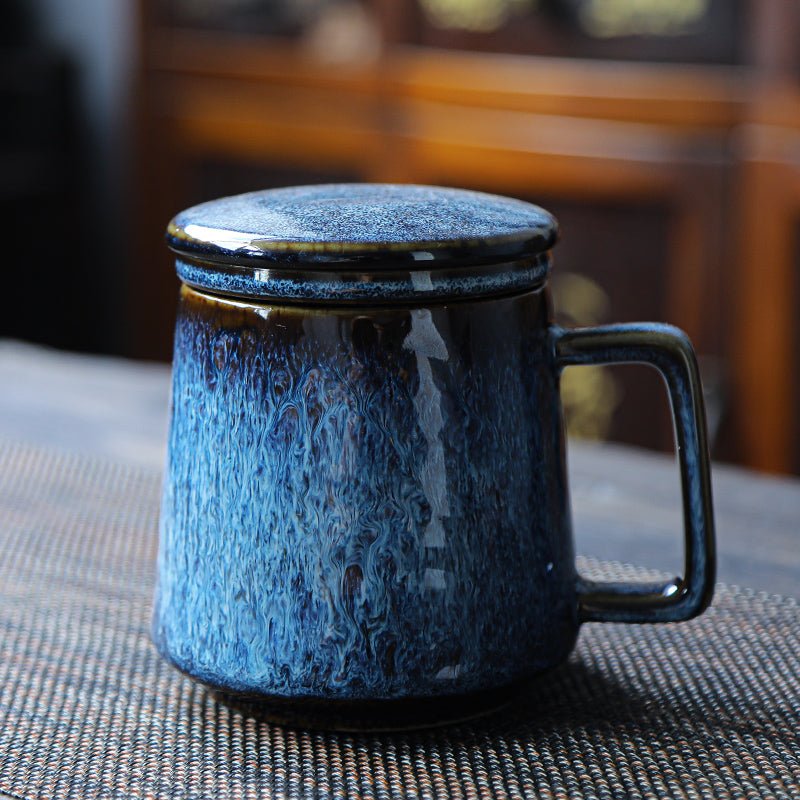
Regular Coffee Mug Size: What Buyers Should Expect Before Ordering
A regular coffee mug size usually lands in the 8 to 12 oz range, but the right pick depends on how you drink coffee, how much counter space you have, and whether you want a lighter cup or a fuller ...
Per saperne di più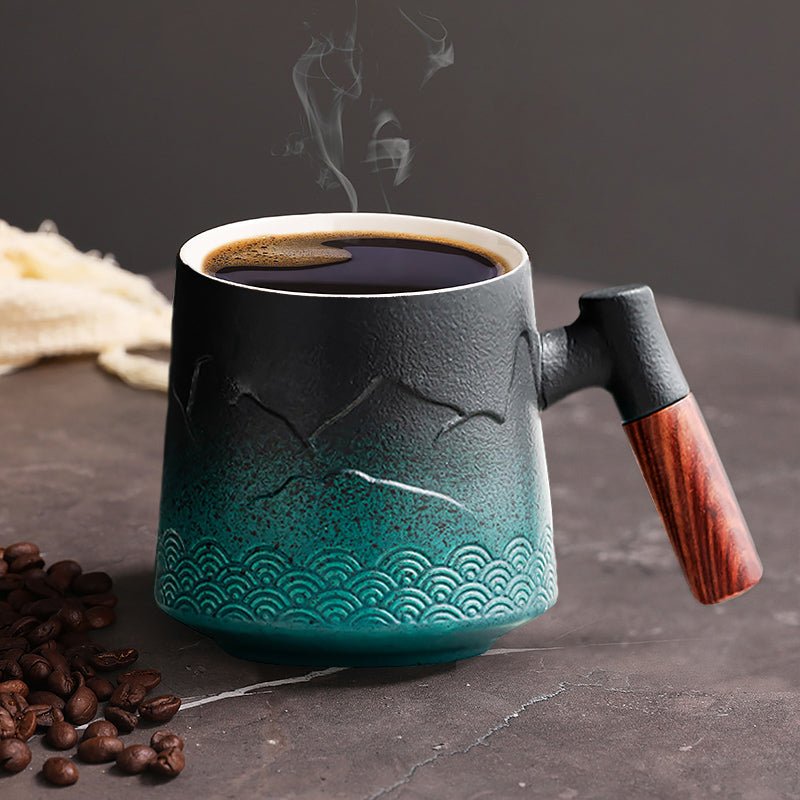
Coffee Mugs With Coffee Sayings: How to Choose One That Fits
Coffee mugs with coffee sayings work best when the message, size, and shape match how the mug will actually be used. Here’s how we help shoppers pick a mug that looks good on the desk and still fee...
Per saperne di più
Commenta
Questo sito è protetto da hCaptcha e applica le Norme sulla privacy e i Termini di servizio di hCaptcha.