
What Makes a Crap Coffee Mug and What to Buy Instead
Reading time: about 9 minutes
A mug can look fine on a product photo and still feel wrong the first morning you use it. The handle pinches your fingers, the rim feels too thick, or the cup looks stylish but tips over when it is half full and sitting on a crowded desk.
That is usually what people mean when they say they bought a crap coffee mug. Not just ugly. Bad to hold. Bad to wash. Bad to live with.
We handle this category every day in our store, and the same complaints come up again and again: awkward grip, thin glaze that shows wear too quickly, handles that are too small for adult fingers, and shapes that are more decorative than practical. If you want something better, start by looking at real use, not just the print or pattern. A good place to compare options is our full mug collection, then narrow down by shape, size, and handle style.
For shoppers who want a simple everyday ceramic pick, the Green Waves Coffee Tea Mug is a useful reference point: clean shape, easy to read silhouette, and a pattern that still looks presentable on an office desk. If you want a warmer seasonal gift option, the Christmas Coffee Tea Mug shows how a themed mug can stay practical instead of becoming pure novelty.
What actually makes a crap coffee mug?
A crap mug is one that fails at the basics. The problems are usually obvious once you know what to check in hand, not just on a screen.
- Poor handle geometry: the opening is too narrow for four fingers, or the handle sits too close to the body so your knuckles hit the mug.
- Unbalanced weight: the mug feels top-heavy when filled, especially if the base is narrow and the wall thickness is uneven.
- Weak rim feel: a rim that is too thick can make sipping uncomfortable, while a rough or uneven glaze can feel cheap immediately.
- Finish that does not hold up: printed graphics that fade, glaze marks that show too easily, or surfaces that pick up stains after a few dishwasher cycles.
- Bad daily-use fit: a mug that looks good in a photo but is awkward on a desk, under a drip coffee maker, or next to a laptop.
In practical terms, a bad mug is one you avoid reaching for. It might still hold coffee, but it does not earn a spot in your routine. That matters if you are buying for yourself or choosing a gift that should feel useful on day one, not just cute in the box.
If you have already owned one mug that chipped at the rim or started to feel sticky after washing, you are not being picky. You are noticing the difference between a mug made for display and one made for actual use.
Which materials and finishes hold up better for daily coffee?
Material matters, but so does finish and construction. A ceramic mug with a smooth, even glaze can outperform a prettier mug with a fragile printed coat. The best choice depends on how you use it.
| Material or build | What it does well | Trade-off |
|---|---|---|
| Ceramic with glazed finish | Feels familiar, easy to clean, usually stable on a counter | Can chip if dropped on tile or a hard sink edge |
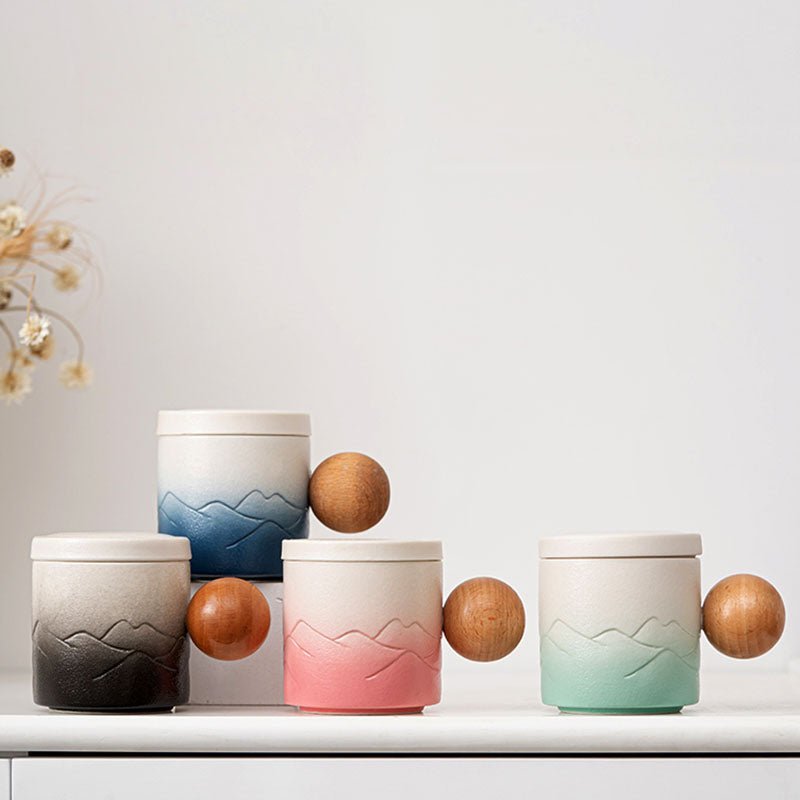
| Wood-handled design | More comfortable to grip when the mug is hot, gives the mug a different feel on the desk | Not the best choice if you want a fully uniform dishwasher routine or a very minimal look |
| Decorative printed mug | Good for gifts and personality | Some prints look tired quickly if the coating is thin or the art sits in high-friction areas |
We like ceramic for most buyers because it is straightforward. It looks normal on a kitchen counter, it pairs with standard drip coffee, and it is not fussy. That said, a ceramic mug is not the right pick for every buyer. If you need a cup that can live in a backpack, travel bag, or car console, a travel tumbler is the better tool. A mug is for desk coffee, kitchen coffee, and home refills.
For shoppers who want something with a different feel in hand, the Mountain Sea II Coffee Tea Mug with Wooden Handle is worth a look. The wooden handle changes the user experience in a real way: less finger crowding, a little more visual contrast, and a more giftable profile. The trade-off is that it is not the right choice if you want a purely traditional all-ceramic mug.
What size and shape should you buy for coffee, tea, and office use?
Size is where a lot of shoppers get stuck. Too small, and the mug feels like a sample cup. Too large, and it cools too slowly, takes over the desk, or feels clumsy in one hand.
We usually tell buyers to think in use cases instead of only ounces:
- Daily black coffee: choose a size that leaves room for a normal pour without sloshing at the rim.
- Milk drinks: look for a mug with a slightly wider body if you want to add cream or foam without overflow.
- Tea and all-day desk use: prioritize comfort in the handle and balance over pure capacity.
- Gift buying: choose a shape that reads clearly from a shelf or box opening and feels easy to hold right away.
For fit-focused shoppers, our related size guides are useful before you buy. If you are deciding between smaller everyday formats, read 10 oz Coffee Mug: Size, Fit, and What to Check Before You Buy and 11 oz Coffee Mug: Size, Fit, and What to Check Before You Buy. For buyers who want a bit more room for milk or a longer desk session, our 12 Ounce Coffee Mug Buying Guide for Daily Use and Better Fit covers the practical side better than most generic size charts.
Shape matters just as much as volume. A straight-sided mug can feel modern and stable. A rounded body can look softer and hold heat differently in the hand. A narrow base can seem elegant, but if the mug sits on a crowded desk near a keyboard, a wider base usually feels safer.
Which mugs are better for gifts, desks, and kitchen counters?
The best mug is not always the prettiest one. It is the one that fits the setting where it will be used.
For gifts, the mug should feel personal without being so specific that it becomes a shelf ornament. Seasonal art can work well here if the pattern still leaves the mug usable after the holiday. That is where the Christmas Coffee Tea Mug makes sense: it is festive, but still practical enough for tea, coffee, or cocoa.
For office desks, we usually favor mugs that are stable, easy to rinse, and not visually noisy. A mug with a clean pattern or restrained colorway reads better next to a laptop, notebook, and keyboard. The Green Waves Coffee Tea Mug fits that use well because it is noticeable without looking loud.
For kitchen counters, durability and cleanup matter more than novelty. A mug that is easy to stack, easy to grab, and easy to identify quickly is more useful than a heavily detailed design that looks busy in a cupboard. If your cupboard is already crowded, avoid overly tall shapes that knock into neighboring cups every time you reach for one.
One more practical point: a mug with a decorative handle or shaped body can be a better gift but a worse stackable everyday mug. That is a real trade-off, not a flaw. We prefer to call it out so buyers do not end up with something beautiful that turns into a nuisance.
How do you compare mugs before buying one?
We recommend checking a mug the same way we would inspect one before putting it on a shelf or sending it as a gift.
- Handle test: imagine three or four fingers inside the handle. If it looks tight in the photo, it will likely feel tighter in hand.
- Rim check: look for a clean, even lip with no visible waviness or rough edges.
- Base check: a flat, steady base matters more than people think, especially on glossy counters.
- Finish check: decide whether you want a simple glazed look or a printed mug with more personality.
- Use-case check: ask where the mug will live. Desk, sink, dishwasher, gift box, or display shelf.
We also suggest looking for common defect modes before you buy: uneven glaze near the handle join, thin spots near the rim, and prints that wrap too close to the grip area. Those are the details that often separate a mug you enjoy from a mug you quietly stop using.
If you want a broader browse instead of jumping straight to one mug, start with our collection page and compare finish, handle style, and visual tone side by side. That is usually faster than relying on photos alone.
For readers who want a little more sizing context before making a decision, our other guides can help: 11 oz Coffee Mug: What Buyers Should Check Before They Buy and 12 oz Coffee Mug: Size, Fit, and What to Check Before Buying. Those pieces are useful if you are choosing between a compact mug and a more generous everyday size.
Frequently asked questions
What makes a mug feel like a crap coffee mug?
Usually it is one or more small problems that add up: an uncomfortable handle, a rim that feels rough, a base that sits unstable, or a finish that wears badly after washing. A mug can still look fine in photos and feel wrong the first time you use it. That is why we focus on fit and finish, not just the design.
Is ceramic still the best choice for everyday coffee?
For most home and office use, yes. Ceramic is familiar, easy to clean, and stable on a counter. It is not the right choice for travel, though. If you need something for the car or a bag, a travel cup is the better category.
Should I choose a mug with a wooden handle?
A wooden handle can improve grip comfort and give the mug a more distinctive look. It is a good fit for gifting or for buyers who want something different from a standard all-ceramic mug. If you want maximum simplicity or a very uniform dishwasher routine, a conventional ceramic handle may suit you better.
What size mug is best for daily use?
There is no single answer, but many buyers do well with a mug that leaves enough headroom for a normal pour and a little milk if needed. If you drink black coffee and want a compact feel, smaller sizes can work well. If you like longer sipping sessions or milk drinks, a slightly larger mug is usually more comfortable.
How do I avoid buying a mug that chips or wears out fast?
Look for an even glaze, a smooth rim, and a base that feels solid rather than thin. Avoid mugs with obvious rough edges or prints placed where your hand rubs the surface constantly. A mug that is built for regular washing and handling will usually show that in the details, not just the design.
If you are ready to compare real options, use this order: check the handle, check the rim, check the base, then choose the style that fits your kitchen or desk. Start with the full collection, and then compare the mugs that match your daily routine instead of the ones that only look good in a photo.
Read more
Weighted Coffee Mug Buying Guide: What To Check Before You Buy
A weighted coffee mug should feel steady on the desk, comfortable in the hand, and balanced enough for daily use. Here’s how we help shoppers compare heft, comfort, and practical trade-offs before ...
Read moreWeighted Coffee Mug Buying Guide: What To Check Before You Buy
A weighted coffee mug should feel steady on the desk, comfortable in the hand, and balanced enough for daily use. Here’s how we help shoppers compare heft, comfort, and practical trade-offs before ...
Read more
Leave a comment
This site is protected by hCaptcha and the hCaptcha Privacy Policy and Terms of Service apply.