
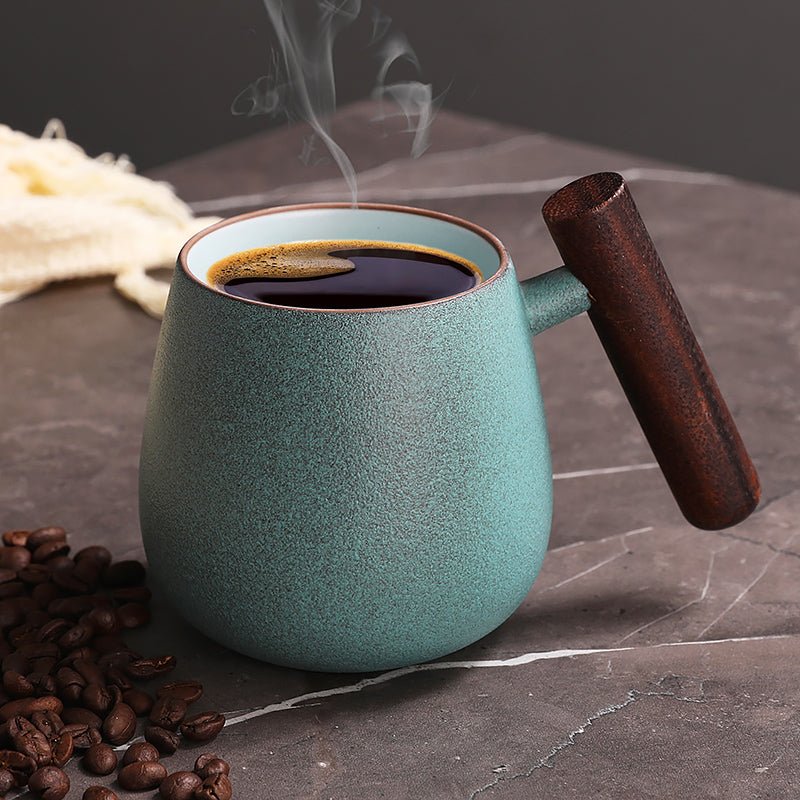
Standard Coffee Mug Sizes: What Buyers Should Choose
Reading time: about 9 minutes
A mug can look right on the shelf and still feel wrong at the coffee maker. We see that all the time: a cup that is labeled as standard turns out to be too tall for the machine, too small for a long morning pour, or awkward in the hand once it is filled.
That is why standard coffee mug sizes deserve a closer look before you buy. In our store, we deal with the same trade-offs shoppers do at home: cabinet space, dishwasher cycles, handle comfort, and the difference between a mug that looks good in a listing and one that actually gets used every day. If you want to compare current shapes and capacities while you read, start with our products or browse the full collection.
What do most people mean by standard coffee mug sizes?
There is no single industry rule for a standard mug, which is where a lot of confusion starts. In everyday retail, most shoppers think of an 11 oz, 12 oz, or 15 oz mug as standard. The exact number matters less than how much coffee you can actually pour before the cup feels full.
Here is the practical breakdown we use when comparing mugs for customers:
| Size | Typical use | What to expect in real life |
|---|---|---|
| 8 oz | Short coffee, espresso drinks with milk, small tea servings | Compact and easy to store, but not ideal if you want a larger morning cup |
| 11-12 oz | Everyday drip coffee | Often the safest all-around size for home kitchens and office desks |
| 14-15 oz | Longer pours, larger servings, cocoa | Comfortable for people who refill less often, but heavier and bulkier |
| 16 oz and up | Oversized drinks, soup-like servings | Useful for big pours, though it is no longer what most buyers mean by a standard mug |
If you want a second opinion on how ounces translate into daily use, our How Many Ounces Is a Standard Coffee Mug? A Buyer’s Guide covers the same question from a shopper’s angle.
How much coffee fits comfortably in each size?
The number printed on the listing is usually the full capacity, not the amount you should actually pour. In practice, you leave headspace at the top so the drink does not splash when you carry it from the counter to the couch or from the break room to your desk. That means a mug labeled 12 oz often feels best with less than a brim-full pour.
A few real-world examples help:
- An 8 oz mug works well for a short black coffee or a smaller cappuccino, but it can feel cramped if you like milk and foam together.
- An 11 to 12 oz mug usually suits a standard drip coffee drinker because it leaves room for a normal pour without feeling oversized.
- A 14 to 15 oz mug is better for people who want a longer sit-down drink, a larger breakfast coffee, or extra room for milk.
- A 16 oz mug is practical for a big pour, but it is less convenient if you use a compact espresso machine or a narrow mug shelf.
That practical gap between labeled capacity and usable capacity is one reason buyers misjudge size online. If the listing only shows ounces, you still need to check the rim shape and overall height. A straight-sided mug and a tapered mug can both say 12 oz, but they do not drink the same.
For a narrower capacity comparison, our article How Many Oz Is a Coffee Mug? Common Sizes and What Fits Best walks through the same sizes with more examples.
Which standard size works best for home, office, and gifting?
The best mug size depends on where it will actually live. A mug used at a kitchen counter has different needs than one that sits on an office desk or gets wrapped as a gift.
For home
For daily use at home, 11 to 12 oz is usually the easiest size to live with. It fits most drip coffee habits, stores well in a cabinet, and does not dominate the hand. If you drink larger lattes or pour your mug full and keep going, 14 to 15 oz may be the better fit.
For office use
An office mug often benefits from extra capacity because coffee cools while you are working. A 14 oz mug can be useful at a desk, but only if the handle is comfortable and the base does not take up too much room near a keyboard, notebook, or laptop. Very large mugs are not ideal if the drink has to fit under a pod machine or in a small break-room shelf.
For gifting
We usually treat 11 to 12 oz as the safest gift size because it is familiar, easy to wrap, and broadly useful. Oversized mugs can be fun, but they are not always what the recipient wants if they prefer a lighter cup or already have limited cabinet space. In our experience, people notice balance and shape more than the ounce label when they open a mug gift.
If you want to compare shape and capacity together, our Coffee Mug Sizes Guide: How to Choose the Right Cup is a good companion read.
What mug details matter besides ounces?
Capacity is only part of the purchase. The details that affect daily use are often the ones shoppers miss when they only compare ounce numbers.
- Material: Ceramic is common for everyday mugs because it is familiar, easy to clean, and comfortable for hot drinks. Stoneware is usually a little heavier and thicker, which can help with heat retention, but it also adds weight in the hand.
- Wall thickness: A thicker mug can feel sturdy and keep heat longer, while a thinner mug may drink more delicately. Thin walls can also make the mug look smaller than the listed ounces suggest.
- Handle clearance: A handle that fits two fingers is not the same as one that comfortably fits three or four. If your fingers scrape the body of the mug, the cup will feel tighter than the listing implies.
- Base and balance: We check for wobble because an uneven base is annoying on a desk and more noticeable after a few dishwasher cycles.
- Finish and care: Dishwasher-safe mugs are easier to live with, but printed designs can fade over time and some glazes can craze if they are exposed to sudden temperature changes.
Those are the details that separate a mug you keep reaching for from one that looks fine in the cart but stays in the cabinet. Common problem spots we watch for are pinholes in the glaze, a handle that feels too narrow, and a base that does not sit flat on the counter. If dimensional fit matters more than the capacity label, see our Standard Coffee Mug Dimensions: What Buyers Should Check.
How do standard mugs compare with larger cups and travel mugs?
Standard mugs are best when you want a simple ceramic cup that stays on the table, the desk, or the kitchen counter. They are not the best tool for every drink. If you need a cup that fits in a car holder or stays hot during a commute, a travel mug is the better category because it is designed around a lid and insulation rather than open-cup drinking.
By contrast, oversized mugs are useful for larger pours, but they can become awkward fast. They take more cabinet room, add more weight when full, and are less convenient under some coffee makers. They also tend to be a poor fit for people who prefer a smaller serving and do not want their coffee cooling in a half-full cup.
That is the trade-off we try to make clear to buyers: a standard mug is the right choice for everyday comfort, not for every use case. If you want a larger vessel for soup, long tea sessions, or oversized cocoa, a standard mug may simply not be the best category.
How should you choose the right mug before buying online?
Online shopping is easiest when you decide what the mug has to do before you look at the photos. We recommend checking these points first:
- Measure your coffee maker clearance. Some mugs are too tall for drip machines, pod machines, or espresso setups with short spouts.
- Check the usable capacity. A listed 12 oz mug is not always comfortable at 12 oz in daily use.
- Look at height and width, not just ounces. A short wide mug and a tall narrow mug can hold the same amount but feel very different in hand and on a shelf.
- Consider your washing routine. If you rely on the dishwasher, look for sturdy glazing and a shape that will not collect water in a deep lip or narrow base.
- Match the mug to the drink. Straight black coffee, milk-heavy drinks, and cocoa each benefit from different proportions.
That is also why a quick browse through our collection can be more useful than comparing ounce numbers alone. Seeing the handles, rims, and profiles side by side usually makes the choice clearer than a spec sheet does.
The best standard coffee mug is the one that fits your machine, your shelf, and the way you actually drink coffee. Ounces matter, but shape and comfort decide whether the mug gets used.
Frequently asked questions
What is the most common standard coffee mug size?
For everyday retail, 11 oz and 12 oz are the most familiar standard sizes. Many shoppers also choose 14 oz or 15 oz mugs when they want a larger serving without moving into oversized territory. The right answer depends on how much you pour and how much space you have in the cabinet.
Is a 12 oz mug really 12 oz when I use it?
Usually, no. The listed number is generally the full capacity to the rim, while real-world use leaves space at the top so the drink does not spill. That is why a 12 oz mug often feels more like a comfortable everyday cup than a full 12 oz serving.
What mug size is best for latte drinks?
Most latte drinkers are better off with 12 oz to 16 oz, depending on how much milk and foam they want. A mug with enough diameter and a comfortable handle matters as much as the number on the listing. Very narrow mugs can feel cramped even when the capacity looks right.
Are ceramic mugs or stoneware mugs better for daily use?
Both can work well. Ceramic is usually lighter and common for everyday kitchen use, while stoneware is often thicker and heavier, which can help the mug feel solid and hold heat a bit longer. If you prefer a lighter cup for office use or frequent hand washing, ceramic is often easier to live with.
What should I check before buying a mug online?
Check the height, diameter, handle opening, and care notes first. Then look at the photos for the rim shape and base stability, because those details affect comfort more than the ounce label alone. If you are buying for a specific machine or shelf, measure that space before you order.
If you want to narrow your choice quickly, start with the size that matches your routine, then compare the shape and care notes across our products and the full collection.
Read more
Tea Mug Buying Guide: Best Materials, Sizes, and Everyday Use
A practical guide to choosing a tea mug that feels right on the desk, holds heat well, and cleans up without drama. We cover materials, sizes, care, and the trade-offs that matter before you buy.
Read more
Tea Mugs Ceramic for Daily Brewing: Size, Shape, and Care
Tea mugs ceramic work best when the rim feels right, the cup holds heat without getting awkwardly heavy, and cleanup stays simple. This guide breaks down the buying trade-offs and points you to sty...
Read more
Leave a comment
This site is protected by hCaptcha and the hCaptcha Privacy Policy and Terms of Service apply.