
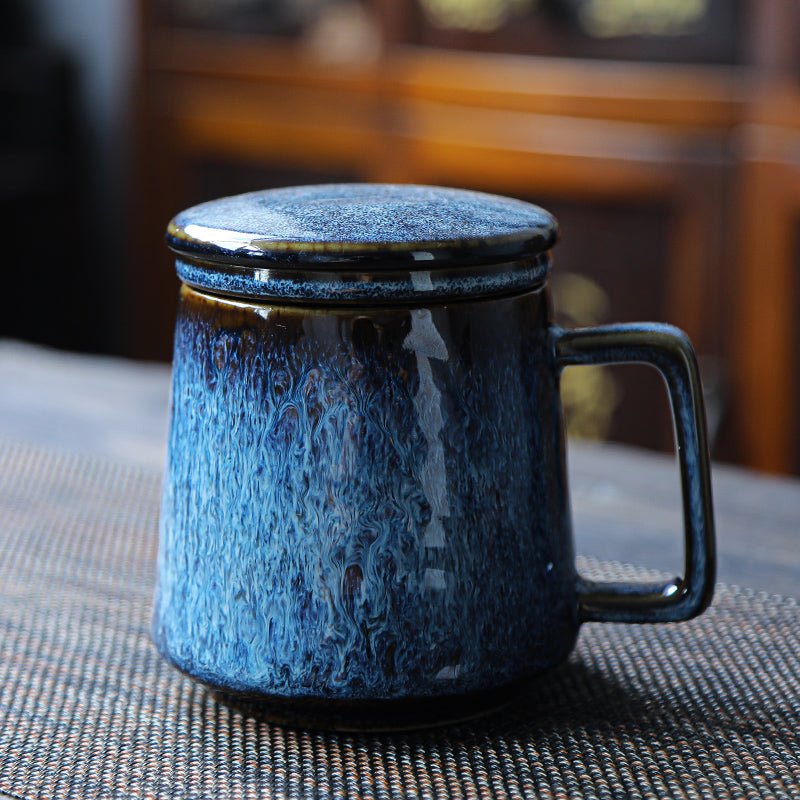
Mug Coffee Cake: How to Choose the Right Mug and Avoid Overflow
Reading time: about 8 minutes
A mug coffee cake fails in the same place most often: the batter rises fast, hits the rim, and then bakes into a gummy dome or spills onto the microwave plate. We see it happen on kitchen counters, office desks, and in gift mugs that looked fine until the first test bake.
The fix is usually not a fancier recipe. It is the mug. In our store, we pay close attention to mug shape because a mug that works for coffee does not always work for cake. The right cup gives the batter room to rise, heats more evenly, and is easier to carry from microwave to table.
What makes mug coffee cake work better in some mugs than others?
Mug coffee cake is a small-format bake, so the container matters more than people expect. A wide, straight-sided mug usually performs better than a narrow, tapered one because the heat reaches the center more evenly and the top has room to rise without sealing itself into a dense cap.
These are the details we watch for when we test mugs for this kind of use:
- Capacity: a roomy 10 oz to 11 oz mug is a practical baseline for most mug cakes.
- Shape: straight sides and a wider opening are easier for batter flow and doneness checks.
- Base stability: a flat, balanced bottom helps prevent wobble when the mug is hot and full.
- Wall thickness: very thin walls can overheat fast, while extremely thick mugs can make timing less predictable.
That is why we do not treat every coffee mug as a baking vessel. A decorative tumbler, a tall narrow travel-style cup, or a mug with a sharply sloped interior can all give you a different result. If you want a fuller overview of what a mug cake is and what to use, our post Coffee Mug Cake: What It Is, How It Works, and What to Use covers the basics from a buyer's point of view.
Which mugs do we actually reach for in our store?
When we compare mugs for everyday use, we look for the kind of shape that still feels good on a desk after the cake is gone. We also care about how the mug behaves in real life: does it feel steady in one hand, does the handle stay comfortable when the cup is hot, and does it fit the sort of portions people actually make at home?
If you want examples from our store, start with The Rock Coffee Tea Mug for a heavier, more grounded feel, Morning Night Coffee Tea Mug for a simple everyday silhouette, or Mountain Coffee Tea Mug if you prefer a mug with a more scenic, giftable look.
For a broader comparison, browse our full mug collection and look closely at opening width, handle clearance, and overall footprint. Those details matter more for mug coffee cake than a lot of shoppers expect.
If you are comparing approaches before you buy, the related guides Cake in a Coffee Mug: How to Make, Serve, and Choose the Right Mug and Coffee Cake Mug Cake Recipe: Right Mug, Timing, and Fixes are useful next reads. They stay focused on the practical part: mug size, rise, and how to keep the texture from turning heavy.
How do you mix and microwave it without a gummy center?
A mug coffee cake is usually best when the batter is mixed just enough to combine the dry spots, then cooked in short bursts. Overmixing makes the crumb tighter. Underbaking leaves the middle wet. The sweet spot sits between those two failures.
- Choose a mug with room above the batter. Leave at least one-third of the mug empty so the cake can rise.
- Mix the batter until you no longer see dry flour. Stop there. A few tiny lumps are better than a beaten, elastic batter.
- Add any crumb or streusel topping lightly. A thick topping can sink, especially in narrow mugs.
- Microwave in a short first burst, then check the center. Add time in small increments if needed.
- Let the mug sit for a minute before eating. The center continues to set after the microwave stops.
In our experience, the most common mistake is treating every microwave like it behaves the same way. It does not. A small office microwave, a high-watt home unit, and an older apartment model all change the finish. If you want a tighter timing breakdown, our article Coffee Mug Cake in Microwave: The Right Mug, Timing, and Fixes goes deeper into that part.
If the batter climbs past the halfway point in the mug before cooking, the mug is already too small for the style of cake you are making.
What should you expect from texture, serving, and cleanup?
Mug coffee cake is not trying to be a full bakery cake. It is quicker, denser, and usually eaten warm. That is the trade-off. You get speed and convenience, but you give up some of the crisp crumb and layered finish you would expect from a full oven-baked cake.
This is where the mug choice becomes practical, not just aesthetic. A mug with a broad opening is easier to top with a spoonful of glaze, a dusting of cinnamon sugar, or a small spoon of fruit. It is also easier to eat from without scraping the sides.
Cleanup is simpler when the mug has a smooth interior and no sharp shoulder where batter can bake on. If the mug is dishwasher-safe, top-rack cleaning is usually the least effort. If it has printed decoration, metallic trim, or a delicate finish, hand-washing is the safer path. We have seen plenty of good-looking mugs lose appeal once baked-on crumbs start collecting around a narrow rim.
For shoppers comparing sizes, our size-focused posts 10 oz Coffee Mug: Size, Fit, and What to Check Before You Buy and 11 oz Coffee Mug: Size, Fit, and What to Check Before You Buy are helpful if you are deciding between a tighter fit and a little extra headroom.
What mug features matter most if you want to serve or gift it?
If the mug coffee cake is part of a gift, brunch spread, or desk snack, the mug itself becomes part of the presentation. A heavier mug can feel more substantial in hand. A simpler mug can look cleaner on a breakfast tray. A scenic mug can make the whole thing feel more intentional without adding extra work in the kitchen.
We usually tell buyers to think in this order:
- First: fit for baking, which means enough room and a stable shape.
- Second: comfort, especially if the mug will be carried while hot.
- Third: visual style, because the mug is part of the finished experience.
That order keeps you from buying a mug that looks good online but performs poorly for a real mug coffee cake. A narrow, tall mug may be attractive, but it is not the best choice if you care about even cooking. A very small mug may work for a few spoonfuls of batter, but it leaves little margin for error. And if you want a crisp streusel top, a mug is not the best format at all; a ramekin or small oven-safe dish usually handles that better.
What problems do we see most often, and how do you avoid them?
The most common issues are predictable once you have watched enough of these bakes. The good news is that most of them are fixable without changing the whole recipe.
- Overflow: the mug was too small or the batter was filled too high.
- Rubbery texture: the batter was overmixed or microwaved too long.
- Raw center: the mug was too tall and narrow, or the microwave power was lower than expected.
- Dry edges: the mug was overheated in one spot, often because of uneven microwave timing.
- Soggy topping: too much moisture was trapped under a heavy streusel layer.
Our practical fix is simple: use a mug with room, cook in shorter bursts, and stop as soon as the center looks set but still soft. If the top looks done but the middle is behind, let the mug rest instead of pushing the microwave longer all at once.
One limitation worth saying plainly: mug coffee cake is not the best choice if you want a large, sliceable cake with a crisp crumb top. It is better for single servings, quick desserts, and low-mess snacks. If that is not what you want, a small baking dish will serve you better.
Frequently asked questions
What size mug is best for mug coffee cake?
A 10 oz to 11 oz mug is the safest starting point for most single-serving mug coffee cake recipes. You want enough room for the batter to rise without touching the rim too quickly. If your recipe has a lot of batter or a heavy topping, use a wider mug rather than a taller one.
Can I use any coffee mug for mug coffee cake?
No. A standard coffee mug works better than a narrow decorative cup, but the shape still matters. Straight sides, a stable base, and enough headroom make a noticeable difference in how evenly the cake cooks.
Why does my mug coffee cake turn out rubbery?
Rubbery texture usually comes from overmixing or overheating. Stir only until the flour disappears, then cook in short intervals and let the mug rest briefly before eating. If the mug is small or narrow, that can also push the texture toward dense and rubbery.
Is a ceramic mug better than glass or paper for mug coffee cake?
A sturdy ceramic mug is usually the easiest choice because it holds heat well and feels stable in hand. Glass can work if it is microwave-safe, but it can run hot and be more awkward to handle. Paper cups are not a good fit for this use.
Can I make mug coffee cake ahead of time?
You can mix the dry ingredients ahead of time, but the best texture usually comes from cooking it fresh. A mug cake cools quickly and loses the soft, warm center that makes it worth making in the first place. If you want to serve more than one person, a larger oven-baked coffee cake is a better option.
If you are still deciding what mug to use, start with the shape first and the style second. Compare The Rock Coffee Tea Mug, Morning Night Coffee Tea Mug, and Mountain Coffee Tea Mug, then check our full mug collection for the size and silhouette that gives your mug coffee cake the most room to rise.
Read more
Rooster Coffee Mug Buying Guide: What to Check Before You Buy
A rooster coffee mug works best when the size, handle, and finish match daily use, not just the theme. This guide shows what to check before you buy and which shapes make sense for gifts or everyda...
Read more
Coffee Mug Set of 8: What to Check Before You Buy
A practical look at what makes a coffee mug set of 8 worth buying for daily coffee, tea, and shared kitchens. We cover material, handle comfort, cleanup, and the trade-offs that matter after the fi...
Read more
Leave a comment
This site is protected by hCaptcha and the hCaptcha Privacy Policy and Terms of Service apply.