
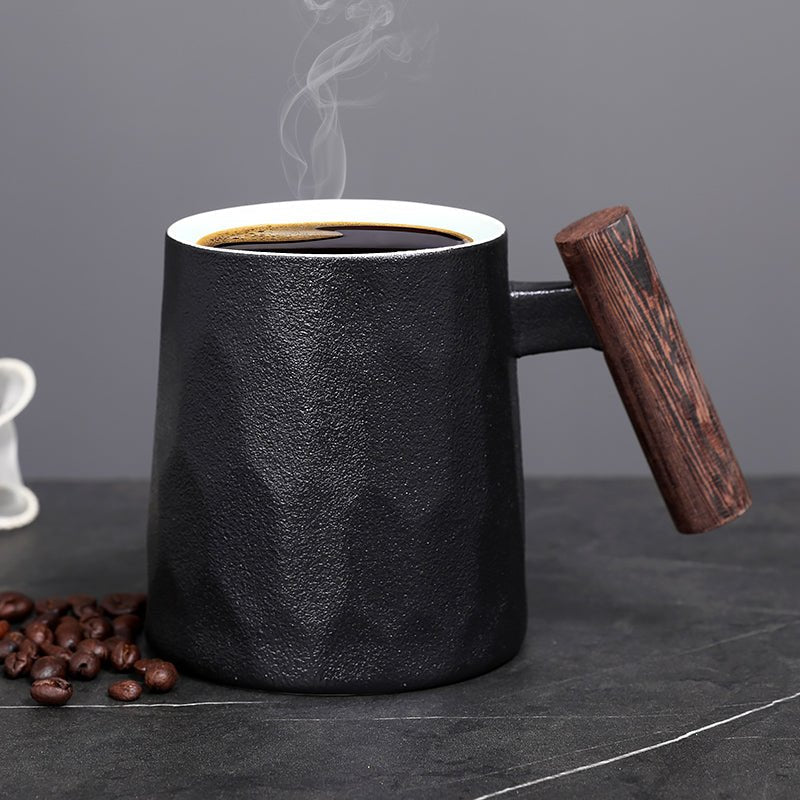
Massive Coffee Mug: What to Check Before You Buy
Reading time: about 9 minutes
A massive coffee mug looks simple on a product page. Then it lands on a kitchen counter, and the details start to matter: how the handle feels in your hand, whether it fits under a cabinet, and how heavy it gets once it is full.
At our store, we see the same pattern again and again. Shoppers want a bigger mug for fewer refills, longer desk sessions, or tea that actually lasts through a meeting, but the wrong oversized mug can feel awkward fast. The right one feels balanced, easy to wash, and comfortable enough to use every day.
If you are still deciding between common capacities, our Average Coffee Mug Size: What Buyers Should Know Before Ordering is a useful baseline before you move into the larger sizes.
What makes a massive coffee mug different from a regular mug?
A massive coffee mug is not just a mug with a bigger number on the listing. The shape changes how it feels in your hand, how hot the drink stays, and how much cabinet space it takes up. Once you get past the standard everyday size, the handle, wall thickness, and base width start affecting usability as much as capacity.
In practice, bigger mugs usually mean more volume, a deeper bowl, and a handle that needs more clearance for your fingers. That sounds minor until you try to pour hot coffee, carry it across a busy office desk, or load it into a dishwasher that is already half full. A mug that is comfortable empty can feel clumsy when filled near the rim.
The best oversized mug is not the biggest one you can find. It is the one you can lift, sip from, wash, and store without rearranging your routine.
If you are comparing a larger everyday mug against a smaller one, our 10 oz Coffee Mug: Size, Fit, and What to Check Before You Buy helps show where the size jump starts to matter.
Which size should you buy if you want one mug to last through the morning?
The best size depends on how you actually drink coffee, not on the largest option available. A lot of buyers who search for a massive coffee mug are really comparing the jump between 16 oz, 20 oz, and 24 oz. That is where the trade-offs get real.
Here is the simplest way we break it down in our store:
| Size | Best for | Trade-off |
|---|---|---|
| 16 oz | People who want a larger-than-average mug without going oversized | Still manageable on a desk or in a cabinet, but may not feel truly massive |
| 20 oz | Long coffee sessions, tea drinkers, and people who dislike refills | Heavier when full and can feel bulky in smaller hands |
| 24 oz | Big pours, soups, broth, or all-day desk use | Can be too large for casual daily coffee if you prefer smaller servings |
Our 16 Ounce Coffee Mug Buyer’s Guide: Size, Material, and Fit is the best starting point if you are unsure where the line between regular and oversized actually is. If you already know you want more capacity, the jump to 20 oz Coffee Mug: What to Check Before You Buy or 24 oz Coffee Mug: What to Check Before You Buy is worth reading before you place an order.
- Choose 16 oz if you want a roomy mug that still behaves like a normal coffee mug.
- Choose 20 oz if you want fewer refills without jumping into truly bulky territory.
- Choose 24 oz if you use one mug for coffee, tea, broth, or longer work sessions.
What materials work best for a big mug?
For an oversized mug, material matters more than people expect. A large ceramic or stoneware mug usually feels substantial, holds heat well enough for everyday use, and has the classic look most buyers want on a kitchen shelf or office desk. Porcelain is typically lighter and can feel cleaner and thinner at the lip, while stoneware tends to feel sturdier and more grounded in the hand.
There are trade-offs. A thick-walled stoneware mug can be reassuring, but it also adds weight. A very thin mug may feel elegant, but once it gets large, it can feel top-heavy or less durable in daily use. We also watch for a few practical details that shoppers often miss: a handle that is too narrow for two or three fingers, a base that rocks slightly on the counter, and glaze inconsistencies around the rim or handle join. Those are the spots where cheap oversized mugs usually show their shortcuts.
For shoppers comparing style and size together, our Anthropologie Coffee Mug: Style, Size, and Everyday Use Guide is useful if you care about the look of the mug as much as the capacity.
What we usually recommend:
- Pick ceramic or stoneware if you want the most familiar everyday feel.
- Choose a mug with a comfortable lip thickness, not just a large bowl.
- Check the handle opening before buying if you have larger fingers or like a full grip.
- Look for a flat, stable base so the mug does not wobble on a desk or tray.
How does a massive coffee mug work in real daily use?
This is where oversized mugs either earn their place or end up at the back of the cabinet. On a kitchen counter, a large mug is great when you want one pour and done. On a desk, it is useful because you do not have to keep heading back to the coffee machine. At a gift unboxing, it feels generous and practical, which is part of why bigger mugs do so well as presents.
But the same mug can be inconvenient in the wrong setting. A very large mug is not ideal if you like small servings, if your cabinets have low shelves, or if you want something light enough to hold one-handed while walking around the house. It is also not the best choice for espresso, small cappuccinos, or anyone who prefers a tighter, more concentrated drink.
Care is part of the buying decision too. A dishwasher-safe mug is easier to live with, but if the mug has printed decoration, metallic accents, or a delicate glaze, check the care guidance before you assume every cycle is safe. In a crowded dishwasher, oversized handles can knock against other pieces. In a microwave, a wider mug can get warm unevenly depending on fill level and drink type, so you still want to follow the care notes for the product you buy.
If you are weighing a smaller daily mug against a bigger one, the 8 oz Coffee Mug: What to Check Before You Buy guide is a helpful reference point for how far the size spectrum really goes.
What should you avoid if you want a massive mug that still feels practical?
Not every oversized mug is a good buy. Some look impressive and then fail on basic use. We usually tell shoppers to avoid a mug that only wins on capacity and ignores the things you touch every day: handle comfort, base stability, lip feel, and cleaning.
Be cautious if you see any of these issues:
- A handle that only fits one finger comfortably.
- A thick body that makes the mug feel heavier than the volume suggests.
- A rounded base that feels less stable on smooth counters.
- Decorative finishes that are hard to hand-wash or may not suit the dishwasher.
- An oversized shape that will not fit the cabinet shelf you already use.
A massive coffee mug is also not the right answer if your main goal is portion control. If you usually pour 8 to 10 ounces and stop there, a huge mug can make the drink feel lost and can encourage overfilling. In that case, a smaller everyday mug may be the better buy, and the smaller-size guides on our blog will help you choose without overshooting.
What should you compare before adding one to cart?
Before you buy, compare the mug the same way we do when we inspect inventory: hold comfort, base stability, material, care, and where it will live in your kitchen or office. Those details are what separate a mug you use every day from one that only looks good in a photo.
Use this quick checklist:
- Check the capacity and decide if you want roomy or truly oversized.
- Look at the handle shape and make sure it supports your grip.
- Confirm the material and finish match how you wash and use dishes.
- Measure your cabinet shelf or dishwasher space if your kitchen is tight.
- Decide whether you want a single big mug or a smaller mug paired with refills.
If you want to browse the current assortment first, start with our products page or jump straight to the full collection. That is usually the fastest way to compare shape, size, and finish side by side.
Frequently asked questions
Is a massive coffee mug good for everyday use?
Yes, if you actually drink larger portions and want fewer refills. It works well for long mornings, desk use, tea, and broth, but it can feel oversized if you only pour a small amount. If you prefer compact mugs or have limited cabinet space, a smaller size may be the better fit.
What size counts as a massive coffee mug?
Most shoppers start thinking of a mug as massive once it moves past the standard everyday range and into 20 oz and 24 oz territory. Some people also treat 16 oz as the beginning of the larger-mug category, depending on what they are used to. The real test is how the mug feels in your hand and how much liquid you normally pour.
Should I choose ceramic, stoneware, or porcelain for a large mug?
Ceramic and stoneware are the most common choices for an oversized mug because they feel sturdy and familiar. Porcelain usually feels lighter and can have a thinner drinking rim, which some buyers prefer. If you want a heavier, more grounded feel, stoneware is usually the better choice.
Are massive coffee mugs dishwasher and microwave safe?
Some are, but not all. You should check the care notes for the specific mug, especially if it has metallic decoration, special printing, or a delicate finish. Even when a mug is dishwasher safe, a crowded rack can make large handles rub against other dishes, so placement still matters.
What is the biggest drawback of buying a very large mug?
The biggest drawback is that it can be less convenient than it looks. A very large mug may be heavier, harder to store, and more awkward for small hands or smaller servings. If you want a mug for one cup of coffee at a time, oversized is not always better.
If you are narrowing it down now, use the checklist above, compare the size guides that match your usual pour, and then browse our collection or products page to pick the mug that fits your counter, your grip, and your routine.
Read more
Double Walled Glass Coffee Mugs: What to Check Before You Buy
Double walled glass coffee mugs can make a daily coffee feel cleaner, cooler to hold, and better presented on the counter. This guide shows what we check for in size, build, care, and everyday use ...
Read more
Personalized Travel Coffee Mugs: What to Check Before You Buy
Compare personalized travel coffee mugs by lid style, insulation, size, and print quality so you buy one that actually fits your commute or gift list. We break down the trade-offs shoppers notice a...
Read more
Leave a comment
This site is protected by hCaptcha and the hCaptcha Privacy Policy and Terms of Service apply.