
Hairline Crack in Coffee Mug: What It Means and When to Replace It
Reading time: about 9 minutes
What does a hairline crack in a coffee mug actually mean?
A hairline crack in coffee mug form is usually a very fine line in the glaze, the ceramic body, or both. In our experience, shoppers often notice it first after a hot pour, a dishwasher cycle, or a tap against a sink edge. The crack may look harmless at first because it is thin and easy to miss, but the key question is not how visible it is. The real question is whether it runs only across the surface or whether it reaches into the mug body.
We handle a lot of mugs in the store, and the pattern is familiar: a mug looks fine on the shelf, then a customer sees a thin line near the handle, base, or lip after a few uses. Some lines are cosmetic craze lines in the glaze. Others are actual fractures. Those are not the same thing. A glaze line may stay stable, while a structural crack can open further with heat, washing, or everyday use.
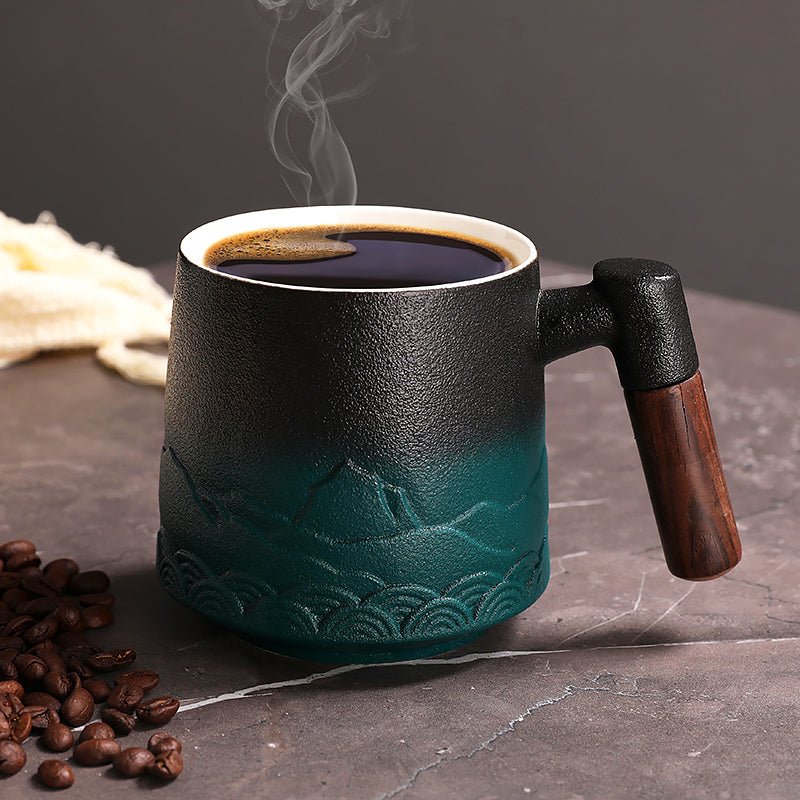
If you are comparing a replacement, our product pages are a good place to start, especially if you want a mug that feels balanced in daily use. See The Flow Coffee Tea Mug, Mountain Sea Coffee Tea Mug, and Spittoon Coffee Tea Mug. If you want to browse the full range, start at our collection page.
Is a hairline crack in a coffee mug safe to keep using?
Sometimes yes, sometimes no. A superficial glaze line is not automatically a safety issue. A crack that cuts through the mug wall, spreads from the rim, or reaches the base is a different case. That mug can fail without warning, especially when it goes from room temperature to boiling coffee or from the dishwasher to a cold counter.
Here is how we judge it in practice:
- Safer to keep using: the line is only in the glaze, does not catch a fingernail strongly, and does not change shape after washing or heating.
- Replace soon: the line is visible in the body, gets darker when wet, or runs from the rim, handle joint, or bottom edge.
- Stop using now: the mug leaks, weeps liquid, feels loose at the handle, or has any sharp edge.
We do not recommend using a mug with a structural crack for very hot drinks, microwave reheating, or repeated dishwasher cycles. That is not where you want to gamble. If you are unsure, it is better to retire the mug and move to a fresh one than to keep testing it with every cup.
How can you tell the difference between a glaze line and a real crack?
A buyer can usually spot the difference with a few simple checks at the sink or under daylight. None of these require special tools. What matters is whether the line is only on the surface or whether it behaves like a break in the cup body.
- Dry it fully. A wet crack often looks darker because moisture sits in the line.
- Run your fingertip across it. A glaze line may feel smooth. A crack in the body may catch slightly.
- Look from the inside and outside. If the line shows on both sides of the wall, treat it as structural.
- Check the handle attachment points. Stress cracks often start where the handle meets the mug body.
- Use a bright light. Hold the mug near a window or lamp and rotate it slowly.
One practical clue: a craze pattern usually looks like fine spidering in the glaze, while a structural crack tends to be a single, more definite line. If the mug was dropped, knocked against a sink, or stacked under heavy dishes, assume the damage may go deeper than it appears.
Our rule in the store is simple: if the line changes with moisture or heat, we treat it as more than cosmetic.
What usually causes a hairline crack in a coffee mug?
Most of the time, the cause is stress rather than one dramatic break. We see the same few triggers again and again:
- Thermal shock: pouring very hot coffee into a cold mug, or rinsing a hot mug under cold water.
- Impact: a tap against a sink, counter, or another mug in the dishwasher.
- Stacking pressure: heavy mugs stored with weight on the rim or handle.
- Manufacturing stress: a small flaw that only shows up after repeated use.
Glazed ceramic and stoneware can both develop lines over time if they are treated roughly. Even a mug that feels solid in the hand can start to show stress near the base or handle after months of hot-and-cold cycles. This is one reason we pay attention to build quality, wall thickness, and the way the handle joins the cup. Those details matter more than a pretty finish when the mug is sitting on a kitchen counter every day.
If you are replacing a cracked mug and want something sized for regular coffee or tea, our size-focused guides are useful too. See 11oz Coffee Mug Buying Guide for Fit, Comfort, and Daily Use and 12 oz Coffee Mug Buying Guide for Fit, Comfort, and Daily Use if you want to compare comfort and capacity before you buy again.
Can you repair a hairline crack in a coffee mug?
For a mug you actually drink from, repair is usually not the best fix. Epoxy, food-safe sealants, and DIY patching may temporarily hide the issue, but they do not restore the original strength of the ceramic wall. They also create another problem: cleaning becomes less reliable, especially around the rim, handle, or inside seam.
There are trade-offs here. If the mug is decorative, a display-only repair can make sense. If it is for everyday coffee, tea, or hot chocolate, we would not treat a repaired crack as equal to a sound mug. A repaired mug is also a poor choice for office desks, car travel, or anyone who tends to pour directly from the kettle. Those are exactly the situations that stress weak points.
If the mug has sentimental value, keep it as a keepsake. If you need a daily drinker, replace it. That is the cleaner answer, and it usually costs less in frustration than trying to nurse a compromised mug along.
What should you look for in a replacement mug?
When a customer replaces a cracked mug, we usually tell them to think about the conditions where the last one failed. That tells you what to avoid next time. A better replacement should match your routine, not just your taste.
| What to check | Why it matters | What we look for in practice |
|---|---|---|
| Wall thickness | Helps the mug tolerate daily heat changes | A mug that feels balanced, not flimsy |
| Handle shape | Reduces stress at the join and improves grip | Enough room for two to three fingers |
| Base stability | Less wobble on desks and counters | A flat, steady foot ring |
| Capacity | Affects weight and heat retention | A size that fits your pour, not just your shelf space |
If you are narrowing options, it can help to compare by size first. Our earlier guides on 10 oz mug fit and 12 ounce mug fit cover the practical side of daily use, from hand feel to countertop stability. That is often more useful than shopping by color alone.
For replacement shopping, some buyers want a cleaner everyday mug, while others want a shape that feels a bit more substantial in the hand. That is where product comparison helps. The Flow Coffee Tea Mug is a straightforward daily option, Mountain Sea Coffee Tea Mug gives a more characterful look, and Spittoon Coffee Tea Mug suits shoppers who want something different from the usual plain cylinder. None of them is the right choice if you need a mug that can take rough handling or frequent drops. No ceramic mug is truly made for that.
How should you care for a mug so it does not crack again?
The best prevention is basic, boring care. We see the same habits keep mugs alive longer:
- Let a hot mug cool before rinsing it with cold water.
- Do not bang it against the sink to knock out grounds or tea leaves.
- Avoid stacking heavy cookware on top of it in the cabinet.
- Use the dishwasher carefully if the mug is marked dishwasher safe, and leave space so the mug is not rattled against plates.
- Inspect the rim, handle, and base occasionally for new lines.
That last point matters. Small cracks often appear first where the mug gets the most stress: the rim, the handle join, and the bottom edge. If you catch a line early, you can retire the mug before it becomes a leak risk on an office desk or a stain risk on a dining table.
We also see fewer complaints from customers who wash mugs promptly instead of letting coffee dry inside overnight. Dried residue does not cause cracks by itself, but repeated scrubbing can wear the surface over time. Gentle habits add up.
Frequently asked questions
Can I use a coffee mug with a hairline crack for hot drinks?
If the crack is only in the glaze and does not change with moisture or heat, the mug may still be usable. If the line is in the body, reaches the rim, or gets darker when wet, stop using it for hot drinks. We would not trust a cracked mug with boiling water or repeated microwave reheating.
Does a hairline crack mean the mug will leak?
Not always, but it can. Some cracks stay cosmetic for a while, while others slowly open enough to seep liquid. If you see moisture in the line after washing or pouring, treat that mug as compromised.
Is a glaze crack the same as a structural crack?
No. A glaze crack is in the surface coating, while a structural crack goes into the ceramic body. The second one is the one that can spread and fail under heat or pressure. If you cannot tell which type it is, assume the safer option and replace the mug.
Should I keep a cracked mug as a pen holder or planter?
Yes, that is a practical second life for a mug that is no longer safe for drinks. Just do not use it for food or hot liquids again. A cracked mug can still be useful on a desk or shelf if you keep it out of the wash cycle.
What is the safest next step if I found a hairline crack in coffee mug form?
Stop using it for daily drinks, especially if the crack is near the rim, handle, or base. Then compare replacements based on size, handle comfort, and how you actually wash your mugs. If you want to browse dependable options, start with our collection and compare the styles against your current routine.
If you are replacing one cracked mug, check the rest of the cabinet before buying. One damaged mug often means the others have similar wear patterns. Compare the handle, base, and capacity, then choose a mug that fits your coffee routine instead of just filling the gap left by the broken one.
Read more
Donald Trump Coffee Mug: What to Check Before You Buy
A Donald Trump coffee mug can be a simple desk piece or a gift that needs to hold up to daily use. We compare shape, size, print placement, and care so you can pick the version that fits how it wil...
Read more
Mug Shot Coffee: What to Buy, What Fits, and What Holds Up
A practical buyer’s guide to mug shot coffee mugs, including size, comfort, durability, and which styles make sense for home, office, or gifting. We compare real trade-offs so you can choose a mug ...
Read more
Leave a comment
This site is protected by hCaptcha and the hCaptcha Privacy Policy and Terms of Service apply.