
Designer Coffee Mug Buying Guide: What to Check Before You Buy
Reading time: about 9 minutes
A mug can look perfect on a shelf and still feel wrong in your hand. We see that mismatch all the time: the handle is too tight for two fingers, the base rocks on a desk, or the finish looks great until the first few dishwasher cycles.
That is why buying a designer coffee mug is not just about style. It is about how the mug holds heat, fits your grip, fits your cabinet, and holds up after real use at a kitchen counter, office desk, or gift table. In our store, we look at designer mugs the same way shoppers do after the box is opened: does it feel good, does it clean easily, and does it still look right after it has been used all week?
If you want to compare current styles, you can start with our all collection or go straight to the product page to see what is available right now.
What makes a designer coffee mug worth buying?
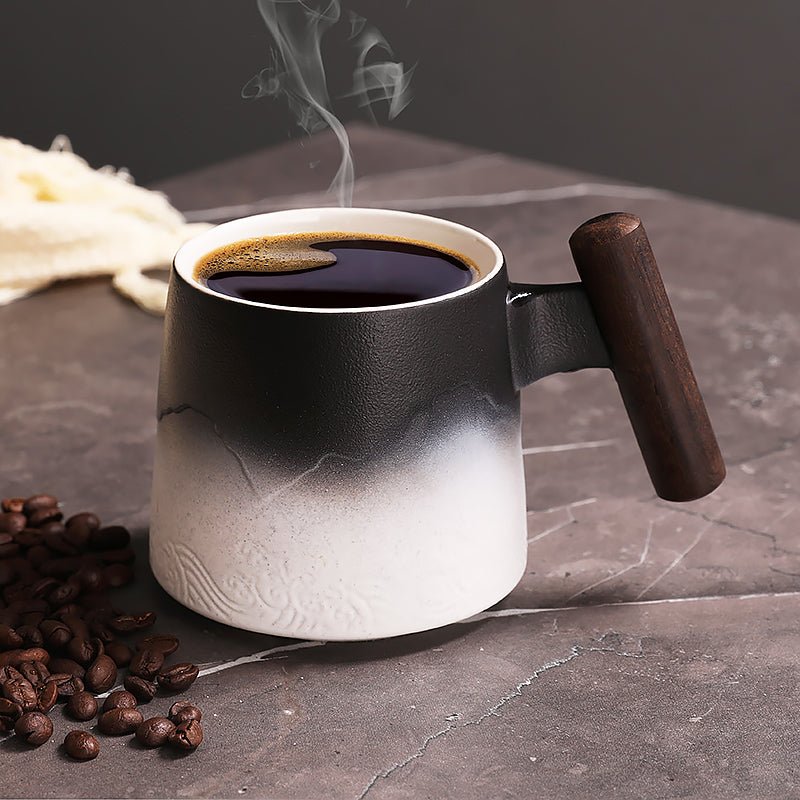
A designer mug earns the label when form and function both do some work. The shape should look deliberate, but it also needs to pour comfortably, sit flat, and feel balanced when full. A printed slogan alone does not make a mug a better buy. What matters is whether the mug feels considered from the rim to the base.
We usually see buyers respond to a few design details first:
- Handle shape: A good handle leaves enough room for two fingers without rubbing the knuckles against the cup body.
- Rim comfort: A smoother, even rim matters more than most people expect, especially for daily coffee.
- Body profile: A taller, narrower mug keeps coffee warmer a little longer than a very wide cup with the same capacity.
- Finish: Matte finishes can feel modern, but glossy glazes are often easier to wipe clean after splashes.
There is also a practical side to design. A highly sculpted mug may look striking, but it can be awkward on a crowded desk or hard to stack in a narrow cabinet. That is the trade-off. A designer coffee mug can be a better daily mug, or it can be more of a display piece, depending on how extreme the styling is.
If you are buying for everyday use, the best designer mug is usually the one that looks distinctive without sacrificing grip, stability, or cleaning ease.
Which material should you choose for daily use?
Most designer coffee mugs for daily use are made from ceramic, stoneware, or porcelain. Those terms get used loosely in product pages, but they do matter. The material changes the weight in your hand, how the mug feels against your lips, and how tough it is around chips and cabinet bumps.
| Material | What it feels like | Best for | Trade-off |
|---|---|---|---|
| Stoneware | Heavier, solid, and warm in the hand | Desk use, home coffee, mugs that need a stable feel | Can feel bulky if you prefer a lighter cup |
| Porcelain | Finer, lighter, and more refined at the rim | People who want a cleaner look and a lighter lift | Can chip more easily if it gets knocked around |
| Ceramic with glazed finish | Varies by body and glaze, often versatile | Most everyday drinkers and gift buyers | Decorative glazes can show wear if the finish is thin or heavily handled |
In real use, stoneware is often the safest middle ground for a designer coffee mug because it feels sturdy on a desk and does not get knocked over as easily as a super-light cup. Porcelain is a better fit if you want something slimmer and more elegant, but it is not the right choice if you tend to stack mugs tightly or move them around a lot. That is especially true in office kitchens, where cups get bumped, slid, and washed in a hurry.
Care matters too. If a mug has a decorated surface, a metallic accent, or a delicate decal, we usually recommend checking the maker's care instructions carefully and washing gently when in doubt. Top-rack dishwasher use can be fine for many mugs, but hand washing is the safer choice if the finish looks fragile or you want the design to stay crisp for longer. Avoid sudden temperature swings as well. A mug that goes from very cold to boiling hot water too fast can be more vulnerable to stress marks or cracking over time.
What size and shape feel right on a desk or at home?
Size is where a lot of shoppers make a mistake. A mug can be beautiful and still be wrong for your routine if the capacity is off. If you usually drink a standard drip coffee, a mid-size mug is often the easiest fit. If you make milk-heavy drinks, want a little room for cream, or sit with one mug for a long time, a larger cup can make more sense.
For a more detailed size comparison, our size guides on 10 oz coffee mugs, 11 oz coffee mugs, 12 ounce coffee mugs, and 16 ounce coffee mugs cover the practical differences in more detail. Those guides help if you are deciding between compact and larger everyday sizes.
Here is the quick version we use with shoppers:
- 10 oz to 12 oz: Good for smaller pours, compact cabinets, and people who prefer a lighter mug.
- 14 oz to 16 oz: Better for larger coffee servings, milk drinks, and long desk sessions.
- Wide, shallow mugs: Easy to sip from, but they lose heat faster.
- Tall, narrow mugs: Hold heat better, but the handle and balance need to be comfortable.
Shape matters just as much as volume. A mug with a wide foot and a low center of gravity feels more stable beside a laptop or notebook. A mug with a tall, narrow body may feel more elegant, but if the handle is undersized or the wall is too thin, it can become less pleasant after a few refills. That is why we always encourage buyers to think about where the mug will actually live: kitchen shelf, bedside table, office desk, or a gift box.
A designer coffee mug is not the best choice if you need a travel cup with a lid, a car-friendly profile, or a lightweight vessel for commuting. It is a better fit for seated drinking, desk use, and home coffee routines.
What should you inspect before you order?
If you cannot hold the mug in person, check the product photos and details carefully. The best listings show the handle from the side, the base from below, and a clear shot of the rim. That is where most functional problems show up. A mug can have a nice surface design and still have a handle that feels cramped or a base that does not sit perfectly level.
We look for these details before recommending a designer coffee mug to a shopper:
- Handle clearance: Make sure your fingers will fit comfortably without touching hot ceramic.
- Base stability: A flat, even base matters on stone counters, office desks, and trays.
- Rim finish: Check for smoothness and consistent thickness so each sip feels clean.
- Glaze quality: Look for even coverage, with no rough spots where the handle meets the body.
- Decoration durability: Decide whether the print or finish is meant for daily handling or lighter use.
Common problem areas are easy to miss in photos. We have seen mugs with a slightly rough handle join that becomes annoying after a few days, bases that wobble just enough to catch your eye on a desk, and decorative surfaces that look great until they start to show wear around the rim. Hairline glaze crazing can also appear over time on some ceramic pieces, especially if they are exposed to repeated temperature swings.
If you want a mug that you will use every day, not just display, ask one question: does this mug still make sense after the third refill and the third wash? If the answer is yes, the design is probably doing real work, not just visual work.
Is a designer coffee mug a good gift?
Yes, but only if you choose the right style. A designer mug makes a strong gift because it is personal without being risky. People notice the shape, the glaze, and the handle immediately, and a well-chosen mug feels more thoughtful than a generic cup. It also fits naturally into a gift box with coffee beans, tea, or a small spoon.
That said, the wrong mug can miss the mark. Highly ornate designs are more personal, so they are better for someone you know well. If you do not know the recipient's taste, a clean ceramic or stoneware mug in a neutral finish is the safer move. We also recommend avoiding oversized mugs as gifts unless you know the person likes a large daily pour.
Good gift signs:
- A shape that looks easy to hold, not just pretty on a shelf.
- A size in the everyday range, usually around 11 oz to 15 oz.
- A finish that can handle normal kitchen use, not just display.
- A style that fits the recipient's space, whether that is a bright office desk or a quiet kitchen counter.
If you are shopping for a gift and want the broadest selection, the product page is the fastest place to compare styles. For someone who appreciates matching their mug to a specific capacity, the size guides above are worth reading first.
Frequently asked questions
Are designer coffee mugs dishwasher safe?
Many are, but not all. The safest answer is to check the care instructions for the specific mug before you buy. If the mug has a delicate print, metallic detail, or a finish that looks especially decorative, hand washing can be the better long-term choice.
What size designer coffee mug is best for everyday use?
For most people, a mug in the 11 oz to 15 oz range is the easiest everyday fit. Smaller sizes feel compact and easier to store, while larger ones are better if you drink bigger pours or like room for milk. The right size depends on how you actually drink coffee, not on the number on the listing alone.
Are designer coffee mugs good for tea and hot chocolate?
Yes. A good ceramic or stoneware mug works well for tea, hot chocolate, and other warm drinks. If you prefer a beverage that sits for a while, a taller mug with a sturdy handle is usually more comfortable than a very wide, shallow cup.
What is the best material for a designer coffee mug on a desk?
Stoneware is often the most practical desk choice because it feels stable and has enough weight to resist small bumps. Porcelain can also work if you want a lighter, more refined look. If your desk gets crowded, avoid shapes that are too wide or top-heavy.
What should I avoid if I want a mug for daily use?
Avoid mugs with handles that feel too small, bases that do not sit flat, and decorative finishes that look fragile if they will be washed often. If you need a mug for commuting or carrying around, a travel mug is the better category. A designer coffee mug is for seated drinking, not for a backpack or cup holder.
If you are ready to choose, start with the size that matches your routine, then compare the current styles in our all collection. If you want the quickest filter, use the 10 oz, 11 oz, 12 oz, and 16 oz guides to narrow the field before you pick your designer coffee mug.
More from our blog
Read more
Blue Coffee Mug Buying Guide: Size, Finish, and Best Uses
A blue coffee mug should feel balanced in the hand, hold the right pour, and survive daily use. We break down the sizes, finishes, and quality checks that matter before you buy.
Read more
Jesus Coffee Mug Buying Guide: Size, Print Quality, and Gift Value
A practical guide to choosing a jesus coffee mug that looks good on a desk, holds up in daily use, and feels right as a gift. We cover size, materials, print durability, and the trade-offs buyers s...
Read more
Leave a comment
This site is protected by hCaptcha and the hCaptcha Privacy Policy and Terms of Service apply.