
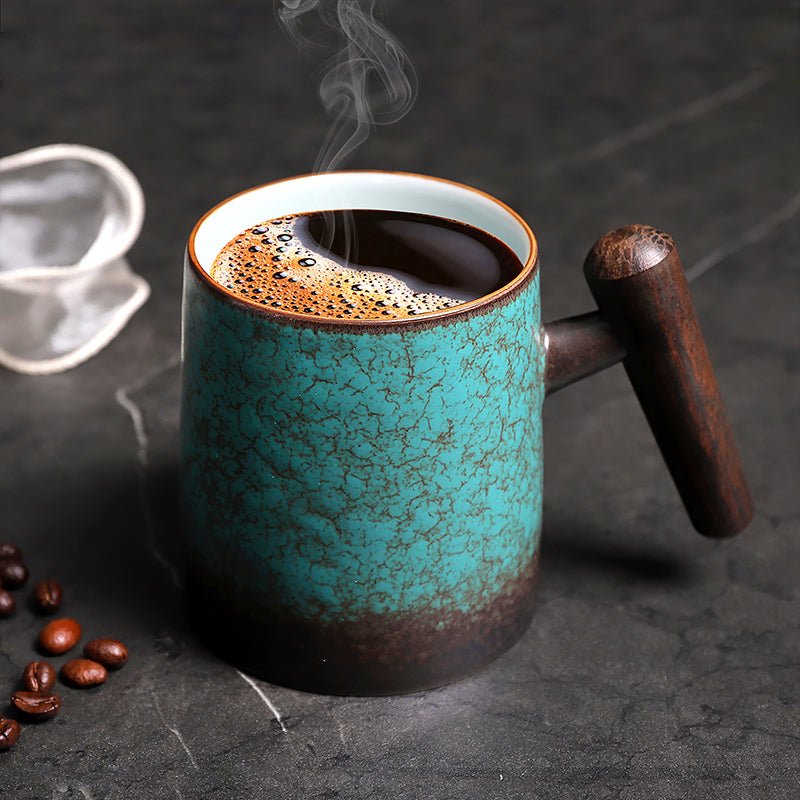
Decaf Coffee Cup for Small Coffee Setup: Compare 3 Sizes
Reading time: about 8 minutes
A cup can look compact in a product photo and still become awkward once its handle meets the side of a coffee machine, wall, or neighboring mug. We see this most often on narrow kitchen counters and office drink stations, where a decaf coffee cup for small coffee setup use has to earn its place. Capacity matters, but so do handle reach, shelf depth, and the amount you normally serve.
Our current options cover three useful capacity points: 170 ml, 200 ml, and 270 ml. None is automatically the best choice. The smaller cup saves room and suits shorter servings, while the larger mug offers more capacity at the cost of additional storage and counter space. Here is how we compare them in our store.
Decaf coffee cup for small coffee setup: which capacity earns its space?
Start with the amount you actually pour, not the largest capacity that will fit in the cupboard. An oversized cup can leave a small serving looking lost, while a cup filled too close to the rim is harder to carry from the counter to a desk.
| Capacity | Best fit | Main trade-off |
|---|---|---|
| 170 ml | Short servings and very limited shelf space | Less room above the usual pour level |
| 200 ml | A middle-ground everyday cup | Not as compact as the 170 ml option or as roomy as 270 ml |
| 270 ml | Longer servings and buyers who dislike frequent refills | Takes up more usable space and may feel oversized for a short pour |
Capacity is an internal volume measurement. It does not tell you the full exterior width, the height, or how far the handle projects. Two cups with similar capacities can occupy different amounts of shelf space because of their wall shape, base, and handle design.
How much shelf and counter space does a handled cup really need?
Measure the space as the cup will actually be stored. For a handled cup, the critical number is total width from the far edge of the body to the outside of the handle. Measuring only the rim diameter can leave you with a cup that technically fits the shelf but prevents another cup from sitting beside it.
- Check shelf depth: Make sure the cup body and handle can sit fully on the shelf without the handle pressing against a cupboard door.
- Check vertical clearance: Allow room to lift the cup over a shelf lip instead of relying on the cup height alone.
- Check machine clearance: If the cup will sit beneath a dispenser or spout, compare the cup's exterior height with the available opening.
- Check working room: Leave enough clear counter space to grip and turn the handle without bumping the machine or wall.
In a one-cup setup, a decorative handle may be easy to accommodate. In a row of four cups, handle projection becomes a bigger issue because the handles can dictate the spacing between every piece. Buyers storing cups on hooks should also confirm that the handle opening suits the hook rather than assuming every handled cup will hang securely.
Which current cup fits a short, medium, or longer serving?
For a short serving and the smallest capacity in this group, the Retro Coffee Tea Cup in 170 ml is the direct starting point. It suits a buyer who prioritizes a compact cup and does not need the extra volume of a standard mug. The limitation is straightforward: it is not the best option for someone who routinely wants a longer serving or plenty of unused room below the rim.
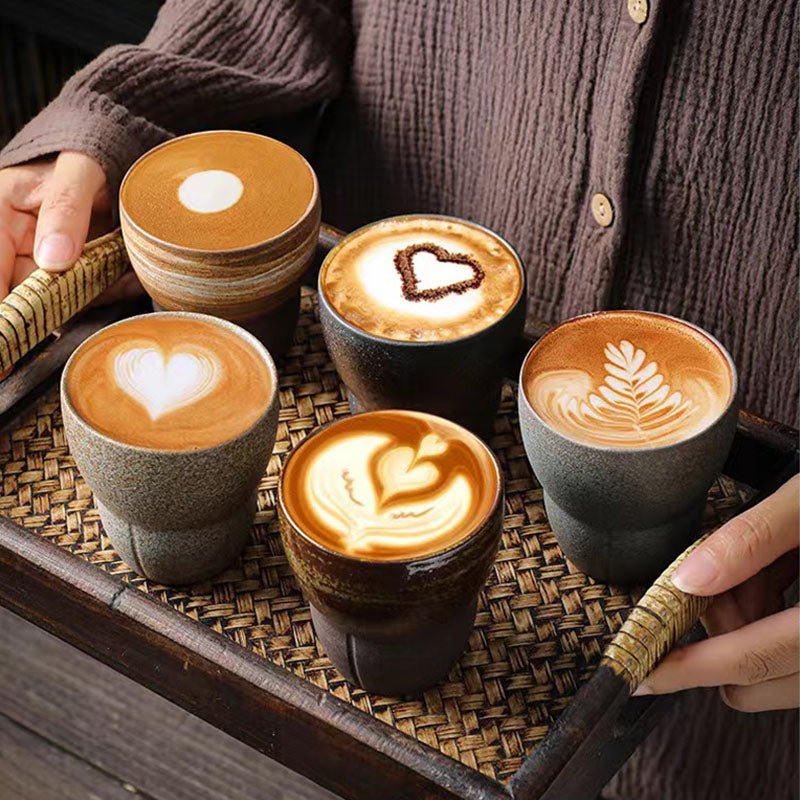
For a balanced middle size, the Pleated Coffee Tea Cup in 200 ml adds 30 ml over the Retro option without moving all the way to a larger mug capacity. This makes sense for a kitchen shelf or office tray where space matters but 170 ml feels restrictive. It is a compromise size, so buyers seeking either the smallest possible footprint or the roomiest cup may prefer one of the other two.
For the longest serving among these choices, the Emerald Coffee Tea Mug in 270 ml provides 100 ml more capacity than the Retro cup. It fits a buyer who values volume more than minimal storage. It is not the strongest match for a tightly packed shelf, a very short pour, or a coffee station where every centimeter of counter clearance matters.
If style and shape are still open decisions, compare these options with the wider unique coffee mug collection. Look at the cup profile and handle position alongside capacity instead of treating volume as the only selection point.
Handle comfort can matter more than a small capacity difference
We handle cups by checking more than whether a finger can pass through the opening. A handle can look generous from the side but still place the knuckles close to the cup wall. That matters on an office desk, where people often pick up the cup one-handed while working, and in a compact kitchen where there may be little room to adjust the grip.
Use these practical handle checks:
- Look at the open space between the inner handle and the cup body.
- Check whether the handle sits high, centered, or low on the body, since that changes how the filled cup balances in the hand.
- Consider how many fingers you prefer to use. A one- or two-finger grip may suit a small cup, while some buyers want a broader grip on a larger mug.
- Check for a smooth transition where the handle joins the body. On arrival, inspect this area for rough edges or fine cracks before regular use.
Handle preference is personal. A compact loop can reduce the overall footprint, but it may feel cramped to someone with larger hands. A broad handle can feel easier to control, yet it needs more room on a crowded shelf.
How should serving preference change your size decision?
A small-space setup does not always require the smallest cup. It requires the smallest cup that still fits the way you serve coffee. If you regularly leave generous room at the top for easier carrying, a 200 ml cup may be more practical than filling a 170 ml cup close to its rim. If you prefer a longer serving at a desk, the 270 ml mug can reduce trips back to the kitchen, provided the larger form fits your work surface.
Buyers comparing nearby drinkware sizes may also find our small-setup cortado cup comparison useful for shorter servings. For a larger reference point, the guide to 12 oz ceramic mugs in compact coffee stations explains the storage compromises that become more noticeable as capacity increases.
What should you inspect and confirm before regular use?
Capacity and appearance are visible before ordering, but care requirements and finish details need a separate check. Do not infer dishwasher or microwave suitability from the cup's appearance. Confirm the care information on the relevant product page or packaging, especially if the cup has a decorative surface or contrasting finish.
During unboxing, place the empty cup on a flat, hard counter and check that the base sits steadily. Inspect the rim for chips or rough points, look around the handle joints for hairline cracks, and run a fingertip carefully around accessible finished edges. These are sensible inspection points for any cup, not a claim that a particular CoffeifyMug product commonly develops those issues.
For routine care, avoid sudden temperature changes unless the product instructions explicitly permit them. Use a non-abrasive sponge when a finish could be marked, and let the cup dry fully before returning it to a tightly enclosed shelf. If dishwasher convenience is a deciding factor, verify that detail before choosing on style alone.
Frequently asked questions
What size decaf coffee cup is best for a small counter?
A 170 ml cup is the most compact capacity among the three options covered here, but exterior dimensions and handle projection still determine the real footprint. Choose 200 ml or 270 ml if your normal serving needs more room and your counter can accommodate the larger form.
Is 170 ml too small for an everyday decaf coffee cup?
It depends on your usual pour and how much empty space you like below the rim. The 170 ml Retro cup suits short servings, but it is not ideal for buyers who routinely prefer a longer serving or carry a cup filled close to the top.
Does a 200 ml cup save much more space than a 270 ml mug?
Capacity alone cannot confirm the difference in exterior footprint. Compare total width including the handle, cup height, and base size; those measurements are more useful for shelf planning than the 70 ml capacity difference by itself.
What is the most versatile decaf coffee cup for small coffee setup use?
The 200 ml Pleated cup is the middle option in this group, making it a practical starting point for buyers who find 170 ml restrictive but do not need 270 ml. The better choice still depends on your serving preference, hand comfort, and available shelf width.
Should I choose a cup or a larger mug for an office desk?
Choose a smaller cup if the desk is crowded and you prefer short servings. Choose the 270 ml mug if additional capacity matters more and there is enough room to place it away from papers, electronics, and the edge of the desk.
Your five-point shelf check before ordering
- Match 170 ml, 200 ml, or 270 ml to your usual serving rather than choosing by appearance alone.
- Measure shelf depth, vertical clearance, and total available width.
- Account for the handle, including its projection and finger space.
- Confirm care instructions instead of assuming dishwasher or microwave suitability.
- Decide whether compact storage or additional capacity is the higher priority.
Start with the CoffeifyMug unique coffee mug collection, then compare the 170 ml Retro, 200 ml Pleated, and 270 ml Emerald options against those five points. That gives you a clear next step without sacrificing shelf space for capacity you will not use.
More from our blog
Read more
Green Tea Mug for Small Coffee Setup: Compare 170-270 ml
Compare three green tea mug capacities for a compact counter, shelf, or office station. See how 170 ml, 200 ml, and 270 ml options affect storage and refill habits.
Read more
Dandelion Coffee Mug for Desk Use: Capacity and Product Fit
Compare three current dandelion mug options by listed capacity, practical desk footprint, handle clearance, and likely refill needs. This guide also explains what to verify before ordering when exa...
Read more
Leave a comment
This site is protected by hCaptcha and the hCaptcha Privacy Policy and Terms of Service apply.