
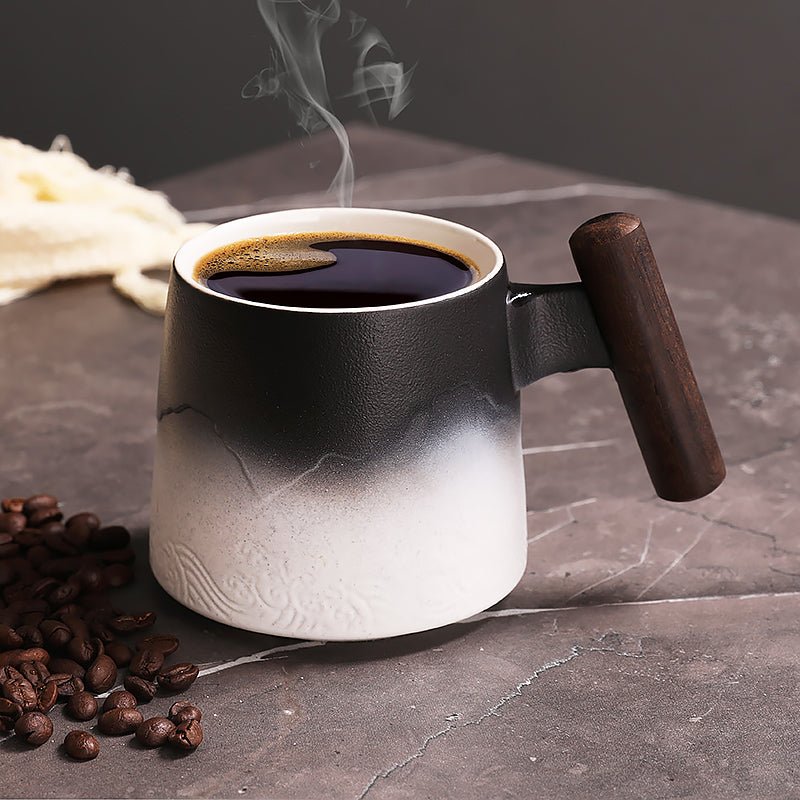
Coffee Mugs for Sale: How to Choose the Right One
Reading time: about 9 minutes
What should you check before buying coffee mugs for sale?
A mug can look right in a product photo and still feel wrong in your hand. We see that most often with buyers who care about the look first and only notice the practical details after the order arrives: the handle feels tight, the cup holds less than expected, or the lip is too thick for a smooth sip.
That is why we recommend checking a few basics before you decide. Our team looks at the same things every day when we add or review mugs in our store: the usable capacity, the weight, the handle shape, the rim finish, and how the surface will hold up to routine washing. If you want to compare the current selection quickly, start with our products page or browse the full collection if you want everything in one place.
- Capacity: Pick the size that matches how much coffee you actually pour, not just the number on the page.
- Handle clearance: Make sure your fingers fit comfortably, especially if you take cream or use larger spoons.
- Rim shape: A smooth, even rim matters more than people expect for daily drinking.
- Finish and print: Glossy glazes, matte coatings, and printed graphics all age differently with repeated washing.
Small details matter because a mug is not a decorative object you only touch once. It sits on a desk, gets washed after breakfast, gets bumped against a sink, and sometimes becomes the one cup everyone reaches for.
Which mug size fits your routine?
Size is the first place buyers get mismatched. A mug that works for espresso-style coffee can feel too small for a large morning pour, while an oversized mug can be awkward on a crowded desk or in a tight kitchen cabinet. If you are deciding between common capacity ranges, our size-specific guides can help: 8 oz Coffee Mugs: Size, Material, and Fit Guide, 12 oz Coffee Mugs: What to Check Before You Buy, and 16 oz Coffee Mugs: What to Check Before You Buy.
Here is the practical way we think about it in our store:
- 8 oz: Best for smaller servings, after-dinner coffee, and people who like a compact cup. Not ideal if you routinely add milk, foam, or extra room for stirring.
- 12 oz: The safest everyday middle ground for many buyers. It usually feels balanced on a desk and works well for standard brewed coffee.
- 16 oz: Better for larger pours, long mornings, or anyone who wants room for cream without risk of overflow.
- 20 oz: A good choice for oversized servings, but it can feel bulky in smaller hands and may crowd a narrow mug rack.
If you need a broader comparison, our article on a buyer's guide to large capacity coffee mugs is useful when you are deciding between 16 oz and 20 oz.
One thing a lot of shoppers miss: stated capacity is not always the same as comfortable fill level. A mug can technically hold more liquid than you would want at the brim, especially if you like to carry it from the kitchen to a sofa or office desk.
What material makes the most sense for daily use?
Material changes how a mug feels in the hand, how hot it stays, and how it ages. For most shoppers comparing coffee mugs for sale, the real decision is not just about appearance. It is about trade-offs.
| Material | What it does well | Common trade-off |
|---|---|---|
| Ceramic | Feels familiar, usually comfortable for daily coffee, and works well for a wide range of finishes | Can chip if knocked against sinks, counters, or other mugs |
| Stoneware | Often feels sturdy and substantial in the hand | Can be heavier, which some buyers love and others avoid |
| Porcelain | Typically has a finer feel and a cleaner drinking edge | May feel more delicate if you prefer a heavy, rugged mug |
For printed mugs and logo-style designs, surface quality matters as much as the base material. A smooth glaze helps the mug wipe clean more easily, while rough spots or uneven printing can become noticeable after repeated use. We also check for common defect modes that frustrate customers later: hairline cracks near the handle, a wobbly base, a slightly uneven lip, or a handle that feels too narrow once the mug is full.
If you are buying for a kitchen that sees daily use, ceramic or stoneware is often the most practical starting point. If you want a lighter, more refined feel for a gift, porcelain may fit better. If you expect to toss the mug into a backpack or keep coffee hot for hours on the move, a mug is not the best tool at all. In that case, a lidded insulated tumbler is the better category.
Which details matter most on the counter, in the office, or as a gift?
We sell mugs for real life, so we pay attention to how they behave outside the product photo. A mug can be right for a shelf display and still be wrong for an office desk with a crowded keyboard, or for a gift where the unboxing moment matters almost as much as the drink itself.
These are the details that usually decide the final purchase:
- Handle shape: A wider handle helps if the mug is heavy or if the drink is topped off near the rim.
- Foot stability: A flat, even base matters on polished counters and office tables.
- Interior glaze: A smoother interior is easier to rinse and usually shows less staining from coffee oils.
- Rim thickness: A thinner, even rim feels better to sip from; a thicker rim can feel sturdier but less refined.
- Storage fit: Check whether the mug will fit under a cabinet, on a shelf, or in a standard mug tree without crowding.
For gift shoppers, presentation is often the deciding factor. A mug should look good opened from the box, not just on a website. That does not mean it needs to be delicate or ornate. It does mean the glaze should look even, the print should line up cleanly, and the proportions should feel intentional.
If you are specifically comparing café-style branding and familiar silhouettes, our guide to Starbucks Coffee Mugs for Sale: What to Check Before You Buy covers the details shoppers often compare before choosing a similar look.
How do you keep a mug looking good longer?
A mug does not need special treatment, but it does benefit from a little care. Most of the long-term damage we see comes from avoidable habits: stacking chipped pieces into each other, scrubbing printed surfaces too hard, or moving a hot mug straight into cold water. That last one can stress ceramic and glaze over time.
Simple care habits help:
- Let the mug cool before rinsing it with cold water.
- Use a soft sponge on printed or decorated surfaces.
- Avoid banging the lip against the sink when washing.
- Store mugs so the rims do not knock together.
- If the manufacturer says the mug is dishwasher safe, place it where it will not rattle against heavier dishes.
Dishwasher use is convenient, but it is not equally kind to every finish. Printed graphics, metallic accents, and some specialty coatings can fade or dull faster than a plain glazed mug. If you want the easiest long-term upkeep, a simple glazed mug usually gives you the fewest headaches.
That trade-off matters. A highly decorated mug may be better for gifting or display, while a simpler one is usually better for everyday breakfast duty.
Which mug should you choose if you want one dependable everyday option?
If you want one mug that can handle morning coffee, office refills, and casual weekend use, we usually point shoppers toward a middle size with a straightforward finish. A 12 oz or 16 oz mug is the most flexible starting point for many buyers because it leaves room for cream, is still comfortable to hold, and usually stores more easily than a very large cup.
That said, there is no universal best choice. A smaller mug is better if you prefer measured pours, shorter drinks, or a tidier shelf. A larger mug is better if you dislike refilling and want room for milk, foam, or a bigger brew. The wrong choice is not a bad mug. It is a mug that does not match the way you actually drink coffee.
If you want to compare options side by side, start with our full collection and check the size notes first. If you already know you want a browsing shortcut, our products page is the fastest way to scan the current selection.
Our rule in the store is simple: choose the mug that fits the person, the coffee, and the counter space. If one of those three is off, the mug usually ends up in the back of the cabinet.
Frequently asked questions
What size coffee mug is best for everyday use?
For most people, 12 oz or 16 oz is the most practical everyday range. It leaves enough room for a normal pour without feeling oversized on a desk or in a cabinet. If you drink smaller servings or prefer a lighter cup, 8 oz can make more sense.
Are ceramic coffee mugs good for daily use?
Yes, ceramic is one of the most common everyday choices because it feels familiar, cleans easily, and works well for home and office use. The main drawback is that it can chip if handled roughly or stacked carelessly. If you want something tougher in feel, stoneware may suit you better.
What should I check before ordering a coffee mug online?
Check the size, handle shape, finish, and care instructions before you buy. Photos can hide practical issues like a narrow handle, a heavy body, or a rim that looks thicker than expected. Reading the measurements and product notes prevents most disappointment.
Are larger mugs better for coffee with milk or cream?
Usually yes, because a larger mug gives you more room for add-ins and reduces the chance of spilling at the rim. A 16 oz or 20 oz mug is often more comfortable for lattes, cappuccino-style drinks, or strong coffee with plenty of milk. If you only drink a standard pour, a smaller mug may feel better in hand.
What coffee mug makes the best gift?
A clean, well-finished mug in a practical size is usually the safest gift choice. Avoid overly niche sizes unless you know the recipient already uses them. A mug that feels balanced, looks neat out of the box, and matches the person's routine is more useful than one that is purely decorative.
If you are ready to narrow it down, compare size first, then finish, then handle comfort. From there, browse the full collection and pick the mug that fits the way you actually drink coffee, not the one that only looks good in the photo.
More from our blog
Read more

Starbucks Coffee Travel Mug: What to Check Before You Buy
A Starbucks coffee travel mug should keep coffee hot, stay sealed in a bag, and fit a real cup holder. We break down the materials, lid styles, and sizes that make sense for daily use.
Read more
Customizable Coffee Mugs: What to Check Before You Buy
A practical buying guide to customizable coffee mugs, with the details that affect daily use: size, material, print durability, and care. Compare real trade-offs before you choose a mug for gifting...
Read more
Leave a comment
This site is protected by hCaptcha and the hCaptcha Privacy Policy and Terms of Service apply.