
Coffee Mug Sublimation: What Works, What Fails, and What to Buy
Reading time: about 9 minutes
A mug can look perfect on screen and still fail in the press. We see it all the time: the design looks sharp in the mockup, but after a wash cycle or two the print fades, the edge ghosts, or the seam line shows where the transfer did not sit flat.
That is the practical side of coffee mug sublimation. The process is simple in theory, but the result depends on the blank, the coating, the press settings, and the mug shape. In our store, we treat those as buying decisions, not just production details.
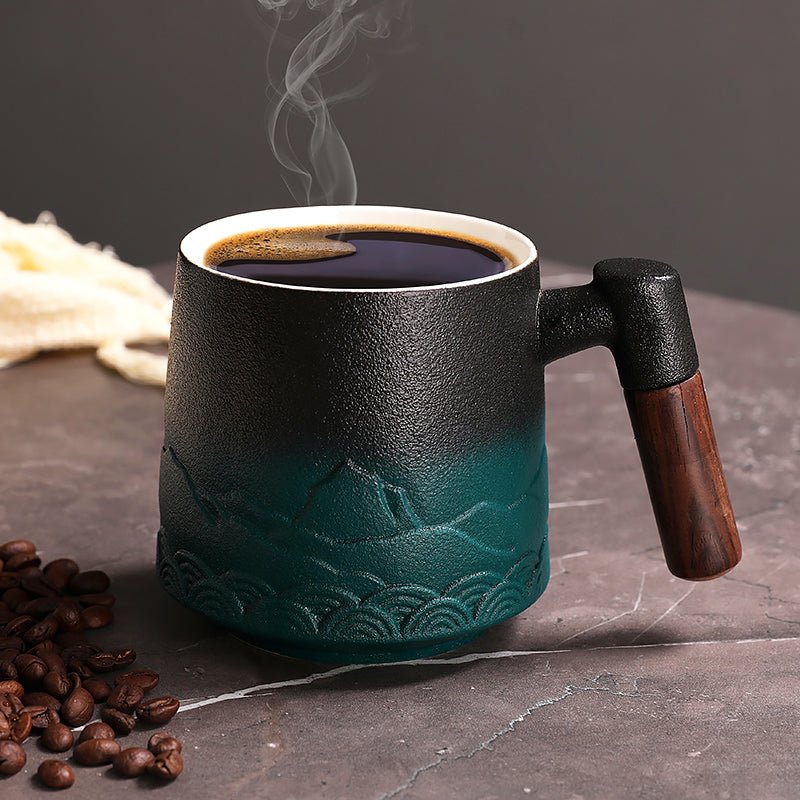
If you are comparing mugs for personal use, gifts, or resale, start with the blank itself. Our Mountain Coffee Tea Mug, Great Mountain Coffee Tea Mug, and Emerald Coffee Tea Mug are useful references because they show the difference between a design-friendly ceramic mug and a mug that is only trying to look decorative. If you want to see the rest of our drinkware options, the full collection is the fastest place to compare styles.
What does coffee mug sublimation actually need to work well?
Coffee mug sublimation uses heat to turn sublimation ink into gas so it bonds with a polyester coating on the mug. That coating is the whole point. Plain ceramic, glass, or a random glossy mug from a discount bin will not give you a reliable transfer.
In practice, we look for a few things before we call a mug sublimation-ready:
- A polymer-coated surface made for sublimation, not just a shiny glaze.
- A consistent cylindrical print area so the artwork sits flat and does not distort near the handle.
- A solid ceramic body that can handle heat without obvious warping, pinholes, or uneven color shifts.
- A clean rim and base finish so the mug feels finished, not rough or chipped out of the box.
The common mistake is assuming all mugs are interchangeable. They are not. A mug that looks fine for a coffee desk setup may still be a poor choice for a wraparound photo print if the wall thickness changes too much from top to bottom. That is where a plain-looking, properly coated mug usually outperforms a decorative one.
If you want a broader buying frame around capacity and hand feel, our guides on the 11 oz Coffee Mug: Size, Fit, and What to Check Before You Buy and the 10 oz Coffee Mug: Size, Fit, and What to Check Before You Buy are useful because a comfortable daily mug and a good sublimation blank often overlap, but they are not the same decision.
Which mugs are the safest bet for clean transfers?
The safest bet is still a smooth, coated ceramic mug with a shape that supports the artwork you want. Straight or gently tapered sides are easier to wrap than heavy contours, especially if you are producing repeated designs for gifts or shop stock.
| Pick this when | Why it works for sublimation | Watch out for |
|---|---|---|
| Gloss-coated ceramic mug | Accepts ink cleanly and gives bright color | Scratches show faster if handled roughly |
| Straight-sided mug | Artwork stays consistent across the wrap | Less visual character if you want a handmade look |
| Gift-ready mug with a clean finish | Looks polished straight out of the box | Decorative details can interrupt the print area |
For a buyer, the important trade-off is this: the most print-friendly mug is not always the most interesting mug. A highly textured or heavily shaped mug can look better on a shelf, but it is harder to press cleanly. If you are making photo mugs, name mugs, or branded office gifts, we would lean toward the simpler blank every time.
Our team also pays attention to the handle spacing and wall consistency because those details matter once the mug is hot. A mug can be technically sublimation-safe and still feel awkward in a real kitchen if the handle sits too close to the print area or the body is too bulky for everyday sipping.
What do we check before we press a mug?
Before we press anything, we check the same practical items a production shop checks at the bench. That saves reprints and keeps gift orders from showing up with a visible seam or a dull patch.
- Confirm the coating. The mug needs to be made for sublimation, not just labeled as a coffee mug.
- Clean the surface. Dust, packing residue, and fingerprints can leave faint marks in the transfer.
- Position the artwork carefully. The design should sit square to the handle and wrap evenly.
- Use the correct pressure. Too much pressure can create distortion; too little can leave a washed-out transfer.
- Let the mug cool safely. Moving it too early can make the finish look uneven or cause handling issues.
There are a few failure modes we see repeatedly. Ghosting usually comes from movement during the transfer. Faded color often points to the wrong heat, time, or paper setup. A blurry edge can come from the transfer not being taped down tightly enough or from a mug surface that is not truly coated well.
If you sell mugs or make them for events, consistency matters more than the first sample. A single great press does not prove the blank is good. We care about how the mug behaves across multiple cycles, because that is what customers notice after the unboxing moment has passed.
We treat a mug as finished only when it still looks sharp on a kitchen counter, not just under a heat press.
What is coffee mug sublimation not good for?
Coffee mug sublimation is not the right choice for every mug or every design. That matters because buyers often assume full-color print can fix any surface problem. It cannot.
It is usually not a good fit for:
- Dark, uncoated mugs where the ink has no white base to show through.
- Textured surfaces that keep the transfer from sitting flat.
- Very irregular shapes that make the artwork distort around curves.
- Projects that need a tactile finish like raised vinyl or etched glass effects.
If you want a mug that feels more decorative than production-friendly, another decoration method may fit better. Sublimation excels when you want a bright, permanent-looking image on a coated ceramic surface. It is less appealing if you want a matte artisan finish, heavy texture, or a material that intentionally shows handwork.
That trade-off is why we do not recommend judging mugs only by appearance. A mug can photograph beautifully and still be the wrong tool for a real transfer job. For a shopper, the best question is not “Does it look good?” It is “Will this mug still look good after repeated use, washing, and handling?”
How do you choose a mug for gifts, desk use, or resale?
The best mug depends on where it will live. A desk mug has different needs than a gift mug, and both are different from a mug you plan to stock in a store.
Here is the simplest way we break it down:
- For gifts: choose a clean, bright, easy-to-read surface. Personalization should stand out fast when the box is opened.
- For office desks: prioritize comfort, stable base balance, and a shape that fits a standard mug shelf or cup holder area.
- For resale: choose a shape that is easy to photograph, easy to press consistently, and easy to pack without chipping.
Size also matters. A smaller mug can feel better for coffee drinkers who want a simple morning pour, while a larger mug may suit tea drinkers or people who leave their mug at the desk for hours. If you are still deciding between capacities, our buying guides on the 12 Ounce Coffee Mug Buying Guide for Daily Use and Better Fit and the 12 oz Coffee Mug Buying Guide for Fit, Comfort, and Daily Use can help you judge what feels right in hand, on a desk, and in a cabinet.
For buyers who want a mug that reads as a gift but still works as a practical daily cup, the design balance is the sweet spot. That is where our Mountain, Great Mountain, and Emerald mugs are useful examples: each one gives you a different visual tone without forcing you into a complicated shape.
How should you care for sublimated mugs so the print lasts?
Good care matters because the best sublimation mug can still be damaged by rough use. We tell customers to treat the print like a durable finish, not an indestructible one.
Simple care keeps the surface looking better for longer:
- Wash with a soft sponge instead of abrasive pads.
- Avoid sudden temperature shock, like moving a very hot mug into cold water.
- Do not use metal scrapers on the printed area.
- Store mugs where the rim and handle will not bang into other ceramics.
Dishwasher tolerance depends on the coating quality and the way the mug was made. Some sublimated mugs hold up well to regular washing, but we still advise gentler care when a customer wants the artwork to stay crisp for a long time. The same is true for microwaves: a coated ceramic mug may be fine for heating liquids, but buyers should still check the specific product listing before assuming every printed mug is identical.
Real life is harder than the test press. Mugs get stacked, tossed into office sinks, and bumped on counters. That is why we prefer blanks with a smooth, even finish and a sturdy handle. A mug that can survive ordinary kitchen use is a better buy than one that only looks good in a staged photo.
Frequently asked questions
What kind of mug is best for coffee mug sublimation?
A polymer-coated ceramic mug is the safest choice. It gives you the most reliable color transfer and the cleanest finish for everyday use. Uncoated ceramic, textured mugs, and dark surfaces are much less predictable.
Why does my sublimated mug look faded after pressing?
Fading usually points to heat, time, pressure, or transfer setup issues. It can also happen if the mug coating is weak or inconsistent. We check all of those before blaming the artwork.
Can I sublimate on any ceramic coffee mug?
No. The mug has to be made for sublimation. A plain ceramic mug without the right coating will not bond with the ink properly, even if it looks glossy.
Is coffee mug sublimation good for gift mugs?
Yes, especially for personalized designs, names, and photo prints. The key is choosing a mug with a clean print area and a shape that looks polished when unboxed. If the gift needs a more handmade or textured feel, another decoration style may fit better.
How do I choose between a 10 oz, 11 oz, or 12 oz mug for sublimation?
Pick the size that matches the drinker, not just the print area. Smaller mugs feel tidier and more compact, while larger mugs suit people who want more room for coffee or tea. Our size guides help compare comfort, desk fit, and daily use before you buy.
What should you compare before you buy?
If you want the shortest possible checklist, use this one before you place an order:
- Material: coated ceramic, not generic ceramic.
- Shape: smooth sides if you want consistent transfer quality.
- Use case: daily coffee, tea, gifts, or resale stock.
- Finish: clean rim, even coating, and no rough spots.
- Care expectations: washing method and heat tolerance should match how the mug will actually be used.
For most buyers, the right next step is to compare the mug style against the real use case. If you want a straightforward place to start, browse our collection, then compare the Mountain, Great Mountain, and Emerald mugs against the size and finish you want. If you are still deciding how a mug should feel in the hand, our 10 oz, 11 oz, and 12 oz guides are the fastest way to narrow it down before you buy.
Read more
Ceremic Coffee Mug Buying Guide: What to Check Before You Buy
A ceremic coffee mug affects how coffee feels on a desk, in the kitchen, and in a gift box. We break down the details that matter most, then point you to styles that fit different routines.
Read more
Coffee Mug Dad Gifts: Best Fits by Size, Feel, and Use Case
A practical coffee mug dad gift works best when it matches the way he actually drinks: at the kitchen counter, on an office desk, or with tea at night. Here is how we compare fit, feel, and care be...
Read more
Leave a comment
This site is protected by hCaptcha and the hCaptcha Privacy Policy and Terms of Service apply.