
Coffee Mug Is How Many Ounces? Standard Sizes and Buyer Tips
Reading time: about 8 minutes
A mug can look generous on the shelf and still feel small once you pour in coffee, leave room for milk, and try to sip without spilling on the office desk. That is why the question coffee mug is how many ounces comes up so often: the number on paper is not always the amount you actually drink.
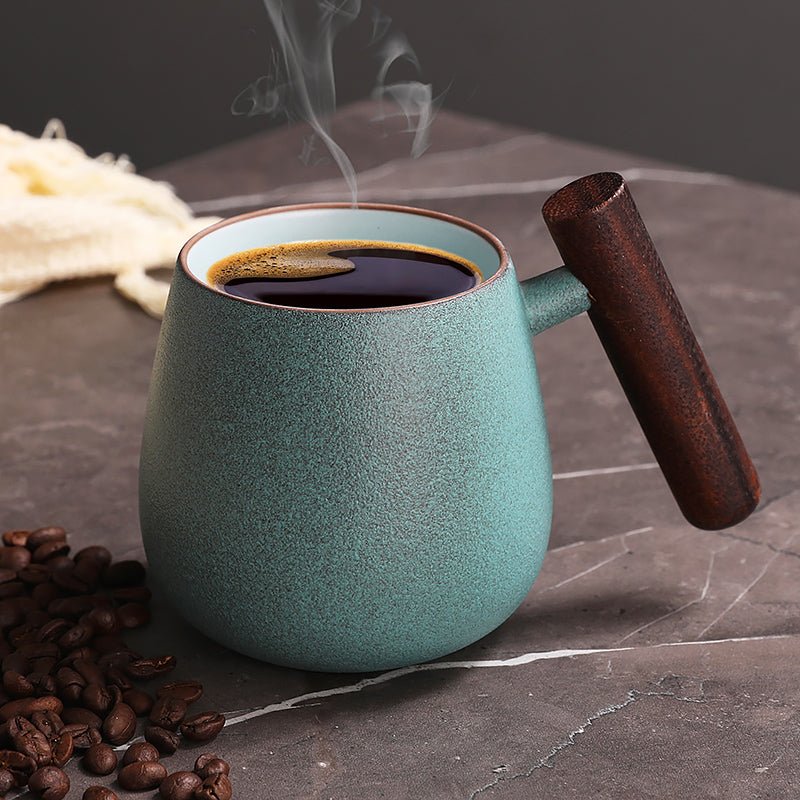
At our store, we look at mug size the way real shoppers use it. A 12 oz mug might be perfect for a drip coffee drinker, while an 8 oz mug can feel tight if you like room for cream. If you want to compare shapes while you read, start with our The Cloud Coffee Tea Mug Wooden Handle or browse the full all mugs collection.
What does the ounce number on a coffee mug actually mean?
The ounce number usually refers to capacity, not a perfect real-world pour. In plain terms, a mug labeled 12 oz often means it can hold about 12 fluid ounces to a practical fill line or near the rim, but most people do not drink it filled that high.
Once you account for the lip curve, the thickness of the wall, and the space needed to carry it without sloshing, usable volume is often lower than the label suggests. That is especially true if you drink coffee with milk, use espresso-based drinks, or like a little room at the top for crema or steam.
A mug that is right on paper can still feel wrong in the hand if the handle is tight, the lip is thick, or the bowl is too wide for your usual pour.
We see this most often with gift purchases. A shopper picks a mug because the capacity sounds right, then realizes the drinker wanted something smaller for a quick morning pour or larger for a long desk session.
How many ounces are most coffee mugs?
Most everyday coffee mugs fall in the 8 to 12 ounce range, with 11 to 12 ounces being a common sweet spot for standard home use. Larger mugs can run 14 to 16 ounces or more, which helps if you add milk, drink tea, or want a single vessel for a longer stretch at your desk.
| Mug size | Typical use | What it feels like in practice |
|---|---|---|
| 6 to 8 oz | Espresso drinks, small cappuccino, short tea pours | Compact, quick to finish, and easier to keep hot |
| 10 to 12 oz | Standard drip coffee, everyday home use | The most balanced size for many counters and cabinets |
| 14 to 16 oz | Big coffee servings, tea with milk, longer desk sessions | Roomy, but it can feel bulky and cool faster |
| 18 oz and up | Large pours or people who want fewer refills | Useful, but not ideal if you prefer a lighter hand feel |
If you have ever bought a mug that felt huge in the box and tiny after the first pour, that is usually the difference between brimful capacity and comfortable serving size. The number matters, but the shape matters just as much.
Which mug size fits your daily coffee?
The right size depends on what you drink, how hot you like it, and how long the mug sits on your table before you finish it. A smaller mug keeps coffee concentrated and hot. A larger mug gives you room, but it also gives heat more surface area to escape.
- Black coffee drinkers: 10 to 12 oz usually gives enough room without feeling oversized.
- Coffee with milk or cream: 12 to 16 oz can be more comfortable because the added liquid needs space.
- Tea drinkers: 10 to 14 oz works well, especially if you like the mug to double for coffee and tea.
- Small-batch espresso fans: 6 to 8 oz is often a better fit than a large mug that swallows the drink.
- Desk coffee users: 14 oz and up can reduce refills, but the mug may take up more room beside a laptop.
We usually steer shoppers toward a standard 10 to 12 ounce mug when they want one reliable everyday cup. If they specifically want something with a distinct hand feel or visual style, the The Rock Coffee Tea Mug is worth comparing, and the Morning Night Coffee Tea Mug is a good side-by-side option when you want a mug that works from breakfast through evening tea.
What should you check besides the ounce number?
Capacity is only one part of a good mug. In our experience, shoppers are happiest when they check the handle, rim, base, and care instructions before they check out.
- Handle clearance: A handle that barely fits two fingers can feel awkward once the mug is hot.
- Wall thickness: Thicker walls usually feel sturdier and keep heat in a bit longer, but they also make the mug heavier.
- Base stability: A flat, steady base matters on a kitchen counter, office desk, or nightstand.
- Rim shape: A thinner, smoother lip usually drinks better than a thick edge that hits the mouth awkwardly.
- Finish and glaze: Uneven glaze pooling near the base or around the handle can be a sign to inspect the piece closely.
We also look for common defect modes that shoppers rarely notice until they open the box: hairline cracks at the handle join, slight wobble on a flat surface, and rough glaze spots near the rim. Those are not always deal-breakers, but they matter if you want a mug you will use every day.
Care is another practical filter. If a mug has a wooden handle, we treat it differently from an all-glazed mug. Repeated dishwasher heat and steam can dry wood over time, so hand-washing is the safer choice unless the maker says otherwise. That trade-off is worth considering if you want a low-maintenance mug for a busy kitchen.
Which mug styles fit different shoppers in our store?
If you are comparing styles instead of just capacity, the best approach is to think about how the mug will live in your routine. A mug for a bright kitchen countertop does not need the same feel as one that sits beside a laptop all day or gets wrapped as a gift.
- For a comfortable daily pour: choose a standard-size mug that leaves a little headroom above the liquid line.
- For a gift: look for a shape that feels balanced in the hand and does not depend on niche brew habits.
- For a desk setup: a mug with a stable base and easy handle access is more useful than a flashy oversized shape.
- For tea plus coffee use: a medium capacity mug is more versatile than a tiny espresso cup or an oversized bowl-like mug.
If you want to compare options side by side, our all mugs collection is the simplest place to start. We also go deeper on sizing in How Many Ounces Is a Coffee Mug? Real Sizes and Buyer Tips, How Many Ounces Is a Coffee Mug? Sizes, Fits, and Buying Tips, and How Many Ounces Is a Standard Coffee Mug? A Buyer’s Guide.
What size is not a good fit for every buyer?
A mug that is too small is frustrating if you want a full coffee with milk and still need room to sip safely. A mug that is too large can feel heavy, take longer to finish, and cool faster than you expect because the surface area is bigger.
That is why we do not treat bigger as better. If you only drink espresso or small pour-over servings, a 16 oz mug is usually more mug than you need. If you drink black coffee by the full pot and want fewer refills, a smaller 8 oz cup will feel limiting almost immediately.
There is also the practical matter of storage. Oversized mugs can crowd a cabinet shelf, while mugs with wide bases or unusual handles can be harder to stack and harder to dry on a rack. Those are small things, but they matter after the first week of use.
Frequently asked questions
How many ounces is a regular coffee mug?
A regular coffee mug is usually about 11 to 12 ounces, though many home mugs fall anywhere from 8 to 16 ounces. The exact usable amount depends on the mug shape and how full you like to pour it. For most daily coffee drinkers, 10 to 12 ounces is the practical middle ground.
Is a 12 oz coffee mug enough for milk drinks?
It can be, but only if you do not add much milk or foam. A 12 oz mug works well for a simple latte-style pour or coffee with a splash of milk, but 14 to 16 ounces is easier if you want extra room. If you like a lot of milk, a larger mug is less messy.
Does the handle take away from the capacity?
Yes, the listed ounce count is about the mug body, not the usable space around the handle. The handle does not count as drink volume, but a bulky handle can change how the mug feels and how much room it takes on a shelf. That is why two mugs with the same capacity can feel very different in real use.
Are wooden-handle mugs harder to care for?
Usually, yes. A wooden handle adds warmth and grip, but it also means you should check the care instructions more carefully because repeated dishwasher heat and long soaking can wear wood down faster. If you want the easiest upkeep, an all-glazed mug is usually simpler.
What is the best mug size for office coffee?
For most office desks, 10 to 12 ounces is the safest choice because it fits most coffee habits without taking up too much space. If you drink slowly or refill less often, 14 ounces can work better. We would avoid very large mugs if your desk is crowded or if you prefer your coffee hot from first sip to last.
Before you buy, compare four things: your usual pour size, how much room you want for milk, how the handle feels in the hand, and whether you want a low-maintenance mug or are fine hand-washing a wood accent. If you want to compare shapes and sizes side by side, start with our all mugs collection.
Read more
Promotional Coffee Mugs Made in USA: What Buyers Should Check
Promotional coffee mugs made in USA can work well for offices, giveaways, and client gifts if you compare material, finish, and imprint durability before ordering.
Read more
Fancy Tea Cup Buying Guide for Style, Comfort, and Daily Use
A fancy tea cup should look good on the table and still feel practical at 7 a.m. We break down the details that matter, the trade-offs that matter more, and which styles fit everyday tea versus dis...
Read more
Leave a comment
This site is protected by hCaptcha and the hCaptcha Privacy Policy and Terms of Service apply.