
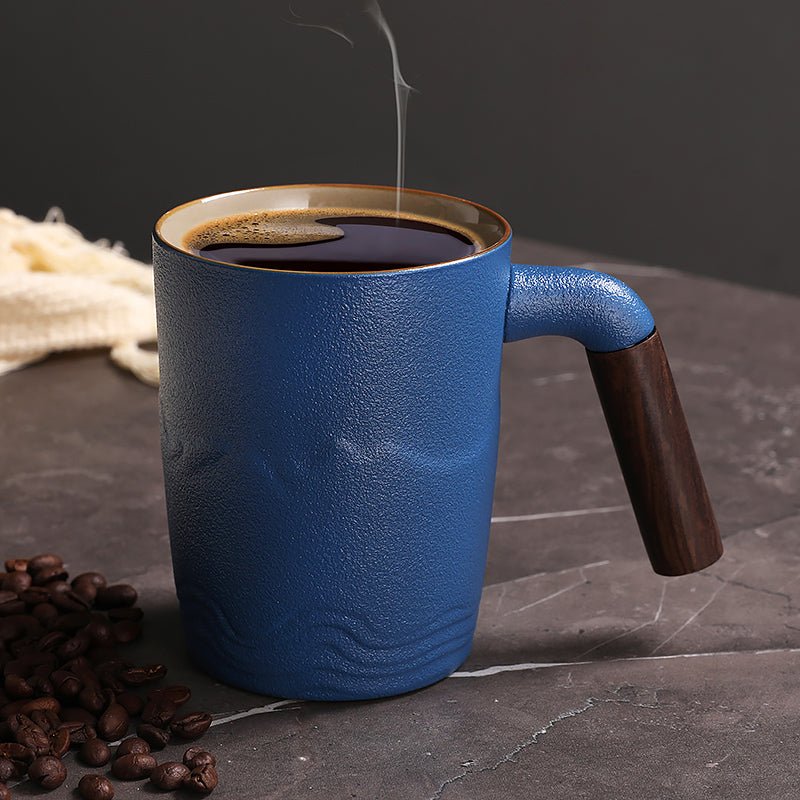
Coffee Mug Dimensions: What to Check Before You Buy
Reading time: about 9 minutes
A mug can look right on the shelf and still feel wrong at the desk. The rim may be too wide for a tight cabinet, the handle may pinch your fingers, or the base may sit awkwardly on a crowded coffee station.
That is why we look at coffee mug dimensions as more than a capacity number. In our store, we check height, rim diameter, base width, handle space, and how the mug balances in real use before we decide if it belongs in the lineup.
If you like sculptural shapes as much as practical ones, start with the Rhombus Coffee Tea Mug, the Handbag Coffee Tea Mug, or the taller White Golden Waves Tall Coffee Tea Mug. For a wider look across our drinkware, browse the all mugs collection.
What do coffee mug dimensions actually include?
Most buyers only look at ounces, but ounces do not tell the whole story. Two mugs can both hold 12 oz and feel very different on a kitchen counter. One may be short and broad. Another may be tall, narrow, and better suited to a smaller shelf or a tighter handhold.
When we evaluate coffee mug dimensions, we care about five measurements:
- Height - matters for cabinet clearance, espresso machine space, and how stable the mug feels when it is full.
- Rim diameter - affects sipping comfort and how much steam escapes.
- Base diameter - tells you whether the mug sits securely on a desk, tray, or warming plate.
- Handle opening - determines whether two fingers fit comfortably or the grip feels cramped.
- Capacity - shows how much liquid the mug holds, but not how large it feels in the hand.
That last point causes a lot of confusion. A thick-walled ceramic mug can look bulky from the outside while offering less usable volume than you expect. A thinner mug can feel more compact and still hold the same amount.
If you want a broader explanation of how these measurements work together, our article on Coffee Mug Dimensions: Sizes, Fit, and What to Check Before Buying goes deeper into the basics.
Which measurements matter most before buying?
If you only compare three things, compare height, handle clearance, and base width. Those are the measurements that most often decide whether a mug fits your routine or ends up pushed to the back of the cabinet.
| Measurement | What it affects | What we check in practice |
|---|---|---|
| Height | Cabinet clearance and machine fit | Will it slide under shelves, a pod machine, or a mug tree without scraping? |
| Rim diameter | Sipping feel and drink cooling | Does it feel open for tea or latte foam, or too wide for casual coffee drinking? |
| Base width | Stability | Does it sit flat on a desk, or does it feel top-heavy when filled? |
| Handle opening | Grip comfort | Can you get two fingers through the handle without knuckle pressure? |
We also look for small build details that generic listings often skip. An uneven foot ring can make a mug wobble. A slightly twisted handle can make a beautiful mug irritating to use. A rim with an obvious oval shape is a red flag, because it usually means the mug will not pour or sip as cleanly as it should.
That is part of why dimensions matter. They help you catch the difference between a mug that is merely attractive and one that works every morning.
How do mug dimensions affect real daily use?
The right dimensions depend on where the mug lives. A mug for a home kitchen can tolerate more height than one that needs to sit below a low cabinet shelf. A desk mug needs a steady base because it will sit close to a keyboard, notebook, and phone. A gift mug should look good in the box, but it also needs to feel comfortable the first time someone lifts it.
In our experience, these are the most common real-world trade-offs:
- Kitchen storage - tall mugs can be awkward under upper cabinets, even if they hold the right amount of coffee.
- Office use - wider mugs can take up too much room beside a laptop mouse pad or meeting notes.
- Dishwasher loading - oversized handles can bump neighboring cups, and very tall mugs may not sit well on the top rack.
- Gift appeal - unusual silhouettes look memorable, but they are not always the best pick for someone who wants a simple daily mug.
That is where style and function have to meet. The Handbag Coffee Tea Mug is a good example of a shape-forward piece that works best for buyers who want something distinctive on a shelf or gift table. A taller mug like the White Golden Waves Tall Coffee Tea Mug can be a better fit for tea drinkers who like more vertical profile and less footprint. A more geometric option such as the Rhombus Coffee Tea Mug makes sense if the buyer values visual design as much as daily use.
These shapes are not ideal for everyone. If you want a mug that slides under a machine, stacks neatly, or disappears into a small cupboard, a simpler cylindrical mug is often the safer choice.
What size is standard, and when should you size up or down?
There is no single standard that suits every shopper. In practice, many everyday mugs land in the 8 to 12 oz range, while larger mugs are often chosen for tea, cocoa, or people who do not want constant refills. The important part is not the label. It is how the size matches the way you actually drink.
Size up if you:
- Drink long coffee sessions and want fewer refills.
- Use milk-heavy drinks that need room for foam.
- Prefer a mug with a broader opening and a more relaxed hand feel.
Size down if you:
- Want a mug that heats quickly and cools at a manageable pace.
- Need something that fits neatly under a machine or shelf.
- Prefer a compact mug that feels less heavy when full.
If you are comparing sizes by capacity, our size-focused posts can help you narrow the field. See 10 oz Coffee Mug: Size, Fit, and What to Check Before You Buy and 12 Ounce Coffee Mug Buying Guide for Daily Use and Better Fit for examples of how capacity changes the buying decision.
A useful rule: if you tend to pour a mug full to the brim and carry it around the house, choose a shape with a slightly wider base and a handle that gives your fingers room to move. Tall, narrow mugs can feel elegant, but they are less forgiving when they are full and moving.
What problems show up when dimensions are wrong?
Wrong dimensions do not always look like a broken product. More often, they look like mild annoyance every day. That is why we treat fit as a usability issue, not just a style choice.
- Too tall - the mug does not fit under the machine or shelf and gets left out on the counter.
- Too wide - it crowds the workspace and feels awkward in one hand.
- Handle too small - fingers scrape the mug body or cannot fit comfortably at all.
- Base too narrow - the mug feels top-heavy and less secure when full.
- Rim too thick or uneven - sipping feels clumsy, and the mug may not feel balanced.
At inspection, we look for common defect modes that matter more than most buyers realize: lopsided handles, wobble from an uneven foot ring, small glaze pinholes, and slight rim ovality. These are not always deal breakers, but they can affect daily comfort and long-term satisfaction.
For a wider buying framework, the guide Standard Coffee Mug Dimensions: What Buyers Should Check is useful if you want to compare options without getting lost in marketing language.
How do you compare mugs before checkout?
We suggest checking mugs in the same order we do in our store. Start with fit, then comfort, then style. That sequence catches most mismatches before you buy.
- Measure the space where the mug will live: cabinet height, shelf depth, and any machine clearance.
- Compare the stated height, rim width, and base diameter, not just the ounce count.
- Check the handle opening with your own grip in mind. Two fingers is comfortable for many people, but not all.
- Look for notes about material and care. Ceramic and stoneware usually handle daily use well, but rough treatment can still chip rims and handles.
- Decide whether the mug is for everyday coffee, tea, or occasional gifting. That changes what size makes sense.
If you are still deciding, we often point shoppers to our general sizing post first, then to size-specific guides if they want to narrow the choice further. For a more detailed breakdown, start with 11 oz Coffee Mug: Size, Fit, and What to Check Before You Buy. It is a good middle-ground example because many buyers land there after comparing smaller and larger options.
A final practical detail: if you plan to wash the mug often, choose a shape with a handle and rim that are easy to rinse by hand. Very sculptural mugs can be beautiful, but they are not always the easiest to dry around the handle junction or the foot ring.
Frequently asked questions
How do I measure coffee mug dimensions at home?
Use a ruler or tape measure to check height from base to rim, width across the top opening, and the widest point of the body if it flares outward. Measure the handle opening too, since that is the part that affects comfort the most. If the mug has a narrow foot ring, check that it sits flat and does not rock.
What is the most comfortable coffee mug size for daily use?
For many people, a mug in the middle range feels easiest to live with because it balances capacity and handling. The most comfortable choice is usually the one that fits your hand, storage space, and drink size without feeling oversized. If you use milk-heavy drinks or larger pours, step up a little; if you want a compact desk mug, step down.
Do taller mugs hold more than wider mugs?
Not always. Two mugs can have the same capacity while one is tall and slim and the other is short and wide. That is why we always recommend checking both ounces and the physical dimensions before buying.
Why does my mug feel smaller than the listed ounces?
Thick walls, a broad base, and a wide opening can reduce the amount of usable space you notice at first glance. A mug can also feel smaller if the interior tapers sharply. The outer shape matters just as much as the printed capacity.
What mug dimensions work best for gifts?
For gifts, a balanced shape usually beats an extreme one. A mug that is neither too tall nor too wide tends to photograph well, fits most cupboards, and feels familiar when the recipient opens the box. If you want something more distinctive, choose a sculptural mug only if the person enjoys display pieces as much as everyday use.
If you are comparing options right now, check the height, rim width, and handle space first, then move to style. For a broader browse, start with our all mugs collection and compare the shapes that fit your cabinet, desk, and daily routine best.
Read more
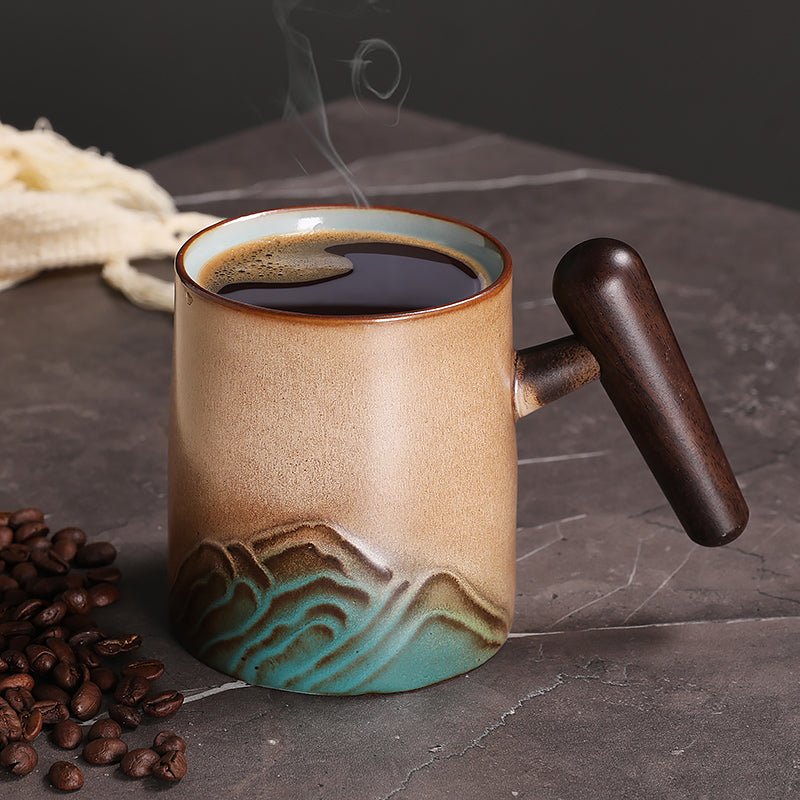
Pendleton Coffee Mug: What to Check Before You Buy
A practical buyer’s guide to choosing a Pendleton coffee mug-style mug, with real checks on size, handle comfort, care, and when a wooden-handle alternative makes more sense.
Read more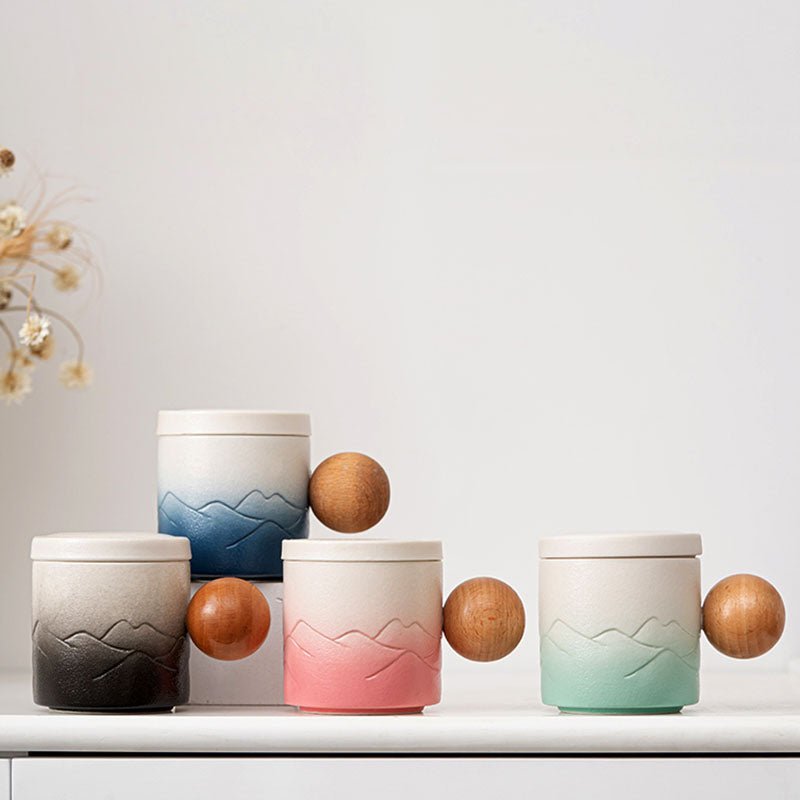
Pendleton Coffee Mug Buying Guide: Fit, Handle, and Daily Use
A practical look at what makes a Pendleton coffee mug worth buying, from handle comfort and size to cleanup and giftability. We compare three options from our store and show what each one is best for.
Read more
Leave a comment
This site is protected by hCaptcha and the hCaptcha Privacy Policy and Terms of Service apply.