
Ceramic Glazed Coffee Mugs for Small Coffee Setup: Key Checks
Reading time: about 9 minutes
A mug that looks compact in a product photo can still crowd a narrow cabinet once its handle, widest body point, and everyday brewing space are taken into account. For shoppers comparing ceramic glazed coffee mugs for small coffee setup, the useful question is not simply which finish looks best. It is which capacity and shape can live comfortably beside the coffee maker, clear the shelf above it, and hold the drink you actually prepare.
We handle this category with small kitchens, office desks, and gift purchases in mind. Our experience is that buyers are happiest when they compare storage and drink volume separately. A larger stated capacity does not automatically mean a better daily mug, and a decorative glaze does not remove the need to check care instructions and surface condition.
How do ceramic glazed coffee mugs for small coffee setup use shelf space?
Start with the mug's storage location, not the empty area in the middle of the counter. A mug usually spends more time in a cabinet, on a hook, or beside a machine than it does in a hand. Measure the shelf height and depth, then check the available width with the neighboring cups still in place.
- Height: Measure from the shelf surface to the shelf or cabinet frame above. Do not assume an angled mug will be convenient to remove every morning.
- Body width: Use the widest point of the mug, not just the base. Rounded or flared walls can consume more shelf width than their foot suggests.
- Handle projection: Include the full handle in the footprint. On a crowded shelf, handles often determine how many mugs fit in one row.
- Working clearance: If the mug stays under an espresso machine or pod brewer, leave room to lift and remove it without striking the brew head.
Product photography is useful for judging finish and proportions, but it is not a measuring tool. If a listed page provides dimensions, compare those figures with your physical space. If a dimension is not shown, do not estimate it from the image; contact the store before buying for a strict shelf or machine clearance.
What changes between 400, 440, and 480 ml?
The current comparison range covers 400, 440, and 480 ml capacities. Those numbers are close enough to look interchangeable on a screen, but the 80 ml difference between the smallest and largest options can affect both drink style and countertop fit. Our ceramic glazed mug capacity guide for 400, 440, and 480 ml examines those volume choices in more detail.
| Capacity to compare | Likely practical fit | Trade-off to check |
|---|---|---|
| 400 ml | Regular coffee, tea, or a drink with moderate milk while keeping volume controlled | Less room for a large recipe, ice, or generous foam |
| 440 ml | A middle ground for shoppers who alternate between black coffee and milk-based drinks | May still be more mug than a short daily pour requires |
| 480 ml | Long drinks, tea, or recipes that need extra headroom | Potentially more cabinet and desk space, depending on the mug's actual shape |
Capacity is the volume the vessel is designed to hold, not necessarily the amount that is comfortable to carry. Filling any mug to its upper edge leaves little protection against spills. Allow practical headroom for walking from the kitchen to a desk, adding milk, or stirring without pushing liquid over the rim.
A 480 ml mug is not automatically wider than every 400 ml mug. It could gain volume through height or body shape. That is why capacity and external dimensions need separate checks. Shoppers primarily making smaller drinks may also prefer a purpose-sized vessel; our guide to a ceramic cortado cup for a small coffee setup covers that more compact use case.
Which current finish suits the way the mug will be used?
Finish choice is personal, but the setting gives it practical context. A mug stored behind a closed cabinet door is selected differently from one that remains on an open shelf or serves as part of a gift. We currently suggest comparing three named designs rather than treating every glazed mug as visually interchangeable.
- For an open shelf or visible desk setup: The changing finish implied by The Gradient Coffee Tea Mug gives the mug a clear design identity. It fits a shopper who wants the everyday cup to contribute to the appearance of a small station. Check the live page for the listed capacity, dimensions, variants, and care information before matching it to a fixed shelf.
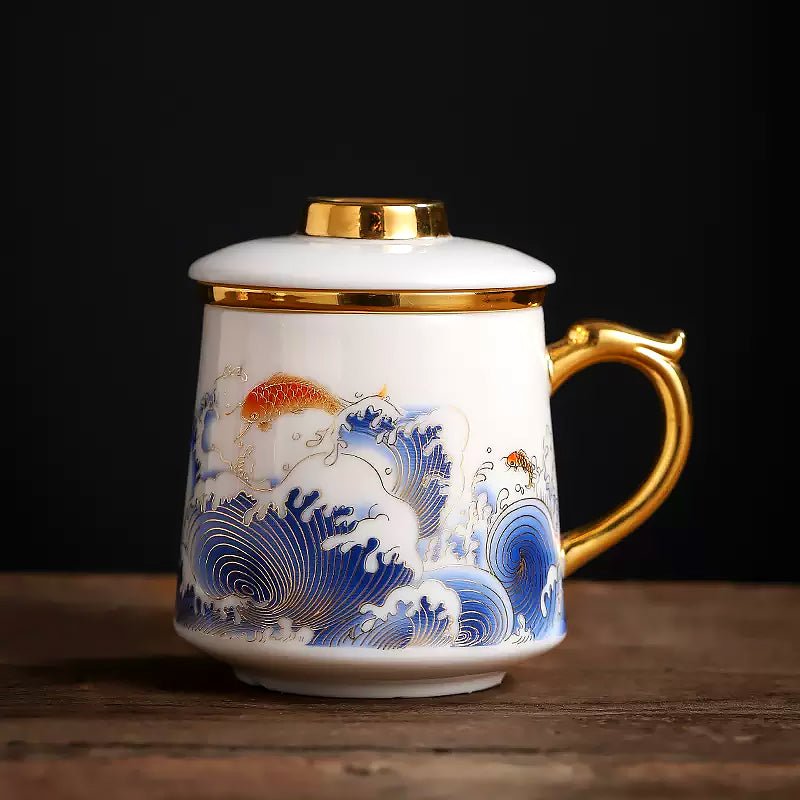
- For a decorative gift choice: The Golden Waves Kio Coffee Tea Mug is the relevant next comparison for someone drawn to a more ornamented name and presentation. For gift unboxings, inspect the mug promptly after delivery so any glaze or transit issue can be documented before use.
- For a strongly defined color direction: The Emerald Coffee Tea Mug is the natural page to review when the mug needs to coordinate with a green-led kitchen or office setup. Confirm the current product details rather than relying on screen color alone, since display settings and room lighting can alter how a glaze appears.
If none of those visual directions suits the room or recipient, browse the wider unique coffee mugs collection. That is also the better route for comparing current availability instead of forcing a capacity or finish that does not fit the intended setup.
What should you inspect in a glazed ceramic mug?
Glaze gives ceramic its finished surface, but it can also reveal manufacturing and handling issues. Small variations in a decorative finish are not necessarily functional defects. The checks that matter most concern stability, exposed ceramic, cracks, and areas that will be handled or washed repeatedly.
- Set the mug on a flat counter. Press lightly near the rim from several directions. A base that rocks can be distracting on a desk and increases spill risk.
- Inspect the rim and handle joints. Look for chips, sharp patches, or cracks where the handle meets the body. These are high-contact and high-stress areas.
- Check the glazed surface under direct light. Pinholes, glaze skips, and fine crazing lines are different conditions. If the surface appears cracked, damaged, or unexpectedly unglazed in a food-contact area, pause before using it.
- Run a fingertip around the foot. An unglazed foot is common on ceramic pieces, but it should not have a sharp burr that can scratch a counter or shelf.
- Test the handle empty first. Make sure your fingers fit comfortably and that the mug can be lifted without pressing a knuckle against a hot body.
These checks are especially useful after shipping. Keep the packaging until the mug has been inspected. If something looks like damage rather than normal finish variation, take clear photographs before washing or using the piece and contact the store.
How should glaze care affect a small-space purchase?
Care requirements matter more in a small setup because many buyers want one mug to handle repeated daily use. Read the care information on the specific product page. Do not assume that every glazed ceramic finish, decorative detail, or mug variant has identical dishwasher or microwave guidance.
If the listing does not expressly confirm dishwasher suitability, hand washing is the cautious choice. Use a soft sponge, ordinary dish soap, and warm water; avoid abrasive pads that can mark a decorative surface. Let the mug dry fully before returning it to a tight cabinet, particularly if the foot ring remains damp after washing.
Temperature changes deserve the same practical attention. Avoid moving a cold ceramic mug directly into an extreme heat situation, and do not use a chipped or cracked vessel. A thick wall may feel substantial and can affect how a mug handles heat, but it also adds bulk and weight. Shoppers prioritizing that construction can use our thick ceramic coffee mug buying checks to compare the trade-offs.
Which buyers should choose a different mug style?
These mugs are not the best answer for every compact station. A 400 to 480 ml vessel can be excessive for someone who drinks only espresso or short cortados. A smaller purpose-built cup may occupy less room, suit the serving volume better, and reduce the temptation to pour a small drink into an oversized vessel.
A glazed ceramic mug may also be a poor match for a bag that is carried daily, a crowded shared sink, or a workspace where breakage is a recurring concern. Ceramic has weight and can chip or break if dropped. A travel mug or another durable format may be more practical in those settings.
Likewise, choose a simpler finish if the mug will receive heavy communal use and appearance is secondary. Decorative styles make sense when the finish is part of the buying decision. They are less compelling when the only priorities are stacking efficiency, minimal care, and easy replacement with identical pieces.
Frequently asked questions
What capacity is best for ceramic glazed coffee mugs for small coffee setup?
Start with your normal prepared drink, then allow some headroom for stirring and carrying. A 400 ml option may suit moderate servings, 440 ml provides a middle choice, and 480 ml offers more room for long drinks, tea, milk, or ice. External dimensions still need to be checked because capacity alone does not reveal shelf footprint.
Can I judge whether a ceramic mug fits under my coffee maker from its photo?
No. Product photos are not a reliable scale reference. Measure the clearance beneath the brew head and compare it with the dimensions stated on the live product page; if the required measurement is unavailable, ask before ordering.
Are all glazed ceramic mugs dishwasher and microwave safe?
Do not apply one care rule to every glaze or decorative finish. Follow the instructions on the individual product listing. If dishwasher or microwave use is not expressly addressed, contact the store or use the more cautious hand-washing approach.
Is a 480 ml mug too large for a small kitchen?
Not necessarily. It can work if you regularly prepare long drinks and its external shape fits your shelf and machine clearance. It is a poor use of limited space if you usually drink short servings and leave most of the mug empty.
What should I check as soon as a glazed ceramic mug arrives?
Place it on a flat surface, inspect the rim and handle joints, and look for chips, cracks, sharp spots, or unexpected glaze gaps. Keep the packaging and photograph any suspected shipping damage before washing or using the mug.
A five-point check before adding a mug to your setup
- Measure cabinet height, shelf depth, available width, and coffee-maker clearance.
- Choose among 400, 440, and 480 ml based on the prepared drink, not maximum volume alone.
- Confirm the current listing's dimensions, capacity, variant, and care instructions.
- Decide whether Gradient, Golden Waves Kio, Emerald, or another collection style fits the visible space.
- Inspect the base, rim, glaze, and handle joints immediately after delivery.
With those checks complete, compare the current choices in our unique coffee mugs collection. Start with the capacity your routine needs, eliminate anything that does not fit the measured space, and use the glaze design as the deciding factor between the remaining options.
Read more

cafe au lait mug for small coffee setup: Size and Fit
Compare three listed mug capacities by shelf footprint, handle clearance, serving space, and everyday fit. This guide explains the practical trade-offs between 400 ml, 440 ml, and 480 ml options.
Read more
Small Ceramic Coffee Cup for Small Coffee Setup: Buying Checks
Compare the measurements that affect cabinet, counter, and desk fit, then weigh usable capacity, handle clearance, glaze care, and current CoffeifyMug styles.
Read more
Leave a comment
This site is protected by hCaptcha and the hCaptcha Privacy Policy and Terms of Service apply.