
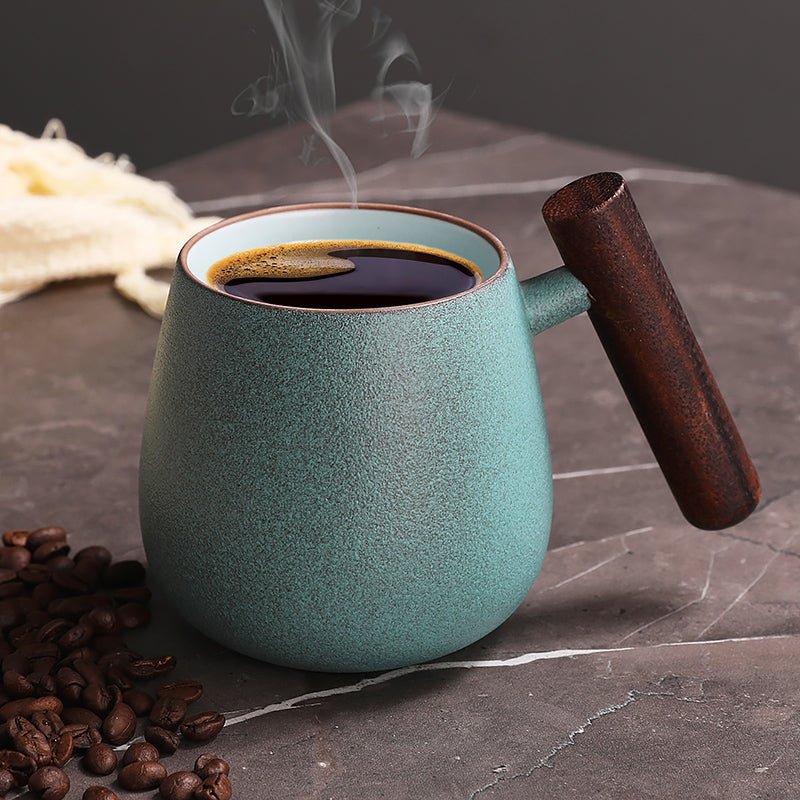
20 oz Coffee Mugs: How to Choose the Right Size, Material, and Fit
Reading time: about 8 minutes
A 20 oz mug looks simple on a product page, then it lands on a kitchen counter and suddenly takes up real space. The handle needs room, the lip needs to feel comfortable, and the mug should not wobble when it is full and warm. That is the difference between a mug people use every day and one that stays in the cabinet.
At CoffeifyMug, we see the same buying pattern over and over: shoppers want a larger mug for long mornings, office desks, or a second pour without switching cups. In our store, we pay close attention to the parts buyers actually live with, not just the stated capacity. If you are comparing options, start with our current selection on our products page or browse everything in our full collection.
Who actually needs a 20 oz coffee mug?
These mugs make sense for people who drink one larger serving instead of refilling often. They are also a practical pick for anyone who adds milk, foam, or room for creamer and still wants the mug to feel balanced. A 20 oz mug is useful on a desk, at the kitchen table, or for slow weekend coffee where a smaller cup feels too limited.
They are not the best fit for every buyer. If you prefer espresso, short drip coffee, or a light cup that is easy to lift with one hand, a smaller mug will usually feel better. A 20 oz mug can also be awkward for kids, for tiny hands, or for cabinets with tight shelf clearance.
- Good fit: long coffee sessions, tea drinkers, office use, and buyers who want extra room.
- Not ideal: espresso drinkers, very small hands, and anyone who wants a lightweight cup.
- Real-world use: breakfast tables, work-from-home desks, and gift sets where the recipient prefers a larger drink.
If you are still deciding between sizes, our earlier guides on 16 oz Coffee Mugs: What to Check Before You Buy and 12 oz Coffee Mugs: What to Check Before You Buy show where the trade-off usually lands.
What should you inspect before ordering one?
A large mug can still be frustrating if the details are off. We look at the same handful of checks for every mug category because they affect daily use more than the headline size.
- Actual fill line: A 20 oz capacity is often a brim measurement, not the amount you will comfortably pour in. Leave headroom for hot coffee, foam, or tea leaves.
- Handle clearance: Make sure your fingers fit without scraping the cup body. A handle that looks fine in photos can feel cramped in the hand.
- Base width: A wider base is more stable on a desk or nightstand, especially when the mug is heavy with liquid.
- Rim and glaze quality: A smooth rim matters for comfort. We also watch for pinholes, rough spots, or uneven glaze near the lip and handle join.
- Weight when full: A 20 oz ceramic mug can feel noticeably heavier than a 12 oz mug. That is fine if you like substance, but not if you want something easy to carry from kitchen to office.
These are the same details buyers call out when they ask us about fit and daily use. They are also the details covered in our 20 Ounce Coffee Mugs: What Buyers Should Check Before Ordering guide, which goes deeper into the first-time buyer checklist.
Which material works best for everyday use?
For 20 oz mugs, material matters because the cup already has more mass than a smaller mug. The wrong material can make the mug feel bulky, while the right one gives you stability without becoming a nuisance at the sink or microwave.
| Material | What it feels like | Trade-off |
|---|---|---|
| Ceramic | Solid, familiar, and easy to pair with most kitchen setups | Can feel heavy when full and may cool faster than insulated drinkware |
| Stoneware | Heavier and sturdier, with a more substantial hand feel | Best for buyers who like weight; not ideal if you want a lighter mug |
| Porcelain | Cleaner-looking and often slimmer at the wall | Can feel more delicate and may not be the best choice for rough daily handling |
For most shoppers, ceramic is the most practical middle ground. It works for office desks, kitchen counters, and gift unboxings because it feels familiar and does not ask for special handling. That said, a large ceramic mug is not the best answer if your main goal is to keep coffee hot for a long commute. For that job, a lidded insulated cup does better than a traditional mug.
If you want a closer look at fit, heat retention, and care for this material specifically, our guide to Ceramic Coffee Mugs 20 oz: Buyer's Guide for Fit, Heat, and Care is the right place to start.
How do 20 oz mugs compare with 12, 14, and 16 oz sizes?
This is usually where buyers make the decision. A 20 oz mug gives you more room, but it also asks for more counter space, more cabinet space, and more hand strength when it is full. Smaller mugs are easier to stash and lift, but they can feel too tight for large pours or milk-heavy drinks.
| Size | Best for | Main trade-off |
|---|---|---|
| 12 oz | Standard coffee servings, smaller hands, compact storage | Less room for creamer or a larger pour |
| 14 oz | Buyers who want a little extra without going large | Still may feel limited for long drinking sessions |
| 16 oz | Daily use with a more generous fill | Not as roomy as a true 20 oz mug |
| 20 oz | Big pours, tea drinkers, desk use, and fewer refills | Heavier, bulkier, and not as convenient for small cabinets |
If you are weighing the middle sizes, our related posts on 14 Ounce Coffee Mugs: Size, Fit, and Buying Guide and 16 Ounce Coffee Mugs: Size, Materials, and Fit Guide make the comparison easier. We also recommend our article on 20 oz Coffee Mugs: What Buyers Should Check Before Ordering if you want a second pass before placing an order.
What problems show up most often with oversized mugs?
Most issues are not dramatic. They are practical annoyances that show up after the first week of use, which is why we always look beyond the photo. A mug can look great on screen and still be annoying on a real desk.
- Handle fatigue: If the handle is too narrow, the mug feels awkward when full.
- Uneven base: A mug that rocks slightly on a flat counter becomes annoying fast.
- Rim chipping: Large mugs often get set down harder because they feel heavier in the hand.
- Glaze wear: Printed or decorated surfaces can dull if they are scrubbed too aggressively or run through high-heat cycles repeatedly.
- Cabinet fit: Tall or wide mugs can crowd shelves, especially if your kitchen already has stacked plates and glasses.
We also see buyers assume every mug labeled dishwasher-safe will age the same way. That is not true. Dishwasher-safe usually tells you the mug can handle the cycle, not that every finish, decal, or glaze will look new forever. If you want the longest useful life, treat the mug like daily cookware, not like a display piece.
Our rule in the store is simple: if a mug feels slightly awkward empty, it will feel worse when it is full.
How should you care for a 20 oz mug at home or at work?
The care routine is straightforward, but the habits matter. A larger mug usually takes more abuse because it is used more often for longer pours and bigger servings.
- Rinse the mug soon after use so coffee oils do not build up around the inside wall.
- Do not move a hot ceramic mug straight into cold water. Sudden temperature swings can stress the body and glaze.
- Use the top rack if the mug is dishwasher-safe and the design is printed or decorated.
- Avoid abrasive scrubbing pads on glossy finishes. They can leave micro-scratches that show up over time.
- Check the handle join and rim occasionally for chips, especially if the mug gets used at an office sink or shared kitchen.
If a mug is going to live on a work desk, it should also be easy to clean after the occasional spill. That is one reason many buyers keep coming back to a straightforward ceramic build: it is familiar, easy to wash, and easy to explain when they are buying it as a gift.
Frequently asked questions
Is a 20 oz coffee mug too big for everyday use?
Not if you regularly drink larger servings or want room for milk, foam, or tea. It can feel too large for smaller hands or quick espresso-style drinks, so the right answer depends on how you actually use it.
Are 20 oz coffee mugs dishwasher-safe?
Many are, but the finish matters as much as the base material. A mug may survive the dishwasher while still showing faster wear on printed graphics, metallic accents, or decorative glazes if it is washed aggressively.
What is the best material for a 20 oz mug?
For most shoppers, ceramic is the safest everyday choice because it balances durability, feel, and ease of cleaning. Stoneware feels heavier and more substantial, while porcelain can look refined but may be less forgiving in rough daily use.
Can I use a 20 oz mug in the microwave?
Only if the mug is marked microwave-safe. Avoid any mug with metallic decoration or trim, and be careful with very hot handles after heating because larger mugs hold heat longer at the rim and body.
Should I buy a 20 oz mug or a 16 oz mug instead?
Choose 20 oz if you want more room and fewer refills. Choose 16 oz if you want a lighter mug, easier cabinet storage, and a size that feels closer to a standard daily cup.
If you want to compare styles side by side, start with our full collection and then narrow to the mug that matches your handle size, cabinet space, and daily pour. If you are checking fit first, our products page is the fastest way to review what is available now.
Read more
Rechargeable Coffee Mug Buying Guide: What to Check Before You Buy
A rechargeable coffee mug can keep coffee comfortable at a desk, but the details matter: capacity, charging method, lid fit, cleanup, and whether it suits your routine.
Read more
Cartoon Coffee Mug Buying Guide: Size, Print Quality, and Fit
A practical guide to choosing a cartoon coffee mug with the right size, print quality, and finish for daily use, gifts, or desk coffee.
Read more
Leave a comment
This site is protected by hCaptcha and the hCaptcha Privacy Policy and Terms of Service apply.