
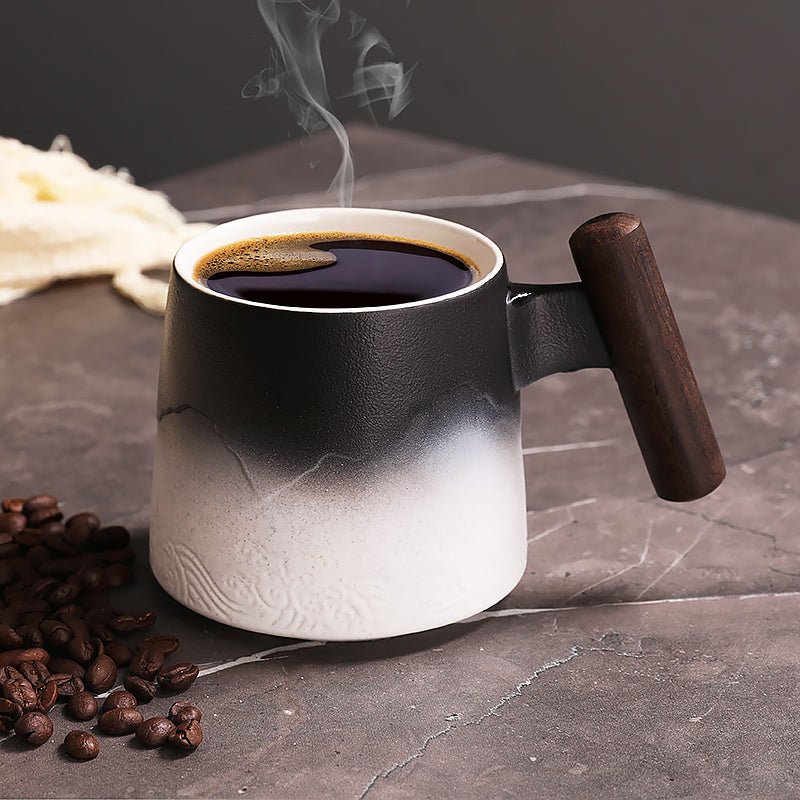
Wholesale Coffee Mugs: How to Choose the Right Style for Bulk Orders
Reading time: about 9 minutes
We see the same problem often at our store: a buyer needs wholesale coffee mugs, but the order will end up in very different hands. Some mugs go to office desks. Some are packed into client gifts. Others sit in a breakroom and get run through the dishwasher every day. The right mug for one of those jobs can be the wrong mug for another.
That is why we look at wholesale mug orders a little differently. Size matters. So does wall thickness, handle shape, glaze finish, and how the mug holds up after repeated washing. A mug that looks fine on a product photo can feel awkward in real use, especially if the handle is too tight or the rim gets hot fast.
If you are comparing options, start with the actual use case. For a simple browse of our mug assortment, you can check our products page, or compare the full range in our collection. We also have separate size guides that help narrow the field, including our posts on 12 oz Coffee Mugs: What to Check Before You Buy and 16 oz Coffee Mugs: What to Check Before You Buy.
What should you check before ordering wholesale coffee mugs?
Most bulk mug orders run into trouble at the planning stage, not the delivery stage. A buyer chooses the look first, then realizes the size is too small for the office coffee machine or too large for a gift box. We try to reverse that order.
Before you place a wholesale order, check these points:
- Capacity: 8 oz, 12 oz, 16 oz, and 20 oz mugs all serve different drink habits. Smaller mugs suit espresso drinks and tighter gift packaging. Larger mugs suit long pours, tea, and work-from-home desks.
- Material: Most buyers choose ceramic because it feels familiar, holds heat well, and photographs cleanly. Stoneware tends to feel heavier and more substantial. Porcelain is usually lighter and more refined in hand, but it can feel less sturdy to some buyers.
- Handle size: A mug can look generous and still be uncomfortable if the handle opening is too narrow for larger fingers or if it twists awkwardly when full.
- Rim and wall thickness: Thin rims often feel nicer to sip from. Thicker walls can help with heat retention, but they also make the mug feel heavier.
- Care instructions: Check whether the mug is dishwasher-safe and microwave-safe if those matters to your buyers. A mug that must be hand-washed is a different purchase entirely for an office or hospitality setting.
In our experience, buyers are happiest when they think beyond appearance and ask, “How will this mug feel on a Monday morning, after three refills, and after a few dishwasher cycles?” That question filters out a lot of weak options.
Which mug size works best for a bulk order?
Size is the first real decision. It affects packaging, perceived value, drink type, and day-to-day usability. We see smaller sizes chosen for espresso bars, tasting programs, and compact gift sets. Larger sizes are more common for offices, merch bundles, and customers who want one mug for coffee, tea, or even soup.
Here is a practical way to think about it:
| Size | Best for | Trade-off |
|---|---|---|
| 8 oz | Espresso drinks, small servings, tight gift boxes | Too small for many standard drip coffee drinkers |
| 12 oz | Classic everyday coffee use, balanced proportions | May feel small to people who routinely refill or use cream-heavy drinks |
| 16 oz | Standard mugs for desks, home offices, and casual retail | Larger footprint and more liquid weight in the hand |
| 20 oz | Large pour coffees, tea, and users who want fewer refills | Can feel bulky and may not fit all cup holders or compact cabinets |
If your order is mainly for everyday drinkers, 12 oz and 16 oz are usually the safest places to start. If you are deciding between those two, our detailed posts on 12 oz Coffee Mugs and 16 oz Coffee Mugs show the differences that matter in real use, not just on paper. For buyers who know they need more volume, our guides on 20 Ounce Coffee Mugs and a buyer's guide to large capacity coffee mugs are worth reading before you place a larger order.
What material is safest for daily use and repeated washing?
For most wholesale coffee mugs, ceramic is the default for a reason. It is familiar, versatile, and usually presents well in offices, cafes, and retail environments. It also handles logos and printed designs nicely if you are buying for branded use. Still, not every ceramic mug is the same.
Here is how we think about common material choices:
- Ceramic: Best all-around choice for daily coffee and tea. Usually easy to clean and comfortable in the hand. Watch for glaze consistency, chipping at the rim, and handle comfort.
- Stoneware: Heavier and often feels more premium. Good for buyers who want a solid, grounded feel. The trade-off is weight; it can be less comfortable for all-day desk use.
- Porcelain: Lighter, refined, and often more delicate in appearance. Better for a polished gift presentation than for rough daily handling.
We pay close attention to the details that customers actually notice after unboxing: glaze smoothness, whether the handle edges are comfortable, and whether the base sits flat without rocking. A mug with a small wobble may still look fine in photos, but it is the kind of defect that stands out on a breakroom counter.
If your team will use the mugs daily, choose a material that can handle repeated wash cycles and casual handling. If the mugs are going into a gift box or a polished client package, appearance may matter more than raw durability, but the handle and rim still need to feel good in hand.
What do wholesale buyers usually get wrong about care and durability?
The most common mistake is treating care instructions as a minor detail. It is not minor. A mug that is dishwasher-safe on paper may still show wear sooner if the glaze is thin or the print sits in a high-friction area. A mug that is microwave-safe may still become unpleasant to hold if the walls heat unevenly.
In real use, these are the issues we watch for:
- Chipping at the rim: Often caused by stacking, tight shelf storage, or rough handling during washing.
- Handle stress: A handle can feel secure empty and awkward when the mug is full. That matters more in larger sizes.
- Glaze wear: Frequent dishwasher cycles can dull weaker finishes over time.
- Base scratches: Unfinished or rough bottoms can mark desks and countertops.
If your order is for an office kitchen, choose mugs that feel sturdy enough for daily rotation and simple cleanup. If the order is for resale, think about unboxing and shelf appeal as much as durability. Both matter, but the priority changes with the customer.
We have found that the best wholesale mug is not the fanciest one. It is the one that still feels right after the tenth use, the third dishwasher run, and a busy morning when nobody is being careful.
How do you choose between office mugs, gift mugs, and resale mugs?
The best wholesale coffee mugs depend on who is actually using them. A breakroom mug, a corporate gift mug, and a retail shelf mug each need different strengths.
- For office use: Choose a comfortable handle, easy cleaning, and a size that works with standard coffee routines. 12 oz to 16 oz is usually a practical range.
- For gift programs: Focus on appearance, unboxing, and overall feel. A mug that looks clean and balanced on a desk often performs better than one that only looks large.
- For resale: Check consistency across the batch, glaze finish, and how the mug photographs. Buyers notice color uniformity and whether each piece feels like it belongs in the same set.
For shoppers who are comparing broader drinkware options alongside mugs, our article on Amazon Coffee Mugs: How to Compare Materials, Sizes, and Everyday Use can help you sort through the same decision points from a different angle.
Our store perspective is simple: if the mug is going into a place where people grab it quickly and wash it often, go for comfort and durability. If it is going into a curated box, presentation can matter a little more, but the mug still needs to drink well. A beautiful mug that splashes, feels awkward, or chips easily will not stay appreciated for long.
What should you inspect on arrival before you accept a bulk order?
Even a good wholesale mug shipment deserves a quick inspection. We recommend checking a few units from different parts of the order before you commit them to shelves, office use, or client distribution.
- Look for uniform height and diameter: Small variation is normal in ceramic products, but obvious inconsistency can make stacks look messy.
- Check the handles: Make sure they are centered, comfortable, and strong enough for a full mug.
- Test the base: Set each mug on a flat counter. A stable mug should sit level without a visible rock.
- Inspect the glaze: Watch for pinholes, rough spots, or dull patches that may indicate uneven finishing.
- Do a quick wash test: If the mugs are intended for dishwasher use, run a few through a normal cycle before committing the whole batch.
This is one reason many buyers prefer to review the full assortment first on our all products collection and then narrow down to the size and finish that fit their project. It is better to make a small adjustment before ordering than to discover a handle issue after everything has been packed.
Frequently asked questions
Are wholesale coffee mugs usually dishwasher-safe?
Many are, but not all. You should confirm the care instructions for the exact mug you plan to buy, especially if it will be used in an office or hospitality setting. Even dishwasher-safe mugs can show wear over time if the glaze or print is not designed for frequent washing.
What size wholesale coffee mug sells best for everyday use?
For everyday coffee drinkers, 12 oz and 16 oz are usually the most practical sizes. They fit common serving habits without feeling too small or too bulky. If the mug is meant for larger pours or fewer refills, 20 oz may make more sense.
Are ceramic mugs better than stoneware for bulk orders?
Ceramic is usually the most flexible choice because it balances price, appearance, and everyday usefulness. Stoneware feels heavier and more substantial, which some buyers prefer for gifts or premium retail. For office use, ceramic is often easier to live with because it is lighter and familiar in hand.
What defects should I check for when buying mugs in bulk?
Look for chipped rims, rough glaze spots, uneven bases, and handles that feel loose or awkward. These are the issues customers notice first once they start using the mug. A quick sample inspection can save a lot of trouble later.
Can wholesale coffee mugs work well for corporate gifts?
Yes, if the size and finish match the gift presentation. A clean, comfortable mug in a sensible size is usually better than a novelty shape that is hard to hold or store. For gifting, think about unboxing, cabinet fit, and how the mug will feel after the first use.
If you are ready to compare options, start with the mug sizes your buyers will actually use, then review our product range and collection pages to narrow the field. A short checklist helps: size, material, handle comfort, care instructions, and how the mug will be used day to day.
More from our blog
Read more

Starbucks Coffee Ceramic Mug: What Buyers Should Check Before Buying
A practical buyer’s guide to choosing a Starbucks coffee ceramic mug for everyday coffee, office desks, and giftable setups. We cover size, handle comfort, glaze quality, care, and where ceramic be...
En savoir plus
Halloween Coffee Mug Buying Guide: Sizes, Materials, and Gift Picks
A practical guide to choosing a halloween coffee mug that looks festive, holds up to daily use, and fits your drink size. We cover size, material, care, and the trade-offs to check before buying.
En savoir plus
Laisser un commentaire
Ce site est protégé par hCaptcha, et la Politique de confidentialité et les Conditions de service de hCaptcha s’appliquent.