
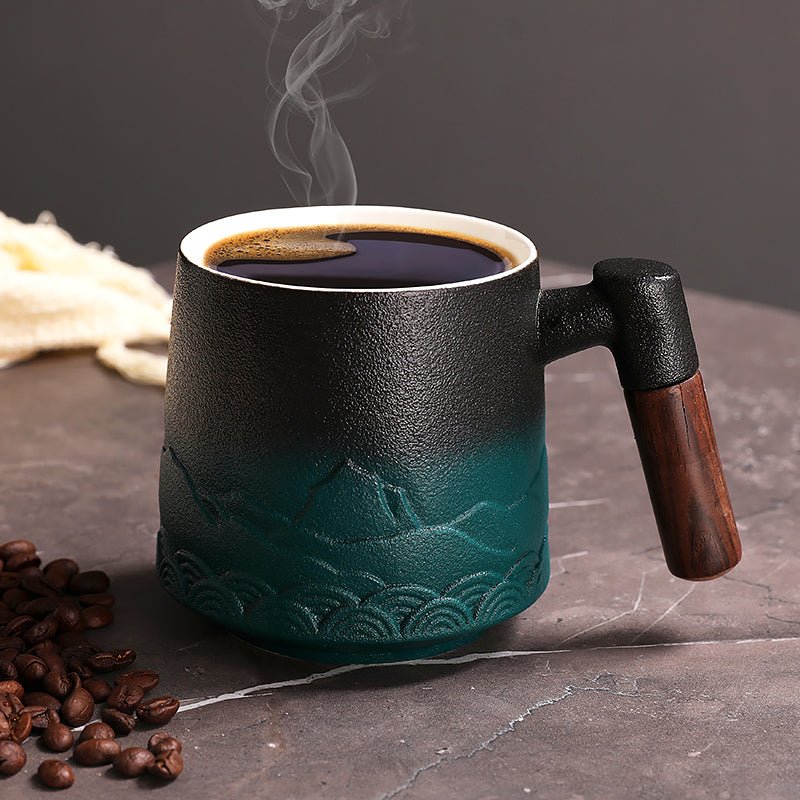
Thomas Kinkade Coffee Mugs: What to Check Before You Buy
Reading time: about 9 minutes
Thomas Kinkade coffee mugs usually get bought for one of two reasons: someone wants a mug that feels like a small piece of art, or they want a gift that looks more thoughtful than a plain cup. The problem is that a beautiful scene on the outside does not guarantee a mug that feels right in the hand, fits under a coffee machine, or survives regular washing without looking tired.
In our store, we see the same pattern again and again. Buyers love the artwork first, then they start asking the practical questions: how big is it, how heavy does it feel when full, and will the print still look sharp after a week on the office desk? That is the right order to think about it.
If you are comparing styles across our shop, start with our all collection and use the mug shape as a filter, not just the artwork. A scenic mug that drinks comfortably gets used. A pretty mug that spills, stains, or feels awkward usually ends up on a shelf.
What should you check first on a Thomas Kinkade coffee mug listing?
The first thing to check is not the image itself. It is the practical information around it. A strong listing should tell you enough to judge whether the mug is for daily use, occasional display, or gifting.
We look for five details before we recommend any art mug:
- Capacity, because a mug that looks large in photos can still only hold a modest pour.
- Material and finish, since ceramic, stoneware, and coated surfaces do not behave the same in the dishwasher or microwave.
- Print placement, including whether the artwork wraps cleanly around the body or ends awkwardly near the handle seam.
- Handle comfort, especially if the mug is tall or the handle has a tighter opening for fingers.
- Care guidance, because a printed mug with metallic accents or delicate decoration may need gentler handling.
There are also a few common defect modes we watch for in printed mugs: faint color banding in sky gradients, small pinholes in the glaze, slightly off-center artwork, and rough spots where the handle joins the cup. None of those are deal-breakers by themselves, but they matter if you are buying a mug as a gift or for a collector who notices details quickly.
If a seller cannot clearly say what the mug is made from, how it should be washed, or whether the decoration is safe for hot drinks and reheating, treat that as a warning sign. A good art mug should be easy to understand before you buy it.
What size works best for daily coffee?
For Thomas Kinkade coffee mugs, size matters more than people expect. Many buyers want the scenic look of a collectible mug, but they still need it to fit real life: espresso plus milk, a full drip coffee, tea with room for lemon, or a desk mug that does not take over the keyboard area.
For everyday use, the best size usually depends on how you drink:
- 10 oz is often a good fit if you keep portions modest or use the mug mainly for tea and shorter coffee pours.
- 12 oz is the safest middle ground for many buyers and matches a standard daily coffee routine well.
- 14 oz to 16 oz works better if you like extra room for cream, drink slowly, or want one mug to cover coffee, tea, and cocoa.
If you want a broader size comparison, our guides on 10 oz Coffee Mugs: How to Choose the Right Fit for Daily Use and 12 Ounce Coffee Mugs: Fit, Use, and Best Picks for Daily Coffee break down the everyday trade-offs without the guesswork.
We also see a subtle issue with larger art mugs: they can look impressive, but if the cup is too tall or the base is too narrow, the mug starts to feel top-heavy on a crowded desk. That is why the shape matters as much as the capacity.
Which shape feels best: short, tall, or novelty?
Shape changes how a mug behaves in real use. A mug can have the right volume and still feel wrong if the balance or handle geometry is off. That is especially true for collector-style mugs, where the artwork sometimes takes priority over ergonomics.
We use shape as a buying guide in our own store. For example, our Handbag Coffee Tea Mug is a good reference if you like a more distinctive silhouette, while the White Golden Waves Tall Coffee Tea Mug shows how a taller profile changes hand feel and shelf presence. The Mountain Tall Coffee Tea Mug is another example of a taller form that works well when the visual story matters as much as the drink itself.
Here is the practical trade-off:
| Shape | What it does well | What to watch for |
|---|---|---|
| Short and wide | Feels stable, easy to stir, good for a desk or side table | Can take up more surface space and may cool faster if the opening is wide |
| Tall and narrow | Often gives a sleek art-display look and can feel substantial in hand | May be less convenient under short coffee machines and can feel top-heavy if the base is small |
| Novelty or shaped mug | Memorable as a gift and visually stronger on a shelf | Sometimes less comfortable for daily sipping and harder to stack or store |
For buyers choosing a Thomas Kinkade style mug as a gift, a tall or slightly unusual profile can help the piece feel special. For a mug that will live beside a laptop or get used every morning, a more balanced shape is usually the better buy.
What materials and print details matter most?
Most Thomas Kinkade coffee mugs are bought for the art, but the finish is what determines whether that art still looks good after repeated use. The exact material can vary by listing, so we do not assume every mug behaves the same. Still, there are a few details worth checking every time.
Concrete details to look for:
- Surface finish: A smooth glaze is easier to wipe clean than a textured or porous finish.
- Color accuracy: Scenic artwork with soft skies, water, or candlelight should have clean transitions, not muddy gradients.
- Wrap alignment: The image should sit straight around the cup, especially near the handle and rim.
- Rim and base: Thin chips at the rim or roughness on the foot ring can show up first in daily use.
There is also a care issue people miss. If the mug includes metallic trim, metallic accents, or specialty decoration, do not assume it belongs in the microwave. If the listing says dishwasher-safe, that is helpful, but printed mugs still last longer when they are not hammered by harsh cycles every day. Top-rack washing is the safer default unless the maker says otherwise.
If you want a mug that can take rough treatment in a break room, a plain workhorse mug is a better choice than a collectible art mug. That is the trade-off. Art mugs usually give you more visual appeal, but they can ask for a little more care.
Is a Thomas Kinkade coffee mug a good gift?
Yes, if the recipient already likes scenic art, cozy themes, or collectible-style kitchenware. It works especially well for people who enjoy their coffee at home, keep a tidy desk, or appreciate gifts that feel personal without being overly specific.
We have seen the best gift reactions come from mugs that hit three points at once: the art is recognizable, the shape feels comfortable, and the size matches the way the person actually drinks coffee. If one of those is off, the gift starts to feel decorative instead of useful.
A few situations where this style is not the best fit:
- The person needs a travel mug with a lid and sealed lid system.
- The mug will be used in a break room where cups get knocked around and washed aggressively.
- The buyer wants a minimal look with no decoration at all.
- The recipient prefers extra-large servings and usually reaches for a 16 oz or larger everyday cup.
If you are comparing art-inspired options and want a size-first perspective, our 12 oz Coffee Mugs: What to Check Before You Buy guide is a useful companion read. It helps narrow down whether the mug should be a display piece, a daily driver, or something in between.
How should you care for a printed art mug?
Care is straightforward, but it should be consistent. Most of the wear we see on printed mugs comes from preventable habits: harsh scrubbing, overheating in the microwave when the decoration is not meant for it, or repeated use in a dishwasher when a gentler wash would preserve the image longer.
Our practical care routine is simple:
- Rinse the mug soon after use so coffee oils do not sit on the glaze.
- Wash with a soft sponge and mild soap when possible.
- Skip abrasive pads that can dull the print or scratch the finish.
- Let the mug dry fully before stacking it with heavier dishes.
- Check the care note before using it in a microwave or dishwasher.
That routine matters more with scenic mugs than with plain ceramic cups, because the print is part of the product value. A mug with a beautiful landscape or collector scene should still look clean and bright after regular use, not just on day one.
We also tell buyers to inspect the mug when it arrives. Look for hairline cracks, glaze bumps, or a handle that feels sharp where it joins the body. If the mug is being bought as a gift, this quick check saves you from handing over something that looks great in photos but feels sloppy in person.
Frequently asked questions
Are Thomas Kinkade coffee mugs good for everyday use?
They can be, as long as the size and care instructions match your routine. A 12 oz to 16 oz mug with a comfortable handle and clear washing guidance is usually the best choice for daily coffee. If the mug has delicate decoration or metallic accents, it is better as an occasional-use piece than a rough-duty kitchen cup.
What size Thomas Kinkade coffee mug should I buy?
Most buyers do well with 12 oz if they want a balanced daily mug. Choose 10 oz for smaller servings or tea, and move up to 14 oz or 16 oz if you like extra room for milk, cream, or a longer drink. If you want more size context, our size guides can help you compare the fit before you buy.
Can printed art mugs go in the dishwasher and microwave?
Sometimes, but not always. The safe answer is to follow the listing or care label exactly. If a mug has metallic details or specialty printing, keep it out of the microwave, and use top-rack washing or hand washing when you want the artwork to last longer.
What makes one art mug better than another?
Print alignment, glaze quality, handle comfort, and capacity matter more than most shoppers expect. A better mug is not just prettier; it is easier to hold, easier to clean, and less likely to show wear around the rim, base, or artwork seam.
Are Thomas Kinkade coffee mugs a good gift for collectors?
Yes, if the design is clearly the kind of artwork the collector likes and the mug is finished well. Collectors usually notice the print quality and overall presentation quickly, so a cleanly made mug with a stable base and a comfortable grip tends to land better than a novelty shape with weak construction.
If you are ready to compare styles, start with the mug shape you want, then check the care details, then compare the artwork itself. That order saves time and usually leads to a better buy. From there, browse our all collection to see which mugs fit your daily routine instead of just your first impression.
Read more
Tommy Bahama Coffee Mugs: What to Buy and What to Skip
Tommy Bahama coffee mugs usually sell on look first, but the real decision comes down to shape, glaze, handle comfort, and size. We break down what fits daily use, what does not, and which resort-s...
En savoir plus
2 Handle Coffee Mug Buying Guide for Daily Use
A 2 handle coffee mug feels different the moment it is full. We compare the styles we stock, the care trade-offs, and the details that matter before you buy.
En savoir plus
Laisser un commentaire
Ce site est protégé par hCaptcha, et la Politique de confidentialité et les Conditions de service de hCaptcha s’appliquent.