
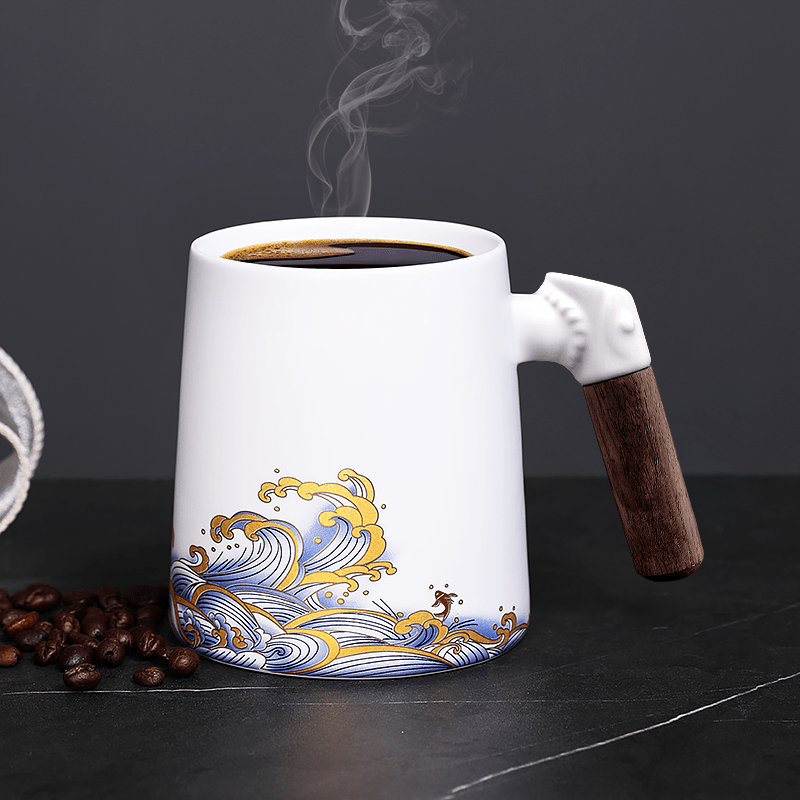
Large Decorative Coffee Mugs for Small Coffee Setup: Compare
Reading time: about 9 minutes
A mug can look perfect in a product photo and still become the item that blocks the cabinet shelf, crowds the coffee machine tray, or forces you to hold your latte one-handed while you search for a place to set it down. That is the central buying problem with large decorative coffee mugs for small coffee setup spaces: visual presence is part of the appeal, but every bit of height and width has to earn its place.
In our store, we see shoppers make the strongest choice when they compare the mug against the exact place it will live, not an imagined open kitchen. A tall statement mug may suit a single daily coffee routine beautifully. It may be frustrating in a shallow cupboard shared by several everyday cups. The goal is not to avoid decorative pieces; it is to choose one whose capacity, silhouette, and care needs fit the actual setup.
How much shelf height and counter footprint can your mug use?
Start with the location, then shop the design. Measure the clear height from the shelf to the shelf above, including any shelf lip or cabinet hinge that reduces usable room. For a mug that will be lifted from an open shelf, leave enough space above it to grip the rim or handle comfortably. A mug that barely slides into place is unlikely to be returned there after a busy morning.
Counter space needs a different check. Measure the spot beside your machine, kettle, or tea tray, then compare it to the listed product dimensions rather than judging by a styled image. Height tells you whether it stores; base diameter and handle projection tell you whether it lives comfortably on the counter. If a product page does not provide the dimension you need, treat that as a reason to confirm before ordering, not as an invitation to guess.
- Open shelf: check vertical clearance, mug width, and the room needed to lift it out.
- Cabinet shelf: account for stacked saucers, shelf lips, and mugs already stored nearby.
- Coffee-machine area: check the base footprint and handle reach so the mug does not knock into the machine or canister.
- Office desk: leave space for a keyboard, notebook, and a stable landing spot away from cables.
A useful low-tech test is to cut a paper circle matching the listed base diameter and place it where the mug will sit. Then place another sheet beside it for the handle side. This makes crowding obvious faster than measuring a countertop in isolation.
Does a large decorative mug give you usable capacity or just a larger silhouette?
“Large” can describe height, width, visual scale, or drink volume. Those are not interchangeable. A tall mug may use less counter width but demand more shelf clearance. A broad body may feel generous in the hand yet occupy the same space as two narrower cups. Before purchasing, compare the stated capacity with the beverage you actually make.
Usable capacity is also less than the number printed on a listing. Hot coffee, tea, foam, and milk need headroom. Filling to the rim makes walking from the kitchen to a desk awkward, particularly with a large handle and a freshly boiled drink. For iced coffee, capacity also includes room for ice; a mug that works for a black coffee may not be the right vessel for a cold drink with ice and milk.
Match the design to the routine:
- One long morning drink: prioritize the listed capacity and a shape that fits your shelf or machine area.
- Tea with a bag or infuser: allow headroom so the bag can be removed without drips running down the outside.
- Milk-forward coffee: account for foam and stirring space, not just the espresso and milk volume.
- Display-first use: a visually substantial mug can be worthwhile if it is used occasionally and stored as a visible object rather than packed into a crowded cabinet.
If volume matters more than decoration, our guide to 12 oz ceramic coffee mugs for small coffee setups provides a narrower capacity-focused comparison. A smaller, repeatable daily cup can make more sense than asking one decorative mug to cover every drink.
Which CoffeifyMug design suits a narrow shelf or display-led coffee corner?
Product-specific decisions should stay tied to what each listing shows and states. We do not recommend assuming a mug's precise dimensions, material, dishwasher compatibility, or capacity from its name or photography alone. Use the current product page as the source for those details, especially if cabinet fit or care is a deciding factor.
For a vertical, shelf-visible statement piece
If you have measured usable shelf height and want a taller decorative profile in a compact coffee corner, review the White Golden Waves Tall Coffee Tea Mug. Its product name identifies it as a tall coffee and tea mug, making it the sensible listing to compare first for a space where vertical storage is available but counter width is limited. It is not the best starting point for a low cabinet shelf; verify the current listed height before treating it as a fit.
For shoppers comparing visual movement with daily placement
A single mug kept beside a brewer can be a functional part of the setup and a visible decorative object. For that situation, view The Flow Coffee Tea Mug alongside the spot where it will sit. Check its current listing details against your tray, shelf, and preferred drink volume. This is less suitable for a shopper who needs identical matching mugs for a tightly organized cabinet, where consistent dimensions may matter more than an individual design.
For a coordinated gold-accent coffee or tea area
If your setup already has warm metallic details and you want the mug to participate in that visual direction, compare the Golden Waves Kio Coffee Tea Mug with the other items in your station. The next step is to use the listing's current photos and specifications to check size, care, and suitability for your routine. A decorative gold-accent choice is not automatically the right pick for someone who wants a plain workhorse mug that can blend into any office kitchenette.
For broader browsing after you have measured the space, the unique coffee mugs collection lets you compare design directions without losing sight of the practical checks above. Keep the tape measure nearby. A collection page is useful for style comparison, but dimensions and care instructions remain product-level decisions.
What should you inspect beyond the decorative finish?
Decorative mugs deserve the same handling checks as any daily drinkware. In our experience, the details shoppers notice after the first week are usually the handle, rim, base, and cleaning routine, not the first impression from the pattern.
On arrival, inspect the mug in good daylight before use. Look over the rim for rough points, run a finger carefully around the handle joins, and set the empty mug on a flat counter to check for wobble. Small variations can occur in decorated drinkware, but a sharp edge, crack, loose handle, or unstable base should be addressed before the mug enters regular rotation.
For care, follow the exact instructions shown on the product page. Do not assume that every decorative finish has the same dishwasher, microwave, or temperature-change tolerance. A safe general habit is to avoid sudden changes between very hot and very cold conditions, avoid abrasive scouring tools on decorated surfaces, and dry the base before returning the mug to a wood shelf or tray. Tea and coffee residue can also collect near the rim over repeated use, so a soft sponge and prompt washing are more useful than occasional aggressive scrubbing.
Handle clearance matters too. A large mug with a small or tight handle opening may be uncomfortable for larger hands, while a generous handle can extend farther into a narrow shelf. The wide-bottom coffee mug comparison is useful if stability is your main concern, but it also highlights the trade-off: a wider base often takes more tray and cupboard space.
When is a decorative large mug the wrong choice for a small setup?
A large decorative mug is not the universal answer to a compact coffee station. It can be the wrong choice if your cabinet clearance is tight, several people share the same shelf, you routinely make short drinks, or the mug must fit beneath a machine's dispensing area. It may also be impractical for commuting, where a lidded travel vessel is generally a better fit than an open ceramic-style mug.
For a work desk, consider the complete movement of the drink. A tall mug may clear the shelf but interfere with a monitor stand; a wide one may be stable but consume the one clear area beside the mouse. For gifting, think about the recipient's actual storage. A distinctive piece can make a thoughtful unboxing experience, but a gift is more likely to be used if its capacity and care requirements match the recipient's routine.
Shoppers who want a more substantial feel rather than a more decorative presence may find a different direction in our thick ceramic coffee mug buying checks. That choice still requires storage measurement, but it solves a different preference: tactile weight and perceived sturdiness rather than display impact.
Frequently asked questions
Are large decorative coffee mugs for small coffee setup spaces practical?
They can be practical if the mug's listed dimensions fit the shelf, counter, and daily drink you have in mind. Decorative scale alone does not predict capacity or footprint, so check the individual listing before ordering. They are a weaker fit for crowded shared cabinets or very low shelf clearances.
How do I know whether a tall mug will fit in my cupboard?
Measure the clear internal shelf height, then compare it with the product's listed height and leave room to grip the mug while removing it. Also measure the shelf depth and account for the handle. Do not use a product image as a substitute for a dimension check.
Can I use a large decorative coffee mug for tea and iced coffee?
Use the product page's stated capacity and care guidance to decide. Tea needs space for a bag or infuser, while iced coffee needs room for ice and milk. A mug with sufficient total volume can still feel too full if there is no comfortable headroom.
What should I check when a decorative mug arrives?
Inspect the rim, handle joins, decorative surface, and base before use. Check that it sits flat on a level counter and follow the item's listed care instructions for washing and temperature exposure. Contact the seller promptly if you find damage, a sharp edge, cracking, or instability.
Should I buy one statement mug or a matching set for a small coffee corner?
One statement mug works well when shelf space is limited and you want a dedicated daily cup or display piece. A matching set makes more sense for households that need several cups stored and used in the same area. Compare both choices against the number of drinks served and the storage space you actually have.
Use this five-point check before adding a mug to cart
Before choosing from our unique coffee mug collection, write down five things: the clear shelf height, counter landing area, desired drink volume, handle-side clearance, and the care routine you are willing to follow. Then open the individual product page, compare those notes to the current specifications and instructions, and select the design that suits the way you make coffee or tea most days. That is the practical route to a decorative mug that looks intentional in a small setup and continues to be useful after the first few drinks.
Read more
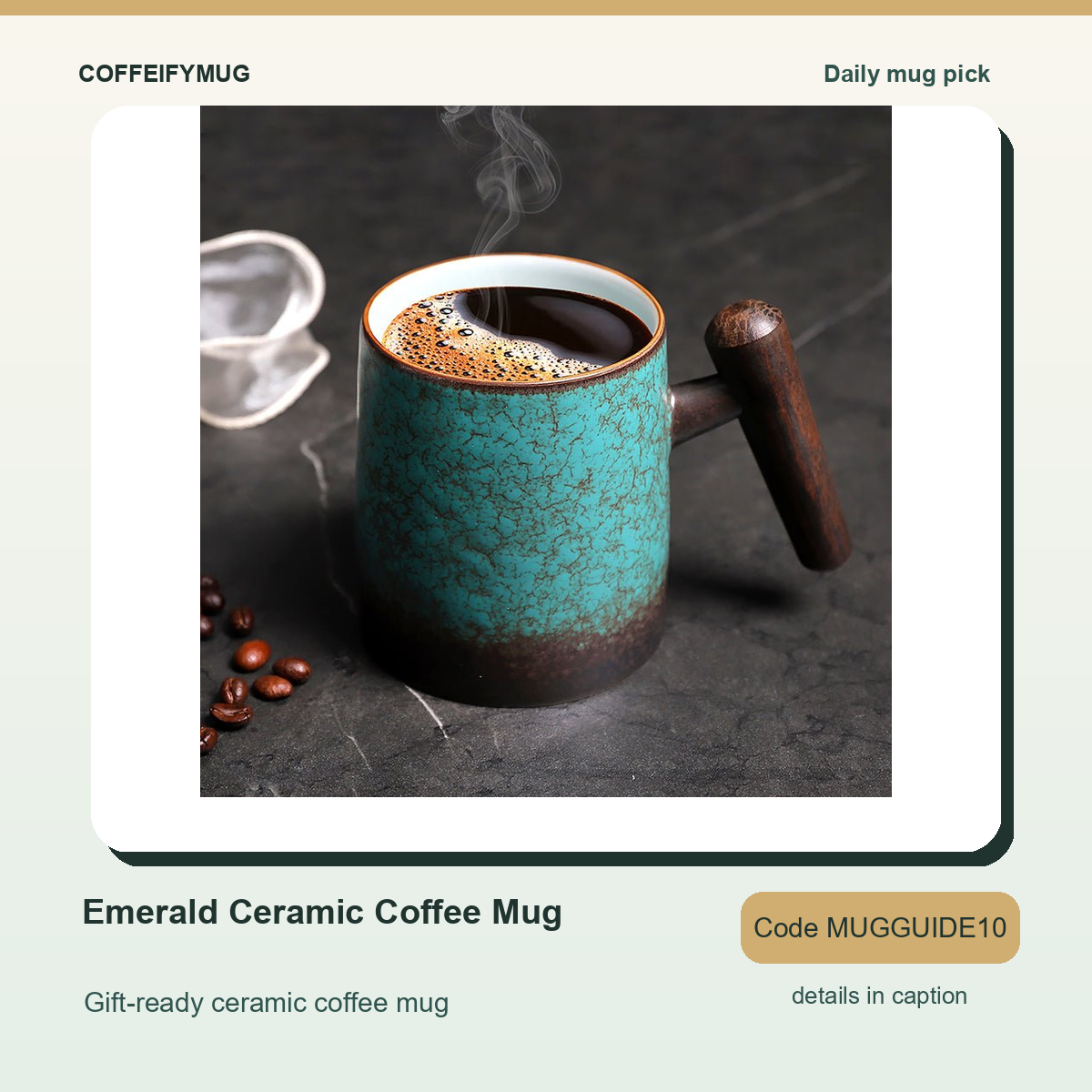
Piccolo Cup for Small Coffee Setup: Compare 170 ml to 270 ml
Compare 170 ml, 250 ml, and 270 ml cup options for a compact coffee station. See how capacity, cupboard space, handle shape, cleanup habits, and drink preferences affect the better pick.
En savoir plus
White Pottery Coffee Mugs for Small Coffee Setups: Compare Before Buying
Compare white pottery coffee mugs for a compact kitchen, office desk, or coffee station by shelf fit, drinking capacity, handle clearance, and everyday care. See which CoffeifyMug styles suit tall ...
En savoir plus
Laisser un commentaire
Ce site est protégé par hCaptcha, et la Politique de confidentialité et les Conditions de service de hCaptcha s’appliquent.