
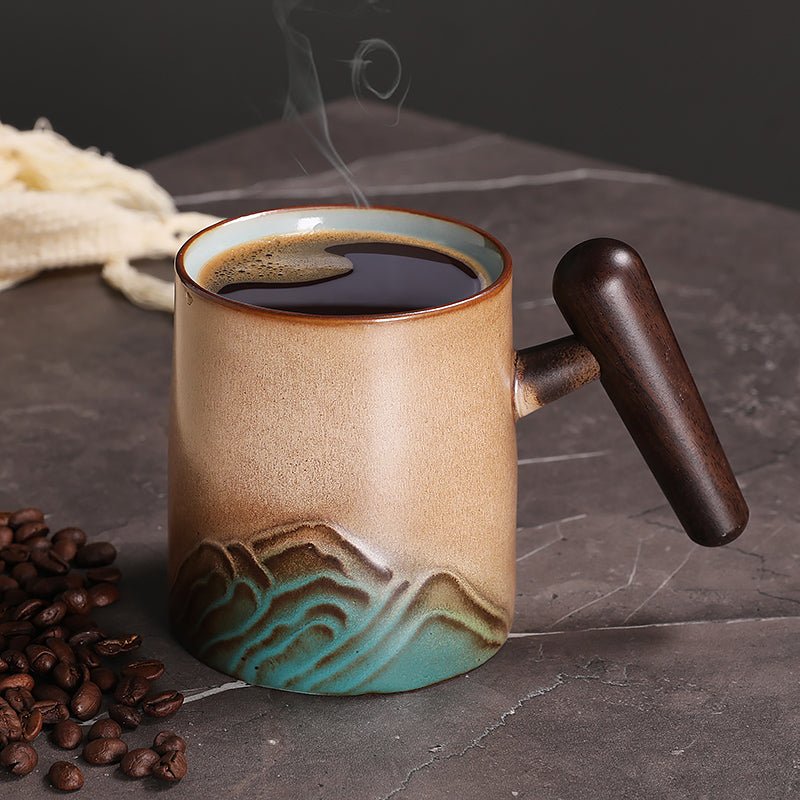
Large Cups for Tea: How to Choose the Right Size, Shape, and Finish
Reading time: about 9 minutes
A tea mug that looks generous on a shelf can feel cramped the moment you add a tea bag, a splash of milk, and a few minutes at a desk. We see this all the time in our store: shoppers want large cups for tea, but they actually need the right balance of volume, handle comfort, and stability.
The useful part is that the right mug usually becomes obvious once you compare a few practical details. Size matters, but so does the shape of the bowl, the thickness of the rim, and whether the base feels steady on a kitchen counter, an office desk, or a crowded bedside table.
What size actually works for a large cup of tea?
For most daily tea drinkers, a large cup usually sits in the 12 to 16 ounce range. That gives enough room for hot water, a tea bag or infuser, and a little extra space so the drink does not feel overfilled. If you like very milky tea, herbal blends that steep longer, or refill-free desk drinking, a slightly larger mug can make sense.
We usually steer customers away from going too large too fast. A mug that is oversized for the amount you actually pour can make tea cool down before you finish it. It can also feel heavier than expected once full, especially if you carry it from the kettle to a sofa or upstairs office.
| Size range | What it feels like | Best for | Main trade-off |
|---|---|---|---|
| 10 to 12 oz | Compact but still practical | Quick black tea, smaller servings, lighter hand feel | Less room for milk, honey, or a larger tea bag |
| 14 to 16 oz | Most versatile large cup size | Daily tea, office use, mixed tea styles | Can take a little longer to drink through |
| 18 oz and up | Very generous and more substantial | Long work sessions, large herbal teas, people who dislike refilling | Heavier when full and easier to overpour |
If you want a broader way to compare capacity and proportions, our guide on Large Cups for Tea: How to Choose the Right Size and Shape goes deeper into how volume affects the drinking experience.
Which shape is better: tall, wide, or rounded?
Shape changes how a tea mug behaves. A tall mug usually keeps tea feeling warmer a little longer because there is less open surface area at the top. A wide mug gives you more room for steam to escape, stirring, and adding milk or lemon, but it cools faster. Rounded mugs sit somewhere in the middle and often feel easiest to hold for relaxed daily use.
In practice, the best shape depends on where the mug lives. On a desk, a stable base matters more than a dramatic silhouette. On a kitchen table, a wide lip can feel comfortable and easy to drink from. If you tend to wrap both hands around your mug, a fuller rounded body often feels better than a very narrow cylinder.
If you want to compare styles in our store, start with The Flow Coffee Tea Mug for a simple everyday shape, White Golden Waves Tall Coffee Tea Mug if you like a taller profile, and Green Waves Coffee Tea Mug if you want a calmer decorative look with a different feel on the table.
If you want to compare more mug options in one place, our collection makes it easier to scan styles side by side before you pick one.
For a related daily-use comparison, Big Coffee Cups: How to Choose the Right Large Mug for Daily Use is useful if you buy the same mug for tea in the morning and coffee later in the day.
What should you check before buying a large tea mug?
We look at a few details every time we handle a mug before listing it. These are the things that usually separate a mug you reach for every day from one that stays in the cupboard.
- Handle clearance: Your fingers should fit without scraping the body of the mug. If the handle is too tight, a full cup gets awkward fast.
- Base stability: A wider, flatter base is usually better on a desk or tray. Narrow bases can feel tippy once the mug is full.
- Rim feel: A slightly rolled or smooth rim usually drinks better than a sharp edge. You notice this most on hot black tea.
- Glaze quality: Look for a smooth finish without rough spots, pinholes, or pooled glaze at the bottom edge. Those are not just cosmetic details; they can make the mug feel less refined in hand.
- Care instructions: If a mug has metallic detailing or delicate decoration, hand-washing is usually the safer choice. Plain glazed mugs are often easier to keep in a regular dishwasher cycle if the manufacturer says they are safe.
- Heat behavior: Very thin mugs heat up quickly and can feel hot to hold. Thicker walls feel sturdier, but they can make the mug heavier.
The most common problems we watch for are practical, not dramatic: a rough foot ring that scratches a table, a wobble on a flat surface, a handle that feels too small once the mug is full, or a hairline crack near the handle joint. Those are the things that matter after the unboxing photo is over and the mug starts daily use.
Our article on Big Coffee Cups: What to Check Before You Buy a Large Mug covers the same inspection mindset from a broader buyer's angle if you want a simple checklist.
Which large mug works best for your tea routine?
Different tea habits call for different mug shapes. If you drink one strong cup in the morning, you probably want something easy to grip and quick to rinse. If you sip slowly through the workday, a larger body with a comfortable handle will matter more than decoration. If you buy gifts, finish and presentation start to matter as much as capacity.
Here is how we usually match the mug to the situation:
- For desk tea: choose a stable mug with a comfortable handle and a profile that does not crowd a laptop, notebook, or mouse pad.
- For slow at-home tea: a wider or rounded mug feels relaxed and easier to cradle with both hands.
- For tea plus milk or honey: a slightly larger opening makes stirring easier and reduces spills.
- For gifting: pick a mug with a clean finish, easy care, and a look that feels intentional even before it is filled.
We like this approach because it avoids one-size-fits-all shopping. A tall mug may be perfect for a customer who drinks one cup at a time, but it is not the best choice for someone who wants an easy spoon-and-stir bowl shape. That trade-off is exactly why our team keeps talking about actual use instead of just decorative appeal.
If you are choosing a gift or building a set, Big Mugs for Tea: How to Choose the Right Large Mug is a useful companion read because it focuses on daily handling, not just appearance.
Are large cups for tea always better than standard mugs?
No. A larger mug is not automatically the better mug. If you drink delicate green tea in small amounts, a huge vessel can make the drink feel underwhelming before you finish it. If your tea routine is short and hot, a smaller mug may actually suit you better because the tea stays concentrated and warm.
Large cups for tea work best when you want more room, less refilling, or a more relaxed pace. They are not ideal if you dislike heavier drinkware, have very small hands, or prefer a quick tea break that is finished in a few minutes.
There is also a care trade-off. Bigger mugs are often easier to knock against a tap, a dish rack, or another cup when washing. If the finish is delicate or the mug has decorative trim, it deserves a bit more care than a plain everyday diner-style cup.
How do you choose a tea mug that will still feel right after a month of use?
The first test is how it feels on an ordinary weekday. Not on a styled shelf. On a cluttered counter, under a kettle, or next to a laptop with notifications going off. A mug that survives that environment without feeling awkward is usually the right buy.
Ask yourself these three things before you click buy:
- Will I fill it most mornings? If the answer is yes, size and handle comfort matter more than visual novelty.
- Will I wash it every day? If yes, simpler finishes and straightforward shapes are easier to maintain.
- Will I carry it across rooms? If yes, weight and balance are as important as volume.
That is the point where shopping gets clearer. A well-chosen mug should not need special treatment to stay useful. It should feel natural from the first tea bag to the tenth dishwasher cycle, if the care instructions allow that kind of use.
Frequently asked questions
What size mug is best for daily tea?
Most daily tea drinkers are comfortable around 12 to 16 ounces. That range gives enough room for a normal pour without making the mug feel oversized or hard to finish. If you drink very strong tea in small quantities, a smaller mug may still be the better fit.
Are tall mugs better for tea than wide mugs?
Not always. Tall mugs can help tea stay warmer a bit longer, while wide mugs are easier to stir and can feel more relaxed to drink from. The better choice depends on whether you value heat retention or ease of use more.
Can large tea mugs go in the dishwasher?
Some can, but not all. Plain glazed mugs are often simpler to clean in a dishwasher if the care label allows it, while metallic accents, hand-painted details, and more delicate finishes are usually safer with hand-washing. Always follow the care guidance for the specific mug.
What should I avoid in a large tea mug?
Avoid a mug that feels top-heavy, has a cramped handle, or shows rough glaze around the rim or base. Those details seem small at first, but they affect daily use. If a mug already feels awkward when empty, it will usually feel worse when full.
Is a large mug a good tea gift?
Yes, if the design is easy to use and not overly fussy to care for. Gift mugs work best when they have a comfortable handle, a stable base, and a finish that looks good without requiring special handling. That is why simple, well-balanced styles tend to age better as gifts.
If you want the fastest next step, compare your usual tea volume, where the mug will live, and how much care you want to give it. Then browse our collection and pick the mug shape that matches the way you actually drink tea, not just the one that looks biggest on the screen.
Read more
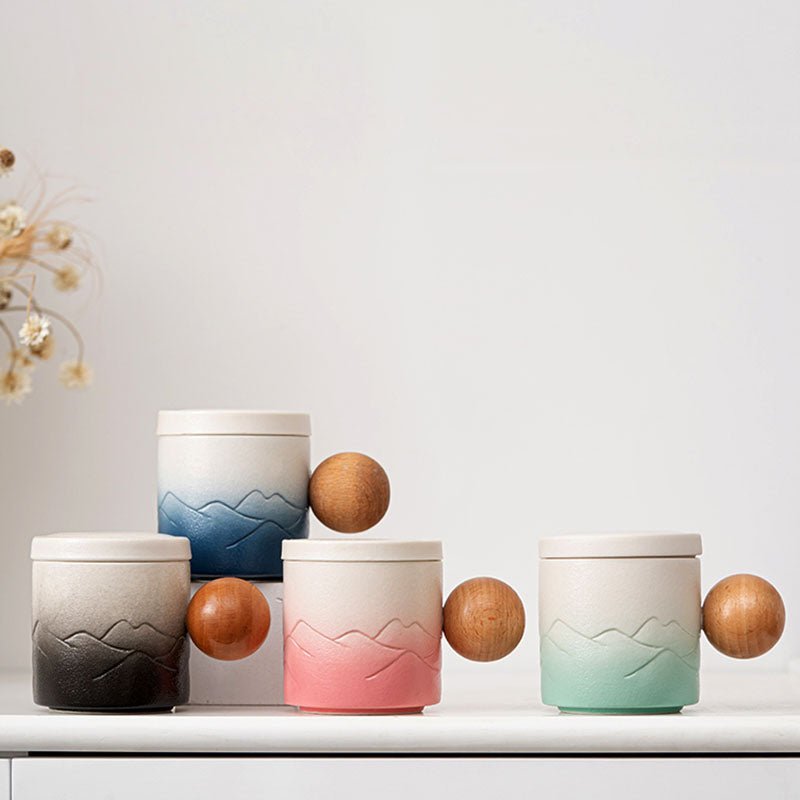
Jesus and Coffee Mug Buying Guide: Sizes, Prints, and Gifts
A Jesus and coffee mug should feel good in the hand, show the artwork clearly, and hold up to everyday use. We break down size, print quality, and gift value so you can choose with less guesswork.
En savoir plus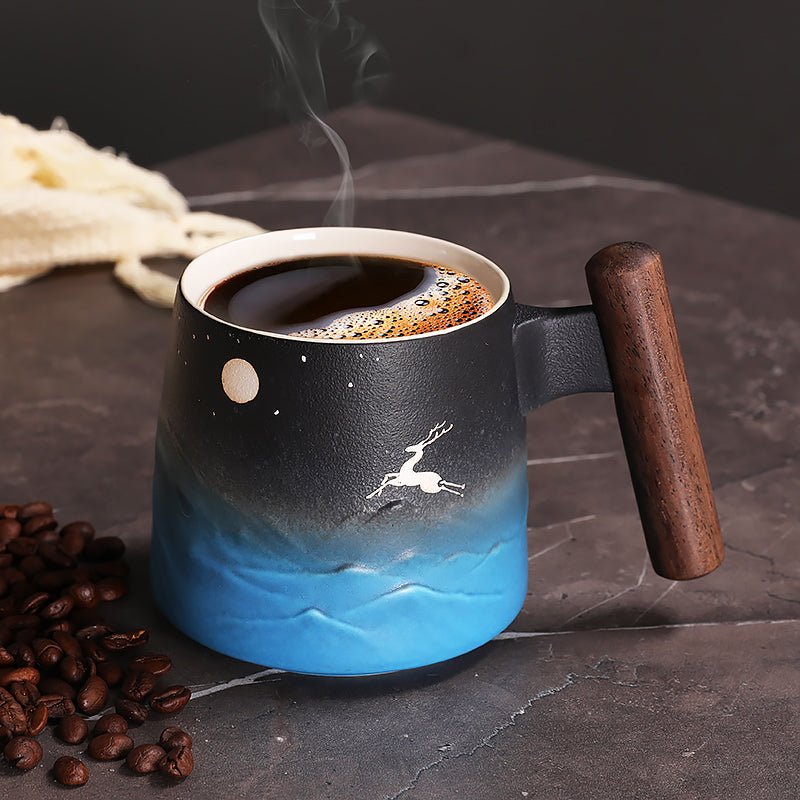
Moon Wood Coffee: Which Mug Style Fits Your Daily Use?
Moon wood coffee usually points to a specific look and feel: a nature-themed mug with a wooden handle and a calmer, more tactile drinking experience. This guide shows which styles fit daily coffee,...
En savoir plus
Laisser un commentaire
Ce site est protégé par hCaptcha, et la Politique de confidentialité et les Conditions de service de hCaptcha s’appliquent.