Large Ceramic Coffee Mugs: What Buyers Should Check First
Reading time: about 9 minutes
The difference shows up on the second refill. A mug that looked perfect on a product page can feel too heavy at a desk, too wide for a small dishwasher rack, or too hot around the rim if the walls are thin. We see that regularly in our store: shoppers start by asking for a bigger mug, then realize shape and build matter just as much as ounces.
If you are comparing large ceramic coffee mugs, the smart buy is not always the biggest one. It is the one that fits your usual pour, sits securely on your counter, feels balanced in the hand, and holds up through daily washing. This guide breaks down the practical points we tell customers to check before ordering.
What size actually counts as a large ceramic coffee mug?
For most buyers, a standard ceramic mug lands around 10 to 12 ounces. Once you move into 15, 16, 18, or 20 ounce capacity, you are in large-mug territory. Some extra-large styles go beyond that, but bigger is not automatically better for everyday use.
In our experience, size questions are usually really about routine:
- 15 to 16 oz: a solid daily size for coffee drinkers who want room for cream without constant refills.
- 17 to 18 oz: better if you drink longer at a desk and want your mug to carry you through a meeting.
- 20 oz and up: best for people who like oversized servings, lattes, or soup-style mug use, but these can feel bulky in smaller hands.
Capacity numbers can also be misleading if the mug has thick walls or a narrow base with a flared top. Two mugs may both say 18 oz, yet one feels compact and the other takes up far more cabinet space. If you want a deeper capacity breakdown, our guide on large capacity coffee mugs helps compare what those volume jumps mean in real use.
How heavy will a large mug feel once it is filled?
This is one of the most overlooked buying points. A large ceramic mug already has more material than a standard mug, and once you add 16 to 20 ounces of coffee, the full weight changes the experience. A mug that feels sturdy in photos may become awkward if you carry it from kitchen to office several times a day.
We usually tell buyers to think about three things:
- Empty weight: thicker stoneware often feels more substantial, which some people like, but it can also be tiring for long use.
- Handle clearance: if the handle opening is tight, your fingers press against hot ceramic and the extra weight becomes harder to control.
- Base width: a wide, stable base feels safer on crowded desks, especially near keyboards and notebooks.
If you tend to drink slowly while working, a slightly lighter large mug is often the better call. If you mainly drink at the kitchen table and want a solid, cozy feel, a heavier build can be worth it. Buyers looking at oversized formats may also want to read what to check with extra large ceramic coffee mugs, because once you move past normal large sizes, weight becomes a bigger trade-off.
Which ceramic material works best for daily coffee use?
Not all ceramic mugs behave the same. Shoppers often use the word ceramic broadly, but there are meaningful differences between common builds.
| Material style | What buyers usually notice | Best for | Trade-off |
|---|---|---|---|
| Stoneware | Heavier feel, thicker walls, solid heat retention | Daily home use, relaxed morning coffee | Can feel bulky when filled |
| Porcelain | Smoother finish, often a bit lighter, cleaner look | Office desks, gifting, more refined styles | Some buyers want a less delicate feel |
| Earthenware | Handmade look, warmer rustic character | Decor-focused buyers, gift presentation | Can be more variable in thickness and durability |
Glaze quality matters just as much as the clay body. We pay attention to a few common trouble spots when evaluating mugs:
- Uneven glaze around the rim, which can feel rough against the mouth.
- Pooling where the handle meets the body, which is often cosmetic but can signal less consistent finishing.
- Uncoated or rough foot rings on the base, which can scratch shelves or leave marks on wood desks.
Microwave and dishwasher use also depends on finish details. A plain glazed ceramic mug is often easier to live with than one with metallic trim, decals, or specialty paint. If you are comparing broader styles, our article on what to look for before buying ceramic coffee mugs goes deeper into those material differences.
What design details should you inspect before buying?
This is where many large ceramic coffee mugs separate into “great daily mug” and “looks good on a shelf.” A few design details tell you a lot before you ever unwrap the box.
Handle shape and finger room
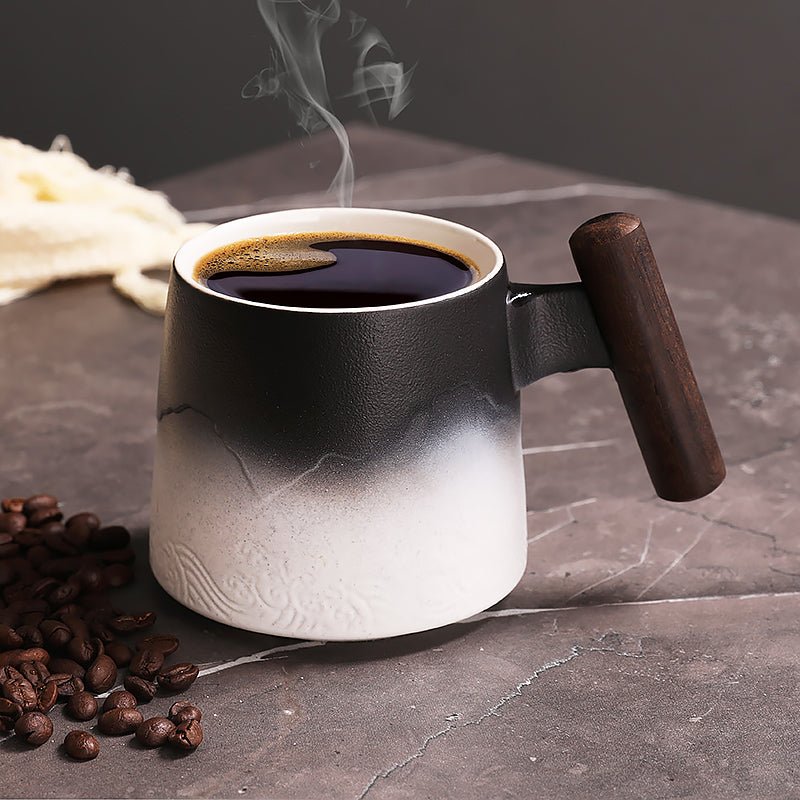
A large mug needs a handle that matches the added weight. Narrow handles or small openings are a common miss. If you usually hold a mug with two or three fingers through the handle, look for enough clearance so your knuckles do not press into the body.
Rim thickness
Thin rims tend to feel cleaner for sipping. Thick rims can make a mug feel more rustic and substantial, but some buyers find them less comfortable for daily coffee.
Interior shape
A slightly rounded interior is easier to rinse and less likely to trap residue in corners. This matters if you drink milk-based coffee or flavored drinks that leave oils behind.
Bottom finish
Check the base. A smooth, well-finished foot ring matters if the mug will live on quartz counters, wood desks, or glass shelves.
These details sound small, but they affect daily use more than decorative artwork does. If you are actively comparing styles, browse our full collection with those checkpoints in mind rather than filtering by color alone.
Are large ceramic coffee mugs good for home, office, or gifting?
They can be, but not every large mug suits every setting.
For home use, large ceramic mugs are often the easiest win. They feel comfortable on a breakfast table, work well for longer morning routines, and usually hold heat better than thinner standard mugs.
For office desks, balance matters more. A mug that is too wide may crowd your keyboard area, and a very heavy mug is less convenient if you refill often at a communal coffee station. A stable base and comfortable handle matter more here than maximum capacity.
For gifting, ceramic still has an advantage because it feels substantial when unboxed. We have seen gift buyers respond well to mugs that combine useful capacity with a finish that looks intentional, not generic. A large mug also reads as a practical gift instead of filler.
That said, there are limits. Large ceramic coffee mugs are not the best pick if the recipient needs a travel-friendly mug, drinks mostly in the car, or prefers extra-light cups. In that case, a handled to-go option or lidded style may suit them better. Our related guides on ceramic coffee mugs with lids and ceramic to go coffee mugs cover those situations more directly.
What are large ceramic coffee mugs not good for?
This is worth saying clearly because commercial guides often skip it. Large ceramic coffee mugs are not the right tool for every buyer.
- They are not ideal for commuting. Most will not fit car cup holders, and open-top ceramic mugs are poor travel companions.
- They are not the best choice for small hands if the mug is very wide or heavily built.
- They are not great for tight storage. Taller or wider mugs can waste cabinet space fast.
- They are not always best for quick reheating if the mug has metallic accents or special decorative finishes.
If your main goal is portability, spill resistance, or a lighter grip, another mug style is a better fit. If your goal is a comfortable at-home coffee experience with more volume and a warmer feel in the hand, large ceramic mugs are hard to beat.
Our rule of thumb: buy the biggest mug you will actually enjoy lifting, washing, and storing every day. The mug you use constantly is better than the oversized one that stays in the cabinet.
How should you compare options before placing an order?
A simple checklist helps you avoid the common mismatch between product photos and real use. Before you buy, compare each mug on these points:
- Capacity: Do you really want 15 to 16 oz, or are you shopping for 18 to 20 oz?
- Material feel: Do you prefer sturdy stoneware or a lighter porcelain-like profile?
- Handle comfort: Is there enough room for the way you hold a mug?
- Dishwasher and microwave practicality: Any metallic trim, decals, or finish details that limit convenience?
- Storage footprint: Will it fit your cabinet shelf and dishwasher rack without awkward stacking?
- Use case: Home table, office desk, gift box, or occasional oversized drinks?
If you are ready to compare styles directly, start with our product selection and then widen the view through the full collection. That makes it easier to compare size, shape, and finish side by side instead of buying on capacity alone.
Frequently asked questions
What size is best for large ceramic coffee mugs for daily use?
For most daily coffee drinkers, 15 to 18 ounces is the practical sweet spot. It gives you more room than a standard mug without becoming so heavy or bulky that it feels awkward on a desk or in the dishwasher.
Do large ceramic coffee mugs keep coffee hot longer?
Many do, especially thicker stoneware styles, because the heavier walls hold heat better than thinner mugs. The trade-off is that a thicker mug also weighs more, so better heat retention can come with less hand comfort for some buyers.
Are all large ceramic mugs microwave and dishwasher safe?
No. Plain glazed ceramic mugs are often the easiest for microwave and dishwasher use, but metallic trim, specialty finishes, or decorative elements can change that. Always check the care details for the specific mug before ordering.
Why do some large ceramic mugs feel uncomfortable even if the capacity looks right?
The issue is usually shape, not ounces alone. A tight handle, thick walls, or a wide body can make a mug feel harder to hold even if the listed capacity is exactly what you wanted.
Are large ceramic coffee mugs a good gift?
Yes, especially for people who drink coffee at home or at a desk and appreciate a more substantial mug. They are less suitable as gifts for commuters or anyone who mainly needs a spill-resistant travel mug.
Where should you start if you are ready to buy?
Use this quick filter before you choose: pick your preferred capacity first, then check handle room, material feel, and care routine. If you want a broad view of styles, browse our large mug options here. If you already know the look you want, go straight to our product range and compare the mugs that match your daily routine instead of chasing the biggest size on the page.
More from our blog
Read more
Daddy to Be Coffee Mug: What to Check Before You Buy
A practical buyer’s guide to choosing a daddy to be coffee mug that feels gift-worthy, holds up to daily use, and suits the soon-to-be dad’s actual coffee routine.
En savoir plus
No Spill Coffee Mug Buying Guide: What to Check Before You Buy
A practical guide to choosing a no spill coffee mug, including lid fit, seal design, size, cleaning, and real trade-offs for desks, commutes, and gifting.
En savoir plus
Laisser un commentaire
Ce site est protégé par hCaptcha, et la Politique de confidentialité et les Conditions de service de hCaptcha s’appliquent.