
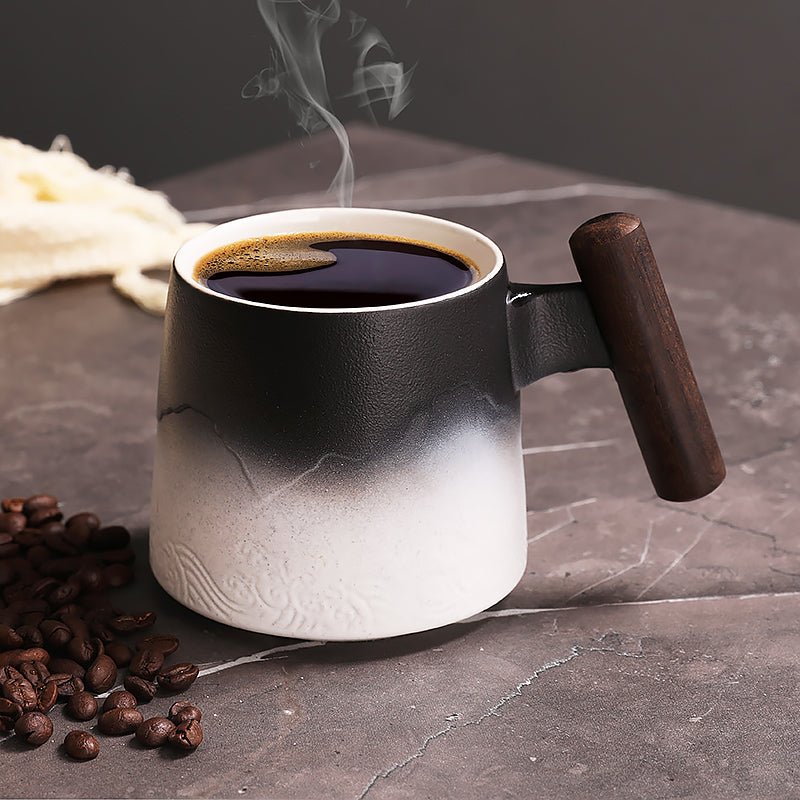
How Many Calories in a Mug of Black Coffee? A Practical Buyer’s Guide
Reading time: about 10 minutes
A full mug on the counter looks harmless until someone starts tracking breakfast, fasting windows, or daily intake and asks the same question we hear a lot: how many calories in a mug of black coffee? The short answer is usually very few. The practical answer depends on how big your mug is, how strong you brew it, and whether “black” really means nothing added.
In our store, we spend a lot of time around real coffee setups: office desks with 12 oz mugs, kitchen counters with oversized 20 oz cups, and gift boxes where the mug looks bigger than the amount of coffee people usually pour. That matters, because calorie questions often start with the mug itself, not the liquid. A mug choice changes serving size, which changes the number people think they’re drinking.
If you want a broader breakdown of what changes the count, our guide Calories in a Mug of Coffee: What Changes the Count? covers add-ins and serving size in more detail.
How many calories are in black coffee without anything added?
Plain brewed black coffee is typically extremely low in calories. A standard mug of black coffee usually comes in at close to zero for practical tracking, because coffee itself contributes very little energy when it’s just brewed grounds and water. That said, “close to zero” is not the same thing as every cup being identical.
The real variables are the brew method and the mug volume. A smaller 8 oz mug and a larger 20 oz mug can both hold black coffee, but the larger mug contains more liquid. The coffee is still not a calorie-heavy drink, yet a larger pour can matter if you’re counting closely or logging intake in an app.
There’s also a difference between brewed coffee and concentrated coffee drinks. Espresso-based black drinks are often served in much smaller volumes, while drip coffee fills a standard mug. If your mug is a roomy diner-style cup, you may pour more than you think. That’s one reason we always tell shoppers to think about mug capacity first, not just the word “coffee.”
Does mug size change the calorie count enough to matter?
Yes, mug size changes the total amount of coffee in the cup, which changes the total calories slightly. It does not turn black coffee into a high-calorie drink on its own, but it can shift the number enough to matter if you are tracking every sip.
We see this all the time with buyers comparing an everyday 8 oz mug to a bigger 20 oz mug. The 8 oz option usually suits smaller pours, quicker drinking, or someone who likes fresh coffee and refills. A 20 oz mug is better for long desk sessions, but it also invites larger servings. If you use a bigger mug and fill it all the way, you’re drinking more coffee, even if it is still black.
If you’re choosing mug size based on how you actually drink, our posts 8 oz Coffee Mug: What to Check Before You Buy and 20 oz Coffee Mug: What to Check Before You Buy are useful comparisons. We wrote them from the same practical angle we use in our own product handling: how the mug feels in the hand, how much liquid it really holds, and whether it fits a routine.
| Mug size | Typical use | Calorie impact for black coffee |
|---|---|---|
| 8 oz mug | Smaller serving, quick coffee break, espresso-style longer drink | Usually very low |
| 12 oz mug | Standard home or office mug | Usually very low |
| 16-20 oz mug | Large pour, desk mug, long mornings | Still low, but more liquid overall |
The takeaway is simple: the mug does not make black coffee caloric, but it can change how much coffee you pour. That matters if you’re tracking intake, or if you tend to top off a large mug several times a day.
What usually adds calories to black coffee?
“Black coffee” stops being black as soon as something else goes in the cup. We’ve seen shoppers call coffee black while still using a splash of milk, flavored creamer, or sugar. That’s where the calorie count moves.
Common add-ins that change the count include:
- Sugar, including white sugar, brown sugar, and syrups
- Milk or cream, even a small pour
- Flavored creamers, which can add more than people expect
- Whipped toppings, often used in specialty drinks rather than plain coffee
We like to be direct here: if you want black coffee to stay low-calorie, keep the cup plain. Once you start adding sugar or dairy, the drink becomes something else. That is not a bad thing. It just means the calorie conversation is no longer about black coffee alone.
For shoppers who like a mug that works equally well for plain coffee, tea, or a roomier mix-ins setup, our collection at all coffee mugs is the best place to compare shapes and capacities side by side.
How do brewing style and coffee strength affect calories?
Brewing style changes taste and strength more than it changes calories. A lighter drip coffee, a darker roast, French press, or pour-over may taste different and feel stronger or smoother, but none of those methods suddenly turns black coffee into a calorie-dense drink by itself.
That said, concentrated coffee drinks can confuse the issue. A small serving of espresso-based coffee may taste intense in a tiny cup, while a mug filled with drip coffee looks bigger and feels more substantial. The calorie number still stays low unless you add ingredients. In our experience, the biggest mistake shoppers make is assuming stronger coffee means more calories. It usually does not.
One practical detail people miss: a mug with a thick rim or wide mouth can make the serving look smaller than it is. We’ve handled enough mugs to know that shape changes perception. A wide, shallow mug can look “lighter” even when it holds the same amount as a taller one. That matters for portion control and for anyone trying to keep a daily coffee routine consistent.
What kind of mug works best if you want simple black coffee every day?
If black coffee is your daily habit, the best mug is usually the one that matches your pace. We look at three things first: capacity, comfort, and care.
- Capacity: An 8 oz mug suits smaller servings and faster drinkers. A 12 oz mug is the most balanced everyday choice. A 20 oz mug works better for slow mornings, but it can encourage larger pours.
- Material: Ceramic mugs are the most common for home use because they hold heat well and feel sturdy on a desk. Stainless steel travel mugs are better for commutes, but they are a different category and not ideal if you want a classic desk mug.
- Care: If you want lower-friction daily use, choose a mug that handles repeated dishwasher cycles well and does not pick up odor. Hand-wash-only mugs can be fine, but they are less convenient for heavy everyday use.
We also check the practical failure points shoppers run into after a few weeks: a handle that feels too small, glaze that stains around the rim, a base that scratches countertops, or a mug that is too tall for a machine shelf. These are not flashy details, but they decide whether a mug gets used or shoved to the back of the cabinet.
If you want help choosing a mug you will actually reach for every morning, our guide Awesome Coffee Mugs: How to Choose a Mug You’ll Actually Use breaks down the trade-offs we see most often.
What should you check if you are buying a mug for black coffee?
Buying a mug for black coffee sounds simple, but the wrong shape can make a daily routine annoying. We see the same issues again and again when people buy based on looks alone.
- Check the real capacity. Some mugs look standard but hold less or more than expected.
- Look at the handle size. A narrow handle can be uncomfortable if you drink hot coffee first thing in the morning.
- Think about lip comfort. A thick or uneven rim changes the drinking experience more than many buyers expect.
- Confirm care instructions. Dishwasher-safe is easier for daily use. If it is hand-wash only, make sure that fits your routine.
- Match the mug to your pour habit. If you fill to the top, buy for that habit. If you prefer half cups and refills, a larger mug may not be necessary.
There is also a practical gifting angle here. A mug that works perfectly for one person can feel awkward for another. Someone who drinks black coffee at a home office desk may want a wider ceramic mug with a stable base. Someone commuting may need a travel mug instead. That is why we do not pretend every coffee mug serves the same job.
Our store perspective: the best mug is not the biggest one. It is the one that fits the way the customer actually drinks coffee, cleans it, and stores it.
Is black coffee a good choice for low-calorie coffee habits?
For most people who want a simple, low-calorie coffee habit, black coffee is the easiest place to start. It keeps the drink straightforward and avoids the hidden add-ins that make morning coffee more complex. It also lets the coffee itself do the work, which is exactly what a lot of buyers want when they ask about calories.
Black coffee is not for everyone, though. If you dislike bitterness, black coffee can feel too sharp, especially in a large mug that cools slowly. Some people do better with a smaller serving size, a milder roast, or a little milk rather than forcing a plain cup they won’t enjoy. A routine only works if you’ll repeat it.
That is why we care about the mug as much as the coffee. The right mug can make plain coffee feel more comfortable. The wrong one makes a simple habit feel like a chore.
Frequently asked questions
How many calories are in a mug of black coffee with no sugar?
A mug of black coffee with no sugar is typically very low in calories, close to zero for everyday tracking. The exact number depends on the mug size and how much coffee is in it, but plain brewed coffee itself does not add meaningful calories.
Does a larger mug mean more calories in black coffee?
A larger mug holds more coffee, so the total calories can rise slightly with volume. Even then, black coffee stays very low-calorie unless you add milk, sugar, or creamer. The bigger issue is portion size, not the mug material or shape.
Do espresso shots have more calories than drip coffee?
Not in a way most shoppers need to worry about. Espresso is more concentrated, but it is usually served in a much smaller amount. A full mug of drip coffee often ends up being more liquid overall, yet both are still low in calories when served plain.
What is the healthiest mug size for black coffee?
There is no single healthiest mug size, but a 12 oz mug is a practical middle ground for most people. An 8 oz mug is better if you prefer smaller servings, while a 20 oz mug suits long mornings or desk use. The best choice is the one that matches your real drinking habit.
Can I use a travel mug if I only drink black coffee?
Yes, but a travel mug is better if you need heat retention or commuting convenience. For a home desk or kitchen counter, a ceramic mug usually feels better and is easier to sip from. If you want a classic everyday cup, a travel mug is not the best replacement.
If you are still deciding, start with a mug size that matches your usual pour, then compare shape, handle comfort, and care instructions. Our all coffee mugs collection is the quickest way to compare options, and our product pages at products show the full range in one place.
More from our blog
Read more
Splatoon 2 Coffee Mug: What to Check Before You Buy
A Splatoon 2 coffee mug works best when the print, mug size, and finish fit real daily use. Here’s what we check in our store before we recommend one for a desk, kitchen, or gift box.
En savoir plus
American Made Coffee Mugs: How to Compare Materials, Sizes, and Everyday Use
A practical buyer’s guide to american made coffee mugs, with the trade-offs that matter on real kitchen counters, office desks, and in dishwasher use. Compare materials, sizes, and finish details b...
En savoir plus
Laisser un commentaire
Ce site est protégé par hCaptcha, et la Politique de confidentialité et les Conditions de service de hCaptcha s’appliquent.