
Hot Toddy Mug for Small Coffee Setup: What to Compare
Reading time: about 9 minutes
A mug can fit beneath a coffee maker and still be wrong for a small station. The handle may catch the mug beside it, the rim may sit too close to the shelf above, or the capacity may encourage a larger serving than the setup can comfortably handle. We see these practical conflicts most often on narrow kitchen counters, office beverage carts, and open shelves where every item has to earn its space.
Choosing a hot toddy mug for small coffee setup use is therefore less about finding the smallest-looking mug and more about balancing capacity, handle clearance, and everyday ceramic construction. CoffeifyMug currently offers two relevant 400 ml choices and one 480 ml choice. Those figures provide a useful starting point, but they do not answer every fit question on their own.
How much room does a hot toddy mug for small coffee setup use?
Capacity and physical footprint are related, but they are not interchangeable. A mug can gain volume by becoming taller, wider, or fuller through the body. Its handle can also extend beyond the ceramic body and become the part that limits how many mugs fit on a shelf.
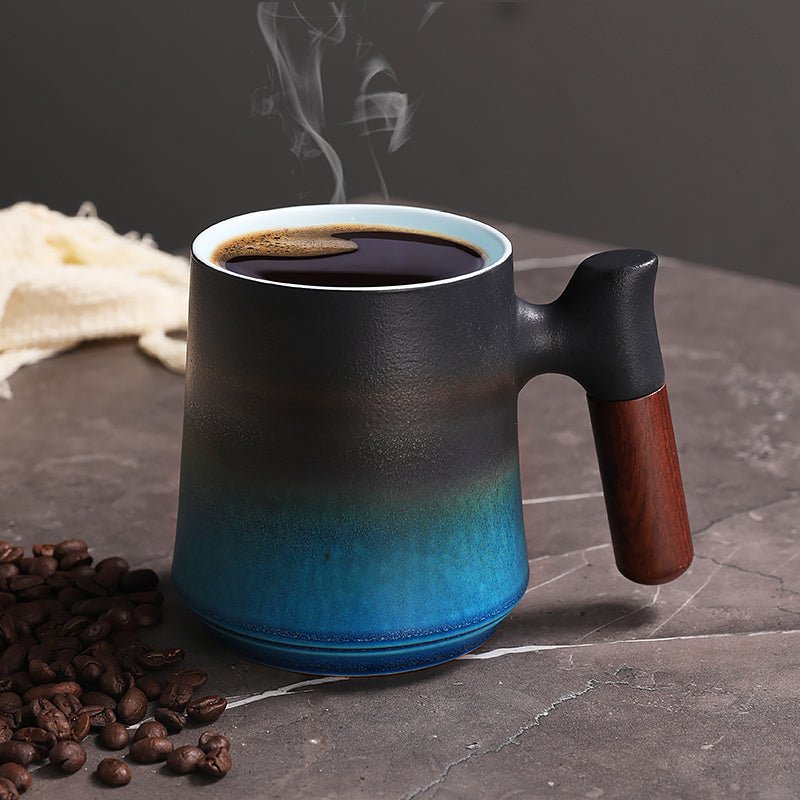
Our current options give shoppers two capacity tiers. The Gradient Coffee & Tea Mug has a listed capacity of 400 ml, as does The Flow Coffee & Tea Mug. The Rock Coffee & Tea Mug increases the listed capacity to 480 ml.
Before treating either figure as the amount you will pour, remember that a published mug capacity is not necessarily a comfortable working fill level. Most people leave headroom so they can carry the drink without sending liquid over the rim. Add-ins also occupy space. The useful question is not simply, “How much does it hold?” but, “How much do I normally prepare, including the room I leave at the top?”
- Measure the available shelf height: Use the clear vertical opening, especially if the shelf above has a lip.
- Measure the full storage width: Allow for the handle, not just the circular mug body.
- Check the coffee maker area: Confirm that the mug can be placed and removed without angling it into a wall or another appliance.
- Count the mugs stored together: Three handles can consume more usable shelf width than expected.
400 ml or 480 ml: which capacity earns its shelf space?
The difference between 400 ml and 480 ml is 80 ml. That is enough to matter for shoppers who regularly prepare a larger drink, but it may be unnecessary for someone who usually makes a modest serving and wants compact storage. Bigger is useful only if the added capacity solves a real problem.
| Current mug | Listed capacity | Best matched situation | Main trade-off to check |
|---|---|---|---|
| The Gradient | 400 ml | A smaller station where moderate capacity is the priority | Compare its pictured body and handle with your available clearance |
| The Flow | 400 ml | A shopper who wants the 400 ml tier but prefers a different visual form | Handle comfort and storage fit should decide between the two 400 ml choices |
| The Rock | 480 ml | A larger usual serving where fewer refills matter more than minimum capacity | The additional volume may take more room than a compact setup needs |
A 400 ml mug is the more conservative place to start when shelf space is tight or when multiple mugs share one cabinet. It still offers substantially more capacity than a small cup without automatically moving to the largest current choice. The 480 ml Rock makes more sense when you know that a 400 ml vessel would feel restrictive in daily use.
For gift buying, do not estimate capacity from the product image alone. Camera angle, handle scale, and styling can make two mugs look closer in size than their stated volumes suggest. Use the listed capacity first, then compare the product photos for form and handle placement.
How does handle shape affect a crowded counter?
The handle is often the overlooked dimension in a small coffee setup. A comfortable handle needs enough opening for the intended grip, but a wide projection also requires more counter and cabinet clearance. In our experience handling ceramic drinkware, this is where a mug that looks compact from the front can become awkward when placed beside a sugar jar, brewer, or second cup.
Study each product page from more than one angle. We do not recommend assigning a handle type from the product name alone. Look at the actual photos and check three practical points:
- Finger clearance: Decide if you tend to use one or two fingers, several fingers, or hold the mug body for support.
- Knuckle clearance: A handle opening can look generous while still placing the knuckles close to a warm ceramic body.
- Outer projection: This determines how closely mugs can sit together and how easily the cup can rotate near a wall.
Handle position also affects removal from a tight shelf. If mugs are stored in a row, outward-facing handles make them easier to retrieve but consume more frontage. Turning handles sideways can save frontage while requiring additional depth. Neither arrangement is universally better; the shelf geometry decides.
What should you expect from everyday ceramic drinkware?
These are everyday ceramic coffee and tea mugs, not recipe kits, active heating devices, or specialized temperature-control vessels. A ceramic mug provides a familiar rigid drinking surface and stable shape, but it can chip or crack if the rim or handle strikes another hard object. It also does not collapse or nest automatically to save space.
Three areas deserve attention when a ceramic mug arrives:
- The rim: Run a careful visual check for chips or rough damage before using or gifting the mug.
- The handle joints: Inspect where the handle meets the body. A visible crack at either attachment point is a reason to stop using the mug.
- The glazed surface: Look for unintended cracks or damage that differ from the product's pictured finish.
Care details should come from the current product listing rather than assumptions about ceramic as a category. If dishwasher or microwave use is essential, verify the product-specific instructions before ordering. During dishwasher cycles, ceramic mugs can knock against plates or neighboring handles, so spacing still matters even when machine washing is permitted.
Avoid abrupt temperature changes, such as taking a very cold mug and immediately exposing it to a much hotter liquid. For routine washing, do not force the mug into a rack position where the handle presses against another item. These habits reduce ordinary impact risk, but they are not a promise of specialized thermal performance or indestructibility.
Which current mug fits each small-space situation?
For a narrow shelf and a moderate usual serving: Start with the 400 ml tier. The Gradient is a relevant next step if its pictured finish, body, and handle suit the rest of your setup. Its known advantage in this comparison is the 400 ml capacity rather than a claim about dimensions we have not listed here.
For the same capacity with a different visual choice: Compare The Flow against The Gradient. Both are listed at 400 ml, so the decision can move to the handle profile shown in the photos, the form you prefer to hold, and how each design fits your existing drinkware. This is a better comparison than trying to declare one capacity winner when their listed volumes are equal.
For a larger regular drink: The 480 ml Rock is the direct option. It fits the shopper who expects to use the extra 80 ml and is prepared to give a potentially larger vessel adequate room. It is not the automatic choice for a tiny shelf simply because it holds more.
For shoppers still deciding by style and form: Browse the unique coffee mugs collection and keep your measured space beside you. A collection view is useful for visual comparison, but return to the individual product pages for confirmed capacity and current care information.
When is a different mug style the better buy?
A ceramic hot toddy mug is not the best answer for every compact coffee routine. If your first requirement is a very small serving, compare genuinely smaller ceramic formats rather than assuming a 400 ml mug will feel compact in the hand. Our guide to choosing an emerald small ceramic coffee mug covers that smaller-mug decision in more detail.
If you need a drink vessel for commuting, a rigid open drinking mug may be the wrong category. A product intended around portability, closure, and bag use deserves separate evaluation; the coffee portable mug comparison explains those trade-offs without treating countertop ceramic drinkware as travel equipment.
Active warming is another separate need. Standard ceramic drinkware should not be presented as a heated system. Shoppers who want powered temperature maintenance should use the criteria in our heated coffee mug comparison and account for the base, cable, controls, and outlet space that such a setup may require.
A five-minute fit check before ordering
A tape measure and your usual recipe can resolve most of this choice. Work through the setup as it actually exists, including the brewer, nearby containers, shelf edges, and the number of mugs stored together.
- Measure usable shelf height, depth, and width rather than the cabinet's exterior dimensions.
- Note how much liquid you normally prepare, then include room for add-ins and spill-preventing headroom.
- Choose 400 ml if moderate capacity and a conservative starting point matter most; choose 480 ml only if you expect to use the extra 80 ml.
- Compare handle photos for finger space, knuckle clearance, and outward projection.
- Verify current care instructions on the selected product page before relying on dishwasher or microwave use.
- Inspect the rim, handle joints, and glaze when the mug arrives, especially if it will be given as a gift.
Frequently asked questions
What capacity is best for a hot toddy mug for small coffee setup?
A 400 ml mug is the more conservative starting point for limited shelves and moderate servings. Choose a 480 ml mug if you routinely need the additional 80 ml and have confirmed that the mug's full profile, including its handle, works in the available space.
Is the difference between a 400 ml and 480 ml mug noticeable?
The listed difference is 80 ml, which can matter after allowing for headroom and add-ins. It is useful for a larger regular serving, but it can be wasted capacity if you normally prepare a smaller drink.
Does a hot toddy mug include drink ingredients or a mix?
No ingredient inclusion should be assumed from the mug category or product name. The products discussed here are ceramic coffee and tea drinkware; check the individual listing for exactly what is included with an order.
Can I put these ceramic mugs in a dishwasher or microwave?
Check the current care instructions on the specific product page before use, because care guidance can vary by item. Do not infer dishwasher or microwave suitability from the ceramic material alone.
How do I check handle clearance if exact dimensions are not listed?
Use the product photos to assess handle proportion, but do not treat a photo as a precise measurement. Measure your available space and contact the store for clarification if a specific width or height is essential to the purchase.
Your next step is simple: write down your available shelf space, choose between the 400 ml and 480 ml capacity tiers, and inspect the handle from every available product angle. Then compare the current options in our unique coffee mugs collection with those three facts in front of you.
Read more
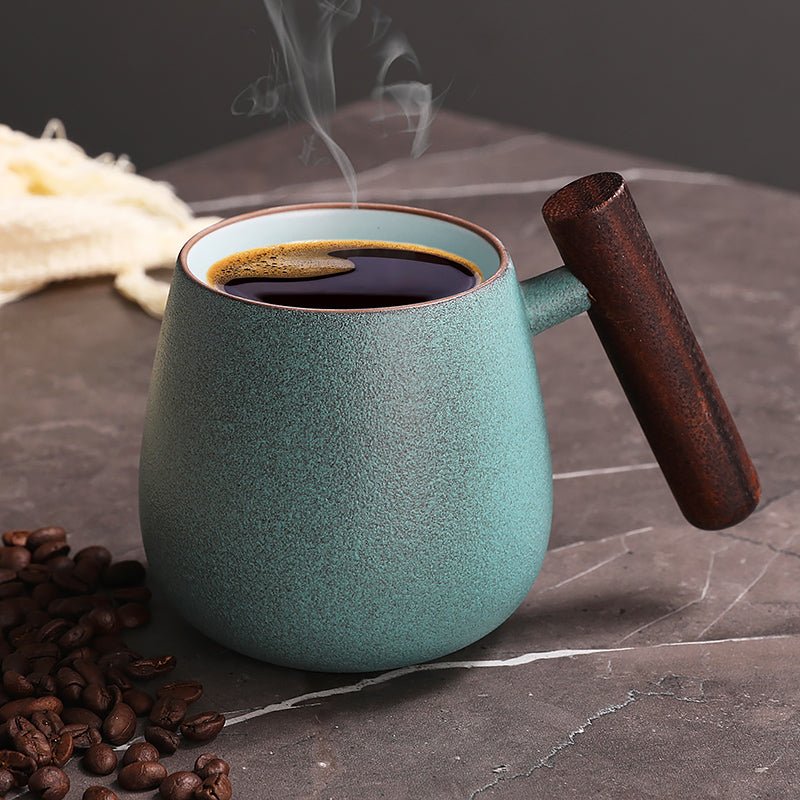
12 Oz Ceramic Coffee Mugs for Small Coffee Setup
Compare shelf clearance, counter footprint, usable capacity, mug shape, and care needs before adding a 12 oz ceramic mug to a compact kitchen or office coffee station.
En savoir plus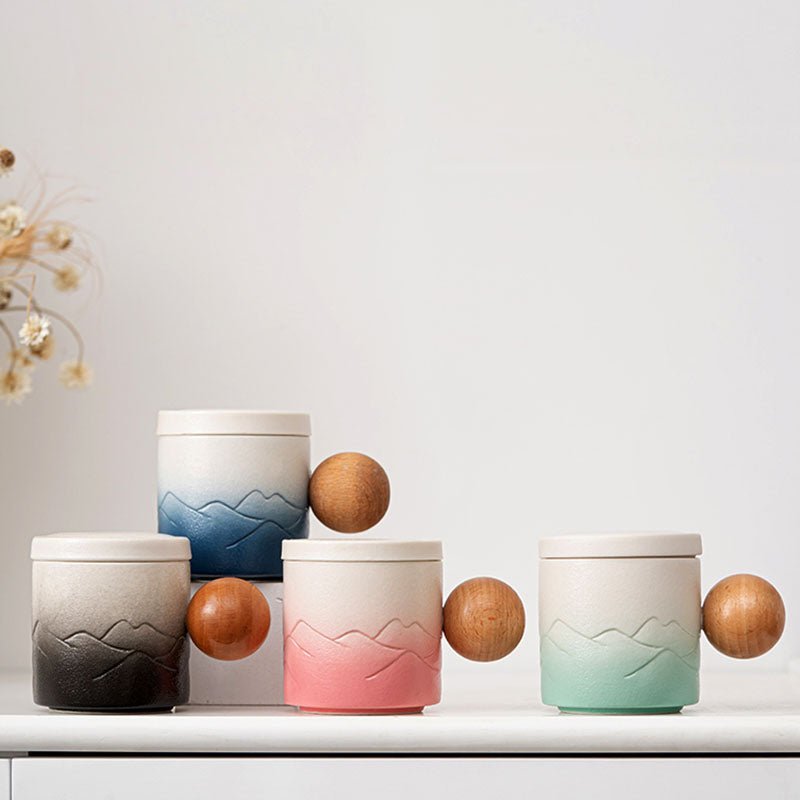
Loose Leaf Tea Mug for Small Coffee Setup: Compare Size and Fit
Compare three current mug sizes for a compact counter, shelf, or office desk. This guide covers listed capacity, visible opening, storage fit, brewing limitations, and practical care.
En savoir plus
Laisser un commentaire
Ce site est protégé par hCaptcha, et la Politique de confidentialité et les Conditions de service de hCaptcha s’appliquent.