
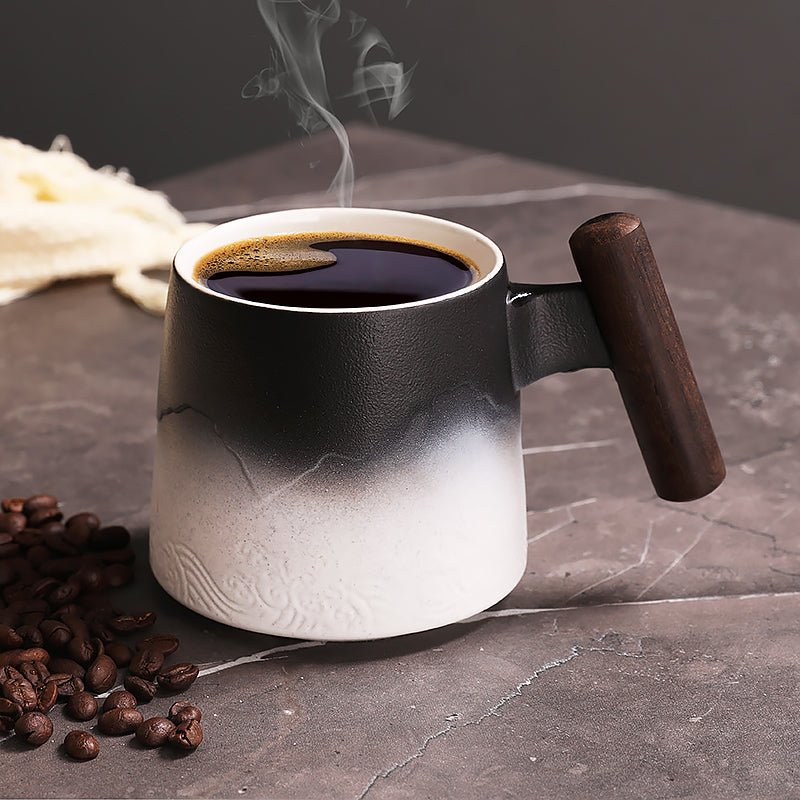
Coffee Mug Set of 8 Buying Guide for Everyday Kitchens
Reading time: about 8 minutes
Eight mugs take over a shelf fast. If the handles pinch, the rims feel thin, or the cups wobble when you stack them, that extra capacity starts to feel like clutter instead of convenience.
We see that all the time in our store. A coffee mug set of 8 makes sense for bigger households, shared offices, hosting, and gift lists that need a practical present instead of a decorative one. The key is choosing a set that works on a real counter, in a real dishwasher, and in a real cabinet with limited space.
If you want to compare current options while you read, start with our all collection. For a few style references, look at The Gradient Coffee Tea Mug, Retro Coffee Tea Cup, and Ball Handled Coffee Tea Mug.
Who actually needs a coffee mug set of 8?
An 8-piece set is most useful when mugs are used all day, not just on weekends. That usually means a family that drinks coffee, tea, and cocoa at different times; a small office that wants matching cups without running short; or a home that hosts often and does not want to mix random leftover mugs with a new set.
In our experience, the biggest reason buyers choose eight is simple math. Six mugs can disappear quickly if two are in the sink, one is at a desk, and another gets borrowed by a guest. Eight gives you a little breathing room without jumping into a bulky set that is harder to store.
This set size is not ideal for every buyer. If you live alone, drink mostly espresso, or keep only two mugs in regular rotation, eight can feel excessive. If you need travel cups, insulated drinkware, or oversized latte bowls, a standard mug set is not the right category to force into that role.
What size and shape should you check first?
Capacity is the first thing we look at because it changes how the mug feels in daily use. An 8 oz mug is better for smaller pours, tea, or people who refill often. A larger everyday mug is better if your coffee runs long, your desk sits far from the kitchen, or you do not want to keep walking back for a top-off.
Shape matters almost as much as volume. A mug that is too tall can feel top-heavy on a tray. A mug that is too wide can cool coffee quickly. The sweet spot is usually a stable base, a comfortable rim, and enough room for foam or cream without sloshing over the edge.
These are the details we check before we recommend a set:
- Rim feel: a clean, smooth rim is easier to sip from than a sharp or uneven edge.
- Handle clearance: make sure two fingers fit without squeezing, especially if the cup will be used every morning.
- Base stability: a flat, even foot helps the mug sit level on counters, trays, and dish racks.
- Stacking behavior: some mugs nest neatly; others take more cabinet space because the handles do not line up well.
- Pour space: if you like milk, foam, or whipped toppings, leave extra headroom.
If you are still deciding between smaller capacities, our 8 Ounce Coffee Mugs: How to Choose the Right Small Mug and 8 oz Coffee Mug: What to Check Before You Buy go deeper on what changes when the mug size gets compact.
Which material and finish holds up best?
For everyday use, material is not just about appearance. It affects heat retention, weight, chip resistance, and how the mug ages in a dishwasher. Ceramic is the most familiar option for a coffee mug set of 8 because it balances durability and comfort well for daily home use.
Stoneware usually feels heavier in the hand, which some people like because it feels substantial. Porcelain often feels lighter and more refined, but it can be more delicate at the rim and handle if the set is thin-walled. Glass looks clean on a table, but it is not always the best choice for people who want a mug that keeps drinks warm a little longer.
We also pay attention to finish quality. A good glaze should look even across the inside and outside, without obvious pinholes, bare spots, or drips that collect on the foot. If a mug has an unglazed bottom, that is not automatically a problem, but it can scuff shelves and show wear sooner.
| Material | What we notice in daily use | Best fit | Trade-off |
|---|---|---|---|
| Ceramic | Comfortable weight, familiar feel, easy to match across a set | Home kitchens, offices, everyday gifting | Can chip if handled roughly or stacked carelessly |
| Stoneware | Heavier, sturdy, often feels more grounded on the table | People who want a substantial mug | Takes up more shelf space and can feel bulky |
| Porcelain | Clean look, lighter hand feel, more refined edge | Formal tables and lighter drinkers | Can feel less forgiving if knocked around |
If you want a broader explanation of set materials and care, our Ceramic Coffee Mug Set Buying Guide for Everyday Use covers the everyday side of that decision in more detail.
Which mug style fits your kitchen or office?
Style is not just decoration. It changes how a set feels on the counter, how it presents to guests, and whether people actually reach for it. A set that looks too formal can stay in the cupboard. A set that feels too casual can look out of place on a clean office shelf.
Here is how we would think about three common directions in our store:
- The Gradient Coffee Tea Mug works well if you want visual variety without making the table feel busy. It suits modern kitchens and mixed tabletop settings.
- Retro Coffee Tea Cup is a stronger pick if you want a classic cafe feel. It reads well in a kitchen with wood, warm metal, or vintage accents.
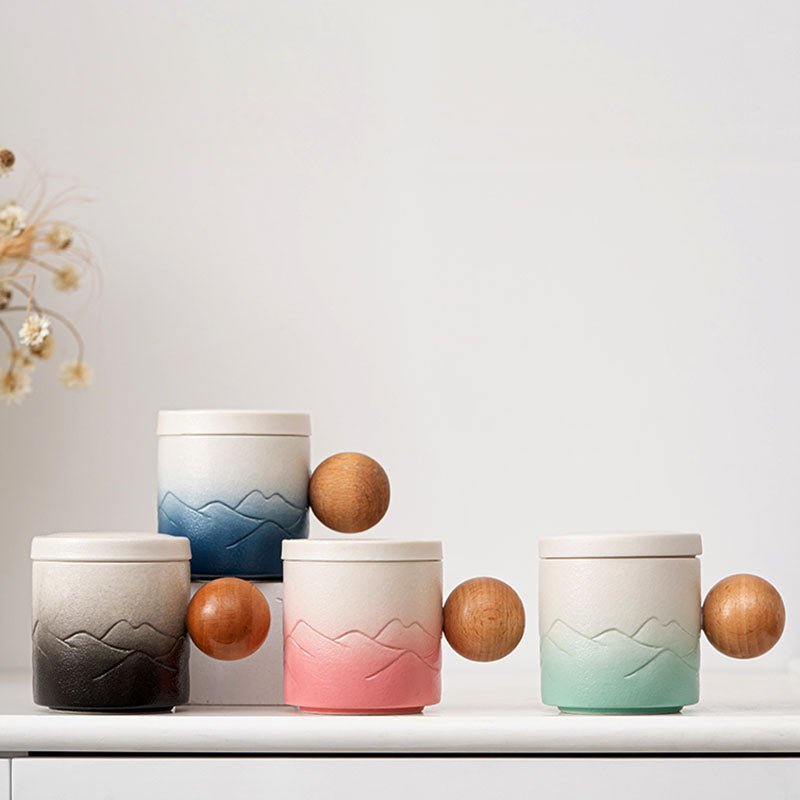
- Ball Handled Coffee Tea Mug is the one to inspect if grip comfort matters most. The handle shape can matter a lot for people who hold a mug at a desk for long stretches.
For a lot of buyers, the best set is the one that does not fight the room. A bright finish can energize a kitchen. A muted finish can make an office cabinet feel more polished. If your household mixes tea, coffee, and cocoa, a balanced design usually ages better than a highly seasonal look.
What should you inspect before you place the order?
We recommend treating a mug set like a small piece of daily equipment, not just decor. The obvious issues are easy to spot. The less obvious ones show up after the first few dishwasher cycles.
These are the common defect modes we watch for:
- Hairline cracks near the handle join or rim.
- Uneven bases that rock on the counter.
- Sharp handle seams that feel rough after repeated use.
- Pinholes in the glaze that can make the finish look unfinished.
- Chipped rims from packing or handling before the set ever reaches the kitchen.
Care is part of the decision too. If you want a set that stays easy to live with, check whether it is dishwasher-safe and microwave-safe, then think about your own routine. A mug that survives reheating is useful for office coffee and breakfast tea. A mug that washes clean without babying is better for families and shared kitchens.
That said, not every set is meant for rough use. If you need mugs for heavy commercial traffic, constant stacking, or very hot drinks handled by lots of different people, you may want a more utilitarian style than a decorative home set.
How do you choose between six and eight mugs?
This is a practical question, and the answer depends on how many mugs are likely to be out of rotation at once. Six can be enough for a tidy two- or three-person household. Eight is more forgiving if people leave cups on desks, in bedrooms, or in the sink during the day.
If your kitchen cabinets are crowded, though, eight pieces can be a real storage commitment. That matters more than people expect. A slightly smaller set may be the better buy if you already own a few favorite mugs that are not going anywhere.
For a side-by-side look at that trade-off, our Coffee Mug Set 6 Buying Guide for Everyday Kitchens is useful if you are deciding whether six is actually enough for your space. If you want the broader checklist that covers gifting, daily use, and kitchen planning, our Coffee Mug Set Buying Guide for Everyday Use, Gifts, and Kitchens pulls those decisions together.
Frequently asked questions
Is a coffee mug set of 8 good for daily use?
Yes, if your household uses mugs throughout the day and you want enough spares to keep the sink from controlling the rotation. It is a strong choice for families, shared homes, and offices. It is less useful if you only need one or two mugs in regular use.
What size should I choose for a coffee mug set of 8?
Choose the size based on how you drink. Smaller mugs work well for tea, espresso-based drinks, or people who prefer refills. Larger mugs are better for drip coffee, milk drinks, and desks where you do not want constant top-ups.
Are ceramic mugs better than glass for everyday use?
For most buyers, ceramic is the safer everyday pick because it feels comfortable, holds heat reasonably well, and is easier to live with in a normal kitchen. Glass can look nice, but it usually shows condensation, cools faster, and is not as forgiving if it gets knocked around.
Should I worry about dishwasher-safe and microwave-safe labels?
Yes. Those labels matter if the mugs are going to be used by multiple people or heated often. A set that is easy to wash and reheat saves time, and it usually fits better into a busy routine than a set that needs special handling.
What makes one mug set feel better than another in the hand?
Handle shape, base stability, and rim finish do most of the work. If the handle is too tight, the base rocks, or the rim feels uneven, the mug will be annoying no matter how good it looks in photos. We recommend checking those details first.
If you want to narrow your choices now, start with the all collection and compare the handle shape, finish, and care notes side by side. That gives you a cleaner read on which coffee mug set of 8 fits your kitchen instead of just your cart.
Read more
Large Handle Coffee Mug Buying Guide for Daily Use
A practical guide to choosing a large handle coffee mug for home, office, or gifting, with real trade-offs, care notes, and product comparisons.
En savoir plus
Coffee Mug That Keeps Coffee Warm: What Buyers Should Check
We break down what actually slows heat loss in an everyday mug, which design details matter at a desk, and where a standard mug stops being enough. Use our store picks and comparison checklist to c...
En savoir plus
Laisser un commentaire
Ce site est protégé par hCaptcha, et la Politique de confidentialité et les Conditions de service de hCaptcha s’appliquent.