
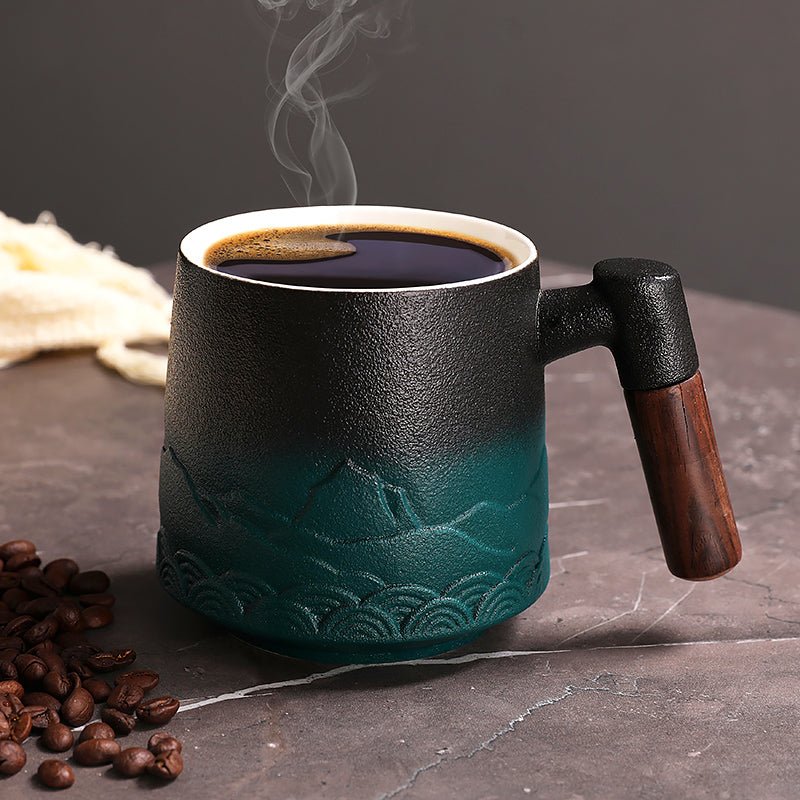
Cast Iron Coffee Mug: What to Check Before You Buy
Reading time: about 7 minutes
A cast iron coffee mug feels different the moment you lift it. The weight is real, the heat stays around longer than a thin ceramic cup, and any flaw in the finish shows up fast after a few washes.
We see a lot of shoppers comparing the idea of cast iron against everyday ceramic or enamelware. In our store, the common mistake is assuming the mug that looks the most solid is automatically the best daily choice. It is not always that simple.
What does a cast iron coffee mug do better than a regular mug?
The main draw is heat retention and a sturdier feel on the counter. Cast iron does not feel fragile, and for some buyers that is the point. On a slow morning, it can keep a pour-over or black coffee warm longer than a thin mug, especially if the cup was pre-warmed.
- It feels stable in hand and on a desk.
- It can hold temperature longer than a lightweight cup.
- It fits a more tactile, collected coffee setup.
The trade-off is weight. If you sip while standing at a sink, taking notes at a laptop, or moving between rooms, a cast iron coffee mug can feel heavier than necessary. For commuters, a travel mug still makes more sense.
What trade-offs should buyers expect?
Cast iron is not a forgiving material. Bare iron can rust if it stays damp. Enameled cast iron avoids that problem better, but chipped enamel is its own issue because a chip can trap moisture and make cleaning more annoying.
| What to check | Why it matters | What we would do |
|---|---|---|
| Rust spots | Usually mean the mug stayed damp or the finish was compromised | Avoid repeated use until the cause is clear; ongoing rust is a bad sign |
| Enamel chips | Can expose the base metal and collect residue at the edge | Inspect the rim and interior before the first wash |
| Rough handle seam | Can make the mug uncomfortable to hold during a full drink | Check for casting flash or sharp edges |
| Unstable base | A heavy mug that rocks on a flat counter is annoying and risky | Set it down on a hard surface before buying if you can |
That is why we tell buyers to inspect the rim, inside surface, and handle junction before they buy. A rough seam at the handle or a tiny pinhole in the glaze is not just cosmetic if you plan to wash the mug often.
Which mug should you compare first if you want a similar everyday feel?
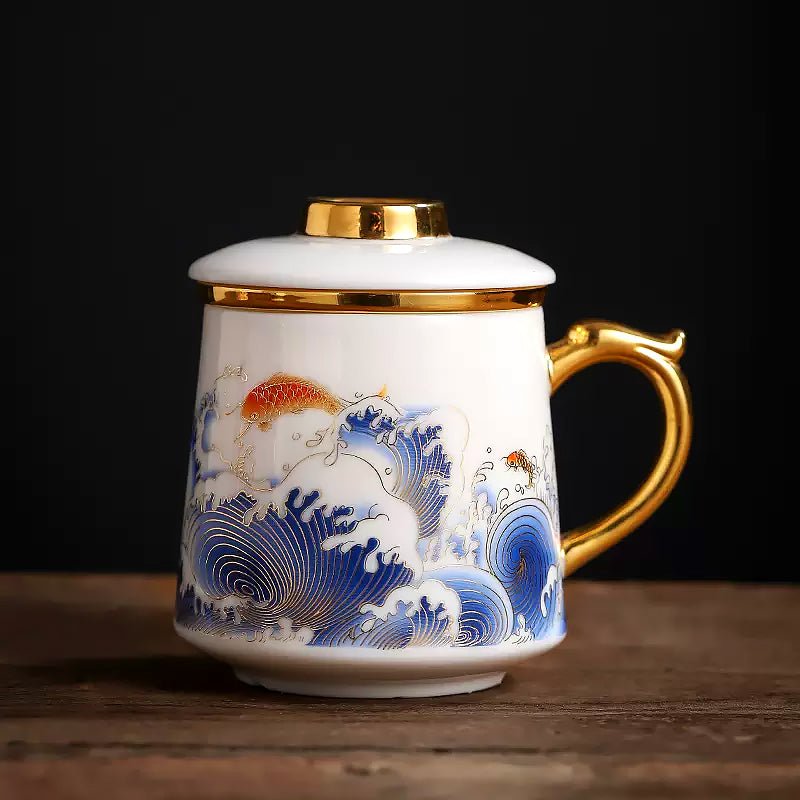
If you are comparing shapes and hand feel more than material alone, start with our all mugs collection. From there, the three product pages we point shoppers to most often are Golden Waves Kio Coffee Tea Mug, The Flow Coffee Tea Mug, and Mountain Sea Coffee Tea Mug.
We do not present those as cast iron replacements. We use them as a practical comparison set for buyers who want a mug that looks good on a kitchen counter, gifts well, and is easier to live with day to day.
If you are also checking capacity, our size guides on 11 oz Coffee Mug: Size, Fit, and What to Check Before You Buy and 12 Ounce Coffee Mug Buying Guide for Daily Use and Better Fit are the right companion reads.
What details should you check before buying?
Here is the short checklist we use when we handle this category:
- Interior finish: Decide whether you want bare seasoned iron or an enameled interior. Bare iron needs more care; enamel is easier to rinse but should be checked for chips.
- Weight and balance: Lift the mug with one hand. If the base feels too heavy for your grip, it will be annoying at breakfast and worse at a desk.
- Handle clearance: Make sure three fingers fit without scraping the mug body. Small handles are a common miss on decorative mugs.
- Cleaning routine: Hand wash is the safer default. Avoid soaking, and never let standing water sit inside overnight.
- Use case: If you want a desk mug, a ceramic option may be easier. If you want heat retention and a solid feel, cast iron makes more sense.
We also tell shoppers to ignore the romance of the material if they need a mug for fast reheating. Metal mugs do not belong in a microwave, and a cast iron coffee mug is a poor choice if your office routine depends on one-button reheats.
Who should skip cast iron and buy something lighter?
If your mug spends time in a car cupholder, if you reheat coffee in the microwave all morning, or if you prefer a large cup that feels nearly weightless, cast iron is the wrong lane. A good ceramic mug or insulated travel mug will be easier to use and easier to live with.
Cast iron also is not the best gift for someone who dislikes hand washing or has limited grip strength. The material rewards patience. It does not reward shortcuts.
How do you care for a cast iron coffee mug so it lasts?
Care is straightforward, but it has to be consistent. After use, rinse soon, wash by hand with mild soap if the finish allows it, dry fully, and do not stack it wet inside a cabinet. If the mug is bare cast iron, a thin wipe of food-safe oil after drying can help maintain the surface. If it is enameled, skip oil and watch for chips instead.
- Do not use a metal scouring pad unless the maker explicitly allows it.
- Do not leave coffee sitting in the mug for hours if you want to avoid staining.
- Do not put it in the microwave.
- Do not use a damaged mug with exposed rust or cracked enamel for daily drinks.
The biggest failure modes we see are simple: moisture left in the rim, a chip ignored for too long, or a buyer assuming every cast iron cup can be treated like stoneware. It cannot.
Frequently asked questions
Is a cast iron coffee mug safe for daily use?
Yes, if the mug is made for beverage use and the finish is intact. The key is maintenance: keep it dry, inspect for rust or chips, and do not use it like a microwave-safe ceramic cup. If you want the lowest-maintenance option, a regular ceramic mug is easier.
Can you put a cast iron coffee mug in the dishwasher?
We would not treat that as a default. Hand washing is safer for both bare cast iron and enameled cast iron because dishwasher cycles can be harsh on finishes and leave moisture behind. If the maker explicitly allows dishwashing, follow that guidance, but drying right away still matters.
Does a cast iron coffee mug keep coffee hot longer?
Usually, yes. Cast iron holds heat better than many thin mugs, especially if the mug was warmed first. That said, the same thermal feel can make the exterior hot to the touch, so it is not always the most comfortable choice for long desk sessions.
What should I do if I see rust or an enamel chip?
Stop using the mug until you inspect it closely. A small rust spot may be a surface issue, but repeated rust or a growing chip means the finish is failing and the mug is no longer a carefree daily cup. If the damage is on the rim or inside, replacement is often the safer call.
Is a cast iron coffee mug a good gift?
It can be, if the recipient likes heavier drinkware and does not mind hand washing. It is less suitable for someone who wants a lightweight office mug, a travel cup, or a piece they can toss in the dishwasher without thinking about it.
If you want the fastest next step, start with our all mugs collection, compare the three product pages above, and then use the size guides to narrow the fit before you buy.
More from our blog
Read more
Care Bear Coffee Mugs: Best Shapes, Sizes, and Gift Picks
A practical buyer’s guide to care bear coffee mugs with shape comparisons, care tips, and real trade-offs. We cover which styles work for everyday coffee, gifting, or display before you shop the co...
En savoir plus
Coffee Lover Mug Buying Guide for Daily Use and Gifting
A practical guide to choosing a coffee lover mug for real daily use, gifting, and display. We cover size, shape, care, and which styles fit different routines.
En savoir plus
Laisser un commentaire
Ce site est protégé par hCaptcha, et la Politique de confidentialité et les Conditions de service de hCaptcha s’appliquent.