
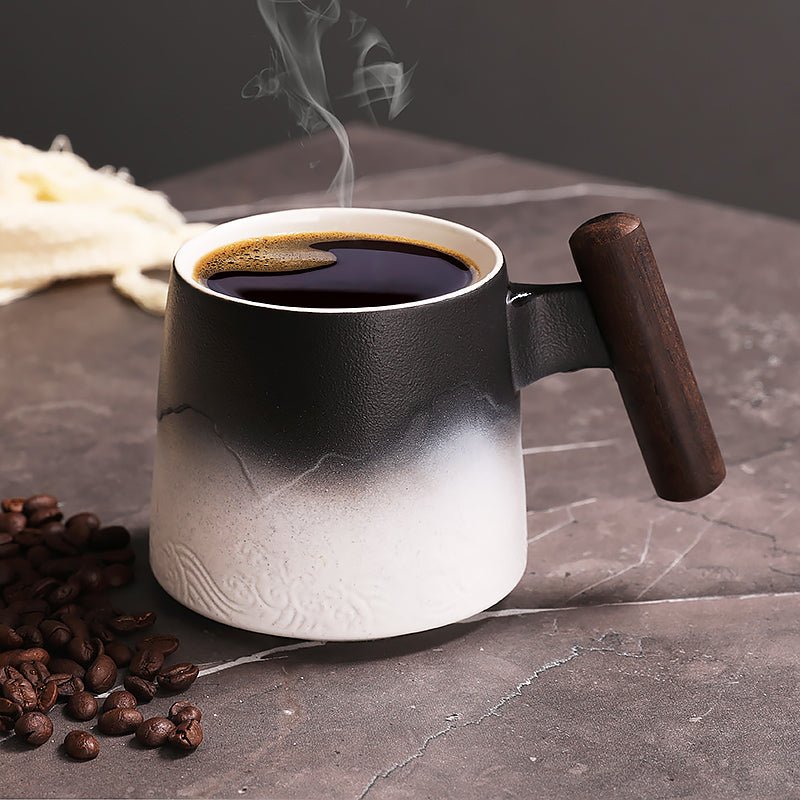
Best Camping Coffee Mug for Car Camping and Camp Coffee
Reading time: about 9 minutes
The best camping coffee mug is the one that still feels right after the first pour, the second refill, and a quick rinse at a campsite sink. If the mug is awkward to hold, tips on a folding table, or chips the first time it gets stacked with the pans, it will not stay in your rotation for long.
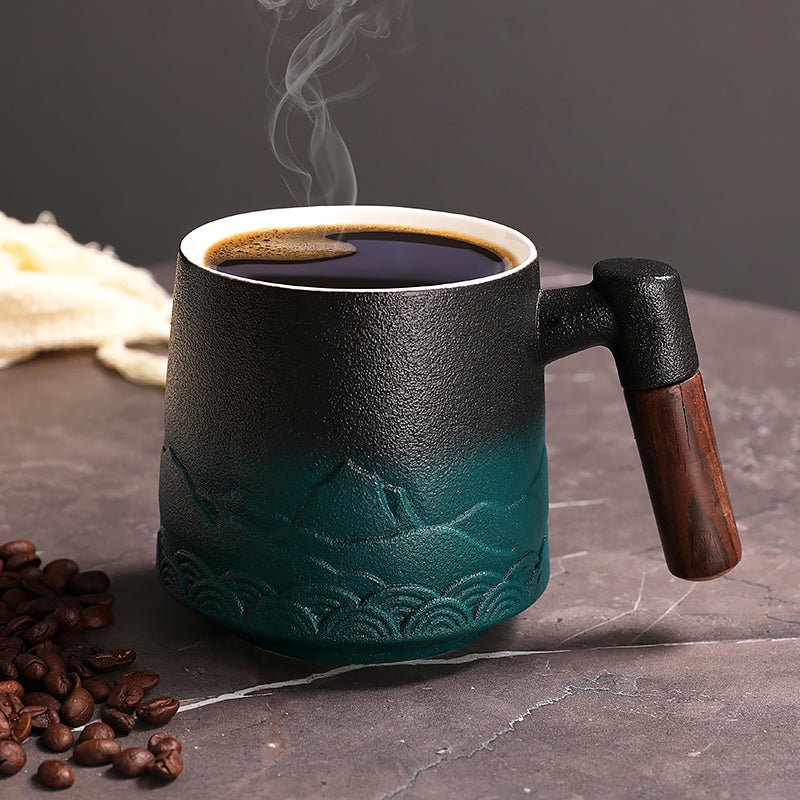
We sell mugs for real-world use, so we look at the same things buyers notice at home and at camp: handle comfort, rim feel, base stability, and how easy the mug is to clean after a full day outside. For a simple starting point, the Landscape Coffee Tea Mug, The Gradient Coffee Tea Mug, and Retro Coffee Tea Cup are three styles worth comparing. You can also browse our full collection if you want to keep the decision broad.
What should the best camping coffee mug do at camp?
A good camping mug has to solve a few annoying problems at once. It should be easy to grip with one hand, stable on an uneven picnic table, and comfortable to drink from when the coffee is still too hot to sip quickly. A mug that looks nice but wobbles on a camp bench is a poor choice. A mug that is tough but unpleasant to drink from usually ends up at the back of the cabinet.
In our experience, the sweet spot for most campers is a mug that feels like a real mug, not a survival tool. That usually means a familiar shape, a wide enough handle for two fingers, and a base that sits flat. If you are heading out for backpacking or long carries, this category changes completely. For that use case, a lightweight insulated metal mug makes more sense than ceramic.
- Best for car camping: A mug that feels good in the hand and looks good on the table.
- Best for cabins or RV trips: Something durable enough for daily use, with a shape that stacks cleanly.
- Not ideal for ultralight hikes: Ceramic is heavier and easier to break than metal.
- Best for a hot first pour: A mug with a comfortable rim and enough volume for your usual coffee size.
That is why we think the best camping coffee mug is often the one that bridges home use and outdoor use. It should feel natural on a kitchen counter, work at an office desk, and still hold up beside a camp stove or fire ring.
Which CoffeifyMug styles make the most sense for camping?
We would not steer every buyer to the same mug. Style matters, but so does how the mug will actually be used. If you want a camp-friendly mug that still feels like something you would use every day, these three are the easiest to compare.
| Product | Best for | What it is good at | What it is not ideal for |
|---|---|---|---|
| Landscape Coffee Tea Mug | Outdoor-themed setups, cabin coffee, gift buyers | A clean, scenic look that fits a camping table without feeling gimmicky | Backpacking, rough packing, or use where breakage risk is high |
| The Gradient Coffee Tea Mug | Buyers who want a more modern everyday mug | Simple style that moves easily from home kitchen to campsite | Gear loads where every ounce matters |
| Retro Coffee Tea Cup | Gift giving, cabin shelves, nostalgic coffee drinkers | A classic look that stands out when unboxed on a kitchen counter | Situations where you need the lightest possible option |
If you are buying for a person who cares about presentation, the unboxing matters more than people admit. A mug that looks good on a kitchen counter, office desk, or gift table is usually the one that gets used first. That is one reason we keep an eye on design balance as much as practicality. A mug should still feel like a mug, not just a printed object.
What features should you check before buying one?
There are a few concrete details that separate a mug you keep from one you relegate to the back shelf. These are the things we inspect in our store and the things buyers notice after the first week of use.
- Handle clearance: You want enough room for two fingers without your knuckles pressing into the cup wall.
- Flat base: A mug that rocks on a table is annoying at home and worse on a camp table that is already uneven.
- Rim thickness: A thick rim can feel clunky, while a very thin one can feel sharp on hot coffee.
- Glaze or finish quality: On ceramic mugs, look for even coverage and no rough spots at the edge or handle joint.
- Stacking and storage: A mug that stores neatly is less likely to chip in a crowded cabinet or RV shelf.
Common defect modes are usually easy to spot if you know what to look for. Hairline cracks near the handle, chips on the rim, glaze crazing, or a slight wobble at the base can all turn into real annoyances later. If a mug has a printed design, check whether the decoration is clean and centered. A sloppy print does not affect function, but it does affect whether the mug feels worth keeping.
Care guidance matters too. If a mug is labeled for dishwasher use, that is convenient, but repeated washing can still be hard on delicate prints and the rim if the mug is stacked carelessly. Let hot ceramic cool before running it under cold water. That small habit helps reduce thermal shock, which is one of the easiest ways to shorten a mug's life.
If you are comparing sizes as well as styles, our related guides on 10 oz Coffee Mug: Size, Fit, and What to Check Before You Buy and 11oz Coffee Mug Buying Guide: Size, Fit, and Best Uses cover the trade-offs between compact cups and the more common standard size. If you are comparing materials too, our Enamel Coffee Mug Buying Guide for Daily Use, Gifts, and Camping is a useful companion read.
Is ceramic a good camping mug, or should you buy something else?
Ceramic is a good camping mug material for the right kind of trip. It is comfortable to drink from, usually feels more stable in the hand than a lightweight metal cup, and tends to keep the coffee experience closer to what people want at home. For cabin stays, car camping, picnics, and backyard fire pits, ceramic makes a lot of sense.
It is not the right choice for every buyer. If your setup involves long hikes, hard packing, or a high chance of drops, ceramic is the wrong category. Stainless steel or titanium is better for that use because those materials handle abuse and weight limits more effectively. If your priority is heat retention over drinking comfort, an insulated mug or travel tumbler may also be a better fit.
We call that out because trust matters more than pushing every shopper toward the same product. The right mug is not just the one that looks best in a photo. It is the one that matches the way you actually make coffee. If you sit at a campsite table with a fresh pour and a book, ceramic is a pleasant answer. If you toss your gear into a pack and keep moving, it is not.
What size works best for camp coffee?
Size is where a lot of buyers overthink the decision, then pick the wrong thing anyway. Too small, and you are refilling too often. Too large, and the coffee cools before you finish it. For many buyers, the most practical range is around 10 to 11 ounces, which is enough for a standard pour without making the mug feel bulky.
- 8 to 10 oz: Best if you like smaller pours, stronger coffee, or espresso-based drinks.
- 10 to 11 oz: A dependable all-around size for drip coffee at camp.
- 12 oz and up: Better for people who top off often, but slower to finish if you like coffee hot from first sip to last.
At camp, the mug size should also match the rest of your setup. If your kettle is small, your coffee pours are controlled. If you are sharing a brew bag or a larger pot, a standard mug size keeps things simple. We see a lot of buyers choose oversized mugs because they look substantial, then realize they are carrying more ceramic than they need.
If you are shopping as a gift, keep the drinker's habits in mind. Someone who drinks one strong cup before sunrise probably does not need a giant mug. Someone who sips slowly over breakfast may prefer a larger cup, even if it cools faster.
How should you narrow the choice if you want one mug that works at home and outside?
The easiest way to narrow it down is to decide which compromise you care about least. Every mug trades something off. A more decorative mug may be less practical for rough packing. A sturdier mug may feel plain. A larger mug gives you more coffee but takes longer to finish. The best camping coffee mug for one shopper is often a bad fit for another.
Use this short checklist before you buy:
- Pick your main use case: car camping, cabin stays, or everyday kitchen use.
- Decide whether you want a mug for one hand or two-handed sipping.
- Check the size against how much coffee you actually pour.
- Look for a stable base and a handle that is comfortable when the mug is full.
- Choose the design you will still like after a year on a shelf.
If your goal is a mug that works on Monday morning and next weekend at camp, the best choice is usually the one that avoids extremes. Not the biggest. Not the most fragile. Not the most specialized. Just a well-shaped mug that fits your routine.
Frequently asked questions
Is a ceramic mug good for camping?
Yes, if your camping style is car camping, cabin trips, or time at a picnic table. Ceramic is comfortable to drink from and feels more like a real coffee mug than an outdoor utensil. It is not a good pick for backpacking or any trip where breakage risk is high.
What size camping coffee mug is best?
For most people, 10 to 11 ounces is the easiest range to live with. It holds a normal cup of coffee without feeling oversized, and it is less likely to cool down before you finish. Smaller sizes make sense for espresso-style drinks or very strong coffee.
Can I put my camping mug in the dishwasher?
Only if the product listing says it is dishwasher safe. Even then, stacked mugs can chip on the rim or handle if the rack is crowded. We also recommend letting a hot mug cool a bit before washing it to avoid thermal shock.
What is better for camping, ceramic or enamel?
Ceramic is better for comfort and everyday feel. Enamel is usually better if you want a more camp-style look and a lighter mug that still feels durable. If you want a deeper comparison, our enamel guide is a good place to start.
Do I need a lid on a camping coffee mug?
Not for every setup. A lid helps if you are walking around camp, dealing with wind, or trying to keep bugs out. If you are seated and drinking right away, a lid is less important than a stable base and a comfortable handle.
If you want the fastest next step, start with the three mugs above, then compare them against your actual campsite routine: car camping, cabin use, or everyday kitchen coffee. If you want to browse the full range in one place, open our collection and narrow by style, size, and the mug you will still want to reach for after the trip ends.
Read more
Mimi Coffee Mug Buying Guide: What to Check Before You Order
A practical guide to choosing a mimi coffee mug with the right size, shape, and daily-use fit. We compare a few style options, call out trade-offs, and show where each one works best.
En savoir plus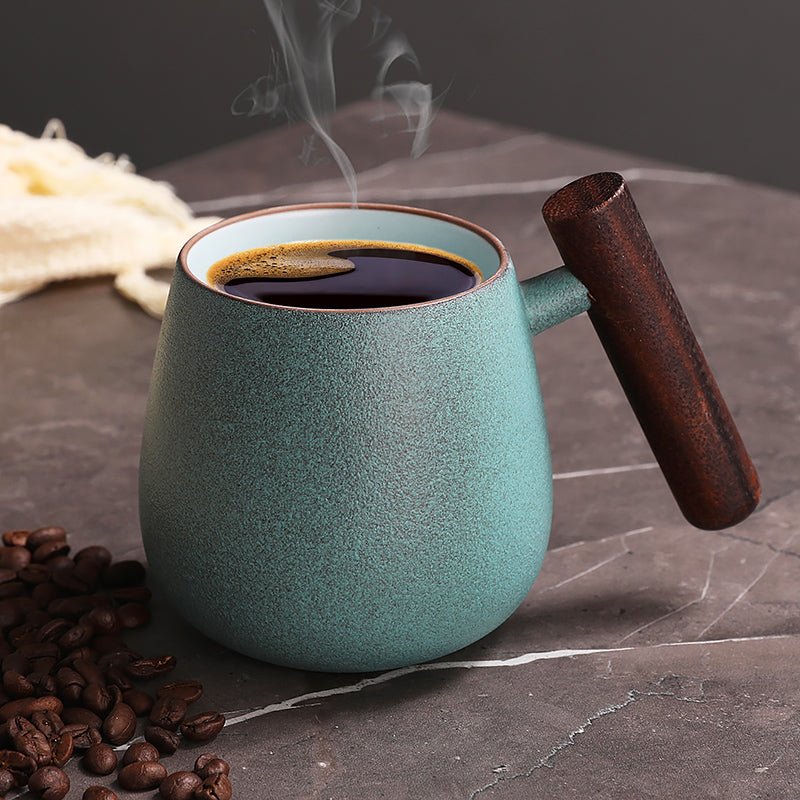
Rick and Morty Coffee Mug: What to Check Before You Buy
A Rick and Morty coffee mug should feel good in hand, fit your coffee routine, and arrive without rim chips or print issues. We cover size, shape, care, and the trade-offs buyers should check befor...
En savoir plus
Laisser un commentaire
Ce site est protégé par hCaptcha, et la Politique de confidentialité et les Conditions de service de hCaptcha s’appliquent.