
Wooden Coffee Cup Buying Guide: What to Check Before You Buy
Reading time: about 8 minutes
A wooden coffee cup changes the feel of the first sip before the coffee even cools. The handle feels different in the hand, the cup looks less generic on a desk, and the buying decision becomes more specific: does this mug actually fit how you drink coffee every day?
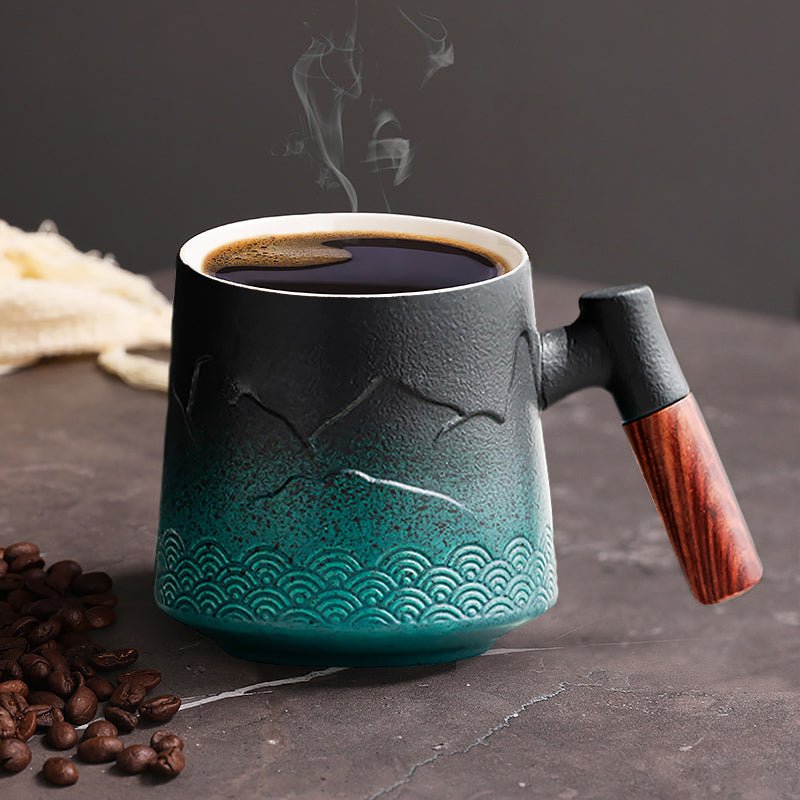
In our store, we see this style chosen for kitchen counters, office desks, and gift boxes where the buyer wants something softer and warmer than a standard all-ceramic mug. Two options worth comparing are Mountain Sea II Coffee Tea Mug with Wooden Handle and The Cloud Coffee Tea Mug Wooden Handle. If you want to browse more shapes and finishes first, start with our full collection.
If you are still deciding between a wooden handle mug and a more standard everyday cup, our Best Mug for Coffee: How to Choose the Right Everyday Cup guide covers the shape, capacity, and balance questions that matter before style comes into play.
What does a wooden coffee cup actually feel like in daily use?
A wooden coffee cup is usually a ceramic mug with a wooden handle, not a mug carved entirely from wood. That matters. Ceramic holds heat well and gives you the familiar coffee-drinking experience, while the wooden handle changes the grip point and makes the mug feel less cold in the hand than an all-ceramic loop handle.
That said, wood changes the maintenance story. A wooden handle can look beautiful on a kitchen shelf, but it is not the right choice for someone who wants to throw every mug into the dishwasher without thinking. It also is not the best pick if you need a rugged commuter mug that gets tossed in a bag with keys, chargers, and receipts. The material mix is better suited to home, office, and slow coffee than to hard travel use.
We look at this category with a practical eye: how the mug sits on a table, how the handle feels after a full pour, and whether the finish looks clean after repeated use. Small details matter here. A wood handle with a smooth sanding job feels thoughtful. A handle with sharp edges, visible glue lines, or uneven finish does not.
Which buyer is a wooden coffee cup best for?
This style works best for shoppers who care about tactile comfort and visual warmth. If your coffee ritual happens at a desk, on a kitchen counter, or during a slower morning routine, a wooden coffee cup often feels more personal than a plain white mug.
It is also a strong gifting choice. A wooden handle changes the presentation enough that the mug feels selected, not random. That is useful for birthdays, housewarmings, and holiday bundles. If you are comparing this against other seasonal options, our Autumn Coffee Mugs: How to Choose the Right Cup for Cozy Season article is a good fit for shoppers who want a warmer table look without overthinking the style.
Here is the simplest way to think about fit:
- Choose a wooden coffee cup if you want a mug that feels warmer and more distinctive on the table.
- Choose a standard all-ceramic mug if you want the easiest care and the least fuss.
- Choose a travel mug if your coffee lives in the car, on a commute, or in a backpack.
- Choose stainless steel if insulation and durability matter more than the look of the cup itself.
For camping, cabin use, or a second mug at the holiday house, a wooden handle can still make sense, but only if the product is meant for that kind of routine. Our Camping Cup Buying Guide for Camp, Cabin, and Everyday Coffee explains where a stylish mug stops being practical and where a true camp cup starts to make more sense.
| Buyer need | Wooden coffee cup fit | Better alternative |
|---|---|---|
| Desk coffee and slow sipping | Strong fit | None needed unless you want full dishwasher convenience |
| Gift for a coffee drinker | Strong fit | Simple ceramic mug if the recipient prefers low-maintenance items |
| Daily use in a busy family kitchen | Mixed fit | Standard ceramic mug with no wood parts |
| Commute, car cup holder, or backpack | Poor fit | Insulated travel mug with lid |
What should you inspect before adding one to cart?
We inspect this category for the same kinds of issues we would not want on our own shelf. The details are small, but they decide whether the mug feels premium or fussy after the first week of use.
Before you buy, check these points:
- Handle attachment: the wood should sit firmly without wobble or visible separation at the join.
- Wood finish: look for smooth sanding, no rough edges, and no splinter-prone areas where your fingers rest.
- Glaze consistency: the ceramic surface should look even, especially around the rim and near the handle connection.
- Base stability: the mug should sit flat and not rock on a counter or table.
- Weight balance: a full mug should feel manageable, not top-heavy in the hand.
The common defect modes in this category are easy to miss in a product photo: hairline cracks in the glaze near the handle junction, rough wood finishing, glue showing where the handle meets the body, or a mug that feels uneven when set down. Those are the details we pay attention to because they matter more after the box is opened than they do on a clean product page.
If you want a mug mostly for gifting, our Christmas Coffee Mugs: How to Choose the Right Gift and Everyday Cup guide can help you decide whether to buy for style, durability, or the recipient's daily routine.
How do you care for a wooden coffee cup without shortening its life?
The right care routine is simple, but it is not identical to care for a basic ceramic mug. Wood does not like being soaked and forgotten. It also does not benefit from aggressive scrubbing or long exposure to standing water.
- Wash the mug soon after use instead of leaving coffee residue to dry.
- Use mild soap and a soft sponge rather than abrasive pads.
- Dry the wooden handle fully after washing so moisture does not sit in the grain or around the join.
- Do not soak the mug overnight.
- Follow the product listing if it gives specific care instructions; that always takes priority over generic assumptions.
We would not treat a wooden coffee cup as a set-it-and-forget-it item. If you want that level of convenience, a plain ceramic mug is the safer choice. The trade-off is clear: the wooden handle gives you a better tactile experience and a more distinctive look, but you give up some ease of care.
One more practical point: if you live in a kitchen where mugs go straight from sink to rack to cabinet, this style is fine as long as everyone is consistent about drying. If your household tends to stack wet dishes or leave mugs in the sink, choose a different mug style. That is not a flaw in the product. It is just the wrong fit for the routine.
How does it compare with ceramic, glass, and travel mugs?
The comparison is less about which material is universally better and more about what kind of drinking moment you want to own.
A standard ceramic mug is the easiest to live with. It is simple, familiar, and usually the most forgiving choice for everyday use. A glass mug shows the drink nicely, but it often feels more delicate. A travel mug is built for movement, lids, and insulation, not for the open-cup coffee moment. A wooden coffee cup sits in the middle: more distinctive than a plain mug, less sealed and rugged than a travel tumbler, and better for a table than for a car.
If you are picking a gift, the visual difference matters. If you are picking for a shared office kitchen, low-maintenance usually wins. If you are buying for your own slow morning routine, the wooden handle can be the detail that makes the cup feel like yours instead of just another vessel from the cupboard.
That is why the question is not only “does it look good?” but also “what job is this mug supposed to do?” For a formal espresso setup, a wooden coffee cup may be too large. For a backpacking setup, it is too fragile. For a desk, a breakfast table, or a cozy shelf display, it can be exactly right.
Frequently asked questions
Is a wooden coffee cup dishwasher safe?
Do not assume it is. Wood and repeated machine washing are a poor combination unless the product listing clearly says otherwise. Hand washing is the safer routine for keeping the handle finish and fit in good shape.
Can I put a wooden coffee cup in the microwave?
Check the product details first. The ceramic body may be microwave-friendly, but any wood component changes the answer and can make microwave use a bad idea. If you reheat coffee often, a plain ceramic mug is the lower-risk choice.
Is a wooden coffee cup good for everyday use?
Yes, if your everyday use is mostly at home, at a desk, or in a kitchen where you can hand wash it. It is not the best option if you want a mug that gets abused, machine-washed constantly, or carried around all day.
What should I look for in a wooden handle mug before buying?
Check the handle finish, the join between wood and ceramic, the base stability, and the glaze around the rim. A good mug should feel balanced in the hand and look clean where the materials meet. Rough sanding or visible wobble is a sign to keep looking.
Is a wooden coffee cup better than a standard ceramic mug?
Better depends on your routine. A standard ceramic mug is easier to maintain, while a wooden coffee cup adds warmth, grip, and a more distinctive look. If style and feel matter more than dishwasher convenience, the wooden handle wins.
If you want the shortest path to the right choice, compare three things before you buy: handle feel, care routine, and where the mug will live most of the time. Then start with Mountain Sea II Coffee Tea Mug with Wooden Handle, The Cloud Coffee Tea Mug Wooden Handle, or browse our full collection to compare more styles side by side.
Read more
F Caw F Coffee Mug Buying Guide for Shape, Comfort, and Gift Fit
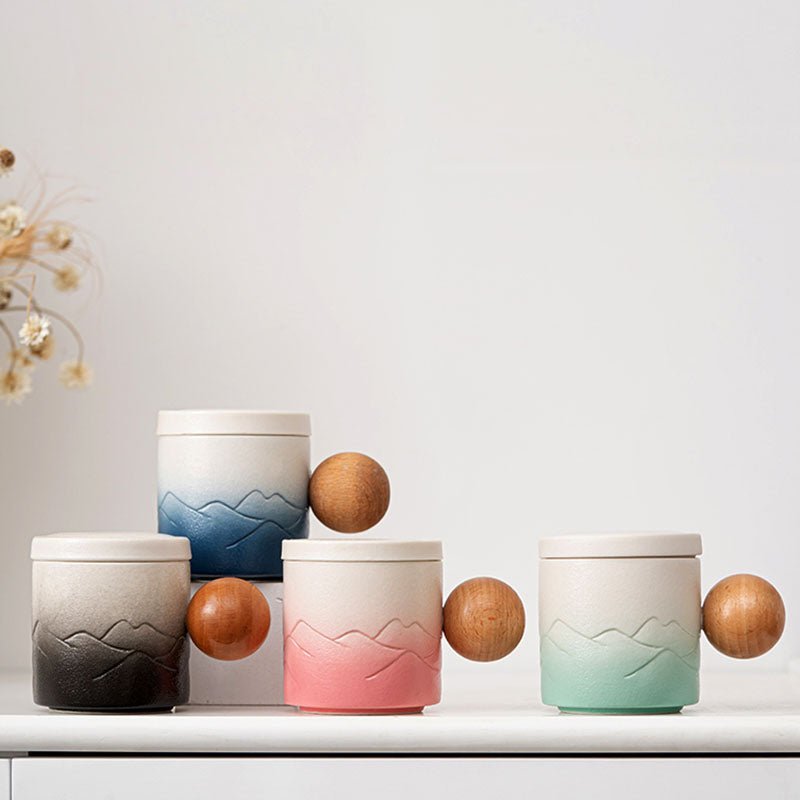
A mug can look right and still feel wrong at the desk. We compare the f caw f coffee mug styles by shape, comfort, and everyday use so you can pick the one that fits your routine.
Leer más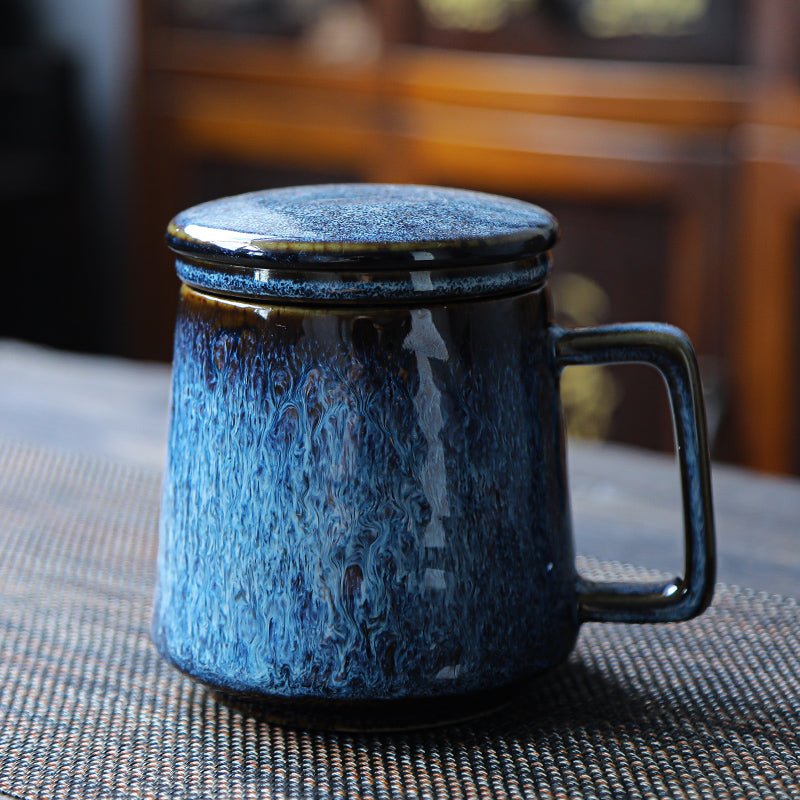
Hermes Coffee Mug: What to Check Before You Buy
A practical buyer’s guide to choosing a hermes coffee mug, with fit, finish, care, and real trade-offs explained clearly. We also point to similar art-forward mugs in our store if you want the look...
Leer más
Dejar un comentario
Este sitio está protegido por hCaptcha y se aplican la Política de privacidad de hCaptcha y los Términos del servicio.