
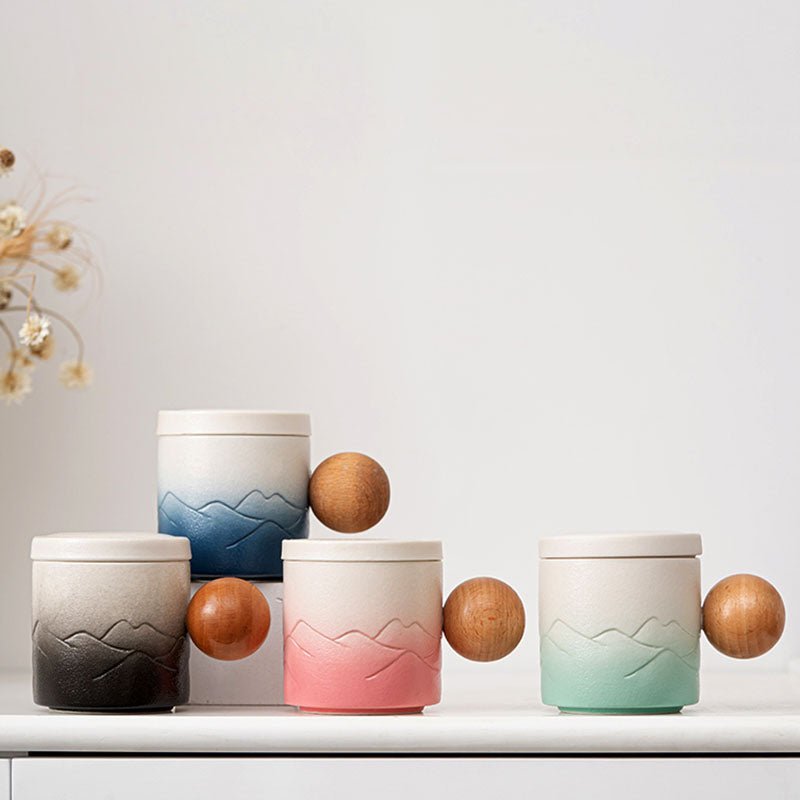
Wood Cups for Daily Use: What to Check Before You Buy
Reading time: about 8 minutes
A mug with a wooden handle changes the whole first sip. On a cold kitchen counter or an office desk, it feels warmer in the hand than a plain ceramic handle, but it also asks for a little more care than the average diner mug.
That trade-off is exactly why we get questions about wood cups before a sale. In our store, buyers usually want three things at once: a mug that looks good on the shelf, feels comfortable during a long coffee or tea break, and does not turn into a maintenance project after a few washes.
What makes wood cups different from plain ceramic mugs?
In practice, the term wood cups usually points to mugs with a wooden handle or wood accent, not a cup made entirely from wood. That matters because the drinking vessel and the grip behave differently: the ceramic body handles heat and liquid, while the wood handle changes the hand feel and the cleaning routine.
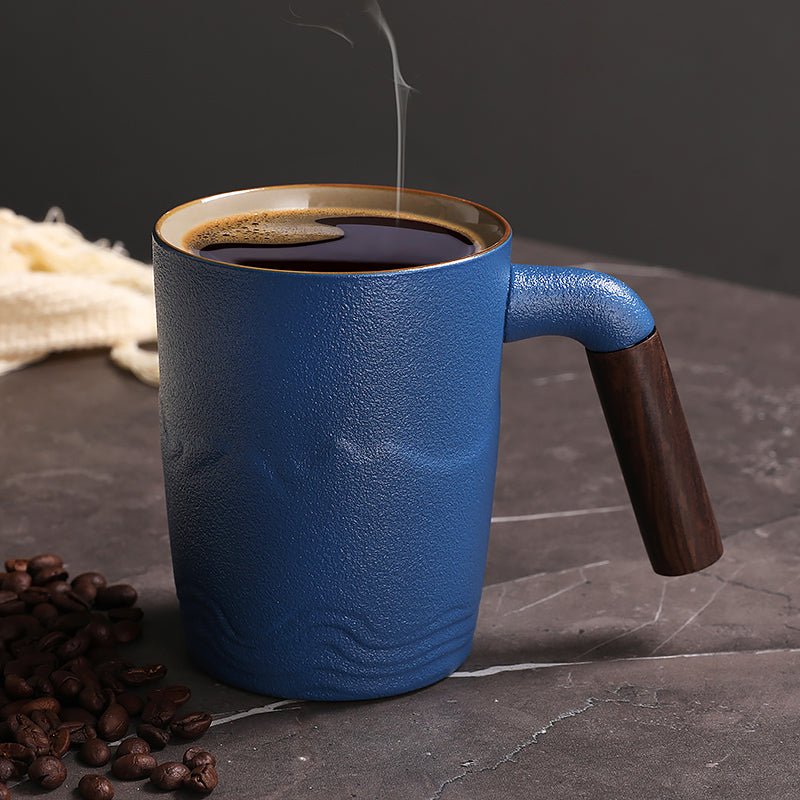
If you want to see two examples from our store, start with the Mountain Sea II Coffee Tea Mug with Wooden Handle and the The Cloud Coffee Tea Mug Wooden Handle. To compare more everyday options, browse our full mug collection and judge the handle style against the rest of your kitchen setup.
The real advantage is tactile. A wooden grip can feel less slippery than an all-glazed mug, and it usually gives the mug a more deliberate look on a desk, breakfast tray, or gift shelf. The downside is just as real: wood is less forgiving than ceramic if you soak it, scrub it hard, or leave it wet after washing.
If you want a mug that disappears into the dishwasher routine and never asks questions, a plain ceramic cup is simpler. If you want a cup that feels a little more considered every time you pick it up, wood cups make sense.
What should you inspect before buying wood cups?
We covered the basics in our guide Wood Cups: What to Look for Before You Buy, but the short version is simple: inspect the handle, the finish, the rim, and the overall balance before you buy.
| What to check | What good looks like | Why it matters |
|---|---|---|
| Handle join | Clean attachment with no wobble or open gaps | Loose joins are one of the first failure points on a handled mug |
| Wood finish | Smooth, sealed, and even to the touch | Rough or dry wood can catch on cloths and age badly with repeated washing |
| Rim and glaze | Even glaze, no sharp spots, no visible hairline cracks | The rim is where your mouth notices quality first, and cracks are a warning sign |
| Weight and balance | Comfortable in one hand with the center of gravity close to the grip | A mug can look beautiful and still feel awkward on a kitchen counter or at a desk |
Common defect modes are usually obvious if you slow down: a rough sanding line on the wood, a glue seam that looks open, a handle that twists when you lift the mug, or a glaze line that looks stressed near the connection point. None of those are small details. They are the things that decide whether the mug feels premium after a week or annoying after a month.
If you are comparing wood cups as a buying category rather than as a single style choice, the product photos should answer more than the color story. Look for the join, the lip, and the thickness of the mug body. Those are the parts that matter once the box is open and the mug is in daily rotation.
Are wood cups good for everyday coffee or tea?
Yes, if you want a mug that earns its place on the counter. For coffee and tea, wood cups work well as long as you are comfortable with a slightly more careful washing routine and you do not expect them to behave like a no-thought, all-purpose kitchen cup.
If you are comparing daily-use size first, our 8oz Coffee Mug Buying Guide for Daily Use and Small Cups is a useful next read. Size changes the experience more than most shoppers expect. A smaller mug cools faster, fits better under compact coffee setups, and feels more controlled for tea. A larger mug gives you more room, but it can also become a heavier carry if the handle is not well shaped.
- Good fit: Morning coffee at a kitchen counter, afternoon tea at a desk, or a mug that stays visible on an open shelf.
- Good fit: A gift when you want something a little more special than a standard white mug.
- Better skip: If you want to microwave without checking the product page first, or if every mug in your house goes through the dishwasher on repeat.
- Better skip: If you need a hard-wearing camp mug or travel mug that gets rough treatment.
That last point matters. Wood cups are not the best choice for tossing in a bag, leaving in a sink overnight, or using as a do-everything utility mug. They make more sense for home routines, office desks, and gift purchases where the look and hand feel matter as much as the function.
How do you care for wood cups without ruining the handle?
In our experience, the handle lasts longer when you treat it like wood, not like ceramic. Wash the mug soon after use, use mild soap, rinse well, and dry the wooden parts right away. Do not leave the handle soaking in a sink, and do not assume a dishwasher cycle is fine unless the listing says so clearly.
- Rinse the mug after coffee or tea so residue does not dry around the handle joint.
- Use a soft sponge rather than an abrasive scrub pad on the wood.
- Dry the wooden handle with a towel before setting the mug on a rack.
- Keep it out of standing water and avoid long soaks.
- Check the finish every so often for dryness, roughness, or a dull patch.
If the mug is meant for a busy office kitchen, this is the main trade-off to think through. A fully glazed ceramic mug can live a rougher life. A wood-handled mug asks for a bit more attention, but the payoff is a warmer grip and a more finished look on the desk.
Which wood cup style works best for gifting?
Gift buyers usually care about one thing first: does it feel intentional when the box is opened? A wood-handled mug usually clears that bar better than a generic promotional cup, especially if the recipient actually drinks coffee or tea every day.
If you are shopping for someone who likes pieces that are both attractive and practical, our article on Beautiful Coffee Cups That Look Good and Work Every Day is a useful companion. It helps separate mugs that look nice in photos from mugs people actually keep by the sink.
For gift selection, we usually think in terms of use case rather than style labels:
- Desk gift: Choose a mug that is comfortable to hold for long work sessions and easy to rinse out between refills.
- Kitchen gift: Choose a mug that matches the recipient's daily routine and is not overly fussy to maintain.
- Low-risk gift: Choose a mug with a straightforward profile and a finish that looks clean under normal indoor lighting.
That is why we keep both the Mountain Sea II Coffee Tea Mug with Wooden Handle and The Cloud Coffee Tea Mug Wooden Handle in the conversation. They fit the kind of purchase where the mug has to do real work after the unboxing ends.
How do wood cups compare with other mugs in our store?
The honest answer is that wood cups are not the universal best pick. They are the better choice when you want grip comfort, a more natural visual cue, and a mug that feels a little less ordinary on the counter. They are not the best choice if you want a mug that can be dropped into the dishwasher every day without a second thought.
That is also why we recommend comparing across the whole category before buying. A shopper who starts with wood cups sometimes ends up choosing a simpler ceramic mug, just because the routine matters more than the visual detail. Others decide the opposite: they want the handle warmth and are happy to hand wash it.
The easiest way to make the right call is to compare three things side by side: the grip, the care routine, and the size. If one of those feels inconvenient now, it will feel more annoying later.
Frequently asked questions
Are wood cups dishwasher safe?
Not automatically. If the mug has a real wooden handle or wood trim, we recommend hand washing unless the product page says the piece is dishwasher safe. Repeated heat, water exposure, and detergent can dry out wood and shorten the life of the finish.
Can I put a wood-handled mug in the microwave?
Do not assume yes. Wood does not belong in the microwave unless the maker explicitly says the mug is microwave safe and the full construction supports it. If you microwave coffee often, a plain ceramic mug is usually the safer, simpler choice.
What should I look for in the handle and finish?
Look for a handle that feels solid, smooth, and comfortable in the fingers, with no wobble or rough edge where it joins the mug body. The finish should look even, not dry or patchy. If the join looks stressed or the wood feels unfinished, keep looking.
Are wood cups good for tea as well as coffee?
Yes. Tea drinkers often appreciate the lighter hand feel and the cleaner grip, especially for a mug that sits on a desk or breakfast tray. The key is still care: dry the handle after washing and avoid leaving it wet in the sink.
What is the best next step if I want one for daily use?
Start by checking your daily routine. If you hand wash most mugs and want a warmer grip, wood cups are a strong fit. If you want the fastest path to the right choice, compare the handle, size, and care notes in our full mug collection, then choose the one that fits your sink, desk, and dishwasher habits.
Read more
Dragon Coffee Mug Buying Guide: What to Check First
A practical guide to dragon coffee for shoppers comparing mugs: how to judge size, handle comfort, print quality, care, and whether a bold dragon design or a subtler style is the better buy.
Leer más
Interesting Mugs That Work for Daily Coffee, Tea, and Gifting
A practical guide to interesting mugs that still earn a spot on the counter. We compare comfort, care, and style, then point you toward the mugs and collection worth checking first.
Leer más
Dejar un comentario
Este sitio está protegido por hCaptcha y se aplican la Política de privacidad de hCaptcha y los Términos del servicio.