
Tea Mugs Ceramic for Daily Brewing: Size, Shape, and Care
Reading time: about 8 minutes
A tea mug gets judged fast. The rim feels too thick, the handle pinches, or the cup cools off before the second pour, and it ends up on the back shelf instead of the desk or kitchen counter.
That is why tea mugs ceramic still make sense for daily use. Ceramic is steady, familiar, and neutral in flavor, but the best cup for loose tea at home is not always the best cup for an office desk or a quick breakfast routine. In our store, we see buyers choose different shapes for bagged tea, loose-leaf tea, and gift sets that need to look good the moment they are unboxed.
What do ceramic tea mugs do well, and where do they fall short?
Ceramic gives you a stable drinkware material that does not carry flavor from one tea to the next the way a stained or poorly cleaned cup can. It also has enough weight to feel steady on a table, which matters if you are pouring with one hand and reaching for milk or honey with the other.
The trade-off is simple: ceramic is not an insulated material. It helps hold heat better than thin glass in many everyday situations, but it will not keep tea hot like a vacuum-insulated travel mug. It can also chip at the rim or foot if it gets knocked against a sink, and hairline cracks are the kind of defect mode we pay attention to when we inspect mugs for everyday use.
For buyers comparing tea mugs ceramic with other materials, the question is usually not whether ceramic is good. It is whether the shape, weight, and finish fit the way you actually drink tea.
Which mug shape works best for your tea routine?
The shape changes more than the look. It changes heat, aroma, hand feel, and even how comfortable the mug is to wash and stack.
| Tea habit | Better shape | Why it works | Watch out for |
|---|---|---|---|
| Slow sipping at a desk | Medium mug with a comfortable handle | Stable in the hand and easy to carry between meetings | Very large cups can feel bulky when filled |
| Loose-leaf tea with room for a infuser | Wider opening | Leaves and strainers sit more naturally, and cooling happens a little faster | Wide cups can lose heat sooner |
| Gift buying or display | Decorative profile with a clean glaze | Looks intentional on a shelf or tray | Style-first mugs are not always the most stackable |
| Minimal, everyday use | Straight-sided mug | Easy to hold, easy to rinse, easy to store | Plain shapes can feel less distinctive if you want a statement piece |
If you want a deeper breakdown of size and finish, our article Ceramic Mugs for Tea: How to Choose the Right Size, Shape, and Finish goes into the details we check before we add a mug to the store.
Which of our ceramic tea mugs fits different buyers?
If you want to compare styles without guessing, start with our tea mugs collection. That is the fastest way to see which silhouettes fit your routine before you commit to one mug.
For a more sculpted look, the Pleated Coffee Tea Cup is the kind of piece that feels at home on a breakfast tray or a clean desk setup. The pleated surface gives it more visual detail than a plain cylinder, so it suits buyers who want a cup that looks intentional without turning decorative to the point of being impractical.
The Retro Coffee Tea Cup is a better fit if you like a simpler, vintage-leaning silhouette. It is the kind of mug that works for daily tea service, but it is not the one we would point someone toward if they want a very modern, oversized coffee format.
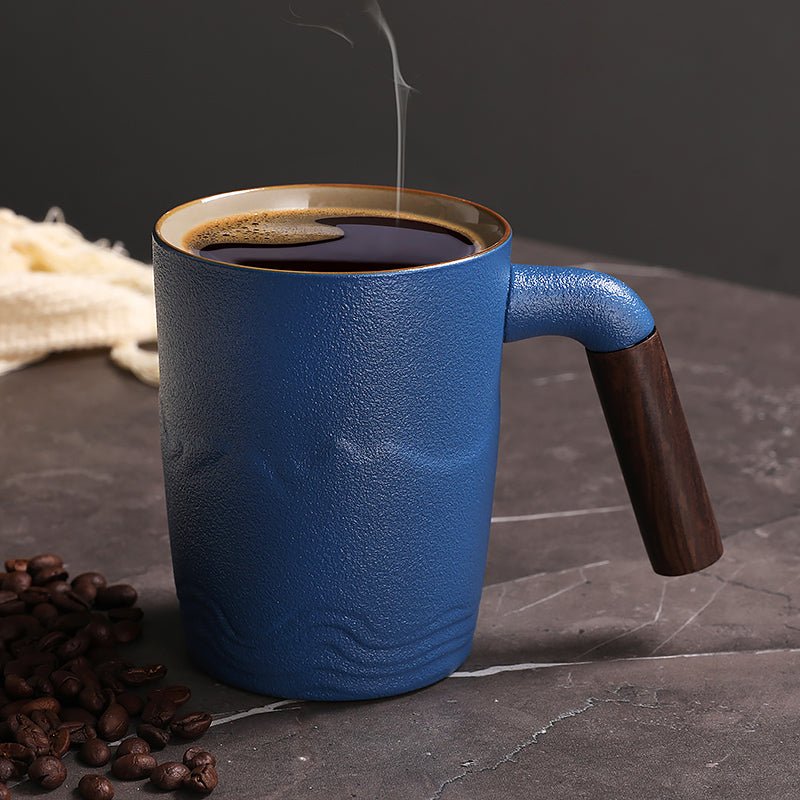
The Mountain Sea II Coffee Tea Mug with Wooden Handle stands apart because the wooden handle changes the feel in hand and the overall presentation. That makes it attractive for gifting and display, but it also means you should think more carefully about care than you would with an all-ceramic mug.
Our experience is that shoppers usually choose between these three based on one question: do they want the mug to disappear into the routine, or do they want it to be part of the table setting?
What details should you check before you buy?
The small details matter more than the headline product photo. A mug can look right and still feel wrong once hot tea is inside it.
- Capacity: A smaller mug keeps tea feeling more focused, while a larger cup is better if you refill slowly and do not want to return to the kettle every few minutes.
- Rim thickness: A thin rim feels nicer when you sip. A thicker rim can feel sturdy, but it can also make the cup feel less refined.
- Handle clearance: Your fingers should not brush the hot body of the mug when it is full. That is a basic comfort issue that gets overlooked in photos.
- Glaze and finish: A smooth glaze is easier to rinse and usually better for day-to-day tea stains than an overly textured surface.
- Base and foot ring: A flat, stable base matters on a cluttered kitchen counter or office desk. It also helps reduce accidental tipping.
If you are comparing mugs for a household order, our guide Ceramic Mugs for Tea: What to Buy for Daily Brewing is the one we would hand to someone trying to narrow the list fast.
We also tell buyers to think about what the mug is not good for. If you want a cup that stacks into a travel bag, or if you need something that stays hot for a very long commute, ceramic is usually not the best match. A vacuum insulated cup is the more practical choice there.
How should you care for ceramic tea mugs so they last?
Daily care is usually simple, but consistency matters. Staining, odor, and chips almost always come from the same few habits: rough handling in the sink, sudden temperature changes, and leaving tea residue sitting overnight.
- Rinse the mug soon after use, especially after strong black tea or dark herbal blends.
- Use a soft sponge instead of abrasive scrubbers, which can wear the glaze over time.
- Let the mug cool before washing it if you have just poured in very hot tea.
- If the mug has a wooden handle, keep the handle away from long soaks unless the product instructions say otherwise.
- Check the rim and base occasionally for small chips or hairline cracks before they become a bigger problem.
That last step is the one people skip. We do not, because a small chip at the rim is not just cosmetic if you use the mug every morning. It changes the feel on the lip and can make the mug less pleasant to keep in rotation.
Who should choose ceramic, and who should choose something else?
Ceramic tea mugs are a strong fit for home brewing, desk use, and gift purchases where appearance and everyday comfort both matter. They are also a good fit for buyers who want a mug that does not hold on to old coffee flavor or pick up odd smells the way some materials can after heavy use.
They are not the best choice for everyone. If you need the lightest possible cup, a thin glass mug may suit you better. If your tea goes in a commuter bag, insulated steel is the safer pick. And if you want a mug that can take rough handling without much concern, ceramic is the wrong material category to overestimate.
The practical buyer question is not, "Is ceramic good?" It is, "Is this ceramic mug the right balance of heat, comfort, and cleanup for my routine?"
Frequently asked questions
What size ceramic tea mug is best for daily use?
For most daily tea drinkers, a medium mug is the safest choice because it gives you enough volume for a full cup without becoming awkward to hold when hot. If you usually finish tea in one sitting, a slightly smaller mug can feel better because it keeps the drink warmer and more focused. If you sip slowly over a long work session, a larger cup may make more sense.
Are ceramic tea mugs better than glass mugs?
For most people, ceramic feels warmer in the hand and hides staining better than clear glass. Glass can be useful if you want to watch color change, but it often feels more fragile and shows residue sooner. Ceramic is usually the more practical everyday choice for tea on a kitchen counter or office desk.
Can ceramic tea mugs go in the microwave?
Only if the product listing says they are microwave safe. We do not recommend assuming that all ceramic is safe, especially if the mug has metal accents or a wooden handle. If you are reheating tea often, check the care notes before you buy.
How do I keep tea stains off a ceramic mug?
Rinse the mug soon after use and wash it with a soft sponge before residue dries hard on the glaze. Dark teas stain less when they do not sit overnight. If a stain starts to build up, a gentle soak is usually better than aggressive scrubbing.
Is a wooden handle a good idea for a tea mug?
It can be, if you want a more tactile grip and a distinctive look. The trade-off is maintenance: wood needs a bit more attention than all-ceramic construction, especially around soaking and drying. If you want the least fussy cleanup, a fully ceramic handle or a standard ceramic mug is easier to live with.
If you are narrowing your choice now, start with the tea mugs collection, then compare the shape, handle type, and cleanup notes against the checklist above. That is usually the fastest way to find the mug you will actually use every day.
More from our blog
Read more
Standard Coffee Mug Sizes: What Buyers Should Choose
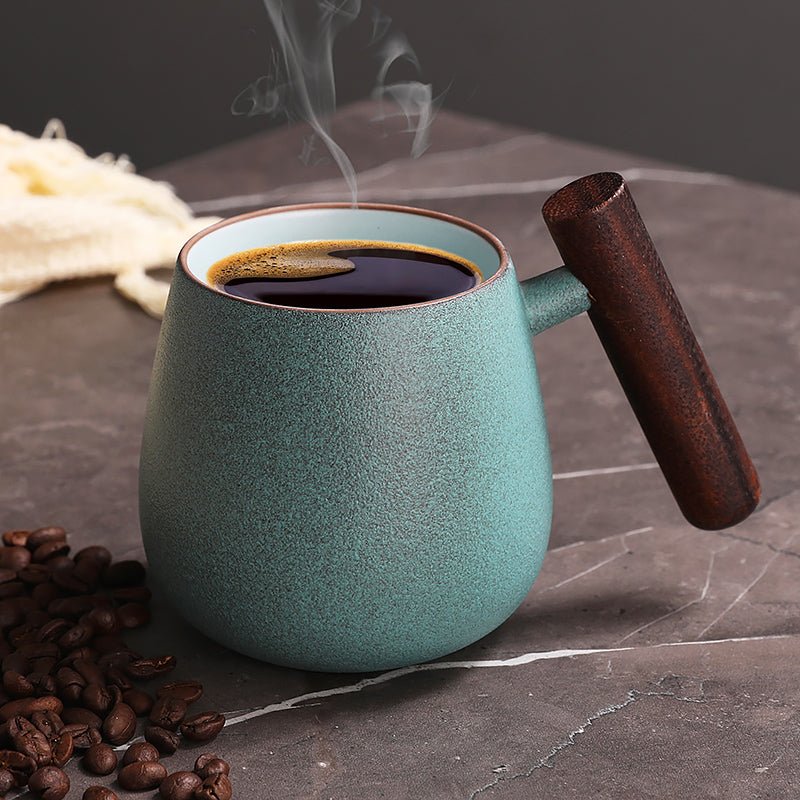
Standard coffee mug sizes are less fixed than most shoppers expect. We break down the common capacities, what actually fits in each, and which mug size works best for home, office, and gifting.
Leer más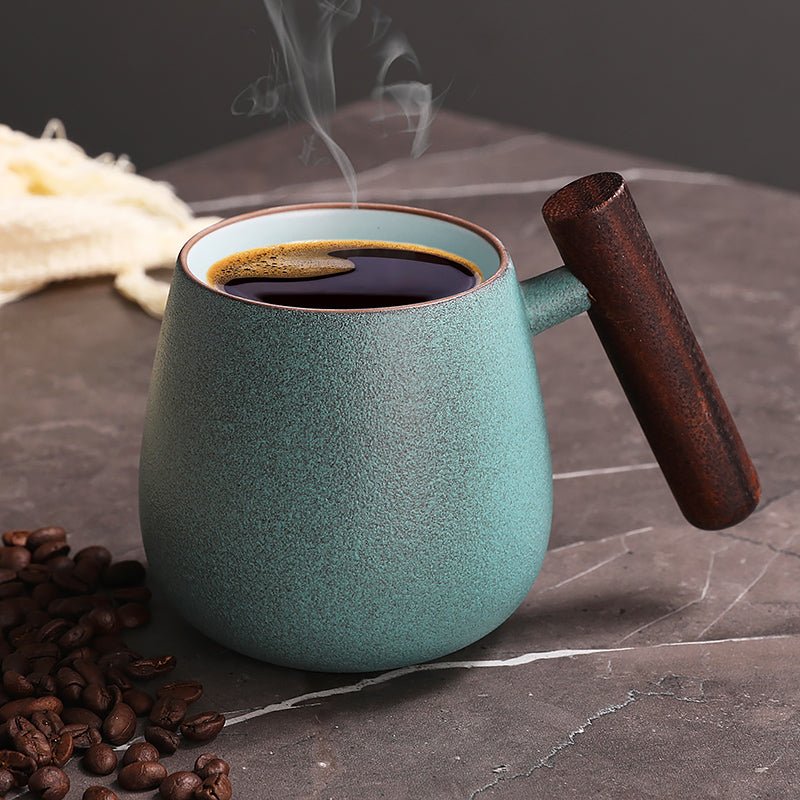
Round Ceramic Coffee Mug for Office Desks: Best Size and Use Cases
A practical guide to choosing a round ceramic coffee mug for office desks best size and use cases, with desk-friendly sizing, real trade-offs, and buying checks.
Leer más
Dejar un comentario
Este sitio está protegido por hCaptcha y se aplican la Política de privacidad de hCaptcha y los Términos del servicio.