

Small Ceramic Coffee Cup: Compare Size, Shape, and Style
Reading time: about 10 minutes
A small ceramic coffee cup can look perfectly compact in a product photo and still take up more shelf or tray space than expected once the handle is included. We see the same issue with drink volume: a cup may have the right visual proportions, but the usable fill level can be lower than its brim capacity suggests.
In our store, we treat size, shape, and styling as separate buying decisions. Someone building a guest tray may prioritize visual detail, making the Pleated Coffee Tea Cup a relevant place to start. A shopper trying to compare several looks before choosing can instead browse our unique coffee mugs collection. The practical checks below will help you judge which option fits your drink, storage space, and cleaning routine.
What does small mean on a real coffee tray?
There is no single useful definition of small without context. A short espresso serving, a modest cup of tea, and a compact milk coffee all require different amounts of usable room. Product photos alone do not settle that question.
Start by separating four measurements or specifications:
- Listed capacity: Check whether the page gives a volume and whether that figure appears to describe filling to the brim. In daily use, you need headspace for carrying the cup without spilling.
- Maximum external width: The handle often determines how much shelf, desk, or tray space a cup occupies. Measure the available space from the handle's outer edge, not just across the ceramic body.
- Height and cabinet clearance: A low cup can fit under shelves that reject a taller mug, but stacking should never be assumed unless the shape clearly supports it.
- Base or foot-ring diameter: This affects how the cup sits on a small tray, coaster, or desk. An uneven foot ring can cause rocking even when the body looks symmetrical.
Usable capacity matters more than a nominal number. If you normally add milk, leave room for it in your calculation. If you carry coffee from the kitchen to another room, leave additional space below the rim. A cup filled to its stated maximum may not be comfortable to move.
Which small ceramic coffee cup suits your serving style?
The three linked CoffeifyMug pages present distinct style directions. The comparison below is intentionally based on those visible product identities rather than unlisted assumptions about dimensions, capacity, ceramic subtype, or appliance compatibility.
| Reader situation | Why the style fits | Relevant next step |
|---|---|---|
| You want texture to stand out on a breakfast or guest tray. | Pleated styling introduces visible surface detail without requiring extra tray accessories. | Check the current specifications and images for the Pleated Coffee Tea Cup. |
| Your shelf or coffee corner needs a strong color focal point. | An emerald color direction can work with simple white, wood, or neutral tableware. | Review the Emerald Coffee Tea Mug and confirm its listed size and care details. |
| You are building a nostalgic breakfast nook or vintage-inspired setting. | Retro styling is the clearest match for a collected, less contemporary table arrangement. | Compare the current photos and specifications on the Retro Coffee Tea Cup page. |
| You care more about overall visual fit than a single named style. | Seeing several designs together makes differences in color, silhouette, and decorative detail easier to judge. | Browse the unique coffee mugs collection before committing. |
Product-page boundary: A name such as pleated, emerald, or retro identifies a style direction. It does not establish capacity, dimensions, dishwasher safety, microwave safety, or a specific ceramic subtype. Use the current product page as the source of truth for those claims.
Which cup shapes work for espresso, tea, and milk coffee?
A small cup is usually most practical for drinks served in short portions. It can suit espresso, a concentrated coffee, or a modest tea serving when the listed capacity matches the amount you actually pour. It is less suitable for someone who normally makes a large latte, adds substantial milk, or expects one serving to last through a long meeting.
Ceramic also absorbs heat when a hot drink is poured into it. In a small serving, that heat transfer can be noticeable because there is less liquid in the cup. Prewarming with warm water can help, but avoid exposing ceramic to abrupt temperature changes unless the product instructions specifically permit them.
Consider these drink-specific variables:
- Espresso or short coffee: Look for enough headspace to lift and carry the cup without disturbing the crema or spilling over the rim.
- Tea: Check the handle opening and rim profile. A cup that looks delicate may feel cramped if your fingers do not clear the body comfortably.
- Milk coffee: Confirm the usable volume after leaving space for milk or foam. A visually small cup can become crowded quickly.
- Iced coffee: A compact cup is generally a poor fit for a drink that needs both ice and liquid volume. A larger tumbler or mug will usually be more practical.
Do not assume that every item described as ceramic has the same density, wall thickness, or thermal behavior. Ceramic is a broad product category. If a listing does not identify porcelain, stoneware, earthenware, or another subtype, we would not infer one from the photograph.
Which ceramic details matter after the first week?
Color and pattern drive the first impression. The rim, handle, glaze, and foot ring determine how the cup feels after repeated use. These are the areas our team pays attention to when handling ceramic drinkware.
- Rim profile: A thinner rim can feel precise for a short drink, while a thicker rim may feel more substantial. Neither is automatically better. Inspect product images closely and choose based on how you prefer to sip.
- Handle clearance: Look at the gap between the handle and cup body. Small handles can support a compact silhouette but may be uncomfortable for larger fingers or a full-hand grip.
- Glaze coverage: Examine the rim, interior, handle joints, and area above the foot ring. Pinholes, rough spots, glaze skips, or sharp edges are different from intentional variations in a handmade-looking finish.
- Foot ring: The unglazed or differently finished ring at the base should sit evenly and should not feel abrasive against a delicate table or tray.
- Rim and handle condition: Chips often begin at exposed edges, while hairline cracks can appear around stressed areas such as handle attachments. Stop using a cup if structural damage develops.
Glaze crazing appears as a network of fine lines in the glaze surface. It is not the same as a single obvious crack through the ceramic body, but it should still be evaluated against the seller's care guidance. Do not describe a visible line as harmless without knowing whether it is intentional decoration, glaze variation, or damage.
Will it fit a small kitchen shelf, office desk, or guest tray?
For a kitchen shelf, measure the full width available per cup and the vertical clearance above it. Allow room to lift the cup without striking the shelf. If you are arranging several pieces, do not assume they can be stacked; contact between glazed rims and ceramic bases can cause scratching or chips.
On an office desk, stability and refill frequency become more noticeable. A compact cup takes up less room beside a keyboard, but it also requires more trips to the coffee machine if you drink larger servings. It is not a substitute for a sealed travel mug, and it will not protect against spills in the way a lid does.
A guest tray needs space for more than cups. Account for a pot or carafe, teaspoons, napkins, milk, and sweeteners before choosing the cup count. Our guide to the best small ceramic cup for a guest coffee tray goes deeper into arranging those pieces without crowding the serving surface.
Style also changes the setting. The Retro cup is the most direct page to check for a vintage-oriented space, but shoppers should still compare practical details before buying. The article on mistakes to avoid with a vintage retro small cup covers the gap between liking a nostalgic design and choosing one that fits daily use. For a color-led setup, our emerald small mug buying mistakes guide addresses similar decisions around scale and coordination.
What should you verify before dishwasher or microwave use?
Care instructions are product-specific. We do not treat ceramic as automatically dishwasher-safe or microwave-safe because glaze, decoration, construction, and manufacturer guidance can differ. Check the current listing for the exact cup you are considering.
- Read the product-page care statement. If dishwasher or microwave compatibility is not stated, do not add that capability based on appearance alone.
- Wash before first use. Use mild dish soap and a non-abrasive sponge unless the supplied instructions say otherwise.
- Avoid sudden temperature changes. Moving a very hot cup directly onto a cold or wet surface can stress ceramic. Let it change temperature gradually.
- Load carefully if dishwasher use is approved. Position the cup so the rim and handle cannot knock against heavier dishes during a cycle.
- Inspect it regularly. Check the rim, handle joints, interior, and base for chips or cracks after washing and before serving.
Metallic decoration is a separate microwave concern. If a cup has any metallic-looking detail, follow the product instructions rather than testing it in the appliance. Decorative surfaces can also be more vulnerable to abrasive cleaners, so avoid scouring pads unless the care guidance explicitly permits them.
Who should skip a small ceramic cup?
A smaller cup is not the right answer for every coffee routine. Choose a larger mug or a different format if you regularly make high-volume milk drinks, dislike frequent refills, need a lid for commuting, or want a cup that can sit beside electronics with minimal spill risk.
It may also be a poor fit for someone who needs a large handle or a full four-finger grip. Compact proportions often mean compact handle clearance. Gift buyers should be especially careful here: a cup can match the recipient's decor while still being awkward for the way they hold or prepare coffee.
For a busy shared kitchen, prioritize confirmed care compatibility over decorative detail. A style that requires gentler handling may not suit an office dishwasher or a household where cups are routinely stacked. That trade-off is worth accepting for a display-oriented coffee corner, but less so for high-traffic daily service.
A seven-point check before adding a cup to your cart
- Write down the amount of coffee, tea, milk, or foam you normally use.
- Compare that serving with the listed capacity while allowing headspace below the rim.
- Measure shelf or tray space using the cup's maximum width, including its handle.
- Inspect the product images for rim thickness, handle clearance, glaze coverage, and base shape.
- Confirm dishwasher and microwave guidance on the current product page.
- Match the styling to the situation: pleated detail for texture, emerald for a strong color cue, or retro for a nostalgic setting.
- Choose a larger mug or lidded format if capacity, grip, or spill protection matters more than compact proportions.
Once those checks are complete, compare the current product details in our unique coffee mugs collection. Start with fit and care requirements, then use color and surface detail to make the final choice.
Frequently asked questions
How much should a small ceramic coffee cup hold?
There is no single capacity that suits every drink. Compare the product's listed volume with your normal coffee or tea serving, then leave enough headspace for milk and carrying. Do not treat brim capacity as the amount you will comfortably serve.
Is a small ceramic coffee cup good for espresso?
It can be a good match if its usable capacity suits your espresso recipe and leaves room below the rim. Check the listed measurements rather than judging only from photos, especially if you prepare a double shot or add milk.
Can I put a small ceramic cup in the dishwasher or microwave?
Only if the product page or supplied care instructions confirm that use. Ceramic alone does not guarantee appliance compatibility, particularly where decorative glazes or metallic-looking details are involved.
Which CoffeifyMug style works best on a compact coffee tray?
Choose the Pleated cup if visible texture is the priority, the Emerald mug if you want a strong color focal point, or the Retro cup for a nostalgic setting. Then confirm the current dimensions and care instructions on the relevant product page before ordering.
Read more

Oversized Ceramic Coffee Mugs: Fit, Capacity and Style
Compare usable capacity, brewer clearance, grip, care and three CoffeifyMug styles. This practical guide helps you avoid a mug that looks right but fits the daily routine poorly.
Leer más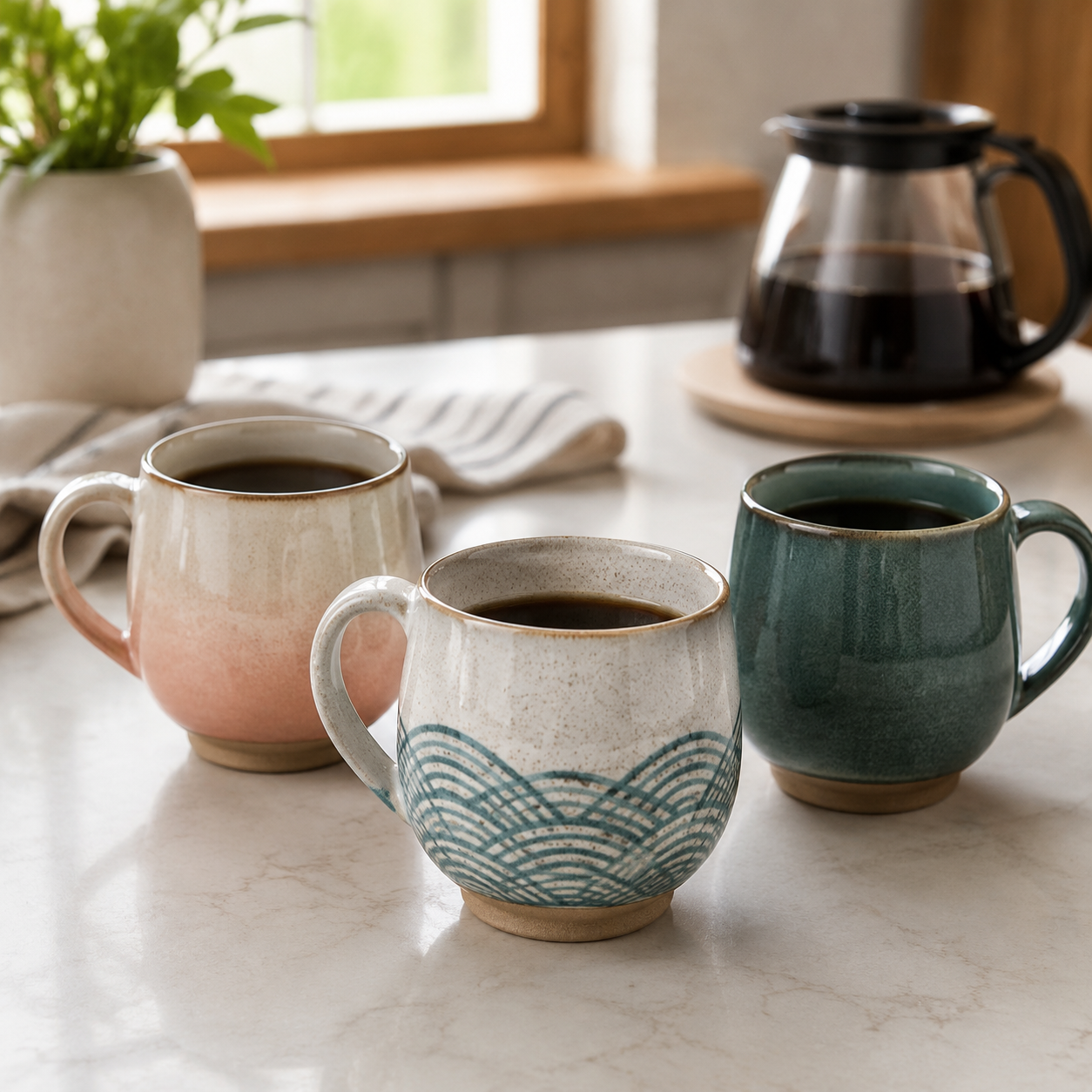
Ceramic Glazed Coffee Mugs: Finish, Fit, and Care
Compare glazed mug finishes without overlooking practical details such as rim quality, handle clearance, usable capacity, care instructions, and desk or kitchen fit.
Leer más
Dejar un comentario
Este sitio está protegido por hCaptcha y se aplican la Política de privacidad de hCaptcha y los Términos del servicio.