
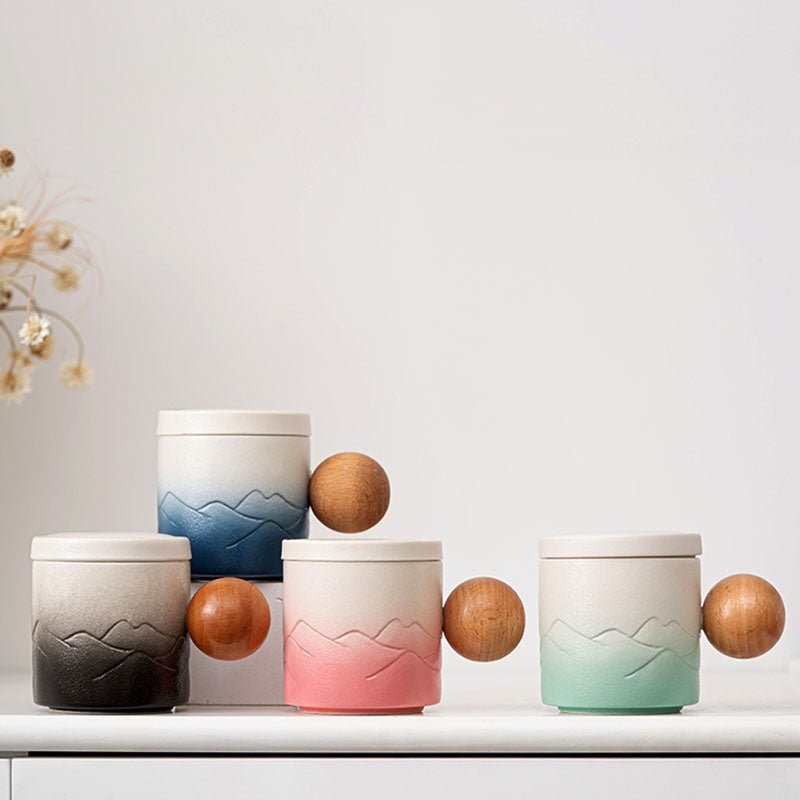
Piccolo Cup for Desk Use: Capacity, Footprint, Product Fit
Reading time: about 10 minutes
An oversized mug seems manageable until it competes with a keyboard, mouse, charging cable, notebook, and the one clear spot where your hand actually rests. That is the practical problem behind choosing a piccolo cup for desk use: capacity matters, but so do handle clearance, refill frequency, spill exposure, and the space occupied by the cup's widest point.
We use piccolo here as useful shopper language for a compact coffee serving, not as a certification. The products below are compared by their verified listed capacities. We are not assigning them a fixed milk-to-coffee ratio, claiming cafe provenance, or presenting any item as a certified piccolo cup.
Piccolo cup for desk use: what does desk fit mean at 170 ml, 250 ml, and 270 ml?
The three current capacity points in our catalog are straightforward: the Retro Coffee Tea Cup is listed at 170 ml, the Ball Handled Coffee Tea Mug at 250 ml, and the Emerald Coffee Tea Mug at 270 ml. Shoppers who want to compare these with other shapes can also browse our unique coffee mugs collection.
Capacity is only one part of desk fit. It does not reveal the base diameter, rim width, overall height, or total width from the far edge of the cup to the outer edge of the handle. A 170 ml cup may be the smallest drink option here, but we will not claim that it has the smallest physical footprint without verified dimensions.
| Product | Listed capacity | Likely buyer situation | Main trade-off |
|---|---|---|---|
| Retro Coffee Tea Cup | 170 ml | Short drink, limited liquid volume, or planned refills | Less room for a longer coffee, tea, milk, or ice |
| Ball Handled Coffee Tea Mug | 250 ml | Middle-ground serving with fewer interruptions | The handle shape needs lateral hand clearance |
| Emerald Coffee Tea Mug | 270 ml | A slightly longer drink or less frequent refilling | More liquid may be unnecessary for quick coffee breaks |
A listed capacity also should not be treated as the amount you will comfortably carry across an office. Filling any cup to the rim leaves little protection against sloshing. Your practical serving volume will usually be lower once you leave sensible headroom.
How does capacity change refill frequency and drinking pace?
The difference between 170 ml and 250 ml is 80 ml. Moving from 170 ml to 270 ml adds 100 ml, while the gap between 250 ml and 270 ml is only 20 ml. Those differences are more useful than broad labels such as small or medium because they show how much extra liquid you are actually buying space for.
- Choose 170 ml if: you make short drinks, prefer a fresh refill, or want portion restraint more than all-morning capacity. It is also the least suitable of these three for ice-heavy drinks because the ice displaces much of the available liquid.
- Choose 250 ml if: 170 ml sounds restrictive but 270 ml would not meaningfully change your routine. This is the clearest middle capacity in the current group.
- Choose 270 ml if: you regularly add more milk or water, drink tea at your desk, or want to extend the interval between refills. It is only 20 ml above the 250 ml option, so shape and handle design may matter more than capacity at this end of the comparison.
Refill frequency is not automatically a disadvantage. In our experience selling compact drinkware, some shoppers deliberately choose a smaller cup because it gets them away from the screen for a fresh pour. Others need to protect concentrated work time and find repeated trips irritating. Be honest about which routine describes your desk day.
If your usual drink falls between a very short coffee and a standard mug serving, our ceramic cortado cup for desk use comparison provides another capacity-focused view without assuming a fixed recipe.
How much footprint and handle clearance does a desk cup need?
Do not measure only the base. The full working footprint includes the body, handle, coaster, and the finger space needed to pick up the cup without pushing nearby objects. A ball-style or projecting handle can be comfortable to hold yet awkward beside a mouse, monitor stand, or desk organizer.
- Measure the widest point. Use the full distance from the opposite side of the cup to the outside of the handle, not just the base diameter.
- Test your dominant side. Right-handed users often keep a cup to the right, where it may compete with the mouse. Left-handed users may run into a notebook, phone, or second monitor control.
- Include the coaster. A coaster can extend beyond the cup base and may become the true footprint. Test with the coaster you intend to use.
- Check overhead clearance. Shelving, monitor risers, and low cabinet spaces can make a taller cup difficult to lift cleanly.
- Leave a pickup path. Your fingers should reach the handle without brushing the keyboard, cables, or another hot object.
A simple home test works well: place your current cup in its normal desk position, trace the occupied area on a sheet of paper, and mark the handle side. Move your mouse through its normal range and open your notebook fully. This reveals conflicts that a capacity number cannot show.
We also recommend checking new drinkware on a flat kitchen counter before placing it near electronics. Look for rocking at the base, chips along the drinking rim, and visible cracking around the handle joint. Packaging dust or a crumb under the base can also cause wobble, so clean both surfaces before deciding the piece is uneven. Do not use a cup with structural damage.
Which current CoffeifyMug option fits each desk setup?
Retro 170 ml: short servings and deliberate refills
A shopper with a crowded workstation who makes a genuinely short drink should begin with the 170 ml Retro Coffee Tea Cup. Its capacity is the closest fit among these three for someone who does not want a conventional large mug serving. It also suits the person who enjoys making a fresh second cup instead of nursing one drink for hours.
The limitation is clear: 170 ml leaves less flexibility for extra milk, a longer black coffee, tea, or ice. It is not the strongest fit for someone who wants one drink to last through a long meeting. Confirm the current dimensions and product photos before treating its smaller capacity as proof of a smaller desk footprint.
Ball Handle 250 ml: a middle capacity with a clearance question
The 250 ml Ball Handled Coffee Tea Mug fits the shopper who finds 170 ml too restrictive but does not need the largest capacity in this comparison. The extra 80 ml over the Retro option can reduce refill pressure while remaining below the 270 ml Emerald capacity.
Its named handle design is also the detail to examine most closely. A distinctive handle can provide a clear grip, but it may need more room beside a mouse or notebook than a compact loop. This option is not ideal for a buyer whose available space is only slightly wider than the cup body. Check the complete product width if it is listed, and use the product images to assess where your fingers will sit.
Emerald 270 ml: a longer desk drink with fewer capacity compromises
The 270 ml Emerald Coffee Tea Mug is the better capacity match for someone who regularly adds milk or water, drinks tea, or dislikes leaving the desk for refills. Compared with 170 ml, the extra 100 ml gives noticeably more room for a longer serving.
It is not automatically the best value for a person who drinks slowly. More liquid can remain in the cup long enough to cool, and the additional capacity offers little benefit if you normally stop after a short serving. It is also not our recommendation for a shopper whose only priority is the smallest possible physical footprint; capacity alone cannot establish that.
What should you verify about material, care, and the current listing?
Material names should not be treated as interchangeable. Ceramic, porcelain, and stoneware bodies can differ in wall thickness, weight, heat retention, finish, and care requirements. The verified comparison here covers capacity, so the current product page should be your source for the material and finish offered at the time you order.
- Material and finish: Confirm the exact construction rather than assuming it from the product's appearance.
- Dishwasher and microwave directions: Use these appliances only if the current care information permits it. Decorative finishes and metallic details, if present on any drinkware, may require different handling.
- Dimensions: Look for body width, full handle-to-edge width, height, and base diameter. Contact our store if a measurement needed for your desk is not shown.
- Condition at unboxing: Before discarding gift or shipping packaging, inspect the rim, base, body, and handle joint under good light.
- Daily cleaning: Rinse coffee or tea residue before it dries, wash according to the listed directions, and avoid abrupt temperature changes such as moving a very cold cup directly to very hot liquid.
For office use, empty and rinse the cup at the end of the day rather than leaving a small amount of coffee overnight. If the piece has a glazed or decorative finish, avoid abrasive scouring unless its care directions specifically allow it. These small habits help prevent residue buildup and unnecessary surface wear through repeated cleaning cycles.
Where do tea, iced coffee, and longer black coffee change the choice?
A cup that fits a short hot drink may become frustrating as soon as ice, a tea infuser, or extra water enters the routine. Ice occupies physical volume, so a 170 ml cup can deliver much less actual beverage than its listed capacity suggests. A tea drinker may also prefer 250 ml or 270 ml simply to avoid making several small infusions during the workday.
For a longer black coffee, start with the 270 ml option rather than forcing the piccolo label onto a serving it does not describe well. Our Americano coffee cup for desk use guide is a more relevant next comparison if added water and fewer refills are central to your routine.
Shared and hot-desking environments add another issue: storage. A visually distinctive handle may be easy to recognize in a communal kitchen, but the complete mug still needs to fit the cabinet or drawer where it will be kept. Measure that space as well as the desk.
Frequently asked questions
What capacity is best for a piccolo cup for desk use?
Choose 170 ml for short servings and planned refills, 250 ml for a middle-ground desk drink, or 270 ml when you add more milk or water and want fewer interruptions. The best capacity depends on your actual serving, not on a fixed piccolo recipe.
Is the 170 ml Retro cup a certified piccolo cup?
We do not present it as a certified piccolo cup. It is a 170 ml coffee and tea cup that may suit shoppers seeking a compact serving, but buyers should judge it by capacity, dimensions, shape, and their own drink routine.
Is 170 ml large enough for iced coffee at a desk?
It can hold a small iced serving, but ice will displace a substantial share of the available volume. Choose 250 ml or 270 ml if you want more beverage after adding ice, milk, or water.
How do I measure desk space for a handled cup?
Measure from the side of the cup body to the outer edge of the handle, then add enough room for your fingers to enter and lift without touching nearby equipment. Include the coaster and test the mouse or notebook in normal use before ordering.
Can these cups go in a dishwasher or microwave?
Check the current product page and care directions for the specific cup before using either appliance. Capacity does not establish material, finish, or appliance compatibility, and decorative details can affect the correct care method.
A 30-second desk-fit checklist before you buy
- Pick 170 ml, 250 ml, or 270 ml based on the drink you actually pour.
- Decide how many refills you will tolerate during a normal work session.
- Measure the full cup-and-handle area, not only the base.
- Allow for a coaster, mouse movement, cables, and notebook clearance.
- Verify current material, dimensions, and care directions on the product page.
- Choose a larger style if you regularly add ice, extra water, or a substantial amount of milk.
If those answers still leave you between shapes, compare the current unique coffee mugs side by side. Start with capacity, eliminate handles that conflict with your desk, and then choose the design you will be comfortable reaching for every day.
More from our blog
Read more
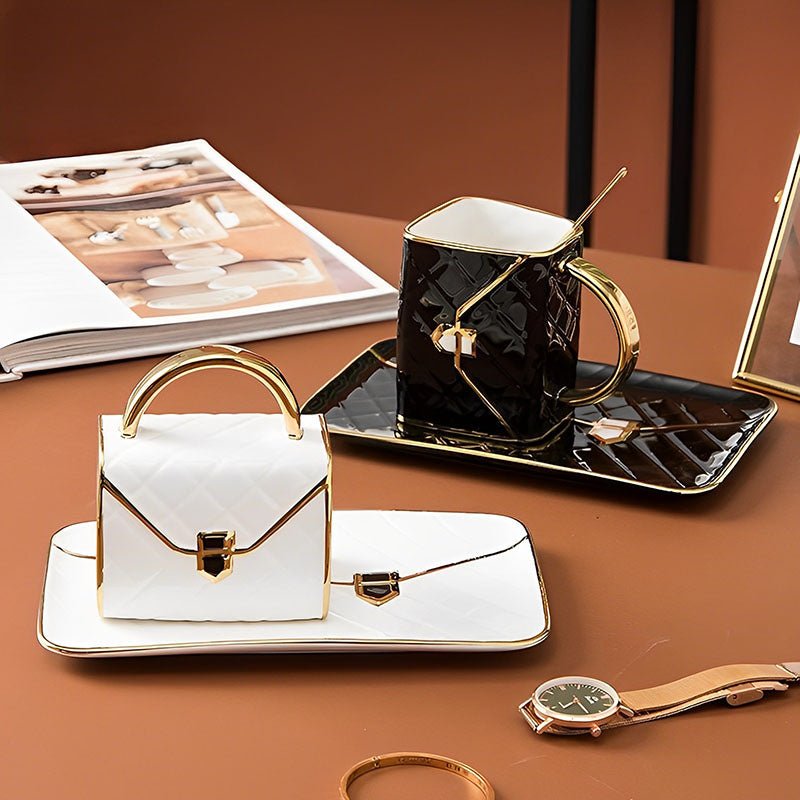
Unique Coffee Mugs for Gifts for Desk Use: Fit Guide
A desk mug gift succeeds only if its capacity, full footprint, handle clearance, and care needs suit the recipient. Use this guide to compare three CoffeifyMug designs without guessing from appeara...
Leer más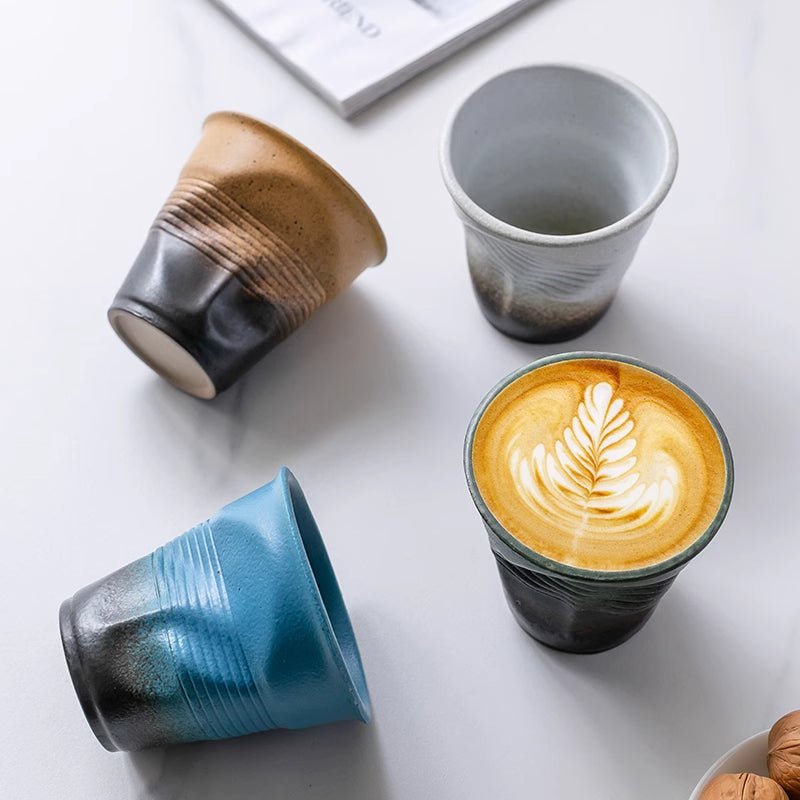
White Pottery Coffee Mugs for Desk Use: Desk Fit Guide
Compare white pottery coffee mugs for desk use by the space they occupy, how often they need refilling, handle clearance, and the product style that suits your workday. Use the product page measure...
Leer más
Dejar un comentario
Este sitio está protegido por hCaptcha y se aplican la Política de privacidad de hCaptcha y los Términos del servicio.