
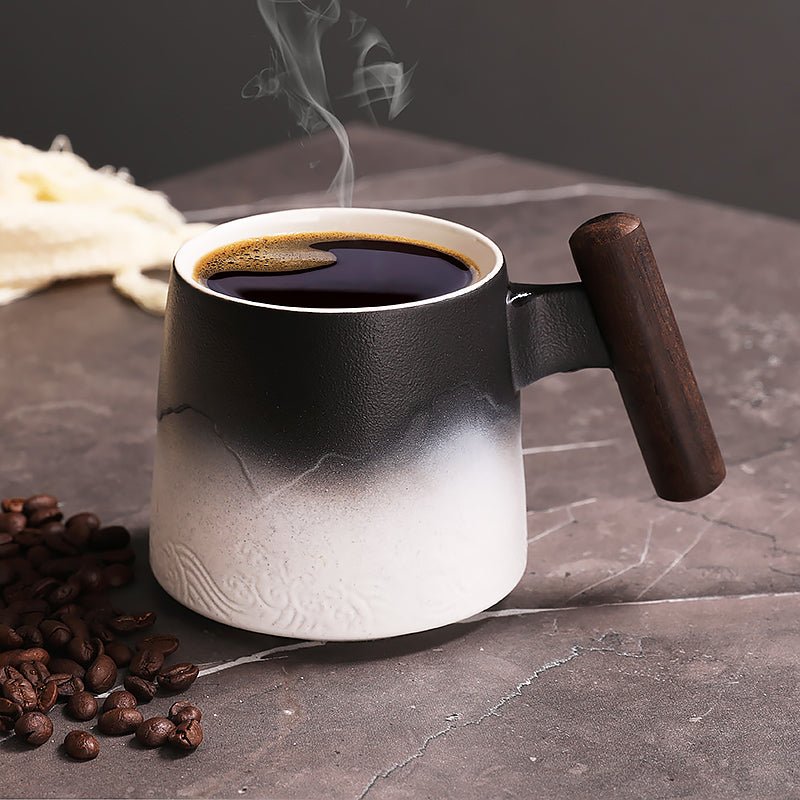
Peet's Brown Southwestern Stoneware Mug: Buyer Checkpoints
Reading time: about 12 minutes
A brown stoneware mug with a southwestern pattern looks great on a kitchen counter, but the real test starts after the first week: does the handle fit your fingers, does the base sit flat on a desk, and does the glaze still feel smooth after a few dishwasher cycles?
That is the practical lens we use in our store. Shoppers searching for a peets coffee mug stoneware pottery cup brown aztec southwestern design are usually not chasing a plain white office mug. They want a cup with weight, texture, and a collected look. Maybe it is for daily Peet's coffee at home. Maybe it is a replacement for a favorite mug that chipped. Maybe it is a gift for someone who likes rustic, Southwest-inspired pottery.
The style can be excellent. It can also disappoint if you buy only from a photo. Below is the checklist we would use before choosing this kind of mug, including what to inspect, what trade-offs to expect, and when a different mug style may make more sense.
What does this mug style usually mean in real use?
A Peet's-style brown southwestern stoneware pottery cup typically combines three buying signals: coffee-brand appeal, a heavier ceramic body, and a decorative pattern that leans rustic rather than minimalist. The phrase often points to a brown or tan mug with geometric banding, stepped shapes, or Aztec-inspired motifs around the body.
In hand, stoneware usually feels denser than thin porcelain. A good one has a little heft, a stable base, and a glaze that does not feel gritty on the lip. It is not the lightest mug in the cabinet. That extra weight is part of the appeal for some people and a drawback for others.
Here is what shoppers should expect from this category:
- Material: fired stoneware ceramic, usually thicker than bone china or thin porcelain.
- Finish: glazed interior for drink contact, often with a matte or semi-gloss exterior depending on the design.
- Look: earth tones such as brown, tan, cream, black, rust, or muted red.
- Common capacity range: many everyday stoneware mugs fall around 10 to 16 ounces, though vintage and branded mugs can sit outside that range.
- Best use: brewed coffee, tea, cocoa, desk coffee, and casual gifting.
If you are still comparing broader ceramic options, our guide on what to check before buying a ceramic coffee cup mug explains the differences between glaze, clay body, rim feel, and daily durability in more detail.
How should you judge the brown Aztec southwestern design?
Photos can make this type of mug look richer than it feels in person. We always tell buyers to evaluate the design as both decoration and daily-use surface. A geometric band around the center is attractive, but raised, rough, or poorly sealed decoration can become annoying after repeated handling.
Look closely at three areas:
- The drinking rim: The rim should be smooth, fully glazed, and free of pinholes, rough clay specks, or uneven bumps. A decorative mug can be beautiful, but a scratchy rim ruins morning coffee quickly.
- The pattern edges: Printed or glazed southwestern designs should look intentional. Slight handmade variation can be charming; smeared lines, bubbling glaze, or flaking decoration are warning signs.
- The color balance: Brown mugs vary a lot. Some read warm and earthy. Others look muddy in low light. If the mug will sit on a dark desk or wood counter, contrast in the pattern matters.
The term “Aztec” is often used loosely in retail listings to describe geometric southwestern-style shapes. A buyer should focus less on the label and more on the actual motif: stepped diamonds, repeating triangles, woven-looking bands, or pottery-inspired borders. If you want a design that feels cleaner and more modern, you may prefer a simpler graphic mug. Our article on choosing a coffee mug design that works daily covers that visual trade-off well.
What size and shape should you choose?
Capacity is one of the most common mismatch points we see. A mug can look substantial in a listing and still hold less coffee than a buyer expects. Stoneware walls are thicker, so the outside may look large while the interior volume is moderate.
For daily coffee, start with how you brew:
| Use case | Better mug capacity | What to watch |
|---|---|---|
| Small drip coffee or tea | 10 to 12 oz | Leaves room for milk without feeling oversized |
| Standard home coffee | 12 to 14 oz | Good everyday middle ground for most counters and desks |
| Large pour or latte-style drink | 15 to 18 oz | Check weight and microwave clearance before buying |
| Collector display | Any size | Prioritize condition, branding, and pattern alignment over capacity |
Shape matters too. A straight-sided mug tends to feel more modern and stacks more cleanly, though many stoneware mugs do not truly stack. A rounded belly keeps the rustic pottery feel and can be comfortable to cradle with both hands. A flared lip can drink nicely, but it may spill more easily during the walk from kitchen to desk.
If you drink larger coffees or want a mug that works under a single-serve machine, measure the machine clearance before buying. Tall mugs can be a better fit for some brewers, and our coffee cup tall buying guide is useful if height is part of your decision.
What should you inspect before buying a stoneware pottery cup?
We handle enough mugs to know the problem areas are usually small, not dramatic. Most buyers notice a large chip. Fewer notice a hairline crack near the handle or a slightly rocking base until the mug is already in use.
Use this inspection checklist before you commit:
- Handle attachment: Check both the top and bottom join. Fine cracks where the handle meets the body can widen with heat and washing.
- Base ring: The foot ring should be even and not sharp. An unglazed rough base can scratch wood tables or painted shelves.
- Interior glaze: Look for crazing, which appears as fine crackle lines in the glaze. Some decorative crazing is intentional, but on a drinking surface it can be harder to keep clean.
- Lip chips: Even a tiny chip on the rim is noticeable every time you drink. For a daily mug, we would pass unless the piece is strictly for display.
- Weight balance: Pick it up empty and imagine it full. A thick stoneware mug can feel much heavier with 12 to 16 ounces of coffee inside.
- Desk stability: Set it on a flat surface and tap lightly near the rim. Wobble is not just annoying; it is risky near laptops.
For branded mugs, also inspect the logo or brand mark. Peet's collectors may care about the exact logo style, placement, and era. If you are buying mainly for daily use, condition and comfort should outrank collectability.
Is stoneware good for heat retention and daily coffee?
Stoneware is one of our favorite materials for people who like a mug that feels grounded. It warms up in the hand and usually keeps coffee comfortable longer than very thin ceramic. That said, it is not an insulated travel mug. Your drink will still cool on an open desk, especially in a cold room.
Here are the practical strengths:
- Comforting weight: Many shoppers like the sturdy, substantial feel.
- Everyday durability: Properly fired stoneware handles daily use well, as long as it is not knocked against a sink or granite counter edge.
- Good glaze options: Brown and earth-tone glazes hide minor coffee staining better than bright white interiors, though the inside still needs regular cleaning.
- Gift appeal: A southwestern design feels more personal than a plain promotional mug.
And the limits:
- Not ideal for commuters: It has no lid, no spill control, and no cup-holder function.
- Not always lightweight: People with grip sensitivity may prefer thinner ceramic or a smaller cup.
- Not guaranteed microwave-safe: Unless the listing or maker clearly says so, do not assume. Metallic decoration, unknown vintage glazes, and some decals can be a problem.
- Not always dishwasher-friendly: Many modern glazed mugs are fine, but vintage or decorative pieces may last longer with hand washing.
If you want a broader comparison of stoneware strengths and care concerns, see our stoneware coffee mug buying guide for everyday use.
How should you care for a brown southwestern stoneware mug?
Care depends on the maker, age, glaze, and decoration. If the mug has a clear care label, follow that first. If it is a vintage or secondhand Peet's mug and care details are unknown, we would treat it more gently.
Our basic care routine is simple:
- Wash before first use. Use warm water, mild dish soap, and a soft sponge, especially if the mug was stored or shipped without original packaging.
- Avoid sudden temperature shock. Do not take a cold stoneware mug from a chilly room and fill it immediately with boiling water. Let it warm gradually.
- Skip abrasive pads. They can dull matte glazes and scratch printed decoration.
- Check the foot ring. If the unglazed base feels rough, set it on a coaster or placemat to protect delicate surfaces.
- Hand wash questionable pieces. If the mug is collectible, older, or has unknown decoration, hand washing is safer than repeated dishwasher cycles.
For coffee staining inside a light interior, a paste of baking soda and water can help, but do not scrub aggressively. On dark interiors, stains are less visible, which is one reason brown stoneware works well for daily coffee drinkers.
Who is this mug style best for, and who should skip it?
A peets coffee mug stoneware pottery cup brown aztec southwestern design is best for a shopper who wants character more than minimalism. It suits warm kitchens, wood shelves, cabin-style spaces, office desks with personality, and gift baskets built around coffee beans or tea.
It is a strong fit if you value:
- Rustic design over a clean white cafe look
- A heavier hand feel
- Earth-tone colors that do not show every coffee mark
- A mug that can feel collectible or giftable
- A pattern that stands out without being bright or novelty-heavy
You may want a different mug if you need:
- A lightweight cup for limited grip strength
- A travel mug with a lid
- A stackable set for a small cabinet
- A very large latte mug or soup mug
- A dishwasher-safe guarantee on an older or unmarked piece
If you are comparing several designs rather than trying to match one exact Peet's mug, browse our current mug options at CoffeifyMug products. For a wider view of styles and categories, our full mug collection is the better starting point.
How does it compare with simpler ceramic mugs?
The main difference is personality versus flexibility. A brown southwestern stoneware mug has a clear visual point of view. It can make a coffee shelf look collected and warm. A simple ceramic mug blends more easily with everything else.
| Feature | Brown southwestern stoneware mug | Simple ceramic mug |
|---|---|---|
| Visual style | Rustic, patterned, decorative | Clean, neutral, flexible |
| Hand feel | Usually heavier and thicker | Can be lighter and thinner |
| Gift appeal | More personal if the design matches the recipient | Safer for broad tastes |
| Cabinet matching | May stand out from existing sets | Easier to mix with other mugs |
| Care uncertainty | Higher if vintage or decorative | Lower if modern and labeled clearly |
For shoppers building a matched set, simpler mugs often win. For someone replacing a favorite mug or buying a memorable coffee gift, the southwestern stoneware style has more presence.
What buying details matter most for gifting?
Gift unboxings are where small quality details become obvious. A sturdy mug with a smooth rim, balanced handle, and clean glaze feels thoughtful. A mug with a rough base or a tiny rim chip feels like a miss, even if the design is attractive.
Before giving this style as a gift, check:
- Recipient taste: Southwestern patterns are specific. Great for someone who likes earth tones, pottery, camping cabins, desert colors, or coffee-shop memorabilia. Less ideal for someone with an all-white kitchen.
- Use habits: If they microwave coffee often, confirm microwave suitability before choosing a mug with unknown decoration.
- Capacity: A 10-ounce mug may feel small to someone who drinks large morning coffee. A 16-ounce mug may feel too heavy for evening tea.
- Packaging: Stoneware needs enough padding around the handle and rim. Those are the break points during shipping.
- Surface feel: Run a finger around the rim and handle if you can. Smooth contact points matter more than most photos show.
If you are unsure about the exact style, a more customizable or personal mug may be a better gift. Our guide to personalized coffee mug ideas that actually look good can help you avoid designs that feel too busy or gimmicky.
Frequently asked questions
Is a Peet's brown southwestern stoneware mug safe for the microwave?
Only assume it is microwave-safe if the mug or listing clearly says so. Stoneware itself is often microwave-friendly, but metallic accents, certain decals, unknown vintage glazes, or repaired cracks can make microwaving a bad idea. If you cannot confirm, heat the drink separately and pour it into the mug.
Can I put an Aztec-style stoneware coffee mug in the dishwasher?
Many modern glazed stoneware mugs can handle the dishwasher, but decorative or older mugs may last longer with hand washing. Repeated dishwasher cycles can dull some finishes or stress already weakened glaze. If the mug is collectible or has unclear care instructions, wash it by hand with mild soap.
What size is best for a daily stoneware coffee cup?
For most daily coffee drinkers, 12 to 14 ounces is the most practical range. It gives enough room for coffee plus a little milk without making the mug feel oversized. If you drink large pours, check both capacity and weight before choosing a 16-ounce or larger stoneware mug.
What defects should I avoid on a used Peet's pottery mug?
Avoid rim chips, handle cracks, rocking bases, and heavy crazing inside the cup if you plan to drink from it. Small scuffs on the exterior may be acceptable for display, but damage on the rim or handle affects daily comfort and safety. The handle join is especially worth inspecting closely.
Is the brown southwestern design good for gifting?
Yes, if the recipient likes rustic, earthy, patterned mugs or coffee-brand pieces. It is less safe for someone who prefers minimalist tableware or lightweight cups. For gifting, prioritize a smooth rim, clean glaze, comfortable handle, and secure packaging over decoration alone.
Your practical next step before buying
Use this quick buyer checklist before choosing a peets coffee mug stoneware pottery cup brown aztec southwestern design or a similar rustic stoneware mug:
- Confirm the capacity matches the way you drink coffee.
- Check that the rim is smooth and chip-free.
- Inspect the handle joins for fine cracks.
- Decide if hand washing is acceptable, especially for vintage or decorative pieces.
- Make sure the brown southwestern pattern fits the kitchen, desk, or gift recipient.
- Choose a different style if you need a lid, a lightweight cup, or a fully matched cabinet set.
If you want to compare this look against other everyday mugs, start with our complete CoffeifyMug collection. If you already know you want a practical coffee mug with character, browse our current product selection and compare capacity, handle shape, finish, and care details before you add one to your cart.
More from our blog
Read more
Iced Coffee Mug Buying Guide: Size, Material, and Fit
A practical iced coffee mug guide covering size, material, handle comfort, and care so you can choose a cup that fits your routine instead of fighting the ice.
Leer más
Reduce Coffee Mug Buying Guide: What to Check Before You Buy
A practical guide to choosing a reduce coffee mug for home, office, gifting, or daily use, with size, material, handle, lid, and care details shoppers often miss.
Leer más
Dejar un comentario
Este sitio está protegido por hCaptcha y se aplican la Política de privacidad de hCaptcha y los Términos del servicio.