
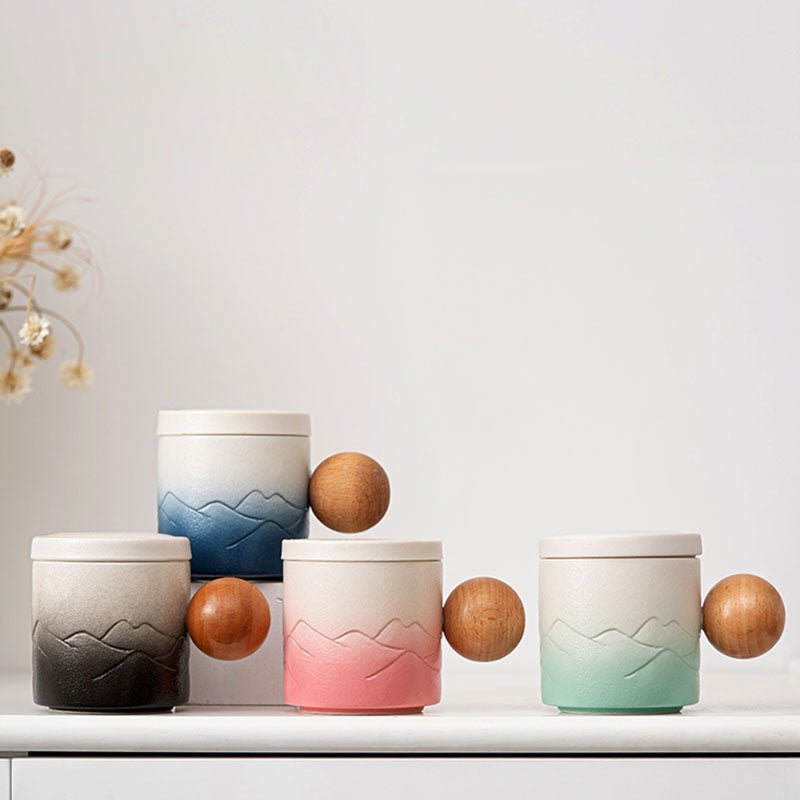
The macchiato cup capacity guide: 170 ml, 200 ml, or 250 ml?
Reading time: about 9 minutes
A 250 ml cup can make a 70 ml espresso-and-milk drink look stranded at the bottom, while a 170 ml cup can become awkward once a home recipe grows beyond a short pour. This macchiato cup capacity guide focuses on that daily mismatch: not which cup is biggest, but how much room your prepared drink needs after espresso, milk, foam, and carrying space are counted.
In our store, we currently handle three relevant ceramic capacities: 170 ml, 200 ml, and 250 ml. Macchiato proportions vary between cafes, machines, and home routines. An espresso marked with a little milk is one common interpretation, but milkier modern versions can be considerably larger. Treat the serving volumes below as planning examples, not universal recipes.
Our macchiato cup capacity guide: what changes from 170 to 250 ml?
The current range covers an 80 ml spread. That sounds small beside a full-size mug, but it is substantial in a compact coffee cup. The 200 ml option adds 30 ml over the smallest cup, while the 250 ml option adds another 50 ml.
| Current cup | Listed capacity | Example prepared volume | Nominal headroom | Likely daily fit |
|---|---|---|---|---|
| Retro Coffee & Tea Cup | 170 ml | 90-120 ml | 50-80 ml | Short, compact servings |
| Pleated Coffee & Tea Cup | 200 ml | 120-150 ml | 50-80 ml | Middle-ground home recipes |
| Ball Handled Coffee & Tea Mug | 250 ml | 160-200 ml | 50-90 ml | Milkier drinks or fewer top-ups |
The headroom figures are simple subtraction from the listed capacities. They are not marked fill lines or promises about comfortable carrying volume. Cup geometry affects how high a given volume sits near the rim, so two vessels with equal unused capacity may not feel identical in the hand.
If you want to compare visible forms before settling on a size, open the current unique coffee mug collection and review the product photographs alongside the capacity numbers.
Who is the 170 ml Retro cup actually for?
The 170 ml Retro Coffee & Tea Cup is the closest fit for someone whose prepared drink stays compact and who wants the cup to look appropriately filled. A 90 ml drink leaves 80 ml of nominal headroom; a 120 ml drink leaves 50 ml. That buffer is useful when adding a spoonful of foam or carrying the cup from the machine to a nearby table.
This is also the most direct choice for a shopper who values the visible retro form and does not plan to turn a macchiato into a long milk drink. It is not a good fit for a routine that regularly reaches 150 ml or more. At that volume, only 20 ml remains against the listed capacity, which may feel too close to the rim for stirring or walking across the kitchen.
If capacity is only one part of your decision, our compact ceramic macchiato cup buying guide covers the broader category without treating every macchiato recipe as the same drink.
Where does the Pleated 200 ml cup earn its extra 30 ml?
The 200 ml Pleated Coffee & Tea Cup suits the shopper whose recipe changes slightly from day to day. One morning might be espresso with a restrained milk addition; another might include more textured milk. At a 120-150 ml finished volume, this cup retains 80-50 ml of nominal headroom.
That extra 30 ml over the Retro cup is practical if you stir sugar, carry coffee to an office desk, or dislike filling a compact cup near its limit. The visible pleated form also gives it a different appearance without moving to the largest capacity. It is less convincing for a very small espresso-led serving, which may sit low, and it still is not intended to replace a full-size breakfast mug.
Capacity does not reveal the exact rim clearance in millimeters. The internal wall profile determines how the unused volume is distributed, so use the current product photographs to judge form as well as the listed 200 ml figure.
When does the 250 ml Ball Handle cup make more sense?
Choose the 250 ml Ball Handled Coffee & Tea Mug if your finished drink commonly reaches 160-200 ml, or if the same cup will alternate between macchiato-style coffee and a modest tea serving. It provides 80 ml more total capacity than the Retro cup and 50 ml more than the Pleated cup.
The visible ball-shaped handle is another clear reason to consider it, but photographs and capacity cannot establish individual grip comfort. Hand size and preferred holding position differ. Review the product form closely if the handle is central to your decision.
This cup is not the strongest choice for someone trying to preserve the visual scale of a very short macchiato. A small serving will occupy less of the vessel, and the overall routine becomes closer to a small mug experience. If your drink is actually a longer black coffee, the examples in our Americano cup capacity and headroom guide will be more relevant than traditional macchiato proportions.
How much headroom does your own recipe need?
The most reliable method is to measure the drink you already make. Shot count alone is not enough because espresso yield, added milk, foam, sweetener, and water all affect final beverage volume.
- Prepare the drink normally. Include the milk, foam, syrup, or water you actually use rather than measuring espresso alone.
- Measure the finished volume. Use a marked measuring vessel so the comparison is in milliliters.
- Subtract that number from 170 ml, 200 ml, and 250 ml. The result is nominal headroom for each current cup.
- Account for movement. Leave more room if you stir at the counter, climb stairs, or walk to another room with the cup.
- Check the visible form. The same calculated headroom can sit differently near a narrow or open rim.
For example, a 135 ml finished drink leaves 35 ml in the 170 ml cup, 65 ml in the 200 ml cup, and 115 ml in the 250 ml cup. In our experience, the middle option is the logical starting point in that scenario: it creates a useful buffer without automatically moving the drink into the largest vessel.
The useful rule from this macchiato cup capacity guide is simple: buy for finished volume plus deliberate headroom, not for the espresso component by itself.
Which capacity matches your refill pattern at home or work?
Capacity changes more than presentation. It affects how often you return to the coffee setup and whether you tend to drink one measured serving or stretch the cup across a longer desk session.
- 170 ml: Best for one compact, freshly prepared drink. Expect another preparation or refill if you usually want more coffee afterward.
- 200 ml: A practical middle ground for one moderate recipe without turning the cup into a general-purpose mug.
- 250 ml: Better for a larger single serving or occasional tea use, but it only reduces refills if you genuinely want the extra liquid.
A larger cup does not make two separate macchiatos fresher, and one cup still needs rinsing between back-to-back servings. For an office desk, consider how far you carry it and how quickly you drink. Extra capacity can reduce trips, but a smaller serving may suit someone who prefers to prepare coffee more frequently.
If you are comparing this compact range with standard daily mugs, use our coffee mug sizes guide for daily use to see where these three capacities sit in a broader routine.
What should you check on a ceramic cup before regular use?
Capacity is easy to compare; condition and care need a hands-on check. At first unboxing, especially for a gift, we inspect the rim under direct light, look around the handle attachment area, and check the ceramic body for visible hairline cracks. A cosmetic surface variation is different from a sharp rim, a crack, or movement at a handle join. Do not use a cup with those structural problems.
- Before the first drink: Wash the cup according to the current product-page care directions.
- During washing: Use a non-abrasive sponge unless the listing gives different instructions. Pay attention to the Pleated cup's visible contours and the junction around the Ball Handle cup's handle.
- Before repeated dishwasher cycles: Confirm dishwasher guidance on the current listing. Ceramic material alone does not guarantee that every finish should receive the same care.
- During storage: Avoid knocking the rim against other ceramics, and do not assume these forms are designed to stack.
- With hot drinks: Avoid abrupt temperature changes, which can stress ceramic material.
We also would not infer microwave suitability, exact shelf fit, saucer compatibility, or stacking clearance from capacity. Those details require current product instructions or dimensions. This guide stays within the facts the size comparison can support.
Frequently asked questions
What does this macchiato cup capacity guide recommend for a short macchiato?
Start with the 170 ml Retro cup if your finished drink stays well below that listed capacity and you want a compact presentation. Measure your normal recipe first; a milkier home version may fit the 200 ml cup more comfortably.
Is a 170 ml cup too small for a double macchiato?
Not automatically. The word double describes the espresso component, not the final volume after milk and foam. If your completed drink is around 90-120 ml, the 170 ml cup still leaves 80-50 ml of nominal headroom.
How much empty space should I leave at the top?
There is no universal headroom requirement because cup shape, foam, stirring, and carrying distance all matter. Measure the finished drink and leave a deliberate buffer; 50 ml is a useful comparison example in this guide, not a mandatory fill rule.
Is the 250 ml cup too large for macchiato coffee?
It is larger than needed for many short espresso-led versions, so the drink may look low in the cup. It makes more sense for a milkier 160-200 ml home recipe, occasional tea use, or a shopper who specifically wants the visible ball-handle form.
Can these ceramic cups go through dishwasher and microwave cycles?
Do not infer dishwasher or microwave suitability from ceramic material alone. Check the current care directions on the individual product page before either use; if guidance is unavailable, hand-washing with a non-abrasive sponge is the conservative option.
Which current capacity should you order?
- Pick 170 ml for the most compact serving and a finished drink comfortably below that capacity.
- Pick 200 ml for variable 120-150 ml recipes and moderate carrying headroom.
- Pick 250 ml for milkier 160-200 ml drinks, occasional tea, or the visible ball-handle form.
Measure one complete drink, subtract that volume from each listed capacity, and decide how much carrying room you want. Then compare the three current forms in our unique coffee mug collection before placing your order.
Read more
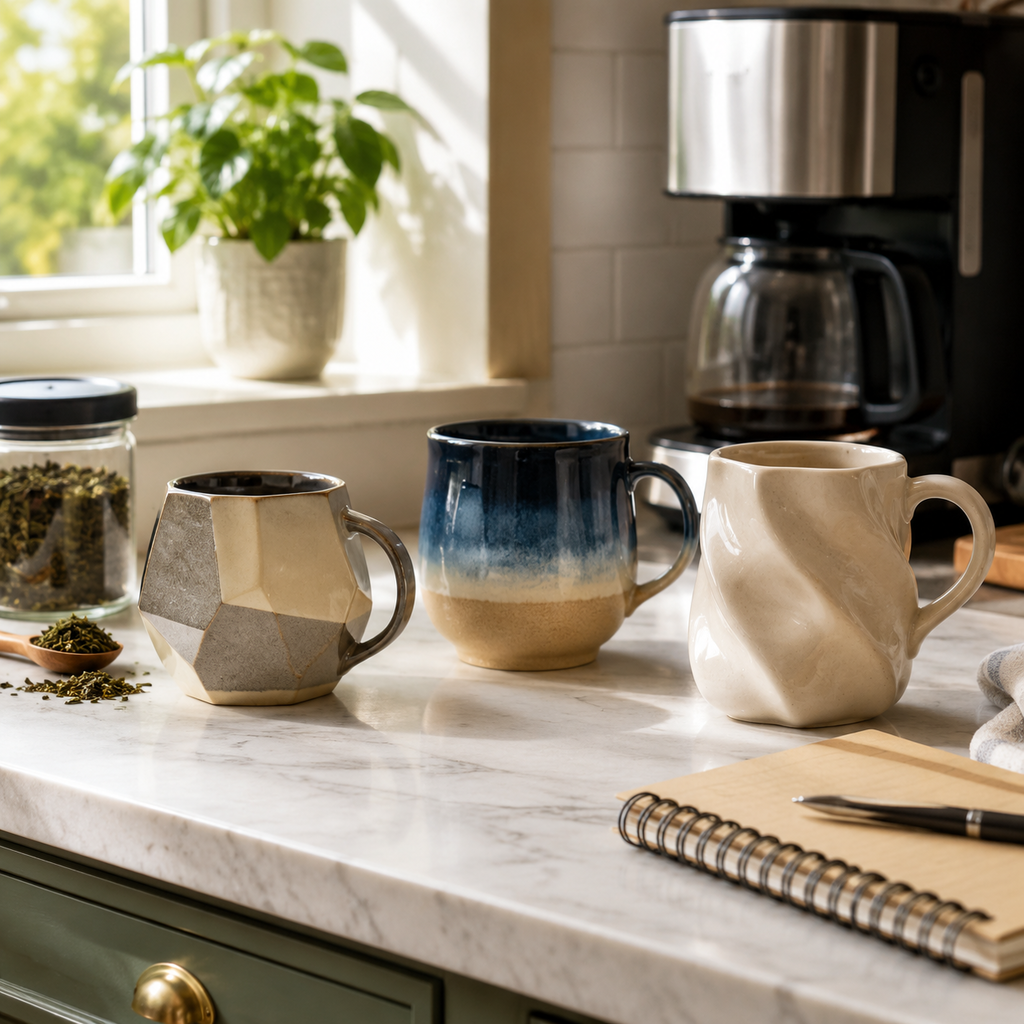
Abstract Coffee Mug Buying Guide: Shape, Finish, and Art-Led Design
Compare abstract mugs by the details that affect daily use: capacity, silhouette, visual finish, and care. See where Rhombus, Gradient, and The Flow fit best for coffee, tea, desk use, and gifting.
Leer más
Flat White Cup Capacity Guide: 200 ml, 250 ml, or 270 ml?
Compare CoffeifyMug's listed 200 ml, 250 ml, and 270 ml cups using your usual serving, desired capacity margin, and refill routine. See where each compact option fits and when a larger cup makes mo...
Leer más
Dejar un comentario
Este sitio está protegido por hCaptcha y se aplican la Política de privacidad de hCaptcha y los Términos del servicio.